What Is a Reefer Storage Container and How Does It Work?

Time:2026-11-04 Author:Aria
0%

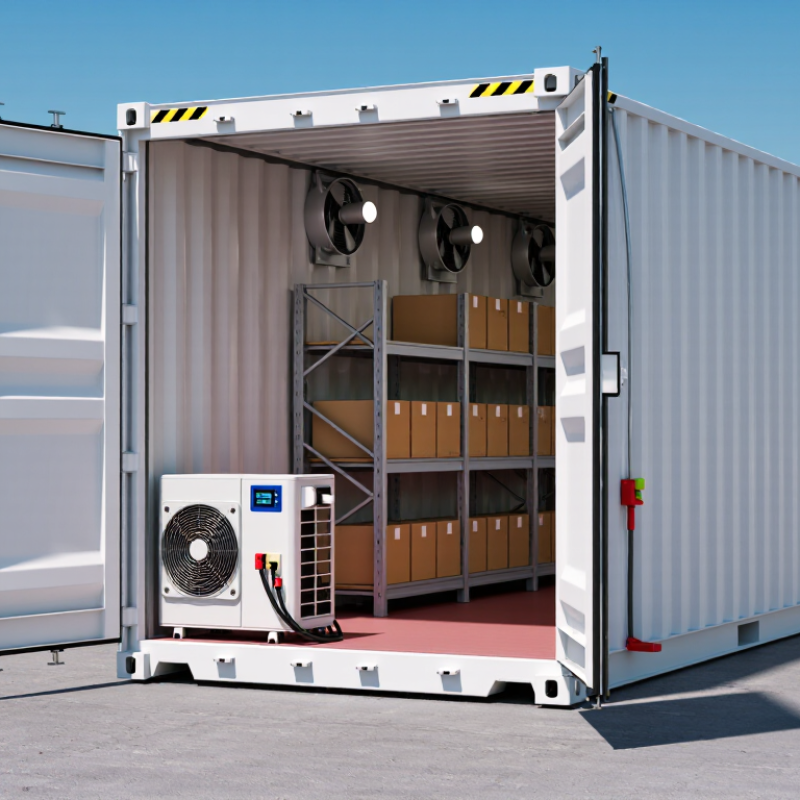
A Reefer Storage Container is more than an insulated steel box. It is a mobile cold room with a refrigeration unit, air channels, sensors, and controls that help maintain cargo-specific temperatures. Inside, fans circulate chilled air through floor channels and around properly loaded cartons. The unit removes heat; it does not magically cool every warm pallet at once. Small details matter. Blocked vents, loose door seals, or incorrect settings can disrupt airflow and temperature consistency.

The wider cold chain is substantial. The Global Cold Chain Alliance’s 2020 Global Cold Storage Capacity Report estimated worldwide temperature-controlled warehouse capacity at 719 million cubic metres. That figure describes warehouse space, not reefer-container capacity, but it shows the scale of infrastructure supporting temperature-sensitive goods. Transport geographer Jean-Paul Rodrigue’s work on freight systems supports a useful principle, paraphrased here: “A reefer protects a controlled environment; it cannot undo poor handling before loading.” That distinction is easy to overlook. A container’s performance depends on cargo preparation, correct set points, airflow, and monitoring—not refrigeration machinery alone.

This guide explains how the equipment works, what its main components do, and what operators should check during storage. It also examines practical limits, including power supply, maintenance, and temperature records. The details can vary by model and cargo. A set point is not a universal answer. For reliable decisions, consult the equipment manufacturer’s manual and qualified cold-chain professionals.
What Is a Reefer Storage Container and How Does It Work?

What Defines a Reefer Storage Container: Common 20-Foot and 40-Foot Units

A reefer storage container is an insulated box with a powered refrigeration unit. The common 20-foot and 40-foot formats use standard external dimensions: about 6.06 and 12.19 metres long, respectively, and 2.44 metres wide. ISO 668:2020 specifies standard container dimensions, while actual internal space varies with insulation and equipment. It varies.

The 20-foot unit suits smaller loads or sites with limited space. A 40-foot unit offers roughly twice the floor length, but not twice the usable capacity in every situation. Reefer technical guidance from the Container Owners Association describes airflow systems that circulate chilled air through floor channels and around cargo. In practice, cartons stacked tightly against the floor vents can restrict circulation. That detail is easy to miss.

Both sizes need a reliable power supply, clear airflow, and temperature settings suited to the cargo. Many units also record temperature during operation, giving operators a useful monitoring trail. ISO dimensions help compare equipment, but they do not guarantee identical payload or internal volume. Check the unit’s rating plate and technical specification before planning a load. A quick measurement helps, too.

How Insulated Walls and a T-Floor Direct Air Around Stored Cargo

A reefer container does more than hold cold air. Its insulated walls slow heat entering from sun, warm docks, and surrounding cargo. The refrigeration unit then circulates air through a T-floor: its narrow channels carry chilled air beneath the load, where it rises through cartons and returns near the ceiling. Air needs room. If boxes cover the floor channels or are packed too tightly, parts of the load may receive less airflow, even when the display shows the set temperature.

This circulation helps limit uneven temperatures, but it cannot fix poor loading or damaged packaging. Keep cartons clear of the air outlets and leave the designed return path open. Check the cargo’s temperature needs and the container’s operating instructions before setting a target; one setting does not suit every product. FAO’s 2019 State of Food and Agriculture report estimates that about 14% of food is lost between harvest and retail, underscoring the value of reliable temperature control across the supply chain. Still, a reefer is not a perfect shield. Door openings, warm cargo, and blocked airflow can all disturb conditions, so monitoring the actual load matters.

How the Refrigeration Cycle Maintains Set Points from About −30°C to +30°C

A reefer container maintains a chosen temperature, commonly within roughly −30°C to +30°C, using a vapor-compression refrigeration cycle. The compressor raises refrigerant pressure and temperature; the condenser releases heat outside. Then an expansion valve lowers pressure, and the evaporator absorbs heat from air inside the container. Fans move that air around the cargo. A thermostat compares sensor readings with the set point and signals cooling or, in cold conditions, heating. Simple in principle.

The set point is not the cargo’s core temperature. Warm produce loaded into a cold container may take hours to cool, so pre-cooling and careful airflow matter. Keep vents clear; blocked floor channels can create warm pockets, even when the display looks right. Ventilation settings also help manage gases and humidity for some cargoes. The International Institute of Refrigeration’s 2019 report estimates that refrigeration uses about 17% of global electricity, underscoring why sound maintenance and door discipline matter. But operators still face imperfect readings: sensor location, frequent door openings, and uneven loading can distort the picture. Check supply and return air readings, not just the set-point display.

What Is a Reefer Storage Container and How Does It Work? — How the Refrigeration Cycle Maintains Set Points from About −30°C to +30°C
Component or Operating Dimension What It Does Typical Range or Operating Detail
Reefer container An insulated cargo container with an integrated refrigeration unit, controls, and air-circulation system. Many units are designed for set points of approximately −30°C to +30°C; the usable range and cooling capacity depend on the specific unit and operating conditions.
Temperature set point The target temperature selected by the operator. The controller compares measured temperatures with this target and adjusts unit operation. A set point is not a guarantee that every part of the cargo will immediately reach that temperature. Pull-down time depends on cargo temperature, loading, airflow, ambient conditions, and unit capacity.
Return-air measurement Measures air returning from the cargo space toward the refrigeration unit. It helps the controller assess the temperature of circulating air. Return-air temperature can differ from supply-air temperature and from the temperature inside individual packages or products.
Compressor Compresses low-pressure refrigerant vapor, increasing its pressure and temperature so that heat can be rejected at the condenser. Its output is controlled in response to cooling demand and operating conditions.
Condenser Releases heat from the refrigerant to the outside air. As it loses heat, the refrigerant changes from a high-pressure vapor to a liquid. Condenser performance depends partly on ambient temperature, airflow, and cleanliness.
Expansion device Reduces the pressure of the liquid refrigerant before it enters the evaporator, lowering its temperature and regulating refrigerant flow. The pressure drop prepares the refrigerant to absorb heat inside the container.
Evaporator Absorbs heat from air passing across its coil as the refrigerant evaporates. The cooled air is then circulated back into the cargo space. Continuous airflow helps distribute cooling through the container.
Air circulation and cargo loading Fans move air through the unit and along the designed airflow path. Clear floor channels and suitable loading patterns help air reach the cargo. Blocked vents, overloading, or poor stowage can create uneven temperatures even when the unit is operating.
Defrost cycle Periodically removes frost from the evaporator coil so airflow and heat transfer can continue effectively. Defrost may be initiated by a timer or control logic. Air temperature can fluctuate temporarily during the cycle.
Power supply Runs the refrigeration equipment, fans, and electronic controls. Many container units use a three-phase electrical supply, commonly in the 380–460 V range at 50 or 60 Hz; requirements vary by equipment and installation.
Monitoring and records Controls may record set points, measured temperatures, alarms, and operating events for inspection or shipment monitoring. Recorded air temperatures are useful operational indicators but do not by themselves confirm the temperature of every item in the cargo.

Typical values are indicative, not universal. Always check the equipment documentation, cargo requirements, and applicable operating procedures.

How Sensors and Fresh-Air Vents Help Control Temperature and Air Exchange

A reefer storage container uses a refrigeration unit, sensors, and adjustable fresh-air vents to protect temperature-sensitive cargo. Sensors commonly track supply air leaving the unit and return air coming back. The difference helps operators see how well cooled air is moving through the load. Small details matter. A reading near the unit may not reflect conditions between tightly packed cartons.

The controller compares sensor readings with a set temperature and adjusts cooling as needed. Data logs can reveal swings during loading, door openings, or changes in outdoor conditions. Operators should check sensor placement and calibration, and avoid blocking air channels beneath or around the cargo. A reassuring display is useful, but it cannot tell the whole story. Cargo temperature may change more slowly than the air.

Fresh-air vents allow controlled exchange with outside air. This can help remove gases released by some produce and replenish the air inside the container. Vent settings depend on the cargo, its respiration rate, and outside temperature and humidity. Too little exchange may allow gases to build up; too much can add heat or moisture. The setting is not a perfect safeguard, so it should match cargo guidance and be checked during handling.

What Operators Monitor: Three-Phase Power, Airflow, and Temperature Records

A reefer container holds cargo within a controlled temperature range, but its display tells only part of the story. Operators check all three power phases, voltage, alarms, and compressor operation. A missing phase can interrupt cooling even when the unit still appears powered. Check during connection and after generator changes. A lit display is not proof of stable cooling.

Airflow matters just as much. Operators compare supply-air and return-air readings, then inspect floor channels and cargo clearances. Blocked vents or tightly packed cartons can create warm pockets while the control sensor reports an acceptable temperature. ASHRAE’s Handbook—Refrigeration discusses airflow and loading as key parts of refrigerated transport. Small gaps matter. That is easy to miss.

Temperature records should include setpoint, supply and return readings, timestamps, alarms, and door events. Operators should also note sensor placement and calibration; a number without context can mislead. FAO’s 2019 State of Food and Agriculture estimated that 13.8% of food was lost between harvest and retail. UNEP’s 2024 Food Waste Index reported that 19% of food available to consumers was wasted in 2022. These figures do not measure reefer failures, but they show why dependable cold-chain records matter. One gap remains: logs can miss brief excursions between checks. Review trends, not just the final reading.

FAQS

What do supply-air and return-air sensors measure?

Supply-air sensors track cooled air leaving the refrigeration unit. Return-air sensors track air coming back. Their difference can reveal how air moves through the cargo.

Can the displayed temperature represent every carton?

No. A sensor near the unit may miss warmer spots between tightly packed cartons. Small gaps matter.

How does the controller respond to temperature changes?

It compares sensor readings with the set temperature and adjusts cooling. Cargo may warm or cool more slowly than the surrounding air.

Why should operators check sensor placement and calibration?

Poor placement or calibration can make readings misleading. A reassuring display is not proof that every carton is at the right temperature.

What do fresh-air vents do?

They exchange some inside air with outside air. This can remove gases from certain produce and replenish the container’s air.

How should fresh-air vent settings be chosen?

Settings depend on the cargo, its respiration rate, and outdoor temperature and humidity. Too much exchange may add heat or moisture; too little may let gases build up.

What power checks help confirm that cooling can continue?

Operators check all three power phases, voltage, alarms, and compressor operation. A missing phase can interrupt cooling despite a lit display. Not quite reassuring.

What should temperature records include?

Record the setpoint, supply and return readings, timestamps, alarms, door events, and sensor details. Review trends, since brief temperature changes may occur between checks.

Conclusion

A Reefer Storage Container is an insulated unit designed to keep stored cargo within a controlled temperature range. Commonly available in 20-foot and 40-foot sizes, it uses insulated walls to reduce heat transfer and a T-shaped floor to guide chilled air beneath and around the cargo. This airflow helps maintain more consistent conditions throughout the container.

Its refrigeration cycle removes heat and adjusts cooling or heating to maintain set points, typically from about −30°C to +30°C. Sensors track conditions, while fresh-air vents allow controlled air exchange when needed. Operators monitor the temperature, airflow, and three-phase power supply to support reliable operation. Keeping temperature records also helps identify changes and confirm that conditions remained within the required range during storage.


Aria

Aria

Aria is a dedicated marketing professional with a deep passion for innovative strategies and a keen understanding of our company's product offerings. With a wealth of experience in the industry, Aria excels at crafting engaging content that highlights the unique features and benefits of our......