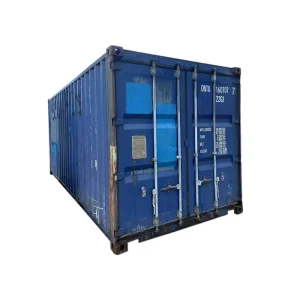
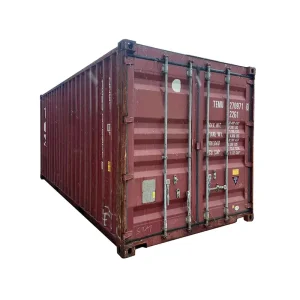
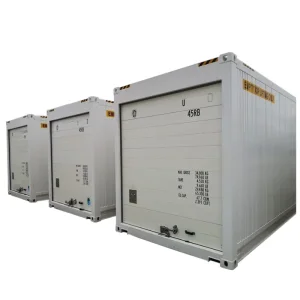
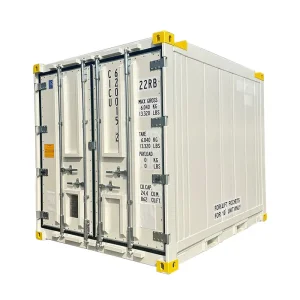
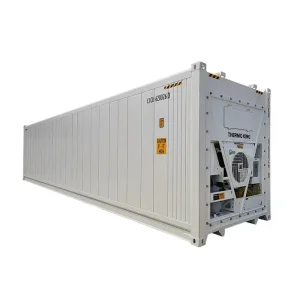
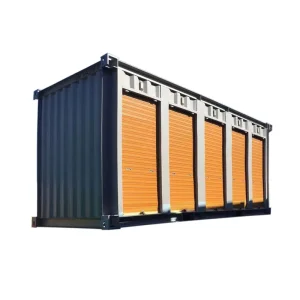
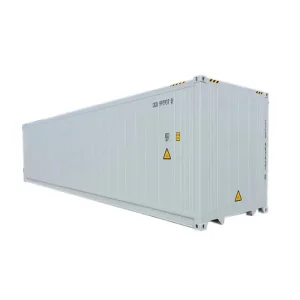
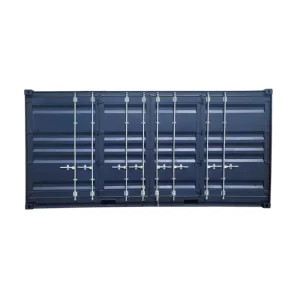
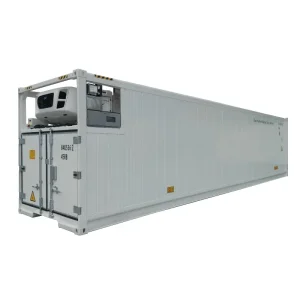
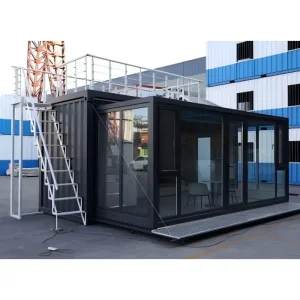
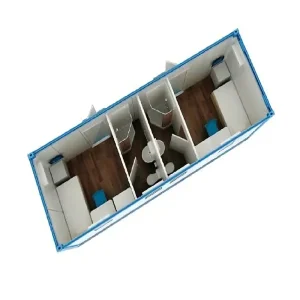
Explore our audited consignment of used dry shipping containers, modular conversions, and thermal units certified for transoceanic freight and on-site operational depots.
A comprehensive examination of how structural steel integrity, repositioning dynamics, and container fleet life-cycles drive the international second-hand maritime economy.
Global ocean liners typically retire dry van freight containers between 8 and 12 years of continuous sea service. These assets are phased out not due to structural compromise, but as part of scheduled fleet amortization. Used dry container factories in China inspect, recondition, and re-certify these boxes to extend their practical working lifecycle by 15–20 years in secondary markets.
Global export-import imbalances create surplus container pooling across major import centers while primary manufacturing regions in Asia face empty repositioning costs. China’s coastal facilities act as key aggregation hubs, collecting secondary units directly from shipping carrier demobilizations, performing necessary CSC plate validations, and re-exporting them globally under competitive tariff lines.
Procuring Cargo-Worthy (CW) or Wind & Watertight (WWT) used dry containers allows logistics integrators and industrial developers to acquire high-grade Corten steel envelopes at 30% to 55% of the capital expenditure demanded by newly built standard ISO containers. This cost delta significantly improves returns on investment for modular structures, remote warehousing, and domestic drayage.
Operating near Tianjin FTA and key Yangtze Delta coastal terminals, our remanufacturing ecosystem manages rigorous technical verifications meeting international classification benchmarks.
Key technological transformations and green building mandates driving evolution in the secondary dry freight sector.
The boundary between static used boxes and intelligent logistics assets is dissolving. Secondary container refurbishment programs now frequently integrate low-power LPWAN sensors, solar-powered GPS trackers, and vibration monitors directly onto the Corten framework, turning retired shipping assets into trackable off-grid hubs.
Global ESG compliance standards prioritize recycled infrastructure over raw steel smelting. Repurposing a single 40ft dry high-cube container offsets approximately 8.2 metric tons of virgin steel carbon emissions. Architectural and industrial firms leverage certified used containers to hit Net Zero building benchmarks.
Historical reliance on vague descriptors like "as-is" is giving way to quantitative grading standards like IICL-6 and ISO 1496-1. Our refurbishment facilities deliver laser-measured deflection surveys, paint thickness analyses, and floor timber sanitization reports with each container batch.
From resource extraction outposts to high-density intermodal yards, how secondary ISO dry containers are engineered to solve diverse operational challenges.
Reinforced 20ft and 40ft units altered into blast-resistant tool arsenals, hazardous chemical isolation bays, and personnel staging quarters withstand extreme salinity, sandstorms, and thermal cycles in Sub-Saharan Africa and Western Australia.
Serving the Belt and Road Eurasian railway corridors, refurbished high-cube dry containers maintain structural tolerance for multi-tier stacking and intensive gantry transfers across varied rail gauges and weather zones.
Structural Corten A steel frames serve as the load-bearing framework for multi-story residential modules, site offices, and disaster relief shelters, significantly cutting construction timelines compared to traditional concrete methods.
Grain, coffee, and bulk commodity traders deploy wind-and-watertight storage units at port peripheries and collection points, safeguarding yields against rodent infestation, damp, and pest risks without heavy civil works.
A rigorous industrial pipeline ensuring that every pre-owned container matches international shipping safety and structural performance requirements.
Containers undergo six-point squareness checks, laser diagonal measurements, and ultrasonic thickness gauging of bottom side rails, corner posts, and ISO casting nodes to identify hidden fatigue or micro-fissures.
Corroded corrugations are removed and patched with certified SPA-H Corten steel plates. Welds follow AWS D1.1 specifications, while door gear assemblies, lock rods, cams, and EPDM weather gaskets are fully restored.
Surfaces undergo grit blasting to Sa 2.5 profile standards, followed by two-pack zinc-rich epoxy primers and polyurethane topcoats. CSC safety approval plates are recertified by Bureau Veritas (BV) or classification surveyors.
Scalable procurement structures designed for freight forwarding networks, global leasing organizations, and major turnkey infrastructure contractors.
Shipper Owned Containers (SOC) eliminate carrier demurrage, detention penalties, and backhaul empty positioning charges. International project cargo forwarders fill containers with outbound equipment, disposing of or repurposing the box at the destination site.
Integrated supply chain programs allow leasing syndicates to cycle older fleets through our coastal yards for sandblasting, corporate livery repainting, floor replacement with apitong/keruing hardwood, and renewal of structural certificates.
Direct pre-export alterations—including custom steel reinforcements, roll-up door additions, internal insulation panel framing, and electrical routing—are completed at our facilities before shipping, lowering on-site labor overhead abroad.
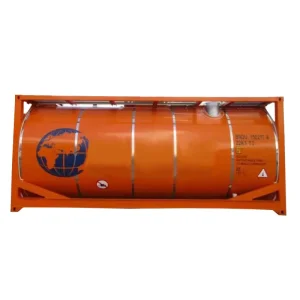
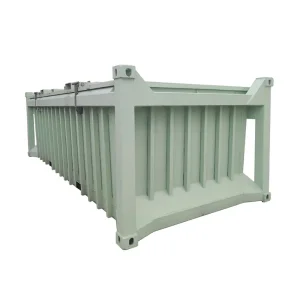
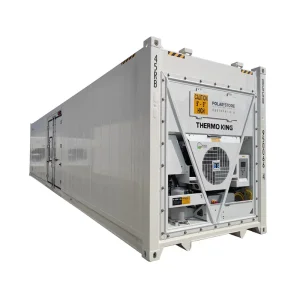
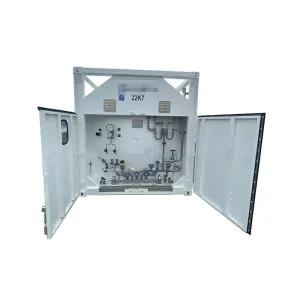
Explore specialized industrial equipment, from heavy ore carriers to offshore platforms and thermal freight units, all engineered to global ISO standards.
Technical, logistical, and commercial clarifications to support informed fleet investment decisions.
"As-Is" units are retired directly without repair guarantees and may have minor structural defects. "Wind & Watertight" (WWT) ensures no water or light penetrates the interior, making it suitable for static storage. "Cargo-Worthy" (CW) confirms the container's structural frame meets ISO stacking and racking tolerances and can carry a valid CSC plate for international sea shipping.
Every dry container intended for freight export receives an inspection by an accredited surveyor (Bureau Veritas, China Classification Society, or IICL inspector). Upon passing diagonal distortion, floor load, and locking bar tests, a renewal sticker or a newly stamped stainless steel CSC data plate is applied, valid for 12 to 24 months.
ISO shipping containers are built primarily from SPA-H Corten atmospheric corrosion-resistant alloy steel. When scratched or exposed to sea salt, this steel develops a dense protective oxide layer (patina) that prevents rust from penetrating deeper into the panel core, ensuring decades of structural service life.
Yes. We implement an individual-box traceability system. Prior to booking vessel space, clients receive comprehensive, timestamped photo and video dossiers showing all four exterior elevations, internal floor condition, corner castings, door gasket seals, and understructure crossmembers.
Empty containers can be shipped via ocean flat-racks, stacked as structural blocks, or carried via "One-Way Free Use" programs where ocean carriers or freight forwarders load cargo into the unit for its voyage to your destination port, significantly lowering delivery costs.
Yes. Our facilities manage full engineering adaptations, including installing roller shutter doors, personnel access doors, HVAC cut-outs, and custom polyurethane exterior coatings in your corporate RAL color palette prior to port staging.