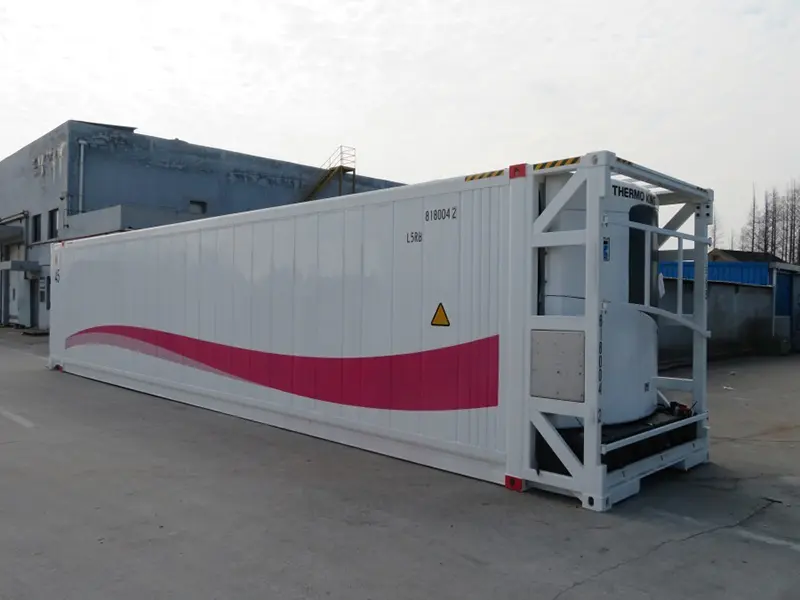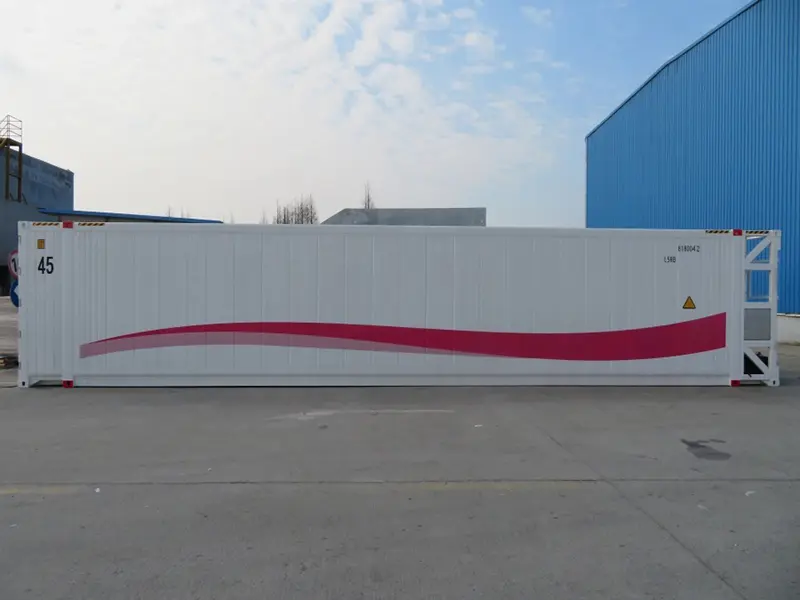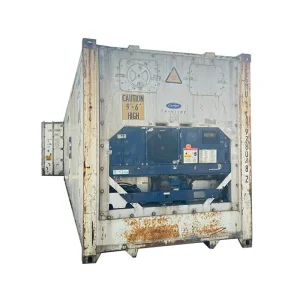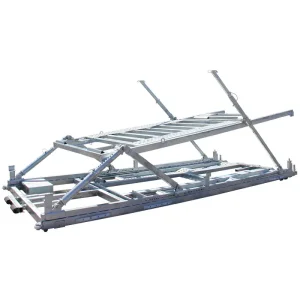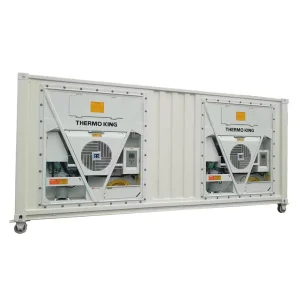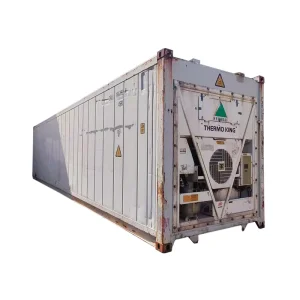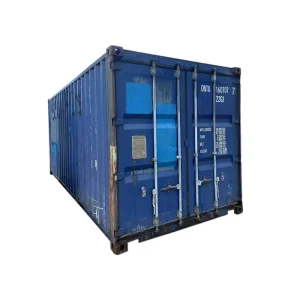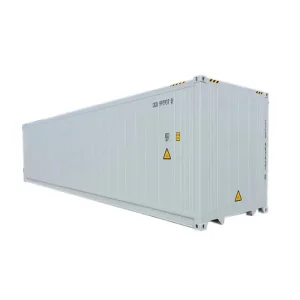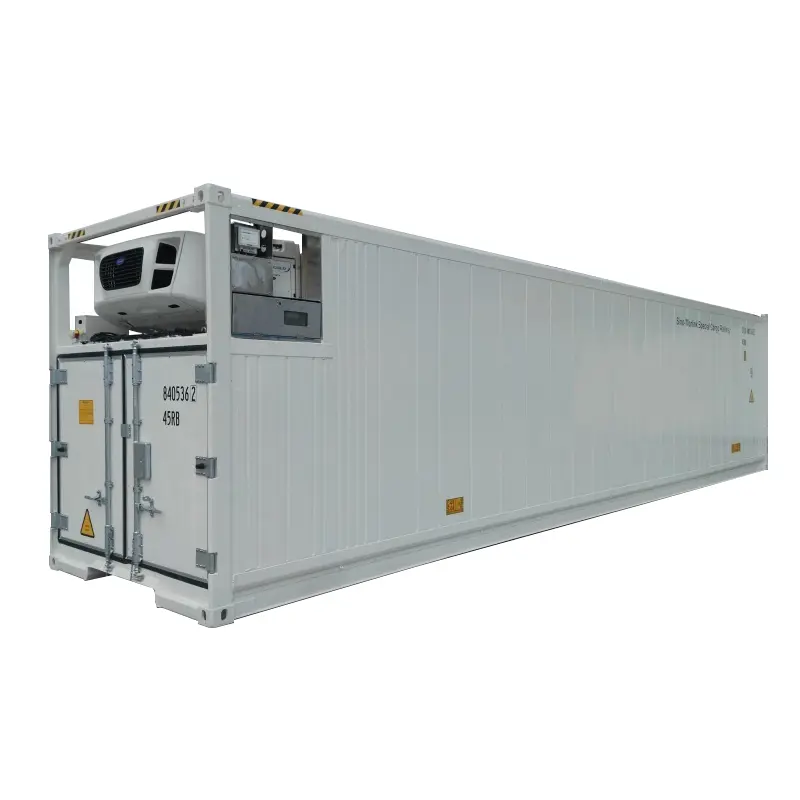
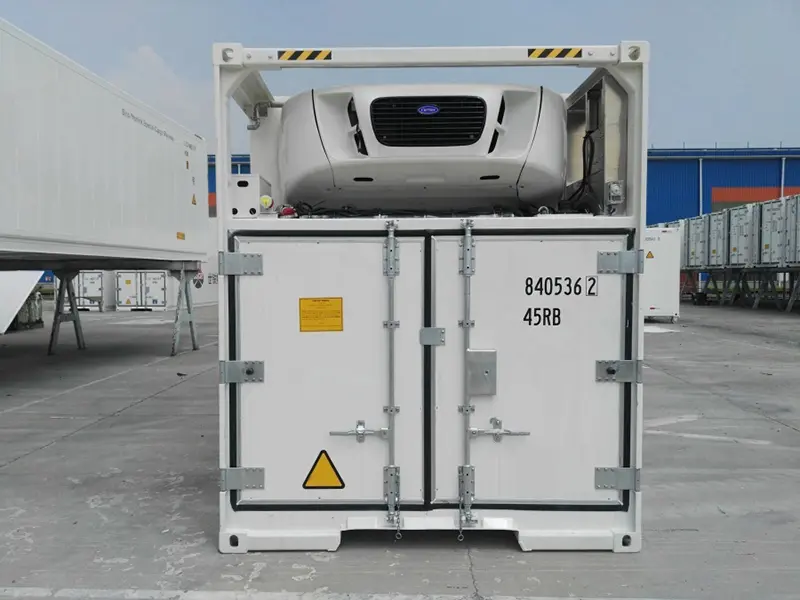
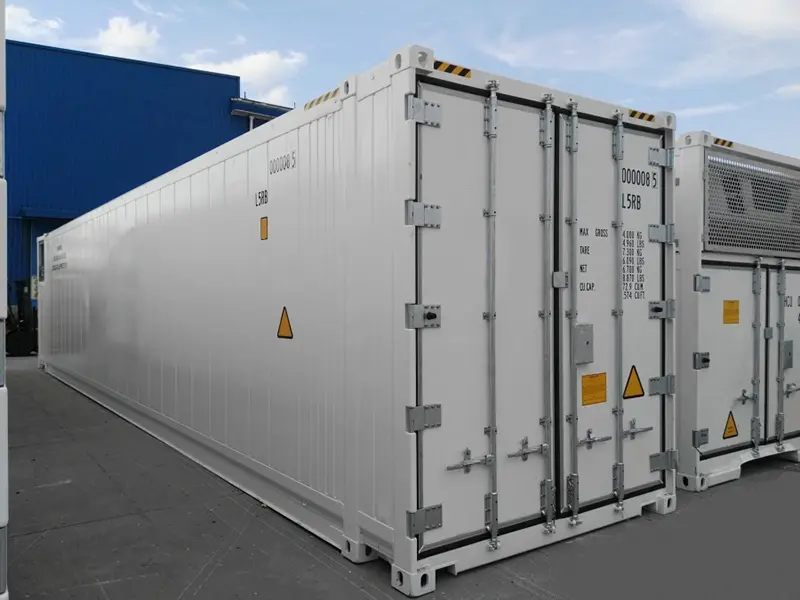
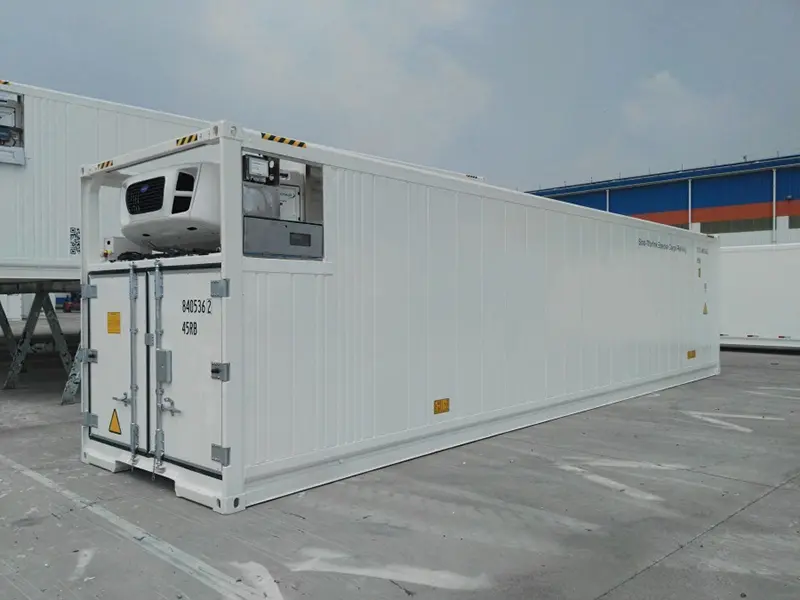
Famous New 40-foot high cube & 45-foot "Belt and Road" railway refrigerated container. Manufacturer, Products

Railway refrigerated containers, as a specialized container that integrates insulation and refrigeration functions, are designed specifically for railway transportation scenarios. They have excellent adaptability and can be seamlessly integrated into multimodal transport modes such as road-rail transport.

Product Description

Product Introduction
With the continuous expansion of the cold chain logistics market and the increasing requirements for food safety and quality, the market demand for railway refrigerated containers continues to grow. At present, railway refrigerated containers have formed a series of products with various specifications suitable for different needs and transportation conditions, and the technology is constantly developing in the direction of high performance, intelligence, and environmental protection. During long-distance transportation, the temperature of the environment in which the goods are located can be accurately maintained constant, effectively preventing the goods from being damaged and deteriorating due to temperature changes. At the same time, with the advantages of large volume and high efficiency of railway transportation, railway refrigerated containers can complete cargo transportation tasks in a more efficient and fast way, effectively ensuring the stability and smoothness of cold chain logistics.
Product Specification
40ft High Cube
External Dimension (MM) 12192 * 2438 * 2896
Internal Dimension (MM) 11405 * 2288 * 2544
Door Opening Width (MM) 2290
Door Opening Height (MM) 2569
Maximum Gross Weight 34000kg
Tare Weight (±2%) 6450kg
Max. Payload 27550kg
Volume 64.3 m³
45ft
External Dimension (MM) 13716 * 2556 * 2896
Internal Dimension (MM) 13008 * 2438 * 2577
Door Opening Width (MM) 2440
Door Opening Height (MM) 2569
Maximum Gross Weight 34000kg
Tare Weight (±2%) 7720kg
Max. Payload 26280kg
Volume 79.8 m³
Key Advantages
High Transportation Efficiency
Railway refrigerated containers use advanced refrigeration technology and equipment, which can quickly cool the goods to the required temperature and maintain a constant temperature.
Large Transportation Capacity
Containers of different sizes have slightly different volumes, but compared with general refrigerated transportation, the capacity of railway refrigerated containers is much larger, allowing more goods to be transported at once.
High Transportation Safety
Equipped with professional refrigeration systems and power generation systems, maintaining very stable continuous low temperatures to effectively safeguard goods against external environmental shifts.
Frequently Asked Questions
Q1In what aspects can railway refrigerated containers be customized?
  • 1. Standard outer width or pallet width can be customized
  • 2. Floor type can be selected
  • 3. Internal lining can be selected
  • 4. Company logo can be customized
  • 5. Other specific requirements can be discussed for engineering feasibility
Q2What are the main volume and payload differences between 40ft High Cube and 45ft containers?
The 40ft High Cube provides an internal volume of 64.3 m³ with a maximum payload of 27,550kg, whereas the 45ft unit provides an extended internal capacity of 79.8 m³ with a maximum payload of 26,280kg.
Q3How do railway reefer containers maintain stable temperatures over long distances?
They utilize advanced integrated refrigeration equipment and stable independent power generation units, enabling rapid pull-down and continuous temperature precision across entire long-haul transit cycles.
Q4How does rail reefer transport compare to conventional refrigerated transport?
Railway refrigerated units offer considerably larger cargo capacities, better cost-efficiency over long distances, consistent transit schedules, and significantly enhanced temperature-control reliability.
Q5How are goods protected against spoilage during transit?
Precision temperature regulation isolates perishable goods from outdoor temperature swings, preventing spoilage, quality decay, or cold chain interruption throughout the entire shipment journey.

Related Products