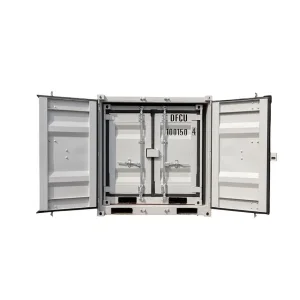
ODM Carrier X4-7300 Refrigeration and Electricity Integrated Container Exporter, Exporters
Explore Model
Engineered for high-frequency multimodal transitions between rail-well wagons, double-stack flatcars, and regional highway semi-trailers.
Analyzing structural shifts in continental freight corridors, modal rebalancing, and decarbonization mandates.
The global freight ecosystem is navigating an aggressive transition toward intermodal freight corridors driven by geopolitical realignments, high-efficiency supply networks, and strict ESG requirements. Road and rail transport containers represent the technical nexus of this multimodal shift. Continental supply chains across Eurasia, North America, and Sub-Saharan Africa increasingly rely on combined transport systems to resolve severe truck driver shortages, curb carbon penalties, and bypass congested deep-sea oceanic chokepoints.
Unlike standard maritime shipping units that spend weeks at static sea equilibrium, road and rail transport containers must withstand dynamic, asymmetrical physical stresses. Rail movements impart high-magnitude longitudinal impact accelerations (up to 4G shunting shocks during hump marshalling), while road transit subjects equipment to cyclical torsional twisting and high-frequency vibration profiles. Consequently, leading global manufacturers like CIMIC have re-engineered structural roll-formed profiles, corner casting anchors, and floor understructures to exceed strict ISO 1496/1 and UIC 592/596 technical benchmarks.
The Silk Road Economic Belt and trans-Eurasian railway routes have expanded inland point-to-point transit from 40 days by sea to 12-16 days by specialized rail reefers and dry boxes, necessitating temperature tolerance from -40°C in Siberia to +45°C in Central Asia.
Traditional ISO sea containers fail to fit European (1200x800mm) or Australian (1165x1165mm) standardized pallets without spatial loss. Modern road-rail units incorporate 2,500mm to 2,550mm exterior widths, maximizing internal pallet packing efficiency by 15-20%.
Seamless shifts across reach stackers, gantry cranes, and chassis rely on automated twist-lock precision. Strict manufacturing tolerances ensure corner casting apertures never warp under thermal swings or off-center lifting dynamics.
How composite metallurgy, autonomous refrigeration power, and IoT sensory meshes define next-decade road-rail container engineering.
Integrating sandwich foam panels with thermoset composites and ultra-high-yield lightened base crossmembers. Reducing unladen tare weight by 12% unlocks greater payload capacities under statutory road gross-vehicle-weight (GVW) limits.
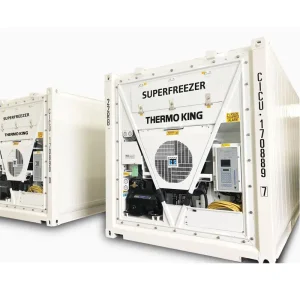
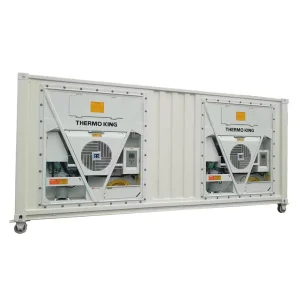
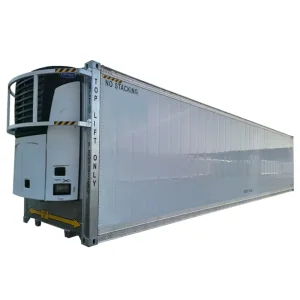
Reefer containers deployed on non-electrified rail spurs utilize embedded roof-recessed monocrystalline solar arrays paired with Tier 4 Final Carrier/Thermo King power blocks, delivering continuous -30°C holding without shore line connection for up to 25 days.
Real-time edge nodes integrated into container corner posts monitor live internal atmospheric compositions, cargo door seal integrity, structural acceleration vectors, and refrigeration thermal loops via dual cellular/Iridium satellite transceivers.
| Container Classification | Structural Material Standard | Internal Volumetric Capacity | Dynamic Dynamic Shunting / Deflection | Optimal Intermodal Domain |
|---|---|---|---|---|
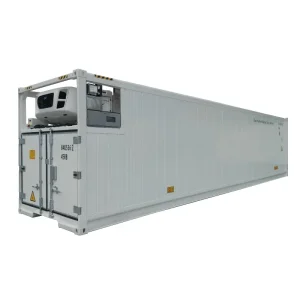
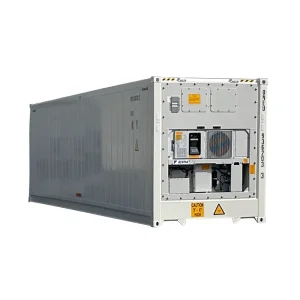
| 40ft High Cube Road-Rail Reefer | SPA-H Corten Steel + Stainless Steel Lining | 67.5 m³ (25 Euro Pallet capacity) | EN 12663 Rail Class P-II (2.0G longitudinal) | Trans-continental cold chain (meat, pharmaceuticals) |
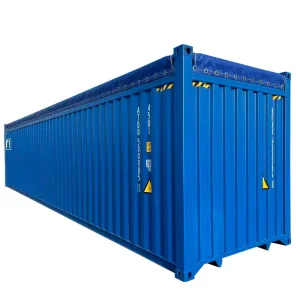
| 45ft Pallet-Wide High Cube Dry | Corrugated Heavy Corten Steel with Bamboo Floor | 89.2 m³ (33 Euro Pallet capacity) | UIC 592 Intermodal Wagon Dynamic Compliance | Express retail distribution, consumer electronics |
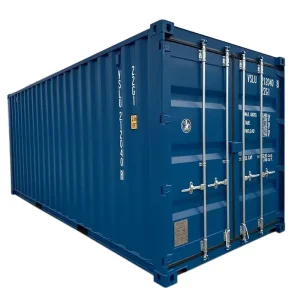
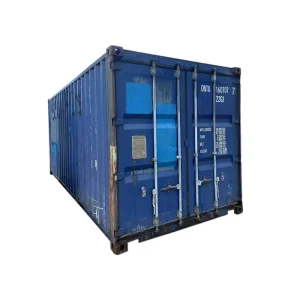
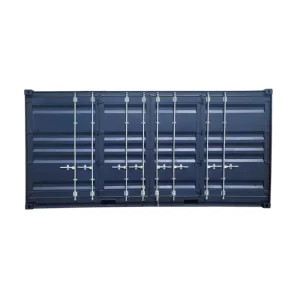
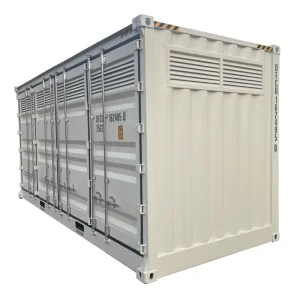
| 20ft Customized Side-Door Intermodal | Welded Structural Steel + Monolithic Hinges | 31.0 m³ (Full bilateral side aperture) | ISO 1496/1 transverse stiffness certified | Urban distribution, heavy machinery, project cargo |
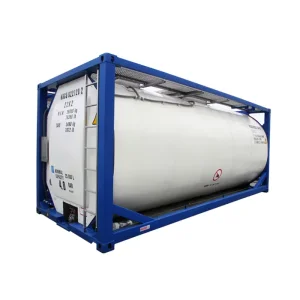
| ISO 20ft Versatile Tank Container | 316L Stainless Vessel + Outer Insulated Jacket | 24,000 – 26,000 Liters | IMDG / RID / ADR Multimodal Hazardous Approved | Bulk chemicals, fuel additives, industrial food oils |
Solving complex routing hurdles through custom manufacturing, regional climate engineering, and modular flexibility.
Long-haul routes traversing China, Kazakhstan, Russia, and Europe encounter wheel gauge changes (1435mm standard to 1520mm broad gauge). Containers endure repeated overhead crane transfers at border hubs. Reinforced top corner castings and ultra-flat floor understructures allow crane operators to execute sub-3-minute container transitions without frame misalignments.
Class I rail networks operate double-stack well cars. Road-rail containers deployed here must feature 9-high stacking capacity tested to 86,400 kg gross weight per corner post. Integrated gooseneck tunnels ensure compatibility with highway skeletal chassis, optimizing weight balance for long-distance drayage without axle overloads.
Perishable produce and temperature-critical biopharmaceuticals traveling by mixed road and rail experience exterior ambient swings from -40°C in continental winters to +45°C during summer yard staging. High-density polyurethane foam injected under vacuum conditions prevents thermal bridging and avoids compressor burnout.
Direct answers from CIMIC container engineers regarding technical specifications, inspection criteria, and customized procurement.
Specialized containment units engineered for extreme duty cycles, mineral bulk handling, hazardous materials, and chemical transit.