Explore our flagship certified UN portable tank containers, cryogenic T75 transports, high-durability offshore baskets, and intermodal logistical platforms engineered for seamless intercontinental intermodal handling.
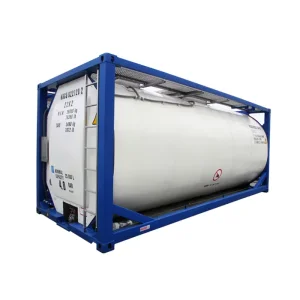
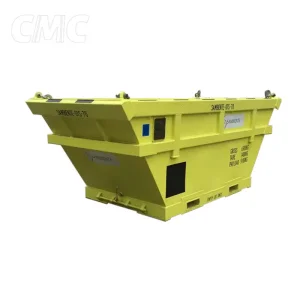
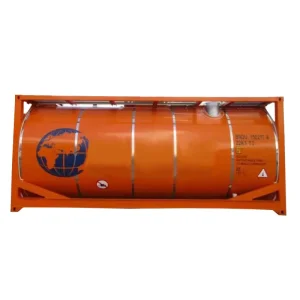
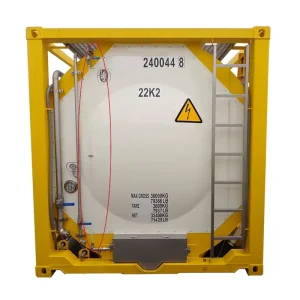
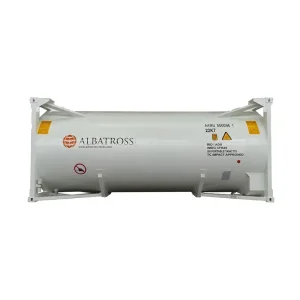
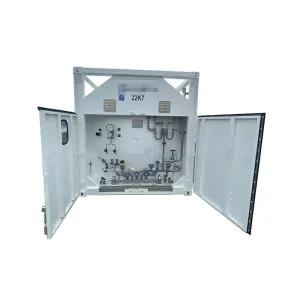
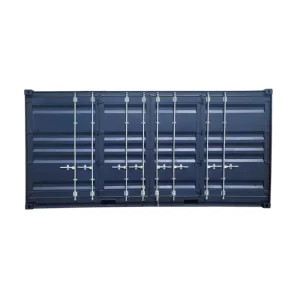
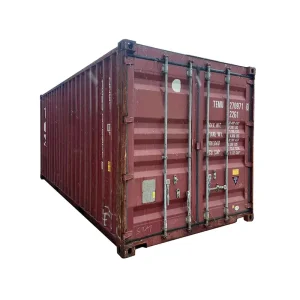
Navigating macro-structural shifts across chemical value chains, cryogenic transitions, and multimodal efficiencies governed by the International Tank Container Organisation (ITCO).
Global supply chains are migrating away from traditional 200-liter steel drums and intermediate bulk containers (IBCs). A standard 20ft ISO tank container holds up to 26,000 liters—equivalent to 128 steel drums—eliminating disposal overhead, product holdup, and container packaging waste while maximizing payload mass per cubic meter of shipboard stowage.
Stringent updates from the International Maritime Organization (IMO) and European inland transport directives mandate absolute zero-emission containment for dangerous goods classes 3, 6.1, 8, and 9. Tank containers provide high-integrity pressure containment designed to withstand 9-high stacking loads, severe sea-motion dynamic forces, and high-impact shunting stresses.
Decarbonization megatrends have accelerated worldwide demand for specialized T75 vacuum-insulated cryogenic tanks. From liquefied natural gas (LNG) peak shaving to liquid carbon dioxide (LCO₂) recovery and green hydrogen/nitrogen cold chains, advanced multi-layer super-insulation (MLI) architectures are now foundational to international energy infrastructure.
Precision engineering parameters designed in strict compliance with UN T-Codes, ASME Boiler and Pressure Vessel Code (BPVC) Section VIII Div 1, and international transportation safety mandates.
| Classification | UN T-Code Range | Shell Metallurgy & Lining | Design Pressure (MAWP) | Target Media & Operational Spectrum |
|---|---|---|---|---|
| General Chemical Tanks | T11 / T14 | S31603 (316L Stainless Steel) / Titanium Stabilized 316Ti | 1.77 bar to 4.0 bar (test 6.0 bar) | Solvents, resins, agrochemicals, plasticizers, industrial oils, and Class 3/6.1/8 liquids. |
| Corrosive & Ultra-Pure Acid Tanks | T14 / T20 / T22 | Carbon steel / 316L lined with PTFE, PFA, Chemfluor, or Natural Rubber | 4.0 bar to 10.0 bar | Hydrochloric acid (HCl), sulfuric acid (H₂SO₄), hydrofluoric acid (HF), and electronics-grade precursors. |
| Foodstuff & Beverage Tanks | T11 Sanitary | AISI 316L with Ra < 0.4 μm electropolished interior; CIP washheads | 2.65 bar to 4.0 bar | Bulk wine, potable alcohol, fruit concentrates, chocolate butter, liquid sugar, and pharmaceutical excipients. |
| Pressurized Gas Tanks | T50 High Pressure | Normalized fine-grain alloy steel (SA-612 / SA-516 Gr 70 / Q370R) | 10.0 bar to 34.5 bar | Propane, butane, LPG, anhydrous ammonia, R134a/R32 refrigerants, and sulfur dioxide. |
| Cryogenic Liquid Tanks | T75 Vacuum | Austenitic 304/316L inner vessel, structural carbon steel outer vacuum jacket | 6.0 bar to 22.0 bar (holding time up to 100 days) | Liquefied Natural Gas (LNG), liquid ethylene, liquid oxygen (LOX), liquid nitrogen (LIN), liquid argon (LAR). |
Analyzing mission-critical tank container configurations tailored across primary industrial sectors, specialized intermodal freight corridors, and challenging environmental terrains.
High-density industrial clusters demand continuous turnaround of ISO T11 insulated tanks fitted with steam and glycol heating channels. Preventing viscous solidification of polyols, MDI, and specialized monomers throughout transit across North American rail links and trans-Atlantic vessel networks requires high-thermal-efficiency polyurethane foam shells with aluminum outer cladding.
Shipping bulk premium wines, pure ethanol, fruit juices, and raw edible oils demands zero organoleptic taint. Our dedicated food-grade tank fleets feature electropolished mirror-finish interiors (Ra < 0.4 μm), high-performance top-sampling ports, sterile nitrogen blanketing purge valves, and Clean-In-Place (CIP) rotary spray balls to guarantee microbiological stability.
Operating in harsh maritime settings where dynamic vessel accelerations cause continuous impact stresses. DNV 2.7-1 / EN 12079 certified chemical skid tanks and offshore silt baskets utilize heavy structural hollow sections, pad-eye lifting lugs verified under magnetic particle testing (MPI), and high-build epoxy marine protective coatings resisting salt-spray oxidation.
Remote industrial locations lack fixed pipeline interconnects. 20ft and 40ft T75 ISO tank containers serve as virtual pipelines. Designed for LNG and liquid nitrogen distribution, these units feature automated economizer circuits, vacuum-jacketed valving, and high-performance super-insulation delivering negligible boil-off rates (BOR < 0.15% per day) over long transit spans.
Leveraging the world’s most integrated industrial supply base in Tianjin and the Yangtze River Delta to deliver uncompromised metallurgical fidelity and unmatched delivery timelines.
Our Tianjin manufacturing ecosystem operates in direct alignment with premier steel producers (such as TISCO and Baosteel). We source verified batches of low-carbon austenitic 316L, Duplex 2205, and SA-516 normalized steel plates with complete Mill Test Certificates (MTCs), ensuring full material traceability from electric arc furnace tapping to stamped vessel shell fabrication.
Tank shell longitudinal and circumferential seams are joined using multi-head Submerged Arc Welding (SAW) and Plasma Keyhole Tig setups. This automation guarantees 100% penetration, minimizes the Heat Affected Zone (HAZ), prevents grain boundary carbide precipitation, and maintains strict vessel roundness tolerances required for extreme cyclical pressure fatigue ratings.
Situated ~100 km from the deepwater port of Tianjin Xingang, our production facility avoids lengthy inland domestic haulage penalties. Containers are loaded directly onto ocean liners or transferred across bonded rail corridors into Central Asia, Russia, Europe, Southeast Asia, and the Americas with complete customs clearance and CSC plate pre-activation.
Every pressure vessel manufactured undergoes thorough third-party witnessing and non-destructive examination (NDE) prior to application of CSC safety approval documentation.
Manufactured under ASME Section VIII Division 1 guidelines with authorization to apply the prestigious 'U' Stamp. Shell calculations undergo finite element stress analysis (FEA) to confirm buckling stability under full external vacuum conditions alongside positive dynamic design pressures.
All main weld seams undergo continuous Radiographic Testing (RT) and high-sensitivity Ultrasonic Testing (UT). Critical high-stress weld junctions, lifting lugs, and corner fitting tie-ins are checked via Dye Penetrant (PT) and Magnetic Particle Inspection (MPI) to guarantee zero microscopic defects.
Prior to insulation application, vessels are subjected to statutory hydrostatic testing up to 1.5 times the Maximum Allowable Working Pressure (MAWP). Pressure curves are recorded digitally. Air-tightness testing is performed on all valves, relief devices, and bolted gaskets at full operating threshold.
Factory premises and product prototypes maintain continuous survey certifications with international classification bodies, including Bureau Veritas (BV), DNV, Lloyd’s Register (LR), and China Classification Society (CCS), with complete UN Portable Tank T-Code type approval records.
Leading the transformation of passive liquid containers into smart, connected industrial assets with real-time condition monitoring and next-generation composite structures.
Integrated low-power satellite and cellular sensors continuously report cargo temperature, internal vapor pressure, ullage levels, geo-coordinates, and impact shock alerts. Our intrinsically safe ATEX Zone 1 hardware links directly with enterprise ERPs via cloud APIs, providing complete supply chain visibility and predictive safety alerting for dangerous goods.
R&D developments focus on light-weighting tare mass through carbon-fiber composite outer frames and hybrid metallic-polymer shells. Advanced electrostatic dissipation fluoropolymer liners (ETFE/ECTFE) expand chemical compatibility for ultra-aggressive acids, halogens, and high-purity battery precursors, increasing payload capacity by up to 12% per shipment.
With global energy vectors transitioning to zero-carbon molecules, next-generation T75 cryogenic containers are engineered to store liquid hydrogen at -253°C and refrigerated liquid green ammonia. Employing extreme high-vacuum multi-layer insulation (MLI) and specialized cryogenic austenitic alloys guarantees zero boil-off across intercontinental maritime trade.
Direct answers from our senior container architects and compliance engineers addressing payload optimization, statutory inspections, heating methods, and chemical compatibility.
A T11 tank container is the universal standard for non-hazardous and moderately hazardous liquid chemicals, featuring a bottom discharge valve assembly protected by three independent closures (internal foot valve, external butterfly/ball valve, and blind flange/screw cap). A T14 tank container is specifically engineered for toxic, highly corrosive, or inhalation-hazard chemicals; under UN portable tank guidelines, it mandates top-only discharge with no openings below the liquid level, higher test pressures (typically 6 bar), and thick-gauge fluoropolymer or rubber linings.
Under IMDG Code paragraph 6.7.2.19, UN portable tanks must undergo two statutory periodic inspections: a 2.5-year intermediate inspection and a 5-year major renewal inspection. The 2.5-year inspection includes an internal visual examination, external structural audit, and a leakproofness pressure test of the shell, valves, and gaskets at not less than 25% MAWP. The 5-year inspection mandates a complete hydraulic pressure proof test at the certified test pressure, wall thickness gauging via ultrasonic testing, and recertification of the CSC and ADR/RID documentation.
Most chemical ISO tanks feature integrated steam heating panels made of longitudinal 316L stainless steel channels covering 8 to 12 m² of the bottom shell, designed to operate at steam pressures up to 4 bar. For routes lacking dry saturated steam connections, we install high-wattage electrical immersion heaters or exterior wrap-around electrical heating blankets (12 kW to 18 kW, 380V-440V 3-phase). For products requiring active cooling during long voyages, reefer-style glycol circulating jackets powered by on-board clip-on generator sets (gensets) are utilized.
According to maritime and inland dangerous goods codes, tank containers must never be filled to less than 80% or more than 97% of their total volumetric capacity unless fitted with approved internal transverse surge baffle plates. Filling below 80% creates liquid surge forces that destabilize container chassis on road turns and strain internal bulkheads during emergency braking. Filling above 97% risks hydraulic overpressurization due to the liquid's thermal expansion coefficient as transit ambient temperatures shift from cold seas to equatorial terminals.
Units for international operations require a dual-approved technical dossier. For North America, units must meet US DOT CFR 49 requirements, be stamped with an ASME Section VIII 'U' Stamp if pressurized, and comply with Association of American Railroads (AAR 600) impact guidelines. For the European Union, the tank must comply with the Carriage of Dangerous Goods by Inland Waterways (ADN), Road (ADR), and Rail (RID) directives, carrying a CE marking and a Pi (π) certification mark under the Transportable Pressure Equipment Directive (TPED 2010/35/EU).
For concentrated hydrochloric acid (32%–37%) and corrosive chlorides, heavy virgin PTFE (3mm–4mm) or bromobutyl rubber liners are vulcanized or mechanically bonded to the steel shell to prevent stress corrosion cracking. For high-purity phosphoric acid and strong caustics (sodium hydroxide 50%), high-grade fluoropolymers (PFA or ECTFE) are specified to eliminate trace heavy-metal leaching and maintain zero porosity across hundreds of high-temperature clean-in-place cycles.
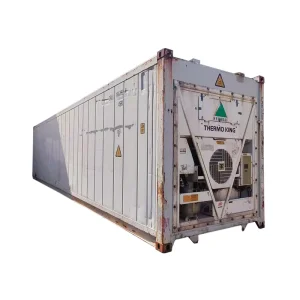
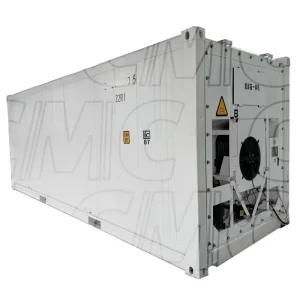
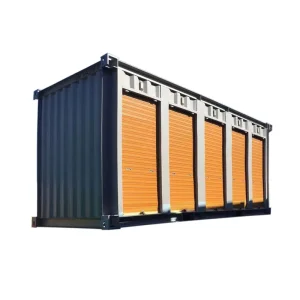
Explore our extended portfolio of specialized intermodal assets, refrigerated bulk platforms, offshore heavy lift baskets, and dry modular container conversions engineered to international standards.


Every project is backed by our specialized engineering team in Tianjin and Suzhou. Whether delivering customized T11 chemical fleets, ASME U-stamped pressurized gas vessels, or DNV 2.7-1 offshore handling equipment, our quality assurance protocols ensure full documentation, complete metallurgical traceability, and rapid vessel-side export dispatch.
