1 / 2
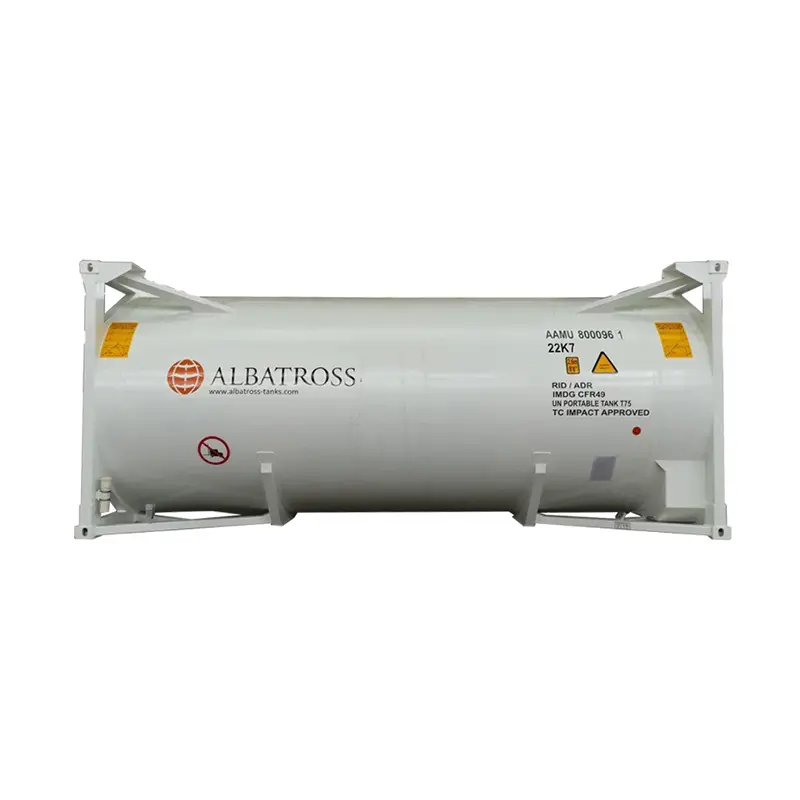
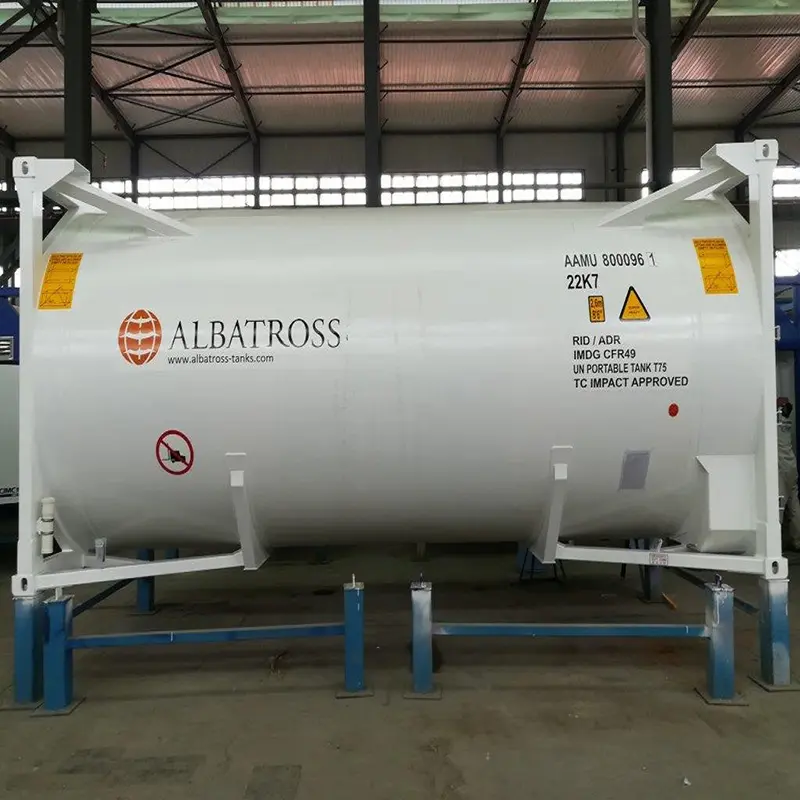
The interior design of tank containers is usually very smooth, aiming to reduce friction and impurities during transportation. The wall thickness of the tank is determined by the pressure and characteristics of the gas it carries; generally, the greater the pressure, the thicker the wall. For example, the wall thickness of a tank used to store high-pressure industrial gases may be between 10 and 20 mm. In addition, in order to prevent gas leakage, the welding process of the tank must meet extremely high standards, and the welding parts must undergo strict non-destructive testing to ensure that the welding quality meets the highest standards.
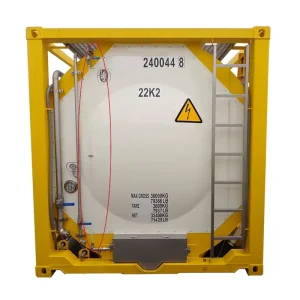
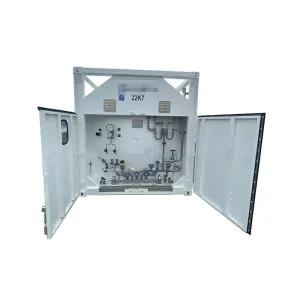
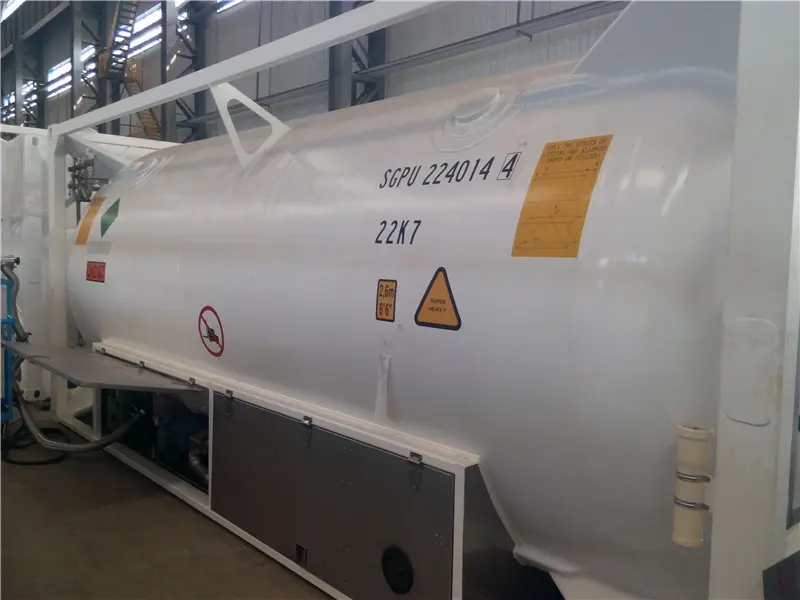
The safety valve on the container is an essential safety device. When the pressure in the tank exceeds the set value, the safety valve will automatically open and release some gas to reduce the pressure and prevent the tank from exploding. The opening pressure of the safety valve is generally set according to the properties of the gas and the design pressure of the tank. The emergency shut-off device is also a key component. In the event of an accident, such as a collision of a transport vehicle or signs of leakage in the tank, the emergency shut-off device can quickly cut off the gas supply channel to avoid large amounts of gas leakage. The pressure gauge is used to display the pressure in the tank in real time. The operator can monitor the changes in gas pressure by observing the pressure gauge to ensure that the pressure is within a safe range.
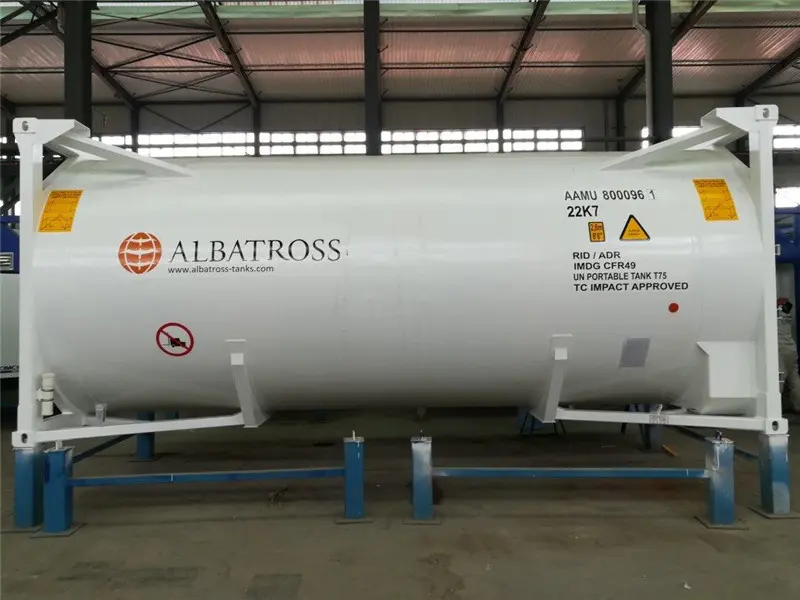
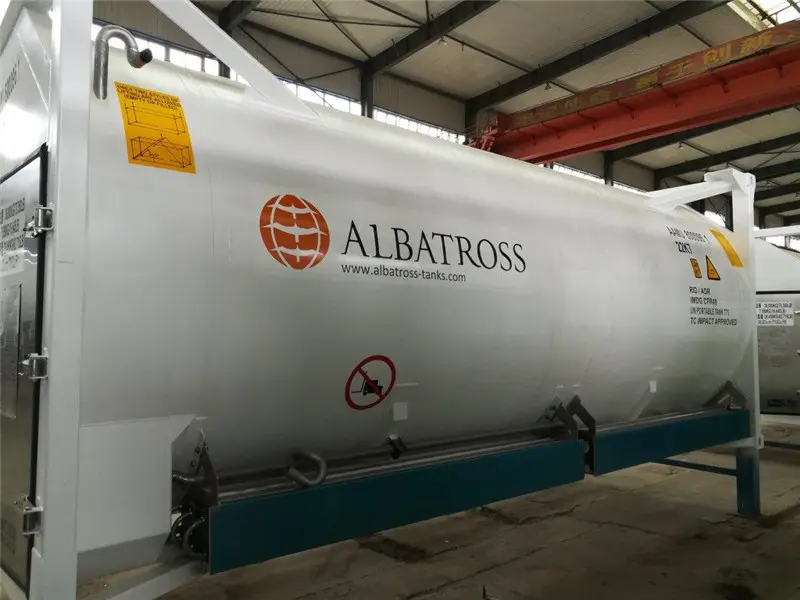
| External Dimension (mm) | 6058 × 2438 × 2591 |
| Water Capacity | 25,000 L |
| Maximum Gross Weight | 34,000 kg / 74,960 lbs |
Compared with traditional gas transportation methods such as cylinder or pipeline transit, gas tank containers boast significantly higher efficiency. Transporting large volumes at once reduces trips and operational costs.
Freely convert between multiple intermodal methods including road, rail, and water for complete door-to-door solutions. This adaptability ensures convenient distribution tailored to versatile logistics needs.
Engineered to stringent international standards and fitted with complete safety systems to mitigate gas leakage or explosion risks. The entire transit cycle is tightly monitored and controlled for total safety.
Significantly lowers packaging material consumption and reduces ecological footprint. Enables centralized bulk supply, improving fuel and energy utilization efficiency while curbing unnecessary waste.
The service life of a gas tank container is influenced by operating and handling environments. Under proper use, regular inspection, and standard maintenance conditions, the design service life can reach approximately 20 to 30 years.
Selection depends on cargo properties, volume, and logistical parameters. Determine if the gas is liquefied, flammable, explosive, or toxic. Liquefied gases require tanks designed to endure specific cryogenic temperatures, regulated pressure levels, and optimal thermal insulation.
Gas tank containers provide superior safety. Tanks are built strictly according to global standards (such as ISO criteria) and statutory safety rules, backed by multi-tier protective systems and stringent procedural monitoring.
Each unit is equipped with automatic safety relief valves to exhaust excess pressure, emergency shut-off valves to rapidly seal flow paths during vehicle collision or seal compromise, and real-time pressure gauges for constant operational tracking.
Wall thickness is calibrated against gas storage pressure and chemical behavior, commonly measuring between 10 mm and 20 mm for high-pressure industrial gases. All welded joints undergo rigorous non-destructive testing (NDT) to prevent micro-leakages.
These standardized containers facilitate seamless multimodal transshipment across road trucks, railway flatcars, and maritime container vessels, delivering an integrated door-to-door supply chain without transloading the cargo itself.