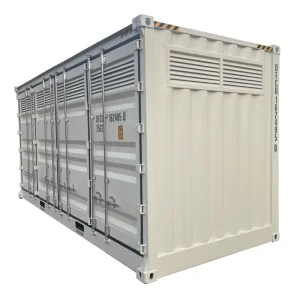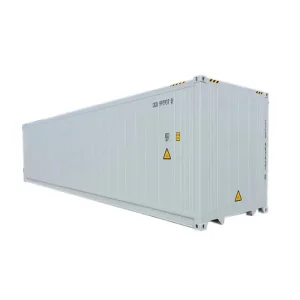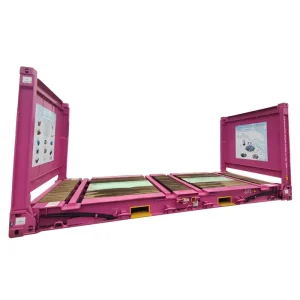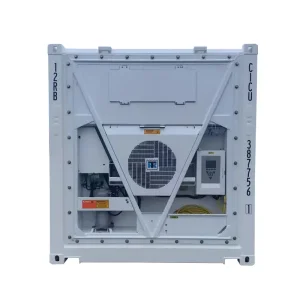
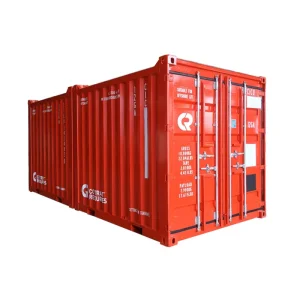
High-integrity dry boxes, heavy-haul baskets, certified reefers, and specialized offshore transport equipment calibrated for rigorous maritime and oilfield standards.
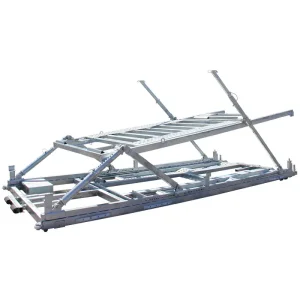
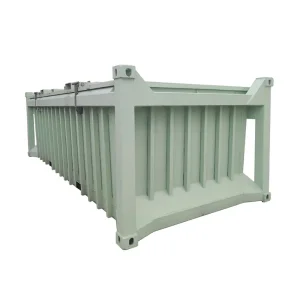
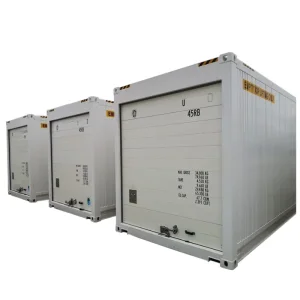
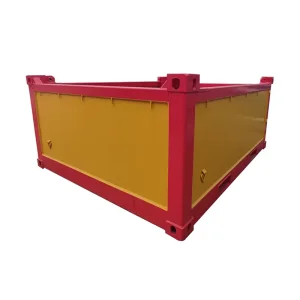
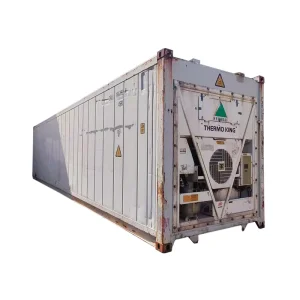
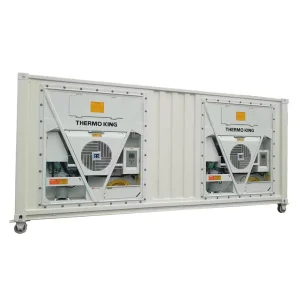
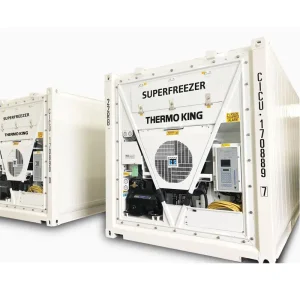
Unlike standard ISO shipping containers engineered purely for static corner casting loads and calm intermodal freight, offshore containers operate in dynamic offshore operating environments with significant heave, pitch, and cross-swell impacts.
Offshore containers are engineered to endure accelerated dynamic forces up to 3.0G in open ocean transits. Pad eyes, primary corner posts, and perimeter rails are finite-element analyzed (FEA) to absorb rapid snatch loads when handled by platform pedestal cranes in sea state 6.
Fabricated using structural fine-grained carbon steels such as S355NL, certified for Charpy V-notch impact toughness values of ≥ 27 Joules at -20°C and -40°C. This eliminates the risk of brittle fracture under freezing Arctic and North Sea operational conditions.
Exposed to severe marine salt-fog spray, our offshore containers receive SA 2.5 automatic shot blasting, followed by high-build zinc-rich epoxy primers, intermediate epoxy tie-coats, and polyurethane topcoats offering a minimum Dry Film Thickness (DFT) of 300+ microns conforming to ISO 12944 C5-M.
| Evaluation Parameter | Standard ISO Shipping Container | DNV 2.7-1 / EN 12079 Offshore Container |
|---|---|---|
| Primary Design Code | ISO 1496-1, CSC Convention | DNV 2.7-1, EN 12079, ISO 10855, IMO MSC/Circ.860 |
| Lifting Configuration | Twistlocks via 4 ISO Corner Castings | Padeyes welded directly to primary structure + 4-leg wire rope sling & shackle assembly |
| Design Acceleration Factor | Static design focus (approx. 1.0G - 1.8G vertical) | Dynamic coefficient up to 3.0G vertical and multi-axis wave motion allowances |
| Impact Resistance (-20°C / -40°C) | Standard Corten steel, not impact batch-tested | Mandatory Charpy V-notch tested steel (S355NL, Q355ND) verified by classification society |
| Inspection & NDT Protocol | Visual & dimensional batch sampling | 100% Visual, MPI, and Ultrasonic Testing (UT) on critical structural pad eye and frame welds |
From ultra-deepwater oil rigs to floating offshore wind farms and heavy subsea pipeline construction, our custom containers serve demanding maritime sectors.
Drill tool baskets, mud logging modular labs, explosive/hazardous goods storage (Zone 1/Zone 2 certified), and high-capacity half-height bins for drill cuttings and casing conveyance between supply bases and mobile offshore drilling units (MODUs).
Custom power conversion cabins, substation maintenance tool containers, and heavy subsea cabling deployment baskets engineered for installation support vessels (WTIV) and offshore wind service operation vessels (SOVs).
Pressurized hyperbaric chamber modules, ROV control cabins, hydraulic umbilical winch containers, and acoustic tracking workstations equipped with certified HVAC systems, acoustic dampening, and custom marine hatchway configurations.
Our smart container manufacturing cluster in Tianjin and Suzhou combines heavy marine fabrication technology with deep port-side logistical efficiency.
High-precision multi-axis CNC laser cutting ensures pad eye tolerances within ±0.2mm, maintaining exact alignment for offshore load-bearing pin configurations and critical welds.
Continuous submerged arc and pulse robotic welding systems ensure full-penetration butt welds on structural hollow sections, delivering uniform heat-affected zones (HAZ) and minimal internal stress.
Certified ASNT Level II / ISO 9712 inspectors perform 100% Visual (VT), Magnetic Particle (MPI), and Ultrasonic Testing (UT) on dynamic lifting points, backed by 2-point and 4-point dynamic proof load tests witnessed by BV/DNV surveyors.
Strategically situated within 100 km of Tianjin Port, our logistics supply chain enables breakbulk and specialized flat-rack maritime shipping worldwide, saving up to 40% on inland haulage costs.
As offshore production accelerates into remote deepwater fields and harsh environments, offshore container design is undergoing a digital and structural shift.
Next-generation DNV offshore units are increasingly integrated with ATEX/IECEx Zone 1 certified low-power satellite sensors. These systems monitor tri-axial impact loads in real time during wave lifts, alerting shipboard and rig logistics managers to snatch loads exceeding design limits.
By shifting to advanced high-yield micro-alloyed steels, our engineering teams are reducing container tare weights by 12% to 18% while maintaining dynamic structural integrity. This directly expands usable offshore payload capacity under restricted crane lifting envelopes.
Transitioning toward solvent-free ultra-high-solids epoxy and graphene-enhanced anti-corrosive coatings designed to meet strict maritime decarbonization and environmental standards without compromising ASTM B117 salt spray life.
Navigating offshore regulatory frameworks demands cross-classification traceability and comprehensive manufacturing dossier verification.
Each production run includes comprehensive documentation: 3.1 Mill Test Certificates (MTC), NDT reports (VT/MPI/UT), Welder Performance Qualification Records (WPQR), coating dry film thickness records, and third-party inspection sign-offs from DNV or Bureau Veritas.
Offshore containers require compatible rigging systems. We supply fully certified 4-leg wire rope or chain sling assemblies conforming to DNV 2.7-1 / EN 12079 / ISO 10855, equipped with safety pin shackles, master links, and individual test load tagging.
Our engineering design desk adapts core structures to meet regional regulations, including NORSOK (Norwegian Continental Shelf), UK HSE offshore safety notices, US Coast Guard 46 CFR, and Australian AS/NZS offshore transport guidelines.
Critical technical checkpoints enterprise buyers should verify when sourcing custom or serial offshore containers from China.
Verify whether the manufacturer provides direct society type approval and individual unit inspection with DNV, Bureau Veritas (BV), ABS, or Lloyds Register (LR).
Align the offshore unit's Maximum Gross Weight (MGW) with deck crane load charts and support vessel handling capabilities, while avoiding unnecessary structural tare mass.
For chemical and fuel storage, verify requirements for stainless steel liners (316L), dynamic bunding/spill containment sumps, and ATEX/IECEx certified earthing terminals.
Choose between anti-slip steel checker plate, hot-dip galvanized open-grid steel grating for liquid drainage, or treated hardwood planks depending on cargo and washing requirements.
Answers to common structural, certification, testing, and operational questions from marine procurement and subsea engineering teams.
Standard ISO containers are designed for mild, predictable handling in container ships and intermodal rail terminals using twistlocks. In contrast, DNV 2.7-1 / EN 12079 offshore containers are engineered for dynamic lifting by supply vessel cranes under harsh open-ocean sea states. They feature high-strength, impact-tested steels (e.g., S355NL tested down to -20°C or -40°C), heavy structural perimeter framing, integrated pad eyes rather than corner castings alone, and mandatory 100% NDT inspection protocols.
Generally, no. Standard ISO container corner castings, wall corrugations, and frame geometries are not designed for offshore crane lifting loads. Welded pad eyes on an uncertified frame cannot meet DNV 2.7-1 requirements without full dynamic re-engineering, structural reinforcement, certified material traceability (3.1 MTCs), and third-party society type verification. Modifying standard boxes rarely meets offshore compliance cost-effectively.
Prototype and serial production units undergo: (1) 2-Point lifting test at 1.5 times the Maximum Gross Weight (MGW); (2) 4-Point lifting test at 2.5 times MGW; (3) Drop test from specified heights based on container class. Non-destructive tests include 100% Visual Inspection (VT), Magnetic Particle Inspection (MPI) on all structural padeye fillet and butt welds, and Ultrasonic Testing (UT) on full-penetration joint preparations.
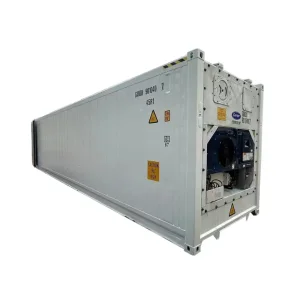
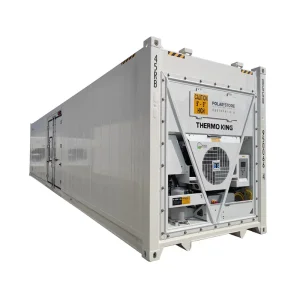
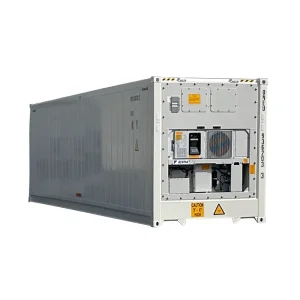
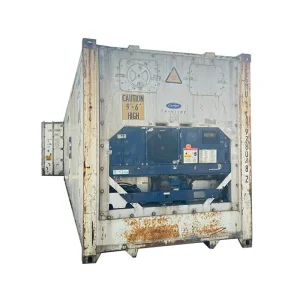
Offshore refrigerated containers combine high-efficiency refrigeration units (e.g., Carrier, Daikin, or Thermo King) with a DNV 2.7-1 primary structural frame. They typically feature heavy-duty 304/316 stainless steel interior liners, food-grade antimicrobial floors, marine-grade condenser coils, IP56 electrical connections, and optional ATEX/IECEx Zone 1/Zone 2 explosion-proof certifications for use near platform hydrocarbon processing areas.
Every delivery includes a complete Manufacturer Data Book (MDB): DNV or BV Type Approval / Unit Certificate, EN 10204 3.1 Mill Test Certificates for primary structural steel, Welder Qualification Test Records (WQTR / WPQR), comprehensive NDT inspection certificates (VT, MPI, UT), coating application reports (ISO 12944 DFT profile), proof load test records, and certification for the 4-leg wire rope sling assembly.
High-cube dangerous goods modules, offshore cold stores, platform frames, and high-performance refrigerated equipment ready for global deployment.