
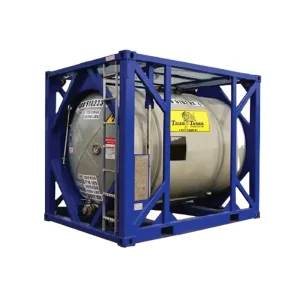
Manufactured under documented DNV certification protocols, featuring certified padeye welds, Charpy V-notch impact tested steel, and specialized door gaskets.
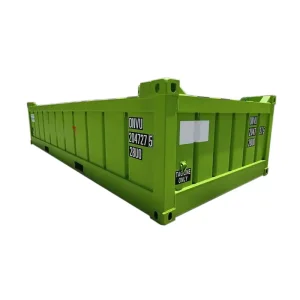
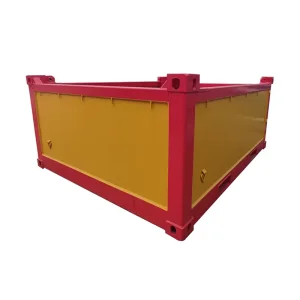
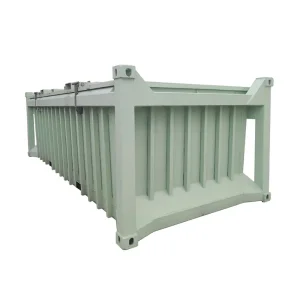
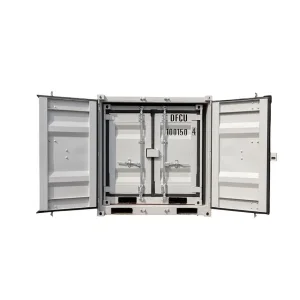
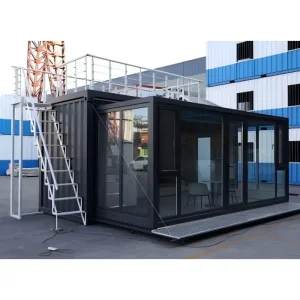

Unlike standard ISO shipping containers engineered purely for static corner casting loads and calm intermodal rail/ship travel, Cargo Carrying Units (CCUs) engineered for offshore platforms operate under severe dynamic mechanical violence. When hoisting cargo between a floating Platform Supply Vessel (PSV) and a fixed or semi-submersible drilling rig in rough seas (Sea State 4 to 6), dynamic snatch loads can apply instantaneous acceleration vectors up to 3.0g to 4.5g onto the container lifting assembly.
As a global offshore container manufacturer founded in 1983 with over four decades of steel fabrication mastery, CIMIC Group engineers each CCU to withstand severe torsional deflection, cyclic fatigue, and sub-zero brittle fracture. We utilize high-yield normalized micro-alloy structural steel (such as EN 10025-4 S355ML) exhibiting verified minimum Charpy V-notch energy impact values of ≥ 27 Joules at -20°C or -40°C. This eliminates catastrophic structural failure during critical Arctic and North Sea marine lifting maneuvers.
Custom-engineered CCUs fulfilling operational safety, dangerous goods compliance, and rugged logistics requirements across major offshore maritime industries.
Continuous rig replenishment requires standardized baskets, mud cutting skips, half-height ore containers, and heavy-duty tubular transport frames designed for non-stop deck shuffling.
Specially outfitted IMO 1/Type 4 tank containers and side-open dangerous goods containers built for safe chemical batch dosing, fuels, drilling fluids, and hazardous wastes.
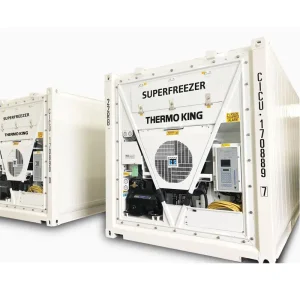
Custom equipment shelters, deep freezer galley reefer modules, and modular crew spaces engineered to provide critical support during offshore wind turbine erection and maintenance.
How cutting-edge structural metallurgy, IoT digital telemetry, and eco-friendly protective chemistry define next-generation offshore container manufacturing.
Migration from standard structural grades toward weight-optimized micro-alloyed steels with yield strengths exceeding 460 MPa. Reduced tare weights permit higher payload capacities without sacrificing elastic resilience or Charpy toughness under cyclic wave-slamming conditions.
Integrated solar-harvesting satellite telemetry units providing real-time data on 3-axis lifting shock loads, continuous door tamper alerts, internal reefer temperature gradients, and chemical vapor detection, linking vessel CCU manifests to onshore cloud control dashboards.
Transitioning beyond traditional solvent-heavy zinc epoxies to zero-VOC waterborne zinc silicates and graphene-augmented polyurea coatings. Achieves ISO 12944 CX ultra-high marine corrosion durability ratings while cutting manufacturing carbon footprint by up to 34%.
Stringent verification from mill steel certifications to non-destructive testing (NDT) and classification society surveying ensure seamless commissioning worldwide.
Every offshore container is supplied with an official Manufacturer's Data Book (MDB), encompassing mill certificates, welding procedure specifications (WPS), PQR records, welder qualifications, and official classification witness sign-offs.
Integrated padeyes are 100% inspected via Ultrasonic (UT) and Magnetic Particle (MPI) non-destructive testing to verify zero subsurface defects. Supplied complete with proof-load tested DNV-certified wire rope or chain sling bridles.
Located within 100 km of Tianjin Port, our main production yards facilitate expedited container stuffing, custom customs bonded processing, and direct crane transfer onto international breakbulk and container container vessels.
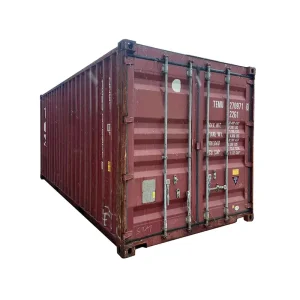
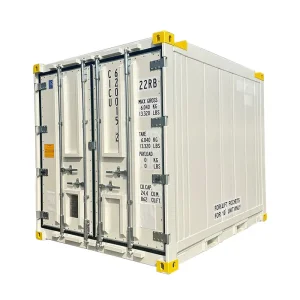
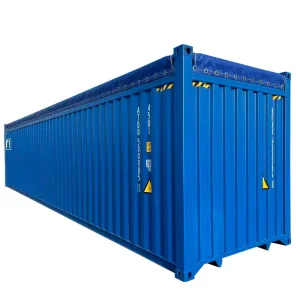
Discover our engineered product portfolio spanning offshore silt baskets, cold-chain reefers, side-door units, and flat-rack platform container systems.
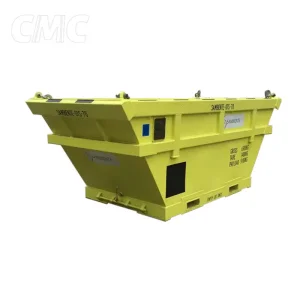
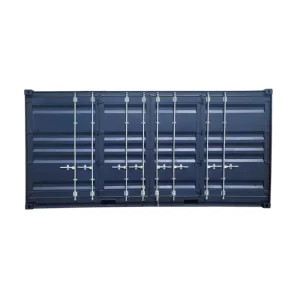

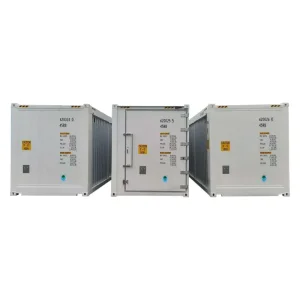
Authoritative technical answers to common queries regarding DNV certification, offshore lifting slings, steel grades, and global delivery schedules.
ISO standard shipping containers are designed for intermodal transport with top/bottom corner casting lifting, assuming calm environments and even load distribution. In contrast, DNV 2.7-1 (and ISO 10855) containers are specifically engineered and destructively tested for dynamic snatch lifts from moving supply vessels at sea. They feature structural padeyes welded into the main frame, Charpy-tested low-temperature steels, primary structure redundancy, and certified four-leg wire rope sling sets.
We strictly utilize normalized structural fine-grain steels such as EN 10025 S355J2, S355K2, or S355ML. Critical primary structure members (corner posts, bottom side rails, header beams, and padeyes) require verifiable Charpy V-notch impact toughness values of at least 27 Joules at design temperatures down to -20°C or -40°C to prevent brittle fracture in sub-zero offshore waters.
Yes. Our offshore containers are supplied complete with matched 4-leg certified wire rope or chain sling assemblies, including top master links and certified bow shackles compliant with DNV 2.7-1 Section 8. Each sling assembly is serial-matched to the CCU and documented in the Manufacturer's Data Book (MDB).
Absolutely. While we offer standardized 10ft, 20ft, and half-height designs, our Suzhou and Tianjin engineering teams specialize in bespoke ODM builds. We routinely fabricate tubular cargo baskets up to 60ft (18.3m) in length, mud cutting skips with vacuum seals, and specialized hazardous chemical workshops tailored to unique vessel and deck footprint layouts.
100% of padeye-to-structure full penetration butt welds undergo ultrasonic testing (UT) and magnetic particle inspection (MPI). All essential primary structural welds undergo 100% visual inspection (VT) and random MPI in accordance with ISO 17638. Production units also undergo 2.5x Max Gross Weight dynamic drop and vertical 2-point lifting tests witness-certified by third-party classification societies (DNV, BV, or LR).
Standard catalog units (10ft offshore CCUs, half-height ore boxes, and certified baskets) maintain rapid production cycles of approximately 3 to 4 weeks. Custom engineered enclosures with fireproofing (A60) or specialized internal plumbing/electrical fixtures require 6 to 8 weeks including classification society prototype approvals. Units load directly at nearby North China seaport terminals.