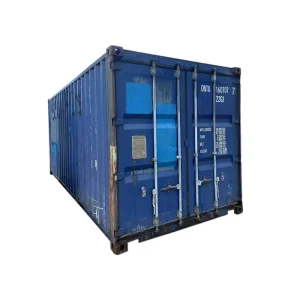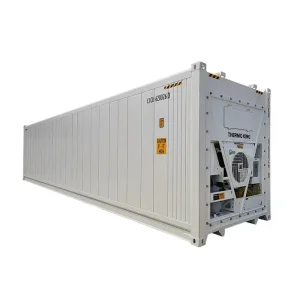
Famous New 40ft High-Cube Certified Reefer Shipping Cargo Container Factory, Pricelist
View Specifications
Immediate terminal release and factory remanufactured units ready for CSC-plated maritime export, static storage, or heavy industrial repurposing.
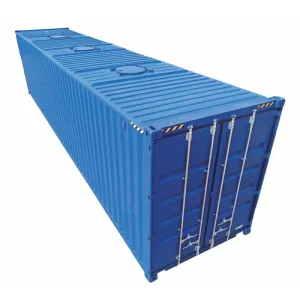
Navigating international supply chain equilibria, structural degradation rates, and secondary remanufacturing economics in modern logistics engineering.
In international maritime trade, ISO standard containers operate under harsh marine boundary layers characterized by severe saline aerosols, cyclic thermal shock, and relentless mechanical stresses caused by dynamic racking and multi-tier vessel stacking. Shipping lines typically retire container units after 10 to 15 years of active intercontinental circulation. At this juncture, the assets transition from primary tier-1 carrier manifests into the secondary industrial ecosystem.
The economic calculus governing used shipping containers hinges entirely upon residual steel mass integrity, metallurgical condition, and remaining design life. Rather than scrapping Corten-rich structural profiles, advanced industrial refurbishment facilities restore structural integrity, yielding heavy-duty modular units at 35% to 55% of the carbon footprint and cost of newly rolled steel fabrications.
The post-pandemic trade imbalance has created severe structural surplus depots across consumer-importing terminal networks (North American West Coast, Rotterdam-Antwerp axis, UK Thames gateway) while generating acute dry and reefer supply bottlenecks across export-manufacturing gateways in East Asia. As shipping lines seek to avoid non-revenue empty repositioning voyages, direct sourcing from coastal hub factories in China has emerged as an authoritative procurement methodology.
Industrial end-users, civil infrastructure contractors, and renewable energy integrators bypass regional brokerage markups by securing inspected, recertified containers directly from coastal factory yards equipped with computerized FEA load analysis, automated shot-blasting, and robotic welding bays.
De-mystifying procurement ambiguity via standardized international maritime inspection criteria and structural degradation tolerances.
| Classification Grade | Structural Tolerances (Roof / Sides) | Floor & Crossmember Thresholds | CSC Plate Status | Recommended Deployment Vectors |
|---|---|---|---|---|
| IICL-6 (Institute of International Container Lessors) | Dent depths ≤ 20mm; Zero cross-corrugation buckling; Flawless corner castings & header rails. | Laminated hardwood/bamboo floor ≥ 28mm thickness; maximum 1.5mm gouge; oil/chemical free. | Valid / Fully Active for immediate multi-modal sea freight interchange. | International intermodal transit, high-value mechanical equipment housing, high-cube modular architecture. |
| Cargo Worthy (CW) | Minor surface oxidation; non-penetrating corrugation deformation ≤ 35mm; weather-tight gaskets. | Sound transverse C-channel joists; localized non-structural scuffs allowed; dry integrity certified. | Eligible for re-inspection and ACEP/CSC renewal sticker issuance. | Cross-border project cargo, bulk agricultural movement, overseas temporary worksite facilities. |
| Wind & Watertight (WWT) | Elastic gasket sealing intact; light rust scale; cosmetic dents acceptable; zero light penetration. | Sound weight-bearing crossmembers; patch repairs executed using Corten-A steel inserts. | Expired CSC plate; invalid for high-seas vessel cellular guide stacking. | Decentralized industrial storage, agricultural equipment sheds, static cold-chain satellite lockers. |
| As-Is / Repurposing Grade | Substantial structural fatigue; corner post deflection or side panel punctures requiring weld remediation. | Floor segments require replacement or secondary marine ply overlayment. | Decommissioned; CSC permanently struck or removed. | Steel reclamation, low-budget structural workshops, perimeter ballistic retaining barriers. |
Unlike standard carbon mild steel (Q235), genuine ISO container panels are pressed from JIS G3125 SPA-H alloyed steel containing copper, chromium, and nickel. When exposed to outdoor ambient cycles, it generates a dense passivation layer of iron hydroxide, retarding internal oxidation by up to 800%.
Every container returned to sea circulation requires verification under the International Convention for Safe Containers (CSC). Certified Chinese manufacturing yards execute rigorous hydraulic payload tests (1.8R gross capacity) to validate corner post shear integrity and racking stability.
Prior to shipment or modification, container shells undergo high-lumen optical containment checks inside darkened examination chambers, paired with ultrasonic door gasket seam verification to guarantee zero micro-vapor infiltration for high-sensitivity logistics.
How integrated manufacturing infrastructure, deep-water port proximity, and steel ecosystem concentration provide unmatched agility in container refurbishment.
CIMIC production facilities in Tianjin and Suzhou are strategically positioned ~100 km from the automated berths of Tianjin Port and Shanghai/Taicang waterways. This proximity slashes inland drayage costs, enables direct yard-to-berth transfers within 24 hours, and ensures scheduled vessel sailings without demurrage penalties.
Refurbishment is not merely repainting. Our dedicated industrial lines utilize automatic shot-blasting bays to eliminate oxidized mill scale down to Sa 2.5 cleanliness, accompanied by 2-part zinc-rich epoxy primers, automated robotic welding rigs, and polyurethane thermal coating spray systems.
Managing inventory across multiple terminal nodes allows immediate batch sourcing of 50 to 500 standardized units. Buyers eliminate protracted rolling mill lead times while retaining access to high-specification Corten plate inventories for bespoke modification projects.
Deploying used container monocoques across advanced industrial installations, agricultural processing hubs, and energy transition networks.
Reinforced 20ft and 40ft HC containers repurposed into Battery Energy Storage System (BESS) enclosures. Engineered with non-combustible rockwool insulation (A1 fire rating), automatic aerosol fire suppression, and floor deflection bracing capable of sustaining 25-ton lithium-iron-phosphate (LFP) rack arrays.
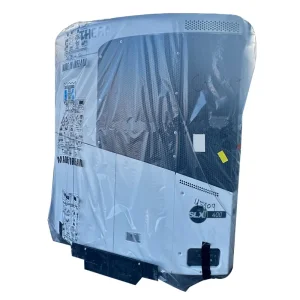
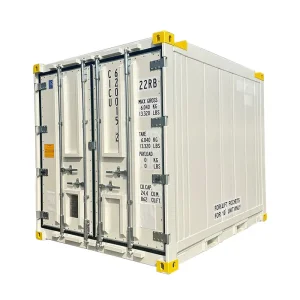
Refurbished Carrier, Daikin, and Thermo King refrigerated units converted into agricultural harvest precooling stations. Custom side-access roll-up doors or air curtains enable rapid forklift pallet ingress while preserving an internal isotherm across -30°C to +25°C ambient profiles.
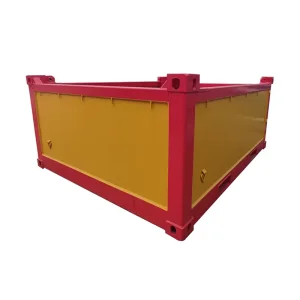
Converting structural used steel into certified DNV 2.7-1 / EN 12079 offshore cargo carrying units (CCUs). Outfitted with calibrated 4-leg wire rope lifting slings, impact-resistant padeyes, and offshore paint systems certified to ISO 12944 C5-M extreme marine durability standards.
Multi-unit combined complexes for mining camps, military field hospitals, and high-density workforce accommodations. Modular containers provide load-bearing stacking capacity up to three stories without auxiliary structural steel framing.
The intersection of IoT telematics, structural digital twins, and cradle-to-cradle carbon validation across remanufactured shipping container assets.
Next-generation secondary container yards are deploying LIDAR structural scanning coupled with cloud-based Finite Element Analysis (FEA). This creates an immutable digital passport detailing localized steel fatigue, remaining elastic limit, and exact structural loading thresholds before remanufacturing begins.
The conversion of legacy diesel-powered reefer containers into variable-frequency smart micro-compressor chillers equipped with integrated rooftop PV film arrays. These units operate autonomously off-grid, ensuring continuous cooling for remote pharmaceutical or perishable food distribution.
In accordance with the EU Carbon Border Adjustment Mechanism (CBAM) and Scope 3 greenhouse gas reporting standards, our remanufactured containers supply audited lifecycle assessment (LCA) documentation confirming substantial carbon offset savings compared to newly rolled ore-derived products.
Critical legal and technical checkpoints for international procurement teams executing container deliveries from China to overseas operations.
Exporting used containers loaded with commercial cargo under Shipper Owned Container (SOC) provisions avoids carrier demurrage and per-diem detention fees at congested destination terminals. Upon discharge, consignees retain asset ownership for static warehousing or local liquidation.
Strict biosecurity protocols demand that container timber flooring comply with quarantine standards against pest infestation. Units exported through our yards receive heat treatment (HT) or fumigation certified in compliance with Australia Department of Agriculture, Fisheries and Forestry (DAFF) biosecurity regulations.
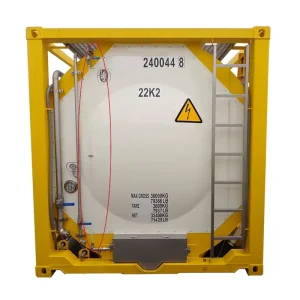
For ISO tank containers designated for alcohols, liquefied gas, or corrosive chemicals, our export protocols verify current IMDG, ADR/RID, ASME VIII, and US DOT compliance alongside hydrostatic 5-year periodic pressure testing documentation signed by Bureau Veritas (BV) or Lloyd's Register.
Direct answers from our senior engineering team regarding fleet acquisition, refurbishment tolerances, and customs clearance procedures.
Every used container designated for sea transit is inspected according to IICL-6 or Cargo Worthy (CW) standards by certified maritime surveyors. Inspection encompasses ultrasonic wall-thickness tests on the corner posts, optical inspection for any structural deformation exceeding 30mm, examination of door locking bars, hinges, and cam keepers, and testing the continuous elasticity of EPDM perimeter door gaskets. Units receive an authentic surveyor report and a valid CSC plate endorsement sticker before port gate-in.
Corten-A (commonly standardized as JIS G3125 SPA-H) is a low-alloy atmospheric corrosion-resistant steel containing Carbon (≤0.12%), Silicon (0.25-0.75%), Manganese (0.20-0.50%), Phosphorus (0.07-0.15%), Sulfur (≤0.03%), Copper (0.25-0.55%), Chromium (0.50-1.25%), and Nickel (≤0.65%). When exposed to airborne salt and humidity, the alloy develops a dense, stable patina consisting of insoluble α-FeOOH that inhibits oxygen diffusion into the base metal, extending operational lifespan 4 to 8 times beyond untreated carbon steel.
Monocoque shipping containers gain their structural load capacity from the interaction between bottom rails, top rails, corrugated side walls, and corner posts. When opening cutouts for windows and doors, structural tube framing (typically 50x50x3.0mm RHS) must be perimeter-welded to prevent roof sagging. Additional adaptations include abrasive blasting to remove toxic maritime floor chemicals, application of non-volatile interior zinc coatings, high-density closed-cell spray polyurethane foam insulation (R-value ≥ 21), and integrated electrical conduit channels conforming to localized building codes.
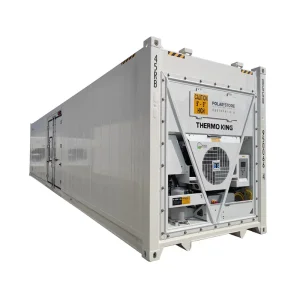
Refurbishing reefer containers involves a strict 4-stage protocol: (1) Pressure washing of the internal T-bar floor and stainless-steel/aluminum interior lining; (2) Pre-Trip Inspection (PTI) execution, running automated self-diagnostics on Carrier Transicold, Thermo King, or Daikin cooling loops; (3) Compressor overhaul, leak detection with helium mass spectrometry, oil replacement, and refrigerant top-up (R134a or R452A); and (4) Continuous 24-hour temperature pull-down logging down to -25°C to verify thermostat calibration and heat-exchange efficiency under sustained electrical draw.
Yes. Used ISO tank containers (typically constructed from 316L stainless steel within a carbon steel external framework) must undergo a 2.5-year intermediate or 5-year periodic statutory inspection in compliance with Chapter 6.7 of the IMDG Code. This involves hydrostatic shell testing to 6.0 bar, pneumatic testing of safety relief valves (calibrated at 4.4 bar), micro-polishing of internal surfaces to an Ra ≤ 0.8μm finish to remove previous cargo residues, and issuance of a cleanliness Certificate of Cleanliness by an accredited independent testing agency.
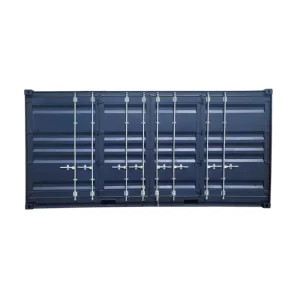
Engineered tank containers, vehicle racks, double-door dry cargo boxes, and certified cold-chain hardware manufactured to strict international parameters.