1 / 5
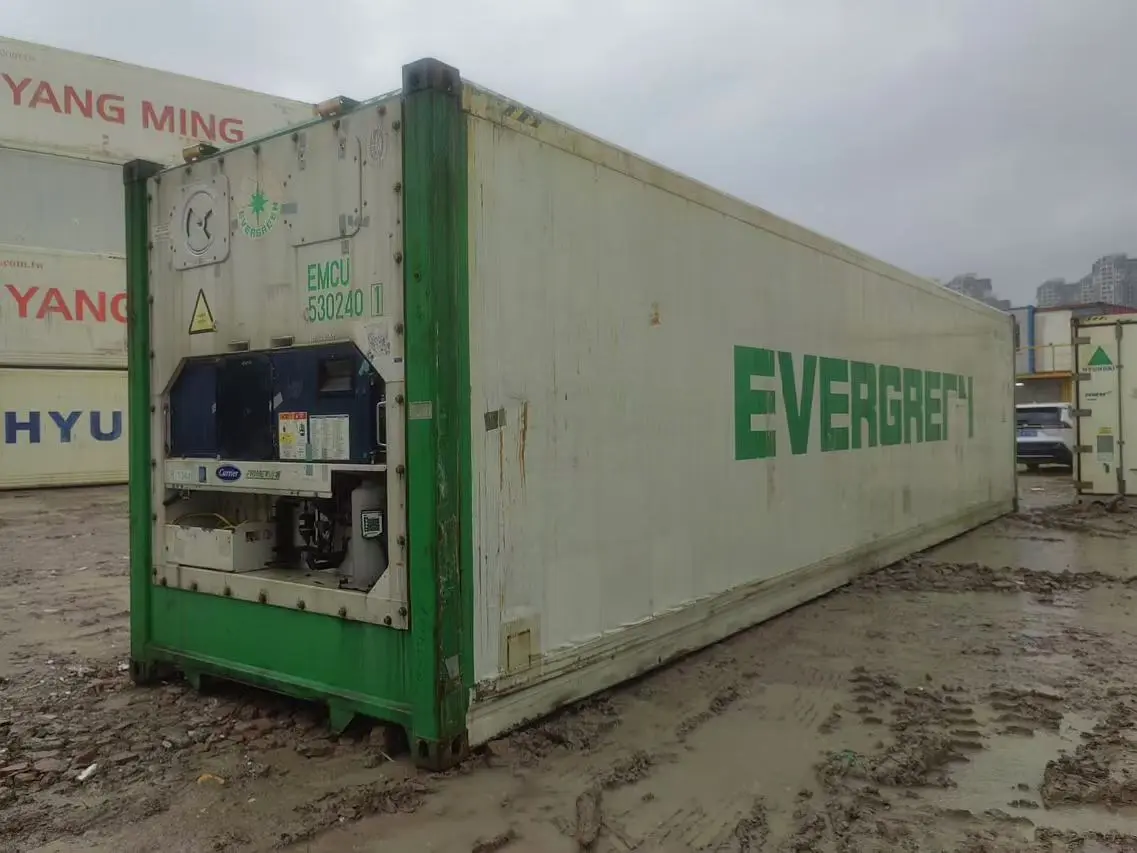
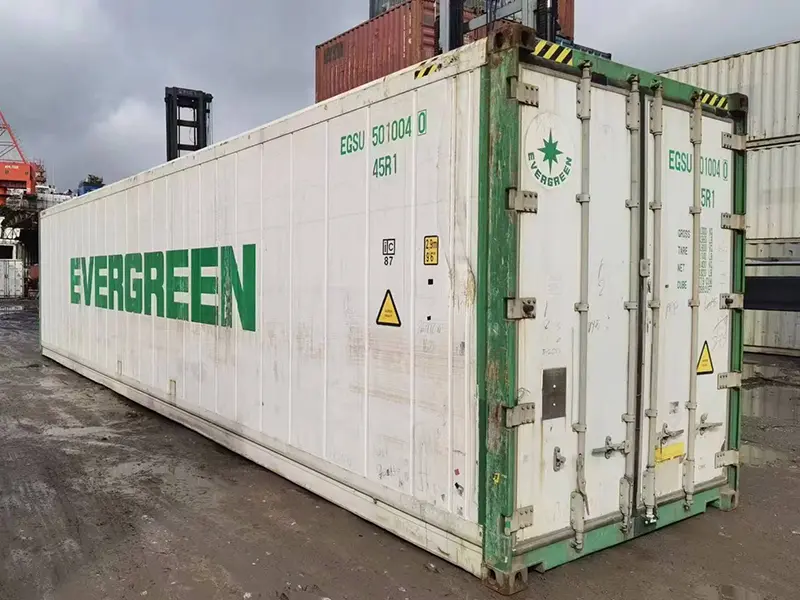
| External Dimension (MM) | 12192 * 2438 * 2896 |
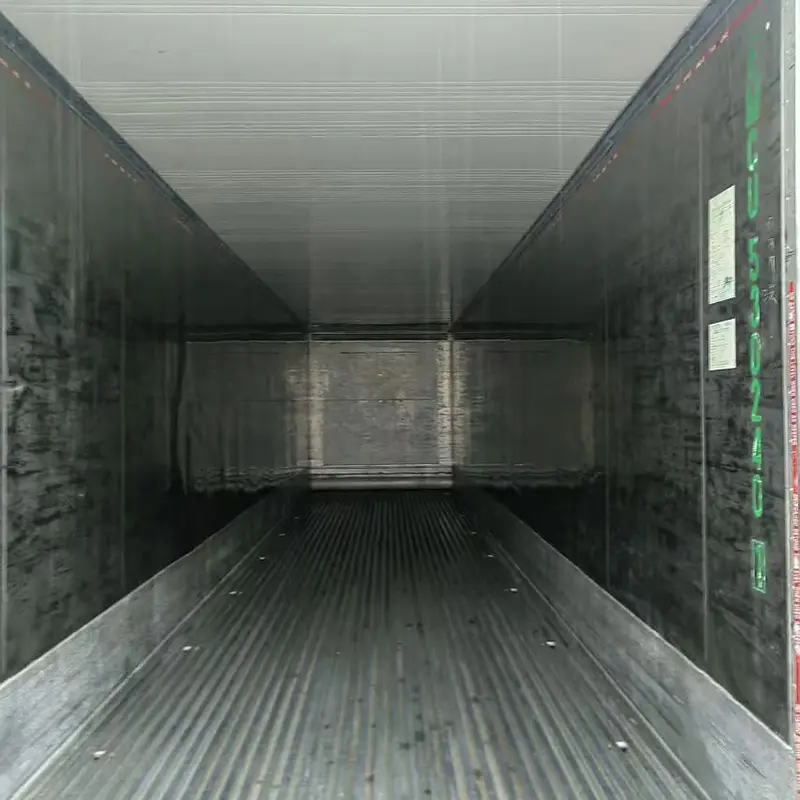
| Internal Dimension (MM) | 11590 * 2294 * 2554 |
| Door Opening Width | 2290 mm |
| Door Opening Height | 2569 mm |
| Maximum Gross Weight | 34,000 kg / 74,960 lbs |
| Maximum Payload | 29,250 kg / 64,490 lbs |
| Tare Weight (±2%) | 4,210 kg / 9,280 lbs |
Compared with purchasing a brand-new refrigerated container, the acquisition cost of a second-hand reefer unit is significantly lower. This delivers exceptional capital efficiency and budget relief for small to medium enterprises and industrial operators.
Engineered for swift relocation, these modular units adapt effortlessly across changing urban or remote logistical scenarios. They offer instant plug-and-play installation for temporary on-site cold storage or agile supply chains.
Constructed with heavy-gauge corten steel and industrial-grade refrigeration components, these containers retain outstanding durability. With standardized maintenance, they consistently operate for years, yielding high return on capital investment.
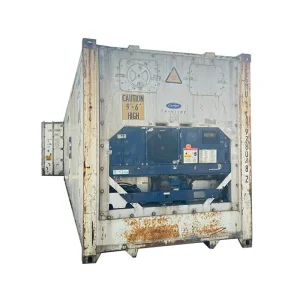
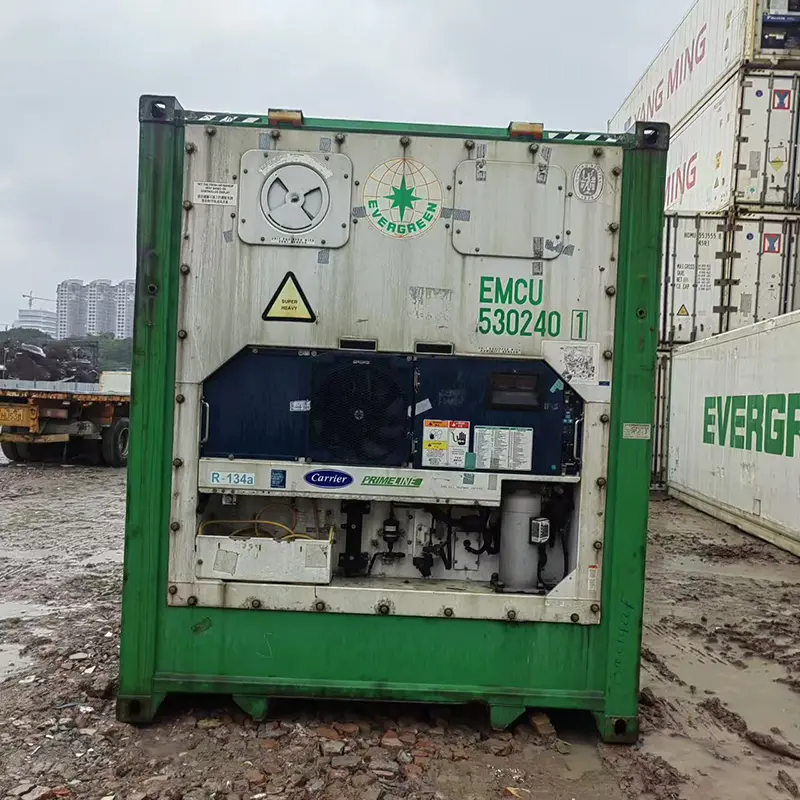
The structural body and internal condition require a full assessment. Exterior inspection entails confirming the four corner posts, panels, and corner castings remain structural and free of extensive corrosion or frame deformation. The interior must be inspected for contamination, odors, lining punctures, and floor delamination. Additionally, run a complete pre-trip inspection (PTI) on the cooling system to verify smooth compressor startup, efficient refrigeration cycle, and accurate temperature management.
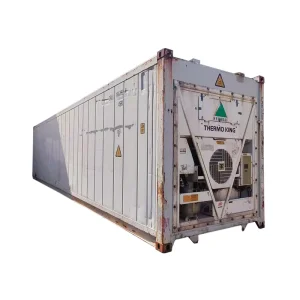
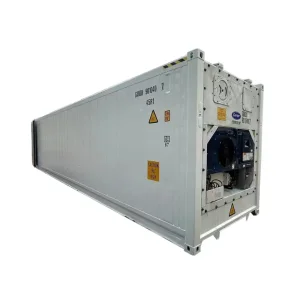
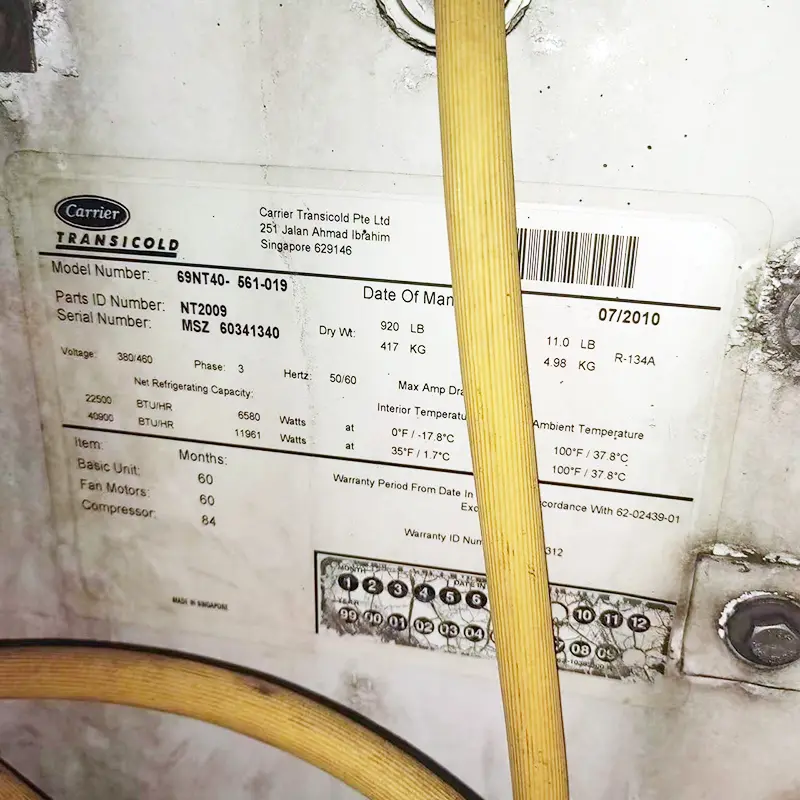
Pricing for second-hand refrigerated units is determined by several core variables: external container dimensions, age, physical wear grade, aesthetic condition, and the integrated refrigeration unit brand (e.g., Carrier, Thermo King, Daikin). Please reach out directly with your project specifications for an accurate quotation.
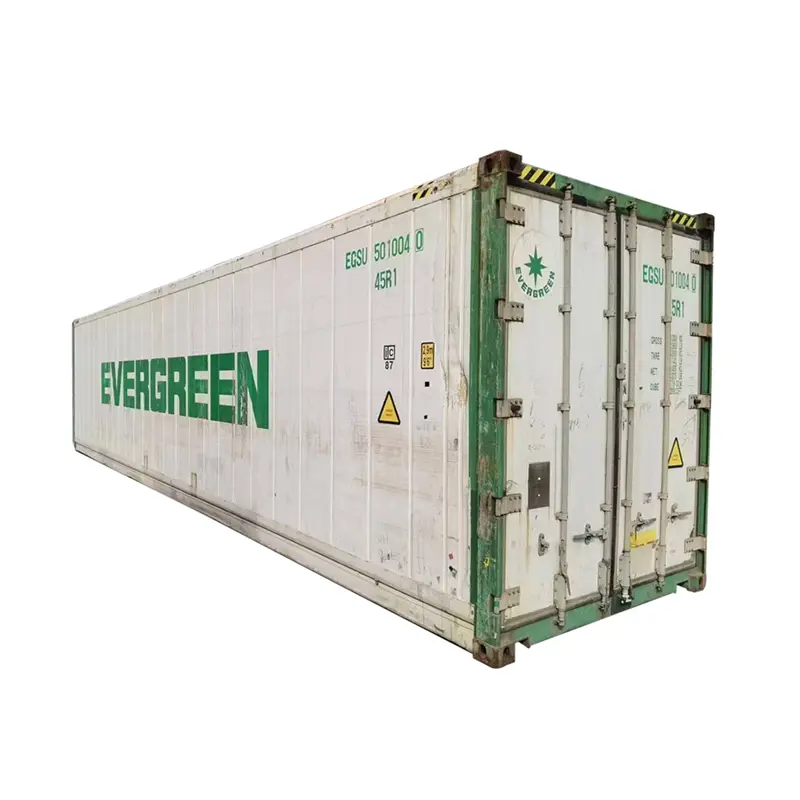
The standard external dimensions are 12,192 mm (L) * 2,438 mm (W) * 2,896 mm (H). The usable internal storage space measures 11,590 mm (L) * 2,294 mm (W) * 2,554 mm (H), featuring a door opening clearance of 2,290 mm width and 2,569 mm height.
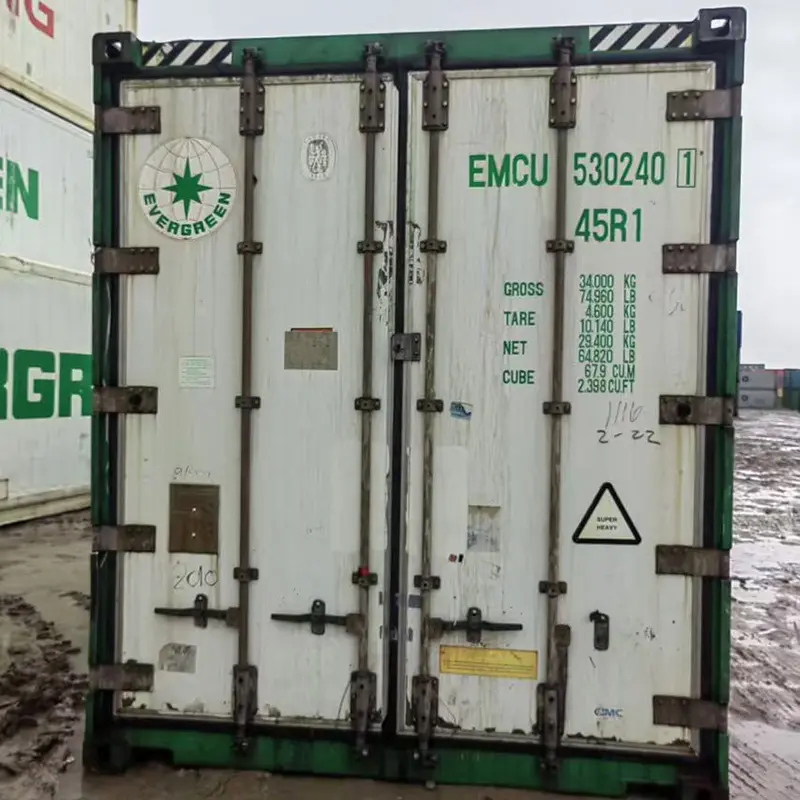
The container has an engineered Maximum Gross Weight rating of 34,000 kg (74,960 lbs). Given an average Tare Weight of 4,210 kg (9,280 lbs), it delivers an allowable Maximum Payload capacity of up to 29,250 kg (64,490 lbs).
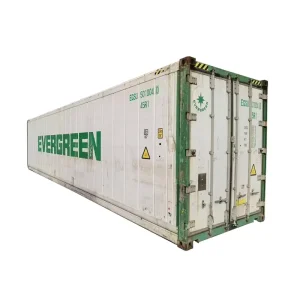
International maritime logistics regulations maintain strict safety protocols regarding sea-worthiness, structural load ratings, and handling certifications. After 10 to 15 years, shipping lines phase them out of deep-sea transport cycles, making these units available as cost-effective, heavy-duty structures for static cold storage and regional logistics.
Despite being retired from rigorous international oceanic voyages, the heavy-duty corten steel framework and reinforced walls are engineered for harsh environments. When placed on level ground and maintained properly, a used refrigerated container can deliver stable continuous operation for many years.