
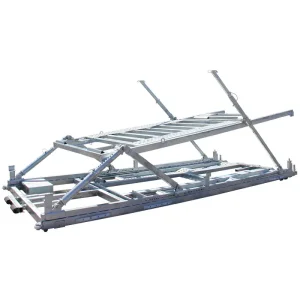
Explore our frontline ISO-certified 40ft refrigerated containers, cryogenic vessels, and specialized vehicle racks built to stringent maritime classification standards.
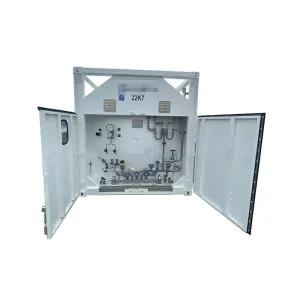
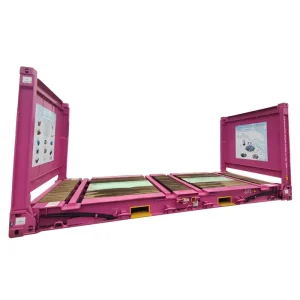
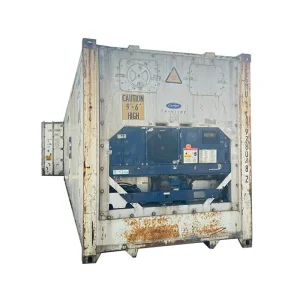
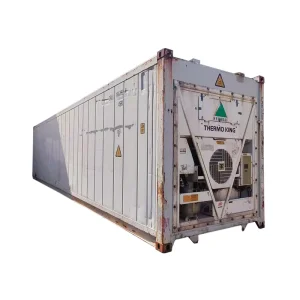
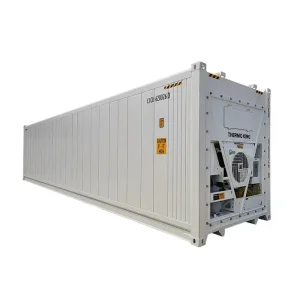
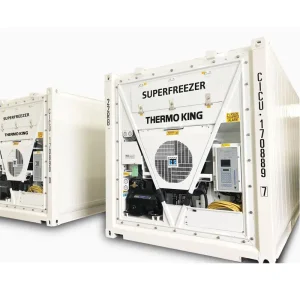
A comprehensive examination of thermodynamic efficiency, structural integrity, Corten steel fabrication, and HVAC refrigeration unit configurations for global intermodal operators.
Fabricated using atmospheric corrosion-resistant SPA-H Corten steel for exterior corner posts, top/bottom side rails, and end frames. Engineered to endure continuous saltwater mist exposure, 9-high fully loaded stacking at sea, and racking forces of 150 kN.
High-pressure in-situ polyurethane injection foaming achieves an ultra-low thermal dissipation rate. Employs non-ozone depleting cyclopentane foaming agents creating an impermeable seal between the Corten outer wall and interior food-grade stainless steel.
Incorporates heavy-duty extruded aluminum T-section floor profiles engineered for optimal bottom-air discharge. Cold air flows continuously through the cargo stack floor channels, eliminating hot spots across 40 feet of dense palletized produce or pharmaceuticals.
How concentrated industrial clusters in the Tianjin Bohai Rim and Yangtze River Delta deliver unmatchable price-performance ratios and rapid scaling for global shipping lines.
China accounts for over 85% of worldwide intermodal container fabrication. Our proximity to the specialized steel strip mills of Baosteel and HBIS allows Tianjin Cimic Imp&Exp Co., Ltd. to source hot-rolled weather-resistant SPA-H Corten coils with zero domestic freight markup. Similarly, large-scale direct supply contracts with domestic isocyanate and polyol producers ensure that our high-density polyurethane insulation cores are insulated from global commodity price spikes, translating into factory quote savings of 18% to 26% compared to non-integrated production hubs.
Our production facilities in Tianjin and Suzhou utilize multi-axis laser cutting, continuous automated robotic seam welding for container side-panels, and hermetic vacuum foaming presses. Automated shot-blasting machines clean steel surfaces to Swedish Standard Sa 2.5 before robotic paint lines apply triple-layer marine-grade coatings (zinc epoxy primer, polyurethane intermediate coat, and acrylic topcoat). This precision manufacturing process guarantees dimensional tolerances under ±1.5mm across the entire 40ft structure, ensuring leak-free performance and lower life-cycle maintenance costs.
Evaluate exact volumetric capacities, structural payloads, and thermodynamic parameters required for maritime, rail, and stationary cold-storage deployments.
| Specification Parameter | 40 Ft Standard Reefer (8'6") | 40 Ft High-Cube Reefer (9'6") | Compliance & Regulatory Standard |
|---|---|---|---|
| External Dimensions (L × W × H) | 12,192 mm × 2,438 mm × 2,591 mm | 12,192 mm × 2,438 mm × 2,896 mm | ISO 668 Series 1 Freight Containers |
| Internal Dimensions (L × W × H) | 11,583 mm × 2,286 mm × 2,250 mm | 11,583 mm × 2,286 mm × 2,555 mm | Usable Load Envelope Tolerance ±2mm |
| Internal Cubic Volume | 59.5 m³ (2,101 cu. ft.) | 67.6 m³ (2,387 cu. ft.) | Increased +13.6% Payload Volume in HC |
| Maximum Gross Weight (MGW) | 34,000 kg (74,950 lbs) | 35,000 kg (77,160 lbs) | CSC International Safety Convention |
| Tare Weight (Incl. Cooling Machinery) | 4,420 kg (9,740 lbs) | 4,680 kg (10,320 lbs) | Depending on Unit Brand Selection |
| Net Cargo Payload | 29,580 kg (65,210 lbs) | 30,320 kg (66,840 lbs) | TIR Approved Customs Load Rating |
| Temperature Regulation Range | -30°C to +30°C (-22°F to +86°F) | -35°C to +30°C (-40°C on Ultra-Freezers) | Continuous Precision ±0.25°C Setpoint |
| Power Consumption / Voltage | 380/460V 3-Phase, 50/60Hz ±10% | 380/460V 3-Phase, 50/60Hz ±10% | CEE 17 / ISO 1496-2 Receptacle Pinout |
| Refrigerant Gas Options | R-134a / R-404A / R-452A | R-134a / R-513A / Low-GWP CO2 (R-744) | EPA SNAP & EU F-Gas Regulation 517/2014 |
Ensuring frictionless international intermodal operations through multi-agency classification approvals, customs transit validations, and stringent cold-treatment verifications.
Every newly built 40ft reefer undergoes individual inspection by world-leading classification bureaus such as Bureau Veritas (BV), Det Norske Veritas (DNV), or ABS. Structural load tests verify 9-tier vessel cell stacking capabilities and dynamic hoisting safety margins under CSC regulations.
Our 40ft reefer reefers are pre-engineered with built-in ports and internal conduits for USDA Cold Treatment probe installations. These sensors monitor and record pulp temperatures throughout ocean transit to eradicate agricultural pests like the Mediterranean fruit fly without chemical fumigation.
Built with tamper-evident seal housings, continuous door-hinge pin welds, and Customs Convention on Containers (CCC/TIR) compliance. Insulation performance satisfies ATP standards (Agreement on the International Carriage of Perishable Foodstuffs), allowing uninterrupted cross-border trucking throughout Europe and Central Asia.
Aligning capital expenditures, total cost of ownership (TCO), and technical modularity across four major buyer sectors.
Global box leasing companies (Textainer, Triton, Seaco) and tier-1 ocean carriers (Maersk, MSC, CMA CGM) demand high intermodal interchangeability, global spare parts accessibility, high resale values, and standard telemetry bus interfaces.
Biomedical shippers transporting vaccines, insulin, blood plasma, and active pharmaceutical ingredients (APIs) require strict WHO Good Distribution Practice (GDP) validation, secondary backup power units, ±0.5°C temperature uniformity, and continuous automated cloud logging.
Exporters of high-value berries, avocados, bananas, and deep-frozen tuna require Controlled Atmosphere (CA) nitrogen flush systems, ultra-low sub-zero temperatures down to -60°C, and rapid heat extraction to slow down produce respiration and maintain shelf-life across multi-week maritime voyages.
Clean energy EPC contractors utilize customized 40ft reefer shells for Battery Energy Storage Systems (BESS). The insulated Corten shell, along with precision HVAC chilling, provides an explosion-proof, temperature-controlled environment for large-scale lithium iron phosphate (LFP) energy racks.
How artificial intelligence, IoT telematics, low-GWP refrigerants, and vacuum insulation panels (VIP) are reshaping international cold chains.
Modern 40ft reefers come equipped with factory-integrated 4G/5G and satellite telematics modules (ORBCOMM, Emerson Cargo Solutions). Dispatchers monitor real-time supply air, return air, humidity, compressor operating hours, and geofencing alerts, enabling predictive maintenance that prevents mid-voyage cargo loss.
In response to the Kigali Amendment and European F-Gas regulations, our factory builds units configured for non-ozone depleting refrigerants like R-513A (GWP 573) and advanced natural CO2 systems (Carrier NaturaLINE, GWP 1). These deliver high cooling efficiency in high-ambient tropical environments while drastically reducing carbon taxation liabilities.
By embedding aerogel-filled Vacuum Insulation Panels (VIP) within the polyurethane core walls, our engineering teams have reduced thermal wall thickness by 25mm. This design boosts internal usable cubic capacity without compromising structural integrity or insulation factors, maximizing container fill rates for high-cube operations.
From trans-continental rail routes to coastal fisheries and remote mining projects, examine the specialized environments where our engineering ensures performance.
Deployments along the China-Europe Railway Express (Yiwu/Chongqing to Duisburg/Rotterdam) face temperature swings ranging from -40°C in Siberian winter to +35°C in Central Asia. Our units use insulated shells paired with diesel clip-on gensets and automatic dual-heating circuits, keeping electronic components, pharmaceuticals, and wine safely inside their required temperature envelopes without freezing.
Deep-sea squid and sashimi tuna trawlers operating in the South Pacific, West Africa, and Indian Ocean rely on 40ft ultra-deep freeze reefers (-60°C). Quick on-dock flash freezing right off the processing vessel prevents cellular breakdown, lock in protein textures, and preserves market pricing upon arrival in East Asian and European markets.
Agribusiness operations across South America and Southeast Asia use stationary 40ft High-Cube reefers directly at the field edge. These units serve as mobile precooling stations, quickly removing field heat from freshly picked berries, dragon fruit, or avocados before they are transported over long distances to central packing hubs.
Understanding the component costs and market variables that determine FOB Tianjin/Shanghai pricing helps fleet managers build accurate procurement forecasts.
The cooling machinery accounts for roughly 55% to 65% of the total unit price. Buyers choose between proven industry setups:
Customizing the basic container box can adjust base prices by 10% to 30%, depending on the project requirements:
Optimizing delivery logistics helps buyers avoid expensive empty container repositioning fees:
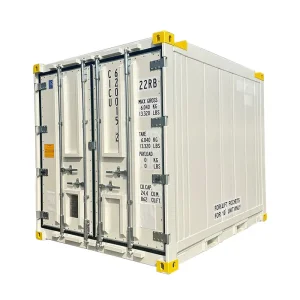
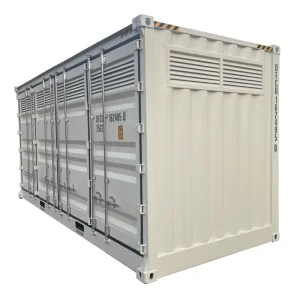
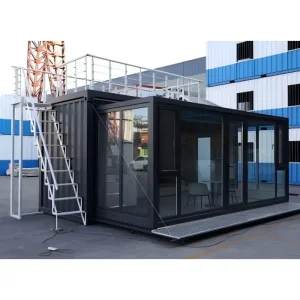
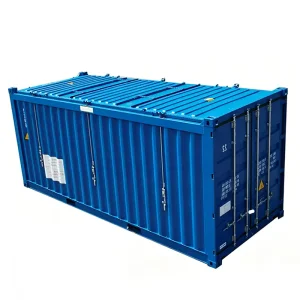
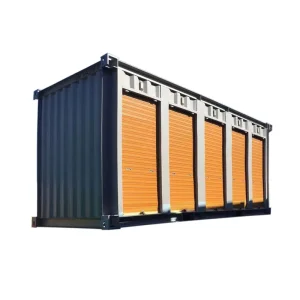
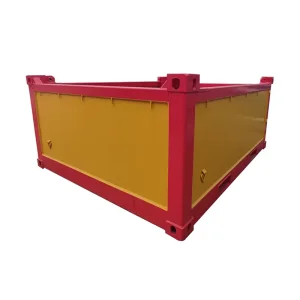
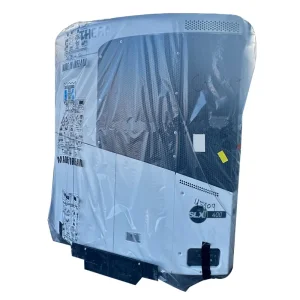
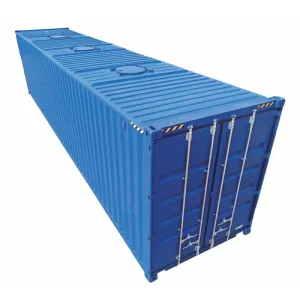
Explore our compact 10ft units, hazardous goods boxes, mobile generator trailers, and custom offshore equipment engineered to international standards.
Detailed engineering answers regarding power specifications, certification plates, factory lead times, and on-site servicing.
Standard marine 40ft refrigerated containers use a 3-phase dual-voltage system: 380V/50Hz to 460V/60Hz (±10% allowable voltage variation). These units connect through a standard CEE-17 4-pin 32A marine-grade female receptacle with an earth pin located at 3 o'clock. When only 220V 3-phase power is available on site, an optional step-up auto-transformer (dual-voltage transformer) can be integrated into the unit frame. Under typical steady-state conditions, average power draw ranges from 4.5 kW to 7.8 kW, though this can briefly peak during defrost cycles or deep-freeze pulldown.
New Build (One-Trip) Units: Built to modern ISO standards and shipped with one outbound cargo leg from China. They come with full factory warranties (typically up to 5 years on the container structure and cooling machinery), high insulation integrity with zero foam degradation, modern low-GWP refrigerants (R-134a, R-513A), clean SUS 304 food-grade interiors, and a valid 5-year CSC safety plate. Ideal for marine shipping lines, pharmaceutical buyers, and operations looking for a 15–20 year working lifespan.
Refurbished / Used Fleet Units: Units decommissioned from major shipping lines (typically 10 to 14 years old). Each used reefer goes through a pre-trip inspection (PTI) to verify compressor pumping efficiency, repair any insulation breaks, and inspect door gaskets. They offer an economical solution for stationary dock storage, construction-site provisions, or temporary agricultural uses, generally costing 40% to 60% less than new units.
All three brands are supported across major global ocean ports. The right choice depends on your cargo requirements:
Carrier PrimELINE: Widely considered the industry benchmark for overall energy efficiency. Its digital scroll compressor manages balanced cooling loads with low power consumption, making it the most common choice among major container leasing fleets.
Thermo King Magnum Plus: Delivers exceptionally fast temperature pulldown and can maintain temperatures down to -40°C. It is often preferred for deep-frozen fish, ice cream, and meat logistics requiring robust sub-zero performance.
Daikin LXE10E: Uses an advanced inverter scroll compressor that provides precise temperature management (±0.2°C) with minimal vibration. It is widely chosen by fresh produce and fruit exporters where air circulation stability is critical.
Every newly built container leaves our Tianjin factory with a complete documentation dossier:
1. CSC Certificate & Stamped Plate: Confirms the unit meets structural load requirements for vessel stacking and rail transit under the International Convention for Safe Containers.
2. Bureau Veritas (BV) / DNV Type Approval: Confirms material composition (SPA-H Corten steel, polyurethane foam density, and SUS304 linings).
3. Pre-Trip Inspection (PTI) Run Sheet: Verifies electrical insulation, low-pressure/high-pressure safety trips, and cooling cycle performance across operational setpoints.
4. Customs TIR Approval & ISO 1496-2 Thermal Verification: Confirms customs seal compliance and insulation heat-leakage benchmarks.
Standard white-label 40ft High-Cube reefers with standard Carrier or Thermo King units usually have a production lead time of 15 to 25 business days from deposit confirmation, depending on current line scheduling. For customized builds (such as side-opening doors, integrated butcher doors, dual-system redundant chillers, or explosion-proof electricals), lead times typically run 30 to 45 days. Our minimum order quantity (MOQ) is 1 unit for standard stock specifications, while tailored OEM structural runs generally start at 4 units. Delivery terms include FOB (Tianjin, Qingdao, Shanghai), CIF worldwide ports, or 'One-Way Free Use' repositioning to help buyers reduce shipping costs.
Speak directly with our technical team in Tianjin. We assist fleet buyers, cold-chain operators, and EPC contractors with custom dimensional drawings, machinery selections, and detailed FOB/CIF pricing estimates.