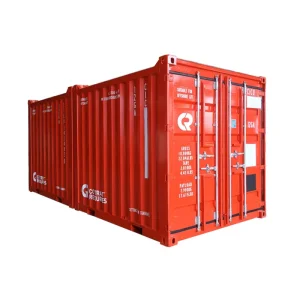
Direct manufacturer supply chain: Factory-calibrated reefer units, dual-access dry freight, DNV offshore modules, and modular expandable structures ready for immediate seaport dispatch.

Macroeconomic shifts, intermodal clearance optimization, and the growing demand for containerized clean-tech infrastructure are redefining 20ft high-cube manufacturing standards across global supply chains.
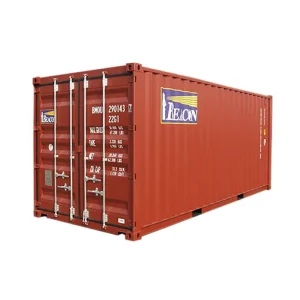
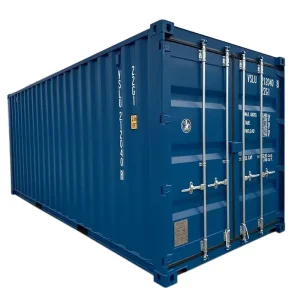
In modern multimodal shipping logistics and heavy industrial engineering, the 20 Ft High Cube (9'6" clearance) and High-Specification structural enclosure represent a crucial evolutionary milestone. Traditional 8'6" standard ISO boxes frequently impose ceiling constraints that limit their utility for advanced industrial integration. By contrast, a 20ft high-cube container provides an additional foot of vertical headroom—yielding approximately 37.4 cubic meters (1,320 cu ft) of internal capacity without expanding the baseline port, chassis, or rail footprint.
This cubic advantage has transformed the 20ft frame from a basic dry-bulk transport vessel into an indispensable modular shell for precision technology. Modern international operators increasingly require 20ft high-spec enclosures to house Battery Energy Storage Systems (BESS), mobile water desalinization skids, modular data centers, and advanced active cold-chain mechanisms. Operating across key commercial hubs in North America, Western Europe, Latin America, Southeast Asia, and Sub-Saharan Africa, specialized logistics providers utilize 20ft high-cube designs to balance extreme internal density with strict international highway dimensional regulations.
From an operational standpoint, 20ft platforms are optimal for heavy, concentrated freight that maxes out gross payload ratings before filling available volume. Dense commodities such as battery banks, mining exploration spares, dynamic subsea machinery, and chemical compounds often reach highway weight limits in standard lengths. A 20ft high-spec configuration allows operators to incorporate reinforced SPA-H Corten crossmembers, specialized 28mm marine-grade treated plywood, or non-combustible check-plate steel decking while maintaining full compatibility with standard ISO twistlocks and shipboard cell guides.
High-tensile Corten formulations reduce deadweight while maintaining maximum gross ratings up to 30,480 kg (67,200 lbs), optimizing road-axle distribution across North American and European bridge laws.
Direct interoperability between container vessel cell guides, double-stack railway well cars, and standard container chassis eliminates the need for break-bulk handling or cross-dock transfers.
Designed to withstand extreme atmospheric corrosion, dynamic sea-sway forces, and severe structural loads during 9-high fully laden container stacking at maritime terminals.
Positioned in the industrial corridors of Tianjin and Suzhou, our manufacturing hubs combine deep metallurgical supply networks with streamlined logistics to major seaports.
China manufactures over 90% of the world's intermodal shipping containers. This market leadership is supported by fully integrated domestic supply chains that link raw metallurgical refining directly to automated robotic production lines. CIMIC Group’s manufacturing base draws on four decades of specialized structural experience, leveraging close partnerships with regional steel suppliers to source high-grade SPA-H atmospheric corrosion-resistant Corten steel.
By standardizing on automated laser-cutting systems, continuous robotic submerged arc welding, and multi-stage shot-blasting plants that achieve surface cleanliness standards of SA 2.5, our facilities manufacture containers with consistent structural tolerances. Every subassembly—from corner castings certified to ISO 1161 to specialized 5-corrugation end-walls—undergoes automated quality checks that remove manual assembly variances.
A major logistics advantage for CIMIC Group is our primary manufacturing site situated approximately 100 kilometers from the Port of Tianjin—the premier maritime gateway in North China. This proximity provides distinct operational benefits for global purchasers:
| Performance Parameter | Standard 20ft ISO Dry Cargo | 20ft High Cube Industrial Shell | 20ft DNV Offshore Module |
|---|---|---|---|
| External Dimensions (L x W x H) | 6,058 x 2,438 x 2,591 mm (8'6") | 6,058 x 2,438 x 2,896 mm (9'6") | 6,058 x 2,438 x 2,896 mm (Custom Pad-eyes) |
| Internal Cubic Volume | ~33.2 m³ (1,172 cu ft) | ~37.4 m³ (1,320 cu ft) | Variable (Engineered Payload Partitioned) |
| Max Gross Weight (Rating) | 30,480 kg (67,200 lbs) | 30,480 kg - 32,500 kg | Up to 35,000 kg Dynamic Proof Load |
| Structural Metallurgy | Standard Corten-A / SPA-H | Enhanced High-Tensile SPA-H | Fine-Grain Low-Temp Carbon Steel (Charpy -20°C) |
| Protective Coating System | Zinc-rich Primer + Polyurethane (120µm) | High-Build Epoxy + Acrylic Topcoat (150µm) | Marine C5-M Severe Industrial System (250-320µm) |
| Primary Certifications | ISO 1496-1, CSC Safety Plate, BV | ISO 1496-1, CSC, UIC, TIR | DNV 2.7-1, EN 12079, IMO MSC/Circ. 860 |
From demanding offshore oil extraction to precision pharmaceutical cold chains and turnkey modular housing, our engineered containers adapt to demanding global environments.
Configured with structural firewall partitions, thermal insulation, integrated HVAC openings, and floor reinforcement to support dense utility-scale lithium-ion battery banks.
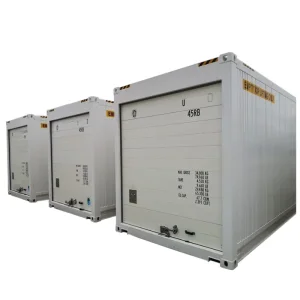
Constructed in compliance with DNV 2.7-1 and EN 12079, featuring specialized pad-eyes, heavy-duty sling sets, and low-temperature impact-tested steel for platform service vessels.
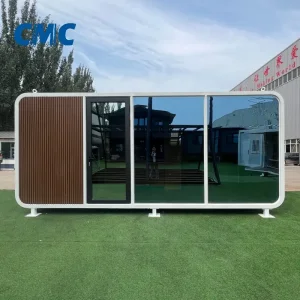
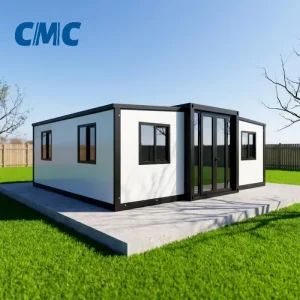
High-cube headroom accommodates dropped acoustic ceilings, floor-to-ceiling double-glazed curtain walls, and internal plumbing for off-grid cabins, workspaces, and emergency shelters.
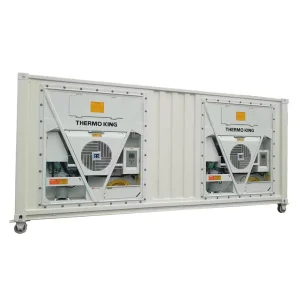
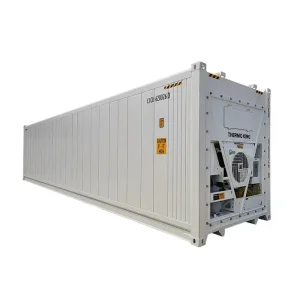
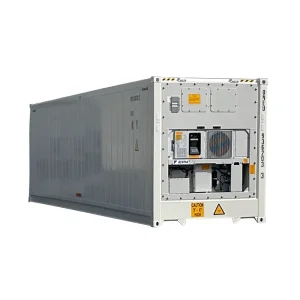
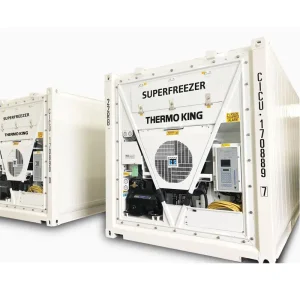
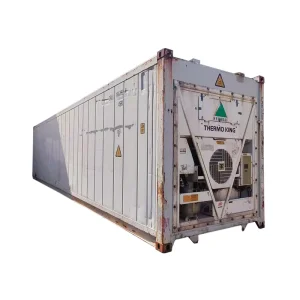
Equipped with Carrier, Daikin, or Thermo King refrigeration machinery, stainless-steel internal linings, and high-density PU insulation for agricultural and biopharmaceutical transport.
Four decades of manufacturing operations and engineering development, backed by international third-party classification societies.
The next decade of intermodal equipment design centers on circular materials, low-VOC surface treatments, and integrated sensor telematics.
Container manufacturing is undergoing a significant transition driven by global decarbonization initiatives, ESG corporate governance, and digital supply chain integration. The standard steel box is evolving into an active, data-connected piece of industrial equipment. At CIMIC Group, our engineering roadmap focuses on three core technological pillars:
Maritime corrosion protection traditionally relied on solvent-based zinc coatings. To reduce environmental impact while maintaining C5-M marine durability, our plants have transitioned to advanced waterborne epoxy primers paired with ultra-low-VOC polyurethanes. In extreme conditions, we use thermal-sprayed aluminum-zinc (TSAZ) metalizing on critical weld joints, providing an active sacrificial galvanic barrier that extends service life in corrosive salt-spray environments to over 25 years.
The rise of high-value cargo, mobile battery systems, and automated cold chains requires real-time operating visibility. Our high-spec 20ft containers can be pre-wired with internal sensor backbones, including:
By using finite element analysis (FEA) to evaluate stress points under 9-high stacking loads (exceeding 86,400 kg per corner post), our engineers have strategically varied sheet thicknesses across container side-walls. Thicker gauge steel is focused along critical load paths near corner posts, while corrugated profiles along center fields are optimized. This reduces container tare weight without compromising structural strength, allowing logistics operators to load heavier commercial payloads while remaining within total weight limits.
Every container manufactured in our facilities undergoes rigorous structural validation, non-destructive weld testing, and official classification society witness surveys.
Containers destined for international transport are stamped with a certified International Convention for Safe Containers (CSC) data plate, validating maximum gross weight, stacking capacity, and transverse racking resistance.
Independent classification surveyors inspect factory floor operations, verifying raw material mill certificates, welding procedure qualifications (WPS), paint dry film thickness (DFT), and weather-tightness.
Specialized offshore cargo-carrying units (CCUs) undergo low-temperature impact tests, dynamic 2-point and 4-point lift trials, and non-destructive examination (NDE) of pad-eye welds prior to final field sign-off.
Detailed answers to common questions regarding structural tolerances, custom modifications, and freight logistics for 20ft high-cube and specialized containers.
A standard 20ft ISO container has an external height of 8 feet 6 inches (2,591 mm), whereas a 20ft High Cube container stands at 9 feet 6 inches (2,896 mm). This additional foot (305 mm) increases internal cubic capacity from roughly 33.2 cubic meters (1,172 cu ft) to 37.4 cubic meters (1,320 cu ft), providing the vertical clearance required for thick floor insulation, HVAC ducting, or high-density equipment racks.
We use genuine atmospheric corrosion-resistant SPA-H Corten steel for all major structural components, including front and rear corner posts, side rails, header beams, and corrugated wall panels. SPA-H contains added copper, chromium, and nickel alloy elements that form a protective rust-like patina when exposed to weather, slowing internal corrosion and ensuring structural stability in marine environments.
Yes. We provide complete OEM/ODM engineering services. Our engineering team can work directly from your CAD/SolidWorks models to integrate custom structural openings, heavy-duty equipment mounting plates, louvered ventilation ports, certified cable glands, fire-rated insulation linings, rollup doors, and high-load internal crane hoists while maintaining CSC compliance where needed.
Our standard 20ft containers are rated for a maximum gross weight of 30,480 kg (67,200 lbs), with custom designs supporting ratings up to 32,500 kg. Corner posts are structurally tested to resist stacking loads of up to 86,400 kg per corner, allowing units to be stacked up to 9-high in fully laden container terminals in compliance with ISO 1496-1 parameters.
We configure our reefer containers with major marine refrigeration units based on your project requirements, including Carrier Transicold (ThinLINE, PrimeLINE), Daikin (LXE series), and Thermo King (Magnum Plus). Units can maintain precise temperatures from -35°C to +30°C in ambient operating environments up to +50°C, with optional ultra-low blast-freezer setups reaching -60°C.
Our manufacturing bases in Tianjin and Suzhou are positioned near major seaports, including Tianjin Port and Shanghai Port. We manage export documentation, Bureau Veritas witness inspection certificates, and CSC safety approval paperwork. Containers can be shipped as empty units or loaded with customer-supplied commercial freight (one-way shipper-owned container / SOC transit) to lower overall positioning costs.
Standard dry units receive a multi-coat system: a zinc-rich epoxy primer (30µm), a high-build epoxy intermediate coat (40µm), and a polyurethane or acrylic topcoat (40-50µm), yielding a total dry film thickness (DFT) around 120-140µm. For offshore units certified under DNV 2.7-1, we apply a marine C5-M compliant high-build epoxy-mastic system with a total DFT of 250-320µm, tested for 1,440 hours of salt spray exposure.
Standard configurations feature 28mm thick, multi-ply hardwood marine plywood treated with protective sealants that meet Australian Department of Agriculture quarantine requirements. For specialized setups, we offer 4.5mm-6.0mm anti-slip steel check-plate welded directly to structural crossmembers, non-sparking aluminum floor profiles, or chemical-resistant polyurethane resin coatings with integrated secondary spill containment sumps.
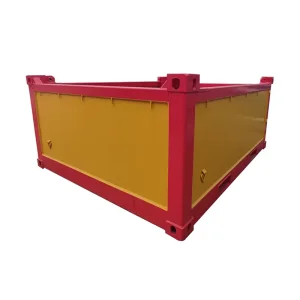
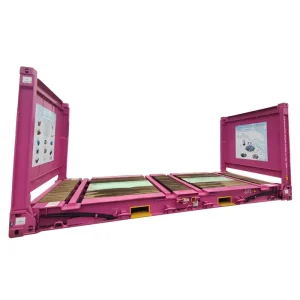
Explore our expanded export line, including specialized platform frame beds, cryogenic and chemical ISO gas tanks, offshore lifting baskets, and deep-freezer storage modules.

Connect with CIMIC Group's engineering division for complete technical specifications, custom CAD shop drawings, factory audit documentation, and competitive seaport-direct quotes tailored to your exact delivery schedule.
