ODM Featured Product Pricelist & Factories for the Mexico City Market
Precision-engineered ISO, Smart Cold Chain, DNV Offshore & Modular Architectural Containers Tailored for the Valley of Mexico Logistics Hub, Bajío Industrial Corridor, and Multimodal Central Terminals.
High-Efficiency ODM Solutions Engineered for Mexico City Commercial Hubs
Direct manufacturer allocations pre-engineered for high-altitude thermal retention, urban intermodal freight, and Central de Abasto cold storage resilience.
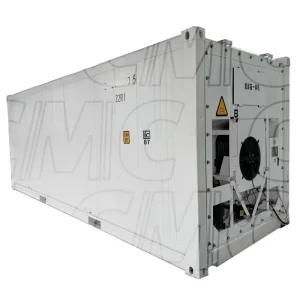
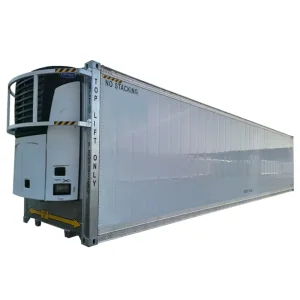
Mexico City Solar Reefer
20ft / 40ftDC Inverter220V Solar
High-Quality The Smart Chain Cold Storage 20ft/40ft Solar Refrigerated Container 220V With DC Inverter Unit Product, Products
Integrated off-grid solar-supported reefer unit engineered for continuous thermal stabilization across Mexico City's Central de Abasto distribution perimeters.
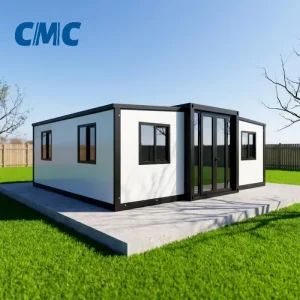
Famous 20ft Modular Container Houses Expandable Steel Container House Excellent Thermal Insulation and Sealing Performance Manufacturer, Exporters
Rapid deployment modular units built with structural Corten frameworks, meeting strict thermal insulation and anti-seismic criteria for Metropolitan CDMX sites.
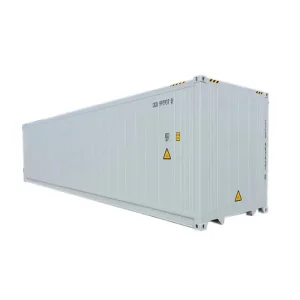
High-Quality New 40ft High Cube Thickened Foam Insulation Container Manufacturer, Factories
High-density expanded polyurethane passive insulated container, optimizing temperature retention for intermodal transit between Veracruz port and Valley of Mexico terminals.
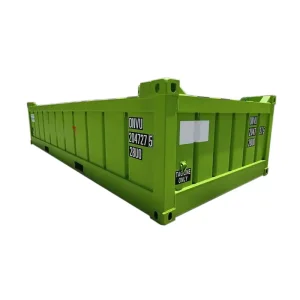
China New DNV Certification Offshore Half-Height Open Top Container Exporter, Products
Certified dynamic-lift offshore container tailored for industrial heavy machinery, mining ores, and energy sector supply chains connecting CDMX headquarters with Gulf platforms.
Mexico City Logistics Landscape & Nearshoring Near-Term Demands
Navigating the industrial transformation of Greater Mexico City (ZMVM), the Bajío corridor convergence, and high-density multimodal containerized infrastructure.
The Metropolitan Area of the Valley of Mexico (ZMVM), anchoring an economic powerhouse of over 22 million consumers, has emerged as the pivotal nerve center for Latin America's nearshoring paradigm shift. As multinational manufacturing firms establish advanced production clusters throughout Querétaro, Guanajuato, San Luis Potosí, and the State of Mexico (Edoméx), the demand for standardized, heavy-duty, and custom-modified Original Design Manufacturer (ODM) shipping containers has accelerated at an unprecedented rate.
1. The Nearshoring Boom & Multimodal Freight Congestion
Mexico's strategic trade position under the USMCA (T-MEC) agreement requires an agile, highly reliable physical supply chain. Goods arriving from Asia through the Pacific deepwater port of Manzanillo or the Gulf hub of Veracruz converge heavily on intermodal dry terminals in Pantaco, Tlalnepantla, and Cuautitlán Izcalli. Containers engineered for this terrain must endure strenuous intermodal transitions—switching seamlessly from container vessels to Ferromex and CPKC rail wagons, and subsequently onto highway tractor-trailers navigating complex urban topographies.
2. Central de Abasto: Extreme High-Capacity Cold Storage Demands
Mexico City hosts the Central de Abasto (CEDA), recognized as the world's largest wholesale commercial market, handling over 30,000 metric tons of perishables daily. Standardized warehousing within urban Mexico City commands steep premium lease rates and suffers from power grid instability during peak operational cycles. Consequently, logistics operators are transitioning toward modular, decentralized smart cold chain containers. Units fitted with DC inverter compressors, smart IoT telematics, and secondary solar arrays offer an indispensable operational buffer against grid fluctuations, maintaining continuous chilling from -25°C to +15°C for agricultural produce, poultry, and biopharmaceuticals.
3. Environmental Challenges: High Altitude & Seismic Considerations
Operating logistics hardware in Mexico City introduces unique microclimatic factors. Positioned at an elevation of 2,240 meters (7,350 feet) above sea level, atmospheric pressure is substantially lower than coastal marine ports, reducing air density and impairing conventional motor heat dissipation. Reefer compressor units and generator engines must be precision-calibrated for altitude airflow compensation. Furthermore, being situated in an active seismic subduction zone, modular container houses and structural conex installations across Mexico City require strict seismic damping, gusset-reinforced corner castings, and ISO 1161 structural compliance to safeguard human capital and critical assets.
Corten SPA-H Structural Steel
Weathering steel metallurgy designed to resist corrosion, oxidation, and structural deformation during multimodal sea-rail-road transit.
Altitude-Calibrated Machinery
Reefer cooling assemblies optimized for 2,200m+ elevations, counteracting atmospheric vacuum effects and compressor heat surges.
Full Regulatory Harmonization
Certified in complete accordance with NOM standards, USMCA transit frameworks, ISO 1496-1, and international CSC safety plates.
Wind & Water Tight (WWT), Multi-point Inspected, Structurally Sound
$1,100 – $2,100
$1,950 – $3,600
Valle de México Storage Yards
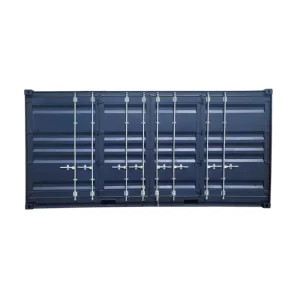
Side-Door Access Dry Container
20ft / 40ft
Full Bi-Fold Lateral Opening Doors, Forklift Ramp Compatible
$3,600 – $5,800
$4,900 – $7,600
Cross-Docking Urban CDMX
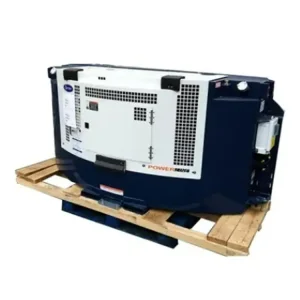
Reefer Clip-On Diesel Generator
Undermount / Clip
Kubota/Perkins Diesel Core, 15kW – 20kW Output, 50-Gal Tank
$4,500 – $7,200
$5,400 – $8,600
Highway Transit Manzanillo-CDMX
*Notice on Market Volatility: The pricing stated above serves as an engineering benchmark based on current hot-rolled steel coil indexes and semiconductor component availability. CIF / DDP figures account for standard sea freight lanes from Tianjin / Qingdao to Manzanillo or Lázaro Cárdenas, inclusive of custom clearance documentation. For custom OEM specifications, reinforced floor corrugation, or private labeling, direct engineering consultations are provided upon request.
Manufacturing Supremacy
Chinese Manufacturing Ecosystem & Port-Side Logistics Advantages
Decades of industrial scaling deliver unbeatable engineering precision, cost amortization, and reliable delivery windows for Latin American trade lanes.
China accounts for more than 90% of global ISO container production, underpinned by a fully integrated industrial supply chain that is unmatched globally. For procurement officers managing assets across Mexico City, partnering with an established manufacturing powerhouse based in Tianjin and Suzhou delivers immense structural, economic, and logistical advantages:
1. Direct Proximity to Tianjin Seaport (~100 KM)
Our strategic manufacturing facilities sit within approximately 100 kilometers of the Port of Tianjin—the maritime gateway of Northern China. This close proximity mitigates expensive inland drayage costs, minimizes pre-shipment carbon footprints, and ensures prompt berthing onto direct Trans-Pacific liner routes heading toward Manzanillo and Lázaro Cárdenas. In an era where domestic Mexican chassis shortages frequently delay regional haulage, factory-to-port velocity is essential to maintaining tight project delivery timelines.
All dry freight, offshore, and reefer structures are built with premium Corten SPA-H weathering steel. Unlike conventional carbon steel, SPA-H develops an adherent protective oxide patina upon contact with moisture and salt mist, drastically inhibiting deep metal corrosion. Automated robotic welding lines execute continuous, high-integrity submerged arc welds on all corner castings, side corrugations, and structural sills, eliminating micro-fissures and guaranteeing structural rigidity that exceeds ISO 1496 stacking parameters (capable of sustaining 9-high laden stacking at sea).
3. Multi-Bureau Certification: ISO, Bureau Veritas, and DNV
Quality assurance is not left to chance. Every production batch is certified under stringent ISO 9001 quality management procedures. Furthermore, export units intended for maritime transit are inspected and stamped with Bureau Veritas (BV) or China Classification Society (CCS) safety approvals. Offshore specialized containers comply comprehensively with rigorous DNV 2.7-1 / EN 12079 standards, verified through finite element analysis (FEA), dynamic lift testing, and low-temperature impact tests (-20°C Charpy V-notch).
End-to-End ODM / OEM
Complete customization from structural layout, door placements, and floor corrugations to specialized insulation values and branding.
Comprehensive Port Stock
Instant availability of seaworthy used, one-trip, and new containers staged across major Chinese coastal hubs for rapid dispatch.
Transparent Traceability
Every single container is documented with individual serial numbers, millimeter-level dimensional checks, and pre-trip inspection reports.
Next-Generation Innovation
Global Technological Trends Shaping Modern Containerized Infrastructure
From IoT-enabled telematics to low-carbon passive refrigeration, container technology is evolving from passive metal boxes into intelligent logistical assets.
The global shipping and modular container sector is undergoing a profound technological transformation, driven by demands for supply chain transparency, carbon reduction mandates, and localized microgrid integration. In Mexico City's industrial perimeter, these four macro trends are redefining procurement specifications:
1. Autonomous Cold Chain IoT Telematics
Modern reefer units deployed along the Manzanillo–Mexico City corridor now feature integrated telematics modules. Sensors capture cargo core temperatures, relative humidity, oxygen/carbon dioxide levels (controlled atmosphere), and GPS tracking in real-time. Data is uploaded via 4G/5G and satellite relays, enabling supply chain executives located in CDMX headquarters to modify set-points remotely, diagnose refrigeration circuit faults, and ensure regulatory compliance with Federal Health Inspection (TIF) requirements.
2. Solar PV Integration & Hybrid Microgrids
With industrial electricity tariffs fluctuating and sustainability ESG requirements mounting, solar-assisted refrigerated containers represent a monumental leap forward. Integrating flexible, marine-grade photovoltaic panels across container roof profiles charges an auxiliary lithium iron phosphate (LiFePO4) battery bank. This system drives DC inverter compressors directly, mitigating reliance on fossil-fuel diesel gensets during highway queuing or terminal dwell periods, lowering fuel overhead by up to 38%.
Urban real estate in Mexico City is notoriously dense and highly regulated. Companies are circumventing prolonged commercial building permit cycles by procuring high-grade modified modular container systems. From modern prefabricated pop-up retail pods and garden office units to multi-container worker accommodations in Toluca and Querétaro, modular steel architecture offers structural strength, 80% faster deployment, and full portability in the event of site lease re-negotiations.
Ground-Level Implementation
Localized Applications Across Mexico City & Greater Industrial Belts
Contextual deployment matrices demonstrating how custom container assets resolve operational bottlenecks in high-density urban and industrial hubs.
Vallejo-Iztapalapa Urban Staging
Side-door opening 20ft and 40ft dry containers acting as rapid cross-docking pods inside high-density CDMX logistics zones, eliminating truck congestion.
Pharmaceutical & Vaccine Hubs
Multi-temperature controlled reefers (Carrier X4 & Daikin) supporting biopharma logistics centered around Tlalnepantla and Santa Fe business zones.
Automotive Tier-1 Just-In-Time
Custom heavy-duty dry conex boxes transporting powertrain parts from Bajío plants directly into assembly nodes ringing the Federal District.
Construction Site Headquarters
Prefabricated expandable modular containers serving as mobile, air-conditioned project management offices along major infrastructure extensions.
Offshore Energy Supply Linkage
DNV-certified open top and half-height containers holding critical valve gear and drill consumables transiting between CDMX corporate offices and Gulf ports.
Decentralized Urban Cloud Retail
Apple cabin pods and modular architectural units modified for boutique specialty outlets, rapid-brew coffee bars, and experiential tech showrooms.
Institutional Best Practices
Enterprise Sourcing Framework & International Quality Assurance
How multinational corporations mitigate procurement risks, guarantee dimensional accuracy, and navigate Mexican customs clearance.
Purchasing shipping and specialty containers from China for delivery into Mexico City demands rigorous compliance frameworks. Institutional buyers avoid intermediaries by establishing clear factory-direct procurement channels that enforce the following technical protocols:
1. Incoterms Selection: FOB vs. CIF Manzanillo / DDP CDMX
While experienced freight forwarders frequently elect FOB Tianjin terms to consolidate internal ocean agreements, multinational entities operating within Mexico frequently mandate CIF Manzanillo / Lázaro Cárdenas or comprehensive DDP Mexico City Pantaco Dry Port arrangements. DDP structures transfer risk and administrative burdens regarding Mexican customs agents (Agentes Aduanales), pedimento processing, value-added tax (IVA 16%), and road freight permits entirely to our logistics division.
2. Rigorous 4-Step Pre-Shipment Inspection (PSI)
Prior to seal locking and factory dispatch, every container undergoes a comprehensive 4-stage Quality Inspection:
Structural Integrity & Dimensional Check: Total squareness confirmation, diagonal variance within ±3mm, corner casting alignment per ISO 1161, and continuous weld inspection under ultrasonic non-destructive testing (NDT).
Light & Water Tightness Testing: High-intensity internal illumination scan followed by extreme high-pressure water jet spraying (200 kPa) against all door gaskets, hinges, and seams to ensure total weatherproofing.
Coating Thickness & Salt-Spray Verification: Measurement of total dry film thickness (DFT 120μm minimum) consisting of zinc-rich epoxy primer and durable polyurethane topcoats capable of enduring 1,000+ hours of ASTM B117 salt spray exposure.
Pre-Trip Inspection (PTI) for Reefers: A continuous 8-hour electronic refrigeration test assessing temperature pull-down rates, defrost cycle responsiveness, pressure thresholds, and insulation thermal leak checks.
Full Product Portfolio
Engineered Container Solutions for Mexico City Logistics & Industrial Projects
Explore our complete catalog of certified dry cargo, offshore reefer, genset integration, and modular structures available for immediate production and container vessel booking.
Cargo Worthy 20ft
20ft Dry CargoWWT InspectedDepot Certified
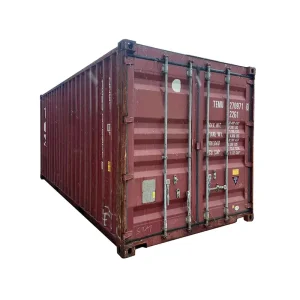
Famous 20ft Used Shipping or Storage Container Factory, Manufacturers
Cost-efficient, wind-and-water tight 20-foot standard conex boxes, thoroughly inspected and ready for on-site warehousing across Mexico City industrial yards.
China 20ft Offshore Refrigerated Container DNV Certification Is More Durable Exporter, Quotes
Extreme-duty refrigerated container certified to DNV 2.7-1 standards for dynamic offshore crane lifting, perishable replenishment, and severe environmental tolerance.
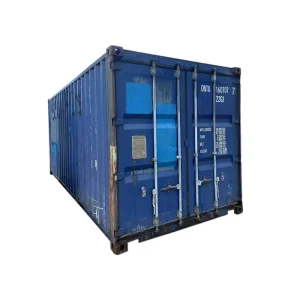
China 40ft Used Dry Cargo Shipping Container Factory, Exporters
Selected 40ft high-cube second-hand dry freight containers, verified for international intermodal transport or conversion into large-scale CDMX self-storage facilities.
Clip-on and chassis undermount diesel generator sets ensuring uninterruptible power for reefer loads traversing highway routes between Manzanillo and Mexico City.
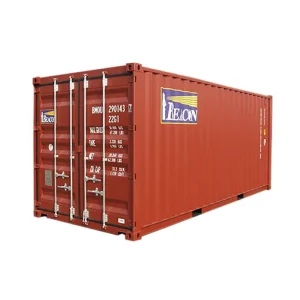
High-Quality New 20ft Customized Side Door Dry Cargo Shipping Container Manufacturer, Manufacturers
Multi-door side loading configuration engineered to accelerate palletized cargo handling within confined urban depots and logistics warehouses across CDMX.
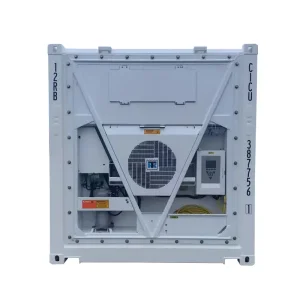
ODM Carrier X4-7300 Refrigeration and Electricity Integrated Container Exporter, Exporters
Carrier-powered integrated refrigeration container delivering ultra-precise temperature control from deep freeze to controlled chill, tailored for Mexican food exporters.
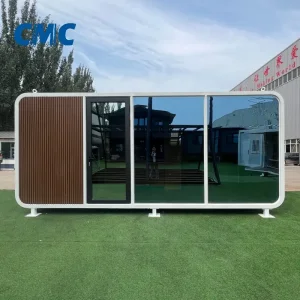
China 20ft Prefab Container House Flat Pack Modular House Office Tiny House Outdoor apple Cabin Office Pod Garden Office Pod Manufacturer, Product
Contemporary curved-edge luxury architectural pod ideal for creative agency studios, executive site suites, or high-end pop-up retail in CDMX metropolitan sectors.
Frequently Asked Questions on Sourcing Containers for Mexico City
Authoritative technical guidance compiled by our container engineering directors and international customs logistics specialists.
How does Mexico City's high altitude (2,240m) affect refrigerated container performance?
At 2,240 meters above sea level, atmospheric air pressure decreases to roughly 77 kPa (compared to 101.3 kPa at sea level). Lower air density reduces the mass flow of cooling air passing across condenser coils, which can trigger compressor overheating if left uncalibrated. Our ODM engineering team incorporates altitude-compensated condenser fan motors, optimized refrigerant charge ratios (R134a or R404a/R452a), and high-efficiency scroll compressors (Carrier, Daikin, or Thermo King) configured to prevent high-head-pressure lockouts in Central Mexican plateaus.
What is the standard ocean transit duration from Tianjin Port to Manzanillo or Lázaro Cárdenas?
Direct liner services between Tianjin / Qingdao and Manzanillo typically require 18 to 24 sailing days. Upon discharge at Manzanillo or Lázaro Cárdenas, intermodal rail (via Ferromex or CPKC) or bonded road transport to Mexico City dry ports (such as Pantaco or Tlalnepantla) takes an additional 3 to 6 working days, depending on customs clearance procedures and rail flatcar availability.
Can modular container houses withstand Mexico City's seismic zone requirements?
Yes. Conventional concrete construction is vulnerable to shearing stress during seismic events. In contrast, our 20ft and 40ft modular expandable container houses utilize fully-welded Q235/Corten steel structural moment frames. The ductile nature of structural steel allows the container module to dissipate seismic shock energy without catastrophic fracture. For multi-story installations in CDMX, we provide reinforced corner castings and custom inter-tier twistlock tie-down plates engineered to comply with local building safety codes (Reglamento de Construcciones para el Distrito Federal).
What is the difference between a passive thickened foam insulated container and an active reefer?
An active reefer container incorporates an electrically driven mechanical refrigeration unit that actively pulls down or heats the internal chamber to an exact user-defined temperature (-30°C to +30°C) and requires an external 380V/440V 3-phase or 220V power supply (or diesel generator). A thickened foam insulated container (Conex Térmico) features passive 75mm to 100mm high-density polyurethane walls without any moving machinery; it preserves the thermal baseline of pre-chilled freight for 24 to 72 hours without power, making it a cost-effective, zero-maintenance asset for regional dry-van haulage between Gulf ports and CDMX.
What certifications accompany your DNV offshore containers for Mexican energy clients?
Our offshore equipment is fully certified under DNV 2.7-1 (Standard for Certification No. 2.7-1 Offshore Containers) and EN 12079. Every delivered unit includes mill test certificates (MTC) for low-temperature impact-tested steel, non-destructive testing (NDT/MPI) inspection records of lifting padeyes, proof load test verification certificates issued by third-party surveyors (such as DNV, Bureau Veritas, or ABS), and certified wire rope lifting slings fitted with Crosby shackles.
Can you customize container exterior paint schemes, corporate logos, and lockbox fittings?
Yes. We specialize in comprehensive OEM and ODM personalization. Clients can specify custom RAL color codes for polyurethane topcoats, incorporate corporate vinyl decals or stencil branding, install factory tamper-proof security lockboxes, specify heavy-duty forklift pockets, or integrate interior LED lighting and tie-down lashing rails directly on the production line prior to export dispatch.
Accelerate Your Mexico City Container Procurement
Connect directly with our senior logistics engineering team in Tianjin. Receive factory-direct pricing, dimensional CAD layouts, and certified shipping schedules tailored for your project.