
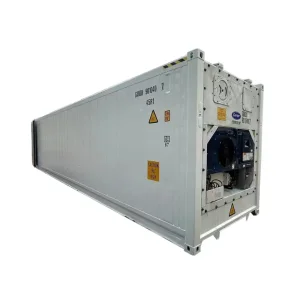
Pharmaceutical & Food Cold Chain
View Product Specifications
Pre-qualified specialized enclosures customized for Central European rail-road corridors, Alpine temperature swings, and industrial manufacturing freight.
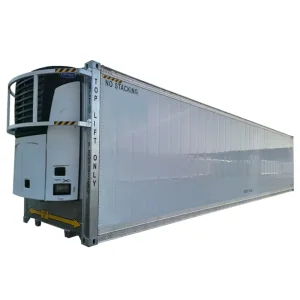
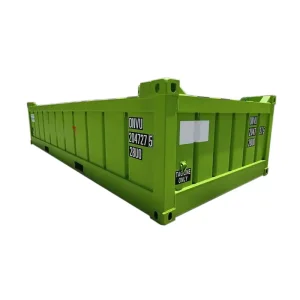
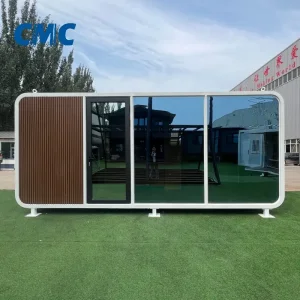
Analyzing freight flows, geographic topography, and stringent environmental statutes governing Austrian intermodal transport corridors.
Austria serves as the logistical linchpin of Central Europe, anchoring the confluence of the Baltic-Adriatic and Orient/East-Med Trans-European Transport Networks (TEN-T). With high-throughput dry ports such as WienCont Container Terminal (Vienna), Enns Hafen, and the multimodal hubs of Linz and Graz, Austrian supply chains rely on standardized yet highly adaptable special container assets.
Due to environmental mandates like the Austrian Federal Sectoral Driving Ban (Sektorales Fahrverbot) along the sensitive Inn Valley / Brenner highway corridor (A12), industrial freight has experienced a rapid structural pivot toward ÖBB Rail Cargo Group’s “Rolling Road” (Rollende Landstraße - RoLa) and intermodal container trains. This paradigm shifts extreme dynamic loads onto intermodal shipping containers, demanding structural conformance with EN 284 swap-body parameters and UIC codification.
Linz & Steyr Industrial Axis: Demands heavy-duty Corten steel half-height and open-top containers to service metallurgical giants (Voestalpine) and specialized automotive manufacturing.
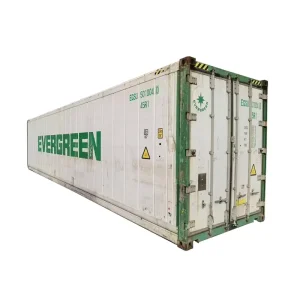
Tyrol & Vorarlberg Alpine Corridors: Necessitates thermal-break insulated reefers and low-GWP Carrier/Thermo King integrated units resilient against sub-zero Alpine winters (-25°C to -35°C).
Vienna & Lower Austria Biotech Cluster: Demands GDP-compliant reefer containers equipped with real-time multi-sensor telematics for biologics and pharmaceutical transit.
Inland water transport via the Danube linking Linz, Krems, and Vienna to Black Sea ports necessitates containers treated with high-grade anti-corrosive marine paint cycles (ISO 12944 C5-M certified) to handle variable humidity and brackish conditions.
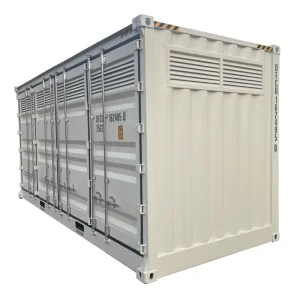
Under Austria's Renewable Energy Expansion Act (EAG - Erneuerbaren-Ausbau-Gesetz), specialized Battery Energy Storage System (BESS) container enclosures require rigorous structural thermal insulation, explosion vents, and NFPA 68/69 pressure-relief engineering.
In cooperation with European rail freight standards, our special container frames utilize high-strength SPA-H Corten steel, minimizing tare weight without sacrificing structural yield strength, ensuring Austrian operators maximize pay-load capacities.
Custom container configurations engineered to surmount extreme elevation, temperature differentials, and specialized industrial workflows.
Austria’s mega-infrastructure undertakings—such as the Brenner Base Tunnel (BBT) and the Semmering Base Tunnel—generate unparalleled demands for ruggedized container housing. Standard dry boxes fail under repeated heavy excavation impact.
We engineer reinforced half-height open-top containers and custom side-access tool vaults featuring 4.5mm corrugation profiles, certified lifting lugs compliant with EN 12079 / DNV 2.7-1, and wear-resistant Hardox-equivalent floor plates capable of transporting jagged metamorphic rock and high-density aggregate.
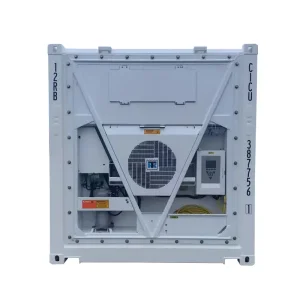
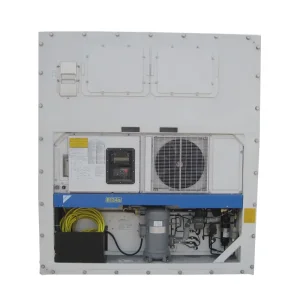
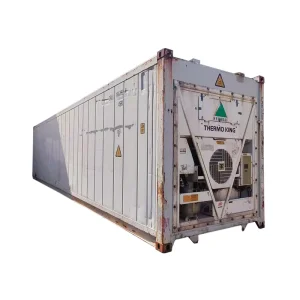
Vienna's prominent life sciences sector (including blood plasma fractionation and vaccine synthesis) demands fail-safe temperature stability during multi-stage Alpine haulage. Our 20ft and 40ft HC reefers incorporate Carrier Transicold and Daikin dual-fuel cooling modules coupled with vacuum insulation panels (VIP), guaranteeing temperature variation under $\pm 0.3^\circ\text{C}$ across variable elevations exceeding 1,800 meters.
Surrounding the chemical industrial agglomerations in Schwechat and Linz, transport of petrochemical products and corrosive precursors is strictly governed by the European Agreement concerning the International Carriage of Dangerous Goods by Road (ADR).
Our ODM dangerous goods containers feature built-in spill containment sumps (bunded floors), explosion-proof sparkless venting systems, EN 14470-1 compliant fire-rated paneling, and emergency exterior latch releases.
Modular flat-pack and high-cube units customized with thermal rockwool insulation ($U$-values below $0.22\text{ W/m}^2\text{K}$) to withstand heavy snow loads ($s_k \ge 3.5\text{ kN/m}^2$) for ski resort infrastructure and environmental monitoring outposts across Salzburg and Carinthia.
How our Tianjin and Suzhou heavy-manufacturing industrial clusters outpace European fabricators in turnaround time, alloy sourcing, and multi-tier quality assurance.
Founded in 1983, our manufacturing base integrates four decades of metallurgical mastery with automated continuous line production. Located roughly 100 km from Tianjin Xingang port—one of the world's premier deepwater maritime nodes—our logistics operations eliminate costly inland transshipment overheads.
While European localized production faces escalating labor constraints, raw material surcharges, and energy price volatility, our integrated supply chain controls every stage: from raw Corten coil uncoiling and automated shot blasting to robotic GMAW welding and electrophoretic deposition (ED) primer coating.
This guarantees Austrian procurement directors direct factory-gate pricing, consistent batch repeatability, and a standard delivery cadence of 25–35 days from blueprint freeze to port delivery.
Raw Material Mastery: 100% certified SPA-H weathering Corten steel featuring copper, chromium, and nickel alloys that generate a passive protective patina against Alpine de-icing salts (NaCl/CaCl₂).
Automated Robotic Production: Precision laser cutting within $\pm 0.5\text{mm}$ tolerances; automated seams eliminate manual pinholes in corner casting welds.
Pre-Delivery Rigorous Testing: CSC water-tightness pressure jet testing (200 kPa), dynamic rail impact simulation tests, and cryogenic load tests down to -40°C.
Foundation Year / 40+ Yrs Exp.
Factory to Seaport Buffer
Global Specialized Segment Share
BV / DNV / ISO Pre-Inspected
Anticipating EU Green Deal targets, digitalization mandates, and structural decarbonization across Central European transit.
Integration of solar-powered ATEX-certified sensory mesh networks monitoring GPS, internal pressure, humidity, door events, and g-force shocks during rail hump shunting.
Development of ISO 20ft and 40ft tank containers utilizing composite vacuum multilayers for liquefied biomethane (LBM) and green hydrogen transport along Danube routes.
Transitioning reefer machinery to natural refrigerants, prioritizing $CO_2$ (R-744, GWP=1) to guarantee unhindered compliance with evolving EU F-Gas Regulations (EU 2024/573).
Carbon-fiber reinforced polymer (CFRP) roof bows and insulated walls reducing tare weight by 22%, dramatically lowering rail traction energy throughout the Alps.
Every special container exported to Austria is backed by comprehensive third-party certification and full documentary alignment.
Valid International Convention for Safe Containers (CSC) approval plates issued under the auspices of Bureau Veritas (BV) or DNV, facilitating unrestricted rail and maritime stacking up to 9-high tiers.
Swap bodies and specialized logistics containers engineered to match standard European rail flat-wagons, fitted with folding support legs, tunnel recesses, and ISO bottom corner castings.
Dangerous goods units designed in strict compliance with ADR chapter 6.8, Machinery Directive 2006/42/EC, Low Voltage Directive (LVD), and electromagnetic compatibility (EMC) for electrified reefer equipment.
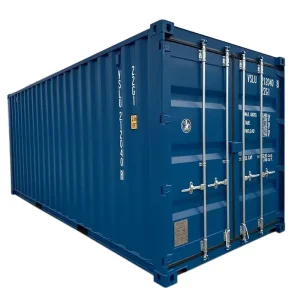
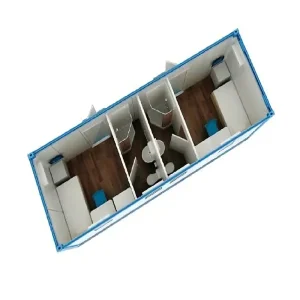
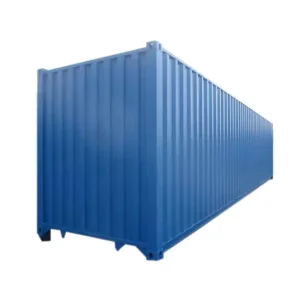
Explore certified dry cargo enclosures, dangerous goods boxes, offshore builds, and modular accommodation structures ready for export.
In-depth responses covering cold weather durability, Alpine rail clearances, DNV/CSC dual certification, and delivery logistics.
Standard reefers are designed primarily for active cooling. For the Austrian market, our units feature an engineered reverse-cycle heat pump system alongside electrical defrost elements capable of active cargo heating even when ambient Alpine ambient temperatures plummet to -35°C in regions such as Tyrol or Vorarlberg. High-density polyurethane foam (45 kg/m³) with cyclopentane blowing agents delivers low thermal conductivity ($\lambda \le 0.020\text{ W/m}\cdot\text{K}$), preventing thermal bridge crystallization.
Yes. Due to the strict 40-tonne GVW road transport regulations (or 44 tonnes for combined intermodal terminal trips) crossing the Brenner Corridor, tare weight minimization is essential. We utilize high-yield SPA-H Corten steel for corrugated walls and lightweight structural aluminum T-flooring, which trims up to 380 kg compared to generic standard builds without compromising stacking rigidity.
Every shipment includes an exhaustive documentation package: CSC Safety Approval Certificate endorsed by Bureau Veritas (BV) or DNV, ISO 9001/14001 factory QC dossiers, steel mill certificates (EN 10204 Type 3.1), radiographic weld inspection reports, paint dry-film-thickness (DFT) logs, and CE declarations of conformity for electrical components and machinery.
Yes. We engineer customized BESS enclosures incorporating heavy floor reinforcement (up to 40-tonne internal equipment payloads), NFPA 68-compliant deflagration panels on the roof, certified A60/EI120 fire-resistant insulation barriers, integrated HVAC ducting, and pre-cut cable gland entries tailored to Austrian grid-operator utility standards.
Finished units are loaded at Tianjin Port and shipped via maritime container lines directly to Hamburg, Rotterdam, or the Adriatic gateway of Koper (Slovenia). From Koper, direct block trains transfer containers to Vienna (WienCont), Enns, or Graz within 24 to 36 hours. Total door-to-terminal lead time typically spans 28 to 35 days, with optional "One-Way Freight" options available to reduce landing freight costs.
Absolutely. While standard ISO containers measure 8ft (2,438 mm) in width, European palletized cargo frequently benefits from 2,550 mm wide pallet-wide configurations and EN 284 swap-body profiles (C745 and C782). We fabricate dedicated tooling lines for swap bodies fitted with folding landing legs, side-curtain doors, and UIC-approved corner positioning.