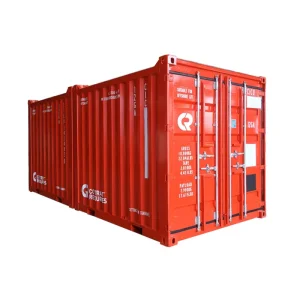
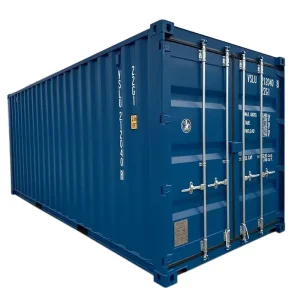
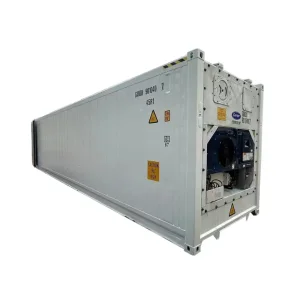
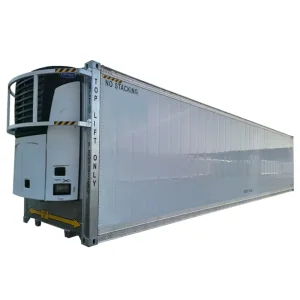
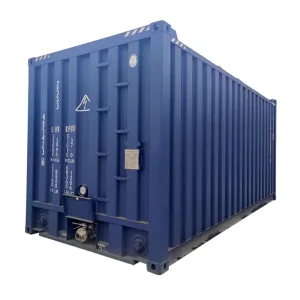
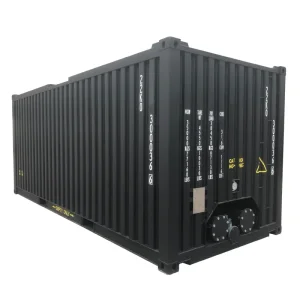
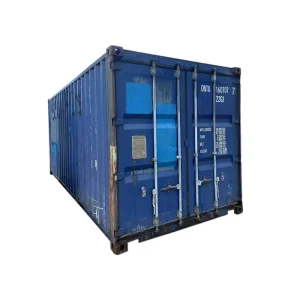
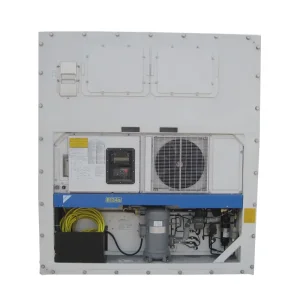
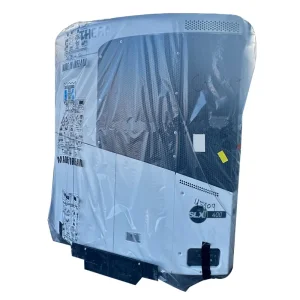
Precision-manufactured shipping units available directly from our Tianjin coastal manufacturing base with worldwide logistics and custom fitting capabilities.

International trade in perishable commodities, volatile chemicals, and high-value biologics demands an unprecedented level of temperature integrity and structural resilience.
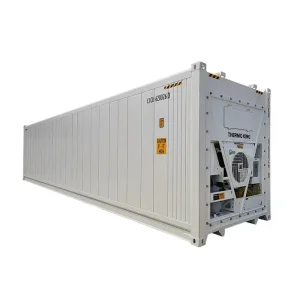
Modern refrigerated cargo containers rely on microcellular polyurethane foam with high-pressure cyclopentane blowing agents. This achieves an industry-leading thermal conductivity factor below 0.019 W/(m·K), minimizing structural heat ingress in equatorial corridors.
Industrial sourcing requires future-proof HVAC units. Factory integration includes world-tier cooling assemblies such as Carrier Transicold, Thermo King, and Daikin, engineered for next-generation lower Global Warming Potential (GWP) synthetic and natural refrigerants like CO2 (R-744).
Factory-installed digital architectures embed remote monitoring units (RMU), wireless PT100 temperature sensors, and real-time cellular/satellite telematics providing continuous traceability of supply chain temperatures from cargo origin to final inland destination.
When global enterprise buyers source from a certified refrigerated cargo manufacturer, procurement evaluations extend well beyond surface unit price.
Reefer machinery consumes substantial kilowattage over a 15-year lifecycle. Corporate procurement strategies focus on energy coefficient metrics (COP) where intelligent variable-speed scroll compressors slash operating electrical draws by up to 32% during seasonal baseline cruising.
Cross-continental fruit and vegetable exporters mandate Controlled Atmosphere (CA) capabilities. Factory-integrated nitrogen flushing valves and selective membrane filters balance O2 and CO2 levels to retard produce respiration, significantly extending transit shelf-life.
Industrial refrigerated transport requires interior T-bar subflooring extruded from heavy-duty 6082-T6 aircraft-grade aluminum alloy, delivering verified mechanical integrity under 7,260 kg forklift axle weights without crushing air circulation corridors.
Connecting intercontinental maritime routes, high-speed rail lines, and isolated mining or pharmaceutical installations with custom-engineered container units.
Precision logistical distribution mandates moving goods with differing preservation profiles simultaneously. Our specialized factory lines construct dual and triple-compartment reefers using moveable insulated partition walls and secondary evaporators for concurrent frozen (-25°C) and chilled (+4°C) delivery.
Deepwater platforms and extreme weather extraction fields operate in corrosive marine environments. We engineer heavy structural reefer and dry containers compliant with EN 12079 and DNV 2.7-1 standards, equipped with integrated offshore pad-eyes, lifting slings, and stainless-steel fastener arrays.
Addressing landside infrastructure deficits, our 40ft High Cube cold rooms function as modular cold-storage hubs for food distribution terminals, humanitarian missions, and seasonal seafood harvests, requiring minimal civil foundation work.
By standardizing dimensional tolerances to ISO 668 dimensions, our factory builds maintain direct handling compatibility with double-stack flatcars, shipboard cell guides, and standard gooseneck skeletal semi-trailers. This design ensures that transshipment bottlenecks are eliminated across intermodal handoffs, securing unbroken cold-chain documentation for high-value freight.
How our factory infrastructure validates structural integrity, international compliance, and operational reliability before factory gate release.
Every dry and refrigerated freight container manufactured is submitted to rigorous static and dynamic load verifications. Units carry a consolidated International Convention for Safe Containers (CSC) data plate approved by Bureau Veritas (BV) or classification societies.
Reefer box fabrications intended for European highway and rail corridors conform strictly with ATP standards (Agreement on the International Carriage of Perishable Foodstuffs), meeting both Heavily Insulated (IR) and Mechanically Refrigerated (FRC) category benchmarks.
Prior to customer handover, automated testing software initiates a 180-minute Pre-Trip Inspection (PTI). The cycle verifies refrigerant levels, compressor amperages, heater contactors, and automated defrost termination controls.
Forward-looking container factory design concepts set to redefine the global freight industry over the next decade.
Research is progressing toward roof-integrated photovoltaic thin-films combined with LFP (Lithium Iron Phosphate) buffer batteries. This setup maintains cooling during long rail transits or dockside power interruptions.
Next-stage thermal envelope configurations integrate VIP cores with standard polyurethane foaming. This technology yields thinner structural walls that retain an exceptional R-value while boosting internal volumetric loading capacity by up to 4.8%.
Microprocessors analyze operating vibration frequencies, delta-T airflow differentials, and suction pressures. Real-time algorithms flag impending mechanical concerns days before physical compressor failure can occur.
Explore our broader industrial line, including integrated power trailers, asphalt transporters, and marine-ready used reefer containers.
Clear, direct answers addressing refrigeration mechanics, power setups, custom designs, and international shipping protocols.