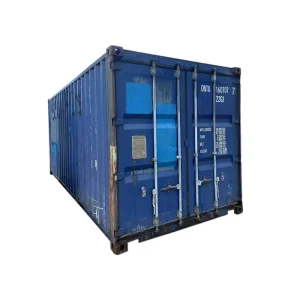
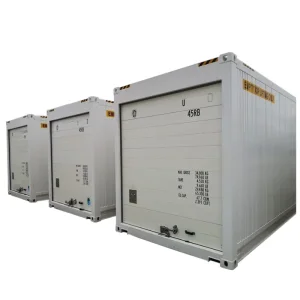
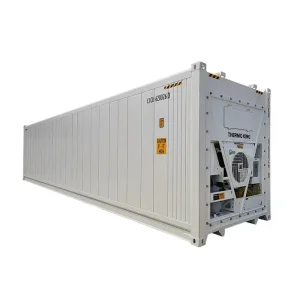
A Comprehensive Analysis of Intermodal Freight Evolution, Cold Chain Engineering, Corten Metallurgy, and Global Supply Chain Governance from Leading Chinese Exporters.
Explore high-cube reefers, offshore DNV certified baskets, dangerous goods units, and modular structures engineered to stringent international CSC and ISO standards.
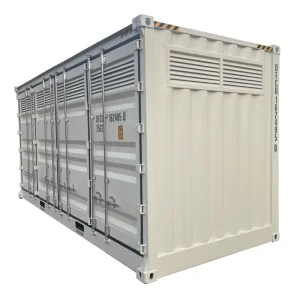
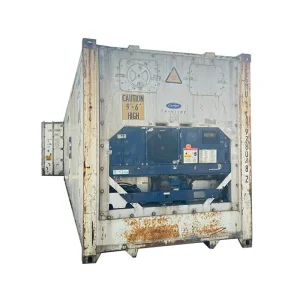
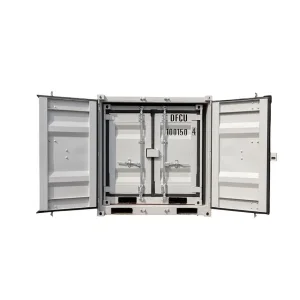
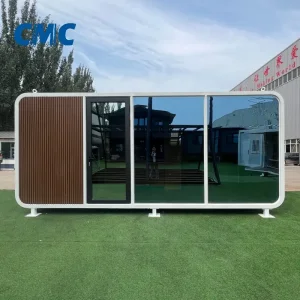
An evolutionary overview of how containerization eliminated 90% of maritime turnaround friction, established global Corten steel structural benchmarks, and empowered modern manufacturing giants.
Prior to April 26, 1956, global commerce was crippled by break-bulk cargo handling. Dockworkers manually hoisted individual barrels, sacks, and wooden crates into cavernous ship holds—a labour-intensive protocol that caused cargo damage, rampant pilferage, and port layovers that routinely consumed weeks. Malcom McLean, a North Carolina trucking entrepreneur, radically transformed global commerce by retrofitting a converted World War II tanker, the Ideal X, to carry 58 detachable 33-foot trailer bodies from Newark, New Jersey, to Houston, Texas. By separating the vehicular chassis from the cargo box, McLean reduced freight handling costs from nearly $5.86 per ton to just $0.16 per ton, unlocking an exponential increase in shipping velocity and laying the groundwork for the modern global supply chain.
Early container shipping suffered from proprietary incompatibilities; Matson used 24-foot boxes on the Pacific while Sea-Land deployed 35-foot configurations. The intervention of the International Organization for Standardization (ISO) codified universal container architecture. The ratification of ISO 668 (external dimensions and ratings), ISO 1161 (corner casting specifications), and ISO 1496 (internal volume and structural testing) established the Twenty-Foot Equivalent Unit (TEU) as the global benchmark. The patented twist-lock corner casting permitted mechanical cranes to interface seamlessly with vessels, railway flatcars, and highway chassis across international borders, establishing the bedrock of true multimodal freight transit.
The 1980s marked the migration of container fabrication from North America and Europe to East Asia, driven by proximity to primary transpacific export flows and superior steel mill integration. Production advanced from carbon steel to Corten-A (SPA-H weathering steel), an alloy containing copper, chromium, and nickel that generates a self-healing patinated oxide layer when exposed to coastal saltwater. Exporters such as Tianjin Cimic emerged during this golden era (founded in 1983), engineering ISO units with 9-high stacking certifications capable of withstanding over 192 tonnes of superimposed corner-post load under rolling sea conditions.
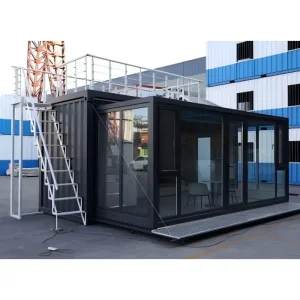
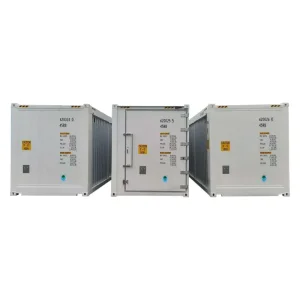
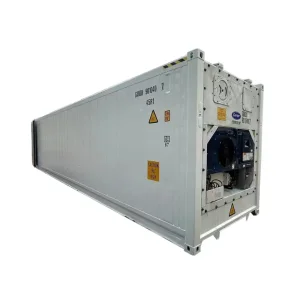
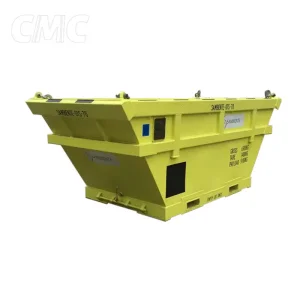
Modern shipping containers have expanded far beyond passive dry-freight boxes. Rapid expansion in pharmaceuticals, high-tech electronics, and agricultural commodities catalyzed the reefer revolution, integrating microprocessor-controlled Carrier, Daikin, and Thermo King cooling circuits. Simultaneously, subsea energy exploration required heavy-duty DNV 2.7-1 / EN 12079 certified offshore structures built for dynamic sea-state lifts, while civil engineers leveraged standardized structural integrity to deploy modular offices, apple pods, and hazardous material containment vaults.
Strategic fleet acquisitions require balancing upfront capital expense, residual asset equity, maintenance protocols, and operational adaptability across varying operational lifespans.
Direct factory commissioning built precisely to engineering blueprints. Ideal for high-stakes cold chain distribution, custom hazardous material repositories, or projects requiring dedicated branding.
Containers manufactured in China and loaded with a single commercial dry payload to the destination port. Offers substantial freight subsidies compared to deadhead repositioning.
Units retired from major international container shipping line fleets, systematically refurbished, leak-tested, and certified for secondary logistics or fixed warehousing applications.
| Evaluation Parameter | Direct OEM Build | One-Trip Sourcing | Certified Used Fleet |
|---|---|---|---|
| Initial Capital Outlay | Baseline (100%) | 75% - 85% of OEM Baseline | 35% - 50% of OEM Baseline |
| Design Customizability | Fully Bespoke (Dimensions, Apertures, Units) | Standard ISO Configurations Only | As-Is (Post-Factory Modifications Possible) |
| Expected Service Life | 20 - 25+ Years | 18 - 22 Years | 8 - 12 Years |
| CSC Safety Approval Term | Full 5-Year Initial Approval | Remaining 4-5 Years Approval | Requires Re-Inspection / 12-24 Mo Recertification |
| Recommended Use Case | High-Value Cold Chain, Offshore, DG Storage | Intermodal Fleets, Modular Conversions | Static Site Storage, Secondary Regional Freight |
Modern intermodal assets are precision-engineered to address complex industrial friction points across severe thermal, structural, and chemical environments.
Engineered for perishables and biologics requiring stringent ±0.25°C stability. Integrated with Carrier PrimeLINE, Daikin LXE, or Thermo King Magnum Plus units utilizing environmentally compliant refrigerants.
Certified for subsea, drilling, and energy platforms where dynamic offshore waves subject cargo boxes to extreme snatch loads during vessel-to-rig crane transfers.
Tailor-made for chemical stockpiling, lithium battery storage, and Class 3 flammable liquids. Built with full secondary containment to prevent environmental leaching.
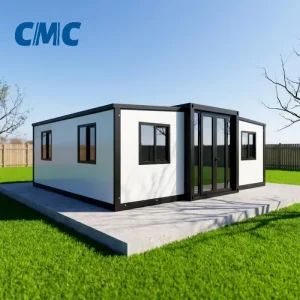
Leveraging ISO structural integrity to construct rapid-deployment field offices, off-grid apple cabins, and disaster relief medical stations with high thermal insulation envelopes.
Deploying intermodal units worldwide demands uncompromising adherence to global maritime safety bodies, environmental protocols, and cargo-worthy conventions.
Governed by the 1972 International Convention for Safe Containers. Every export unit features a riveted, corrosion-proof CSC safety approval plate specifying permissible transverse racking test loads (typically 150 kN), end-wall strength, and gross payload ratings.
Third-party surveyor verification from Bureau Veritas, DNV, or ABS validates welding integrity, x-ray inspection of corner posts, tensile yield limits of SPA-H alloy steel, and water-deluge tight testing under high-pressure nozzle conditions.
Containers crossing into environmentally stringent territories (such as Australia and North America) must fulfill strict quarantine prerequisites, including Australian Department of Agriculture timber treatment certifications.
Emerging technologies are converting the humble shipping container from a passive steel box into an intelligent, digitized node within the global automated supply network.
Next-generation shipping units feature integrated autonomous sensor clusters with low-earth orbit (LEO) satellite and cellular connectivity. Stakeholders receive live telemetry on door breaches, tri-axial shock incidents, ambient humidity, and precise atmospheric gas ratios (O2/CO2) inside controlled-atmosphere reefer units, enabling proactive cargo rescue before spoilage events occur.
To meet strict Scope 3 emission targets, leading manufacturers are transitioning to scrap-based Electric Arc Furnace (EAF) steel production, cutting the embedded carbon footprint of a standard 40ft High-Cube container by over 35%. Advanced biocomposite insulation matrices and recyclable vacuum insulated panels (VIPs) are replacing legacy halogenated blowing agents across modern cold chains.
Microprocessor controller algorithms running machine-learning models at the edge continuously evaluate compressor vibration frequencies, refrigerant pressure differentials, and thermal insulation decay. Predictive maintenance alerts are transmitted to coastal port depots prior to vessel docking, slashing turnaround maintenance intervals and eliminating en-route refrigeration breakdowns.
Clear, definitive answers to technical, commercial, and regulatory inquiries commonly encountered by container fleet procurement directors.
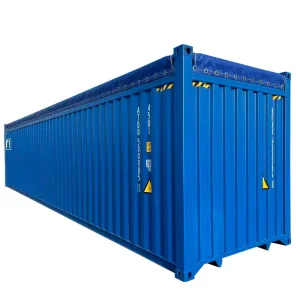
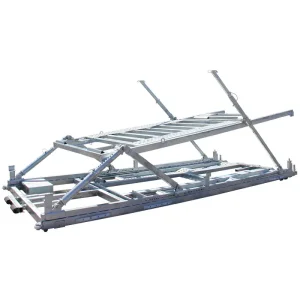
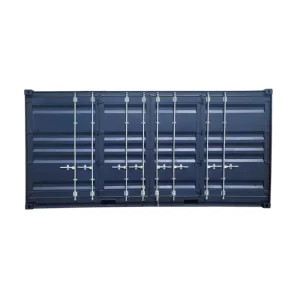
Expand your intermodal operational footprint with certified soft open-top containers, specialized vehicle transport racks, side-access haulage units, and premium cold storage systems.