
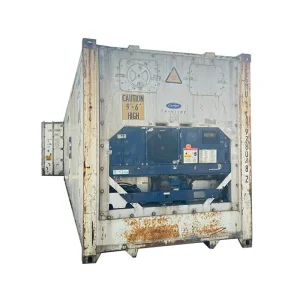
Heavy-duty structural bases engineered for extreme environmental insulation, commercial grow chamber modification, precision HVAC thermal control, and multi-modal transport resilience.
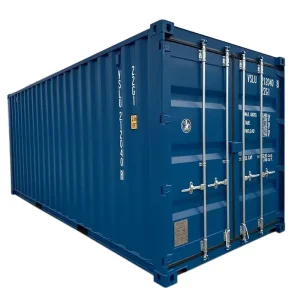
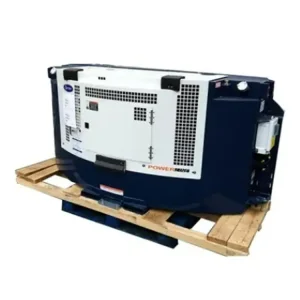
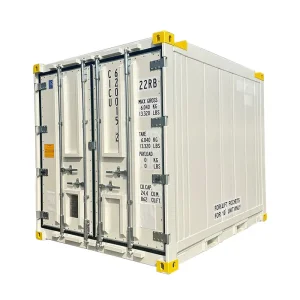
Industrial analysis on structural thermodynamics, bioclimatic envelope optimization, and closed-loop agro-technical parameters for containerized vertical farming.
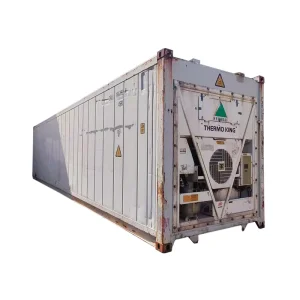
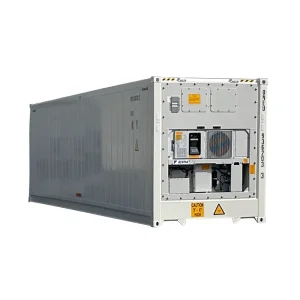
In modern agricultural infrastructure, the traditional greenhouse model is rapidly being augmented and supplanted by Controlled Environment Agriculture (CEA) Plant Growing Containers. Originating from ISO standard corten-steel shipping enclosures and advanced refrigerated reefer boxes, these micro-agricultural factories represent a paradigm shift in biosecure, zero-kilometer food production. CIMIC Group leverages over four decades of maritime engineering excellence (dating back to 1983) across its Tianjin and Suzhou facilities to fabricate turn-key, containerized cultivation platforms that isolate crops entirely from external meteorological volatility, pest vectors, and climatic extremes.
Unlike repurposed field kits that suffer from thermal bridging, condensation rot, and air leakage, purpose-engineered grow containers require military-grade airtightness, hygienic food-contact wall cladding (FRP/SUS304), high-pressure polyurethane (PUR/PIR) continuous core foaming with thermal resistance ratings up to R-30+ ($U$-factor ≤ 0.18 W/m²·K), and integrated HVAC-D systems capable of handling massive latent transpiration heat loads generated by dense horticultural LED arrays.
Constructed with high-tensile SPA-H Corten alloy steel, our plant grow containers feature anti-corrosion zinc-chromate primer, structural stackability up to 9-high fully ballasted, and CSC/BV safety approvals for seamless intermodal air, sea, and rail relocation.
Custom multi-stage inverter chillers and variable reheat coils balance sensible and latent heat loads. Our systems extract up to 120 liters of water daily from crop transpiration, purifying and recirculating 98% of the condensate back into the fertigation loop.
Equipped with solid-state, waterproof IP65 LED light racks providing dynamic photon spectrum switching (UV-A, Deep Red 660nm, Far Red 730nm, Royal Blue 450nm) capable of continuous PPFD exceeding 350 to 900 μmol/m²/s tailored to specific cultivars.
How CIMIC leverages heavy-industrial port hubs, vertical parts integration, and automated robotic assembly to deliver cost-effective, military-grade CEA containers worldwide.
Utilizing continuous automated high-pressure cyclopentane-blown polyurethane injection to guarantee zero micro-voids, uniform 0.021 W/(m·K) thermal conductivity, and absolute wall bonding.
Direct proximity to tier-1 Chinese metallurgical suppliers and HVAC compressor titans (Daikin, Carrier, Thermo King) eliminates tier markups, reducing capital expenditure (CAPEX) by 35% compared to Western assemblers.
Situated only ~100 km from Tianjin Xingang port and deep-water docks in Suzhou, our production lines eliminate costly inland transport barriers and ensure roll-on/roll-off dispatch within 48 hours of quality inspection sign-off.
Every custom container undergoes helium mass spectrometer leak detection, high-pressure typhoon water infiltration testing at 2.5 bar, and 72-hour continuous thermal holding burn-in before release.
From sub-zero Arctic mining camps to arid Arabian Gulf deserts, discover how our plant grow containers safeguard supply continuity and botanical purity.
Engineered to operate reliably in ambient temperatures exceeding +55°C. Equipped with dual-circuit condensing units, desert-grade sand filtration scrubbers, and closed-loop condensate recovery to produce leafy greens and vine crops in the GCC and North Africa using 95% less water than traditional open-field cultivation.
Built in compliance with EU GMP, GACP, and FDA Title 21 requirements. Features seamless ISO Class 6 cleanroom vinyl/stainless interior cladding, positive air pressure lobbies, HEPA H14 filtration, and zero-residue ozone sterilization cycles for medicinal botanical compounds and pharmaceutical cannabis.
Insulated to combat -45°C permafrost conditions for offshore oil rigs, Arctic research outposts, and high-altitude mining sites. Internal thermal break vestibules and smart load-balancing auxiliary heating guarantee uninterrupted year-round fresh vegetable yields without requiring external logistics support.
Autonomous multi-tier research enclosures equipped with split-spectrum LED controls, broad-spectrum CO&sub2; dosing up to 2000 ppm, and variable humidity chambers. Used globally by academic institutes to conduct climate resilience testing, transgenic breeding trials, and rapid seed multiplication.
Rapid sprout systems configured with automated flood-and-drain plumbing and specialized germination racks. Transforms barley, wheat, and corn seed into dense, enzyme-rich green cattle and equestrian fodder within 6 days, yielding over 500 kg of fresh forage daily per 40ft container.
Sleek, modular exterior architectural finishes designed for commercial parking lots, rooftop developments, and central distribution distribution centers. Delivers zero-food-mile culinary herbs, microgreens, and premium strawberries directly to metropolitan retail shelves.
How next-generation control algorithms and renewable microgrid integrations are reshaping total cost of ownership (TCO) in industrial vertical farming.
The contemporary standard of controlled environment cultivation relies on static setpoints: predetermined temperature schedules, fixed photoperiods, and scheduled irrigation flushes. CIMIC's R&D division is engineering the next evolutionary cycle across three core technical vectors:
1. Dynamic Vapor Pressure Deficit (VPD) Optimization via Machine Learning: By ingesting continuous stomatal conductance data, leaf surface thermal imagery, and ambient transpiration rates, our 2026 container models dynamically modulate HVAC compressor frequency, air knife velocity, and LED photosynthetic photon flux density (PPFD) in real-time, matching dynamic plant metabolic curves and slashing auxiliary cooling waste by up to 28%.
2. High-Pressure Ultrasonic Aeroponics (HPA): Transitioning beyond conventional nutrient film technique (NFT) and deep water culture (DWC). CIMIC's advanced grow containers feature high-pressure 80-bar atomizers creating 20–50 micron droplet nutrient mists delivered straight to suspended root systems, accelerating vegetative growth cycles by 35% while expanding yield density per cubic meter.
3. Grid-Tied BESS & Solar Integration: Future-proofing remote agricultural infrastructure. Structural container roofs now incorporate factory-welded unistrut channels to mount high-efficiency bifacial monocrystalline photovoltaic (PV) arrays, directly wired into internal 48V DC busbars and lithium iron phosphate (LiFePO4) Battery Energy Storage Systems (BESS) for complete off-grid autonomy in developing agricultural corridors.
Stringent multi-jurisdictional standards guarantee frictionless customs clearance, fire safety approvals, and rapid municipal utility interconnection.
Every container's central electrical cabinet is custom engineered to regional voltage regimes (110V/220V/380V/480V 3-phase, 50Hz/60Hz). Panels are pre-certified with UL 508A (North America) and CE (Europe) schematics, complete with Schneider/Siemens breakers and integrated surge suppression.
Designed to pass stringent municipal building codes. Features factory-routed NPT fire sprinkler piping, optical smoke and thermal detectors, emergency stop relays, and optional clean-agent gaseous (FM-200 / Novec 1230) fire suppression systems to safeguard multi-tier rack investments.
All modified container shells carry valid International Convention for Safe Containers (CSC) safety plates approved by Bureau Veritas (BV) or DNV. This allows units to travel via standard container freight lanes as cargo-bearing assets, avoiding expensive flat-rack or breakbulk ocean freight tariffs.
A transparent breakdown of procurement parameters, container chassis customizations, and field commissioning lifecycles for institutional investors.
Tailored interior architectures supporting multi-tier aeroponic A-frames, vertical ebb-and-flow benches, or automated seedling germination tables. Customization includes private-label branding, customized plumbing line manifolds, and remote IoT dashboard integration.
Units arrive 95% pre-wired, pre-plumbed, and pre-commissioned from the factory. Field deployment requires only level grade gravel/concrete footing, main electrical tie-in (camlock or terminal block), and municipal potable water hookup. Cultivation can begin within 24 hours of site delivery.
Unlike permanent indoor vertical farming warehouses subject to fixed lease agreements and stranded real estate capital, modular plant grow containers remain mobile assets that can be easily relocated, resold on secondary markets, or expanded incrementally as market demand dictates.
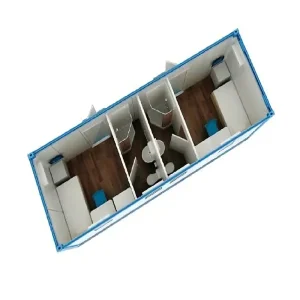
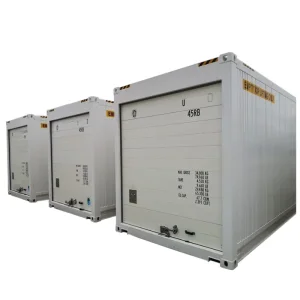
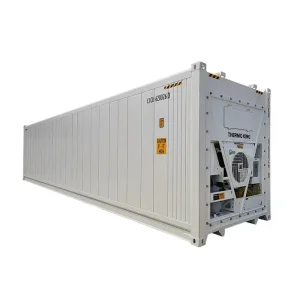
Explore the complete engineering spectrum: from offshore-grade heavy-cargo platforms to expandable onsite operator habitats and mobile power-generation units.
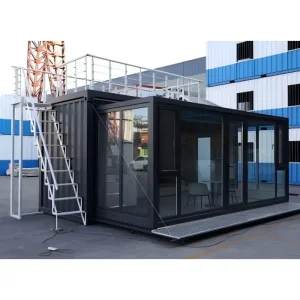
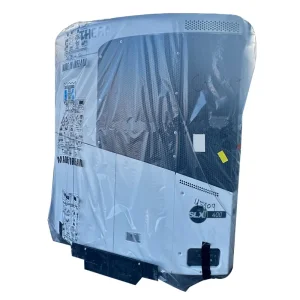

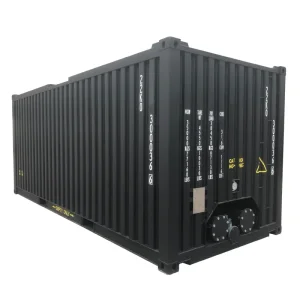
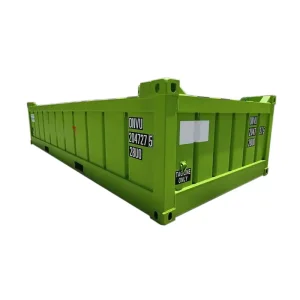

In-depth technical answers addressing cultivation yields, electrical infrastructure, HVAC dehumidification capacities, and global shipping certification.
A standardized 40ft HC vertical cultivation container configured with a 4-tier, 8-rack NFT or aeroponic gutter system provides approximately 50 to 65 square meters of active canopy cultivation area. For leafy greens such as butterhead lettuce, kale, or bok choy, this footprint yields between 3,200 and 4,400 heads per 30-day harvest cycle, translating to roughly 40,000 to 52,000 heads annually through optimized continuous staggered rotation.
Transpiration from thousands of mature plants creates substantial latent heat. Conventional air conditioners often ice up or cycle erratically under such vapor pressures. CIMIC integrates custom commercial HVAC-D (Dehumidification) systems with variable-speed inverter scroll compressors and modulated hot-gas reheat coils. The system maintains relative humidity precisely between 50% and 75% (±3%) without temperature swing, extracting water directly into filtration tanks.
Electrical consumption depends on lighting intensity (PPFD) and external ambient loads. A high-yield 40ft HC leafy-green container operates at an average continuous running load of 9 kW to 14 kW, with peak starts reaching 18 kW (HVAC, full-spectrum LEDs, pumps, dosers). For high-light flowering botanical crops, connected load capacity can reach 22 kW to 28 kW. We recommend providing a 200A single-phase (240V) or 60A–80A 3-phase (380V/480V) dedicated utility drop.
Yes. Leveraging our marine reefer manufacturing expertise, the container shell features a 75mm–100mm high-density polyurethane (42 kg/m³) core insulated wall structure with built-in thermal breaks, achieving an exceptional R-30+ thermal rating. The systems operate reliably in ambient extremes from -45°C (using auxiliary PTC electric core heaters) up to +55°C (equipped with specialized tropicalized condenser packages).
Yes. We engineer complete ODM/OEM automation panels built around industry-standard PLC frameworks (Siemens S7-1200 or Allen-Bradley) or open IoT protocols (MQTT, Modbus, BACnet). Our systems support automated 4-channel nutrient dosing (A, B, C, micronutrients), real-time EC/pH compensation, automated CO&sub2; injection, and secure remote telemetry via cloud-based smartphone and desktop portals.
All CIMIC plant grow containers are built upon certified ISO 668 dimensions and retain their Bureau Veritas (BV) or DNV CSC certification plates. Internal growing racks and HVAC equipment are rigorously shock-mounted and locked with vibration dampeners. Because the unit maintains standard container freight status, it is loaded into normal container vessel cells, ensuring rapid transit without the high surcharges associated with out-of-gauge breakbulk cargo.
Whether you require a single pilot modular grow pod for R&D trials or a multi-megawatt commercial container farm array, CIMIC delivers peerless engineering precision, documented ISO/BV quality, and direct factory pricing.