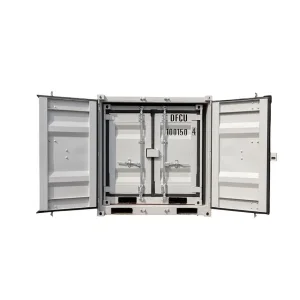
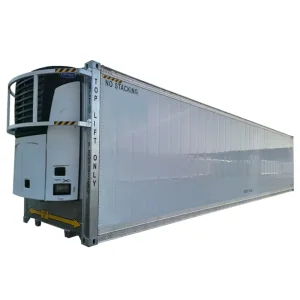
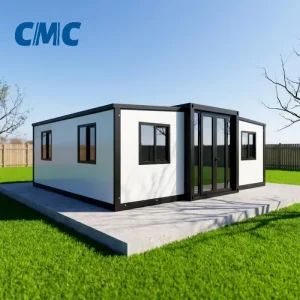
Verified CSC-certified marine shipping boxes, temperature-controlled reefer modules, and industrial offshore cargo assets engineered directly for international port terminal operations and freight logistics.
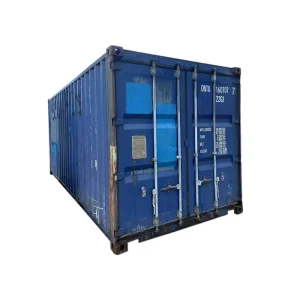
Examining why 9-foot 6-inch High Cube (HQ) configurations dominate modern intermodal transport, volumetric bulk logistics, and specialized structural enclosure integrations.
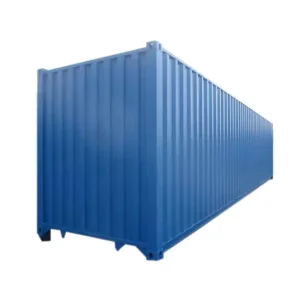
A standard general-purpose (GP) marine container operates at an exterior height of 8 feet 6 inches (2,591 mm). In contrast, the High Cube (HQ) container expands to 9 feet 6 inches (2,896 mm). This additional foot of interior vertical clearance translates into an instantaneous increase of 9.2 cubic meters in cargo stowage capacity, yielding 76.4 cubic meters total for standard 40ft variants.
For shippers dealing in volumetric, lightweight commodities such as consumer electronics, apparel, furniture, and battery energy storage modules, this vertical expansion prevents the container from "cubing out" prior to reaching its gross weight envelope, dramatically lowering per-unit freight costs across maritime trunk routes.
Every commercial HQ shipping container built by premier Chinese manufacturers utilizes JIS G3125 SPA-H atmospheric corrosion-resistant steel. This cold-rolled alloy incorporates balanced additions of copper, chromium, and nickel, enabling the structural substrate to generate a stable, self-regenerating oxide passivation patina when exposed to maritime salt fog.
Unlike standard carbon steel, which suffers catastrophic galvanic oxidation and rust scaling, SPA-H maintains structural yield strengths exceeding 355 MPa. This metallurgical profile ensures corner post stacking loads up to 216,000 kg (9-high laden stacking) under extreme rough sea heave accelerations.
Certified High Cube manufacturing adheres stringently to the International Convention for Safe Containers (CSC 1972) and ISO 1496-1 series testing protocols. Factory acceptance mandates full-scale transverse racking tests, longitudinal end-wall loading up to 0.4P, sidewall testing at 0.6P, and rigorous roof concentrated deflection analysis.
Every unit leaving the automated line is stamped with a stainless steel CSC approval plate verified by independent classification bodies such as Bureau Veritas (BV), ABS, or DNV, ensuring unobstructed global interchange across railways, chassis, and automated quay cranes.
From upstream metallurgy to specialized deep-water port proximity in Tianjin and the Yangtze River Delta, China produces over 90% of global intermodal container assets.
Chinese manufacturing hubs sit alongside major domestic metallurgical conglomerates including Baowu Steel and Ansteel. This direct supply connection guarantees access to certified SPA-H hot-rolled coils with zero logistical delays and favorable raw material indices.
From 28mm Apitong marine-grade bamboo-hardwood composite floor panels to dual-lip EPDM door seals and zinc-rich epoxy primers, all Tier-1 inputs are synthesized within localized industrial corridors, bypassing external import tariffs.
State-of-the-art Chinese container lines feature automated multi-head gantry submerged arc welding (SAW) and robotic continuous spot-welding systems. Side and roof corrugation presses stamp continuous wave profiles with zero localized thinning.
Advanced shot-blasting machines clean steel surfaces to SA 2.5 purity before robotic paint arms apply 3-coat waterborne paint systems, delivering dry film thickness (DFT) precision up to 120 microns that satisfies C5-M extreme marine corrosion resistance.
Factories positioned within 100 kilometers of deep-water port terminals such as Tianjin Port, Qingdao, and Shanghai enable immediate direct interchange. Shippers can avoid complex long-distance inland drayage charges and bottlenecked highway corridors.
Furthermore, Chinese exporters offer "One-Way Free-Use" (Cabotage) leasing schemes, allowing overseas buyers to load export freight inside brand-new HQ containers from China to Europe or North America, effectively neutralizing transoceanic empty repositioning costs.
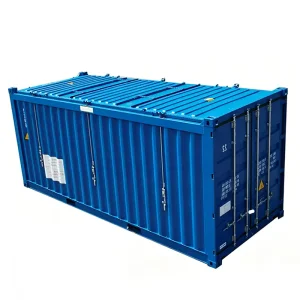
Beyond traditional standard dry freight ISO series, premier Chinese factories specialize in custom structural modifications: side-opening full doors, internal insulated polyurethane cores, integrated recessed genset bays, and heavy load floor reinforcements.
Our dedicated engineering department drafts customized 3D CAD and Finite Element Analysis (FEA) models within 48 hours, accommodating unique project requirements from high-power modular data centers to DNV 2.7-1 certified offshore skid containers.
Technical reference specifications certified under ISO 668, ISO 1496-1, and international maritime shipping standards for 40ft HQ, Reefer HQ, and Specialized configurations.
| Container Model Class | External Dimensions (L × W × H) | Internal Dimensions (L × W × H) | Door Opening (W × H) | Max Gross Mass | Tare Weight | Payload Capacity | Cubic Volume |
|---|---|---|---|---|---|---|---|
| 40ft High Cube Dry (40' HQ) | 12,192 × 2,438 × 2,896 mm | 12,032 × 2,352 × 2,698 mm | 2,340 × 2,585 mm | 32,500 kg | 3,880 kg | 28,620 kg | 76.4 m³ (2,700 cu.ft) |
| 40ft High Cube Reefer (Cold Chain) | 12,192 × 2,438 × 2,896 mm | 11,583 × 2,290 × 2,555 mm | 2,290 × 2,569 mm | 34,000 kg | 4,480 kg | 29,520 kg | 67.8 m³ (2,394 cu.ft) |
| 20ft High Cube Dry (20' HQ) | 6,058 × 2,438 × 2,896 mm | 5,898 × 2,352 × 2,698 mm | 2,340 × 2,585 mm | 30,480 kg | 2,340 kg | 28,140 kg | 37.4 m³ (1,320 cu.ft) |
| 40ft HQ Side-Door Open Variant | 12,192 × 2,438 × 2,896 mm | 12,010 × 2,320 × 2,650 mm | 11,800 × 2,520 mm (Side) | 30,480 kg | 5,200 kg | 25,280 kg | 73.8 m³ (2,606 cu.ft) |
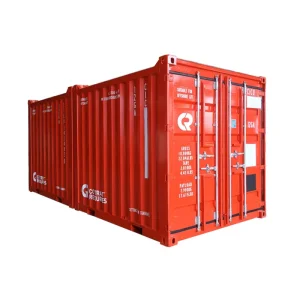
| DNV 2.7-1 Offshore Cargo HQ | 6,058 × 2,438 × 2,896 mm | 5,860 × 2,280 × 2,600 mm | 2,260 × 2,500 mm | 25,000 kg | 3,850 kg | 21,150 kg | 34.7 m³ (1,225 cu.ft) |
Optimized configurations engineered to integrate seamlessly across deep-sea container lines, Class-1 rail networks, and cross-border trucking highways.
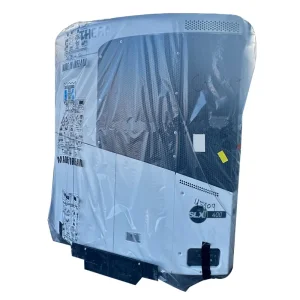
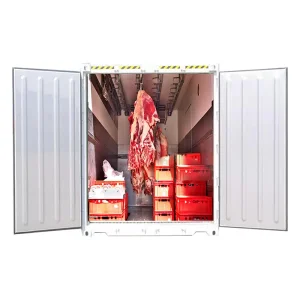
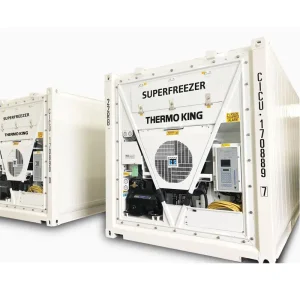
Our 40ft HQ refrigerated container variants deploy advanced scroll and digital inverter compressors from Thermo King, Carrier, and Daikin. These units precisely maintain interior temperatures ranging from -35°C to +30°C within a ±0.25°C variance envelope.
Equipped with micro-ventilation fresh air exchange dampers, high-pressure polyurethane foaming cores, and aluminum T-bar airflow flooring, our reefer containers protect deep-frozen seafood, high-value pharmaceuticals, and fresh agricultural produce across equatorial passages.
The global transition to renewable solar and wind micro-grids demands standardized utility-scale energy containment. Our customized HQ container shells serve as pre-engineered BESS battery rooms with integrated explosion vents, fire suppression piping, and HVAC structural duct cutouts.
Reinforced floor transverse cross-members sustain battery rack floor loadings surpassing 4,500 kg/m², fully compliant with NFPA 855 fire safety clearances and international electrical isolation standards.
With the rise of AI computation and localized 5G edge infrastructure, telecommunication providers convert our 20ft and 40ft High Cube containers into self-contained containerized data centers. The additional 305 mm vertical clearance allows easy installation of standard 42U server racks alongside overhead cable trays.
Units feature electro-magnetic shielding (EMC), internal vapor-tight rock wool thermal insulation, and multi-stage N+1 redundant precision cooling loops ready for immediate remote field turn-on.
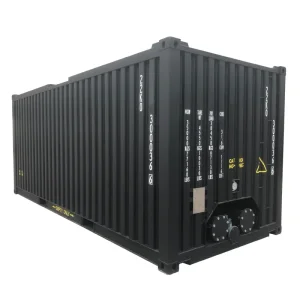
Designed for severe North Sea and Gulf of Mexico exploration platforms, our certified offshore HQ modules feature specialized Pad-Eye lifting lugs welded directly to strengthened corner casting assemblies, verified to withstand dynamic shock loads during supply vessel transfer.
Constructed in strict accordance with DNV GL-ST-E271 and EN 12079 standards, all materials undergo Charpy V-notch impact testing at -20°C to guarantee resilience against brittle fractures in freezing marine environments.
Discover how developers, mining operations, and emergency relief agencies adapt HQ container frames for rapidly deployable physical infrastructure.
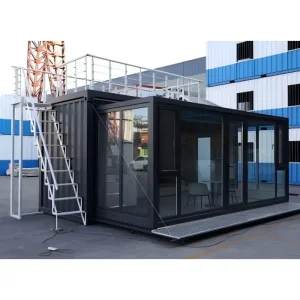
Utilizing high cube geometries provides standard residential ceiling heights after accounting for sub-floor piping, thermal insulation, and ceiling ventilation. Our factory constructs multi-unit mining exploration camps, military barracks, and emergency medical stations with integrated bathrooms, electrical circuits, and exterior architectural cladding.
For remote mining operations in Alaska, Northern Scandinavia, or Siberia, standard dry containers fail due to thermal bridging. We engineer custom thick-wall insulated containers using closed-cell polyurethane cores, dual vacuum-sealed doors, and auxiliary diesel/electric heating units that operate safely down to -50°C.
To eliminate loading delays in congested inner-city fulfillment nodes, our customized 40ft HQ roll-up door containers replace cumbersome swing doors with segmented commercial roller shutters. Forklifts can quickly pick pallets from street-level without needing extensive turning space.
Transparent quality control procedures designed to give corporate buyers, leasing enterprises, and project engineering leaders total confidence.
Every single manufactured container passes through an intensive high-pressure water spray tunnel. Operating under 200 kPa hydraulic pressure across all seams, corner fittings, and door gaskets, this process confirms zero water ingress under driving sea spray conditions.
Corner castings and critical structural stress joints undergo ultrasonic (UT) and magnetic particle testing (MT). Our non-destructive examination (NDE) protocols detect internal micro-porosity and lack of fusion before structural assemblies enter service.
Wooden and bamboo composite floors are strictly treated in accordance with Australian Department of Agriculture, Fisheries and Forestry (DAFF / AQIS) standards. Panels receive certified TCT treatment to eliminate biological pests prior to export clearance.
Factory inspectors work alongside on-site surveyors from Bureau Veritas, Lloyd's Register, ABS, or DNV. Each production batch receives certified documentation, material test certificates (MTC 3.1), and verified container identification codes registered under ISO 6346.
The container industry is adopting connected telematics, environmentally conscious coatings, and lightweight high-strength alloys.
Modern High Cube assets now feature built-in IoT tracking modules. Flush-mounted solar-powered sensor nodes relay real-time GPS locations, acceleration metrics for rough handling, door opening status, and internal humidity data via global cellular and satellite networks.
In step with global green industrial initiatives, our automated manufacturing facilities have transitioned entirely away from solvent-based coatings. Modern waterborne epoxy-acrylic paint systems reduce volatile organic compound (VOC) emissions by over 80% while enhancing UV chalking resistance.
To reduce dependence on scarce tropical rainforest hardwoods, Chinese container production lines use durable fast-growing bamboo strand lumber (BSL). These sustainably farmed composite floors offer greater surface hardness, reduced tare weight, and enhanced environmental responsibility.
Common questions from procurement directors, logistics managers, and modular construction contractors regarding HQ container manufacturing in China.
The primary difference is the exterior and interior height. A standard 40ft General Purpose (GP) container stands at 8 feet 6 inches (2,591 mm) high with an internal volume of approximately 67.7 m³. A 40ft High Cube (HQ) extends to 9 feet 6 inches (2,896 mm) exterior height, delivering 76.4 m³ of internal stowage volume—a 12.2% increase. The structural frame, corner posts, and gussets are specially reinforced to handle dynamic stacking forces at this elevated center of gravity.
Production begins with high-grade JIS SPA-H atmospheric corrosion-resistant Corten steel. After automated assembly, the entire steel frame is shot-blasted to SA 2.5 profile standards, removing all mill scale. A multi-layer coating system is then applied: a zinc-rich epoxy primer (providing cathodic sacrificial protection), followed by an epoxy intermediate build coat, and finished with a high-durability acrylic topcoat, totaling an average 120 microns DFT.
For standard dry freight 40ft HQ or 20ft HQ units, orders can start from 1 to 2 units if stock is available in our Tianjin or regional port yards. For fully customized OEM/ODM modifications (such as side roll-up doors, custom dimensions, or tailored equipment enclosures), the standard initial trial production run typically ranges between 2 to 4 TEU. This covers tooling calibration, structural FEA simulation, and physical classification society type-testing.
Yes. Known as "One-Way Free-Use" or cabotage repositioning, this option is commonly supported. Once your containers pass factory line inspection, we can coordinate with ocean carriers or freight forwarders to load compatible dry cargo directly at Chinese ports. The cargo pays for the ocean transit to your destination port (e.g., Rotterdam, Hamburg, Los Angeles, Melbourne), allowing you to receive your containers overseas with minimal repositioning costs.
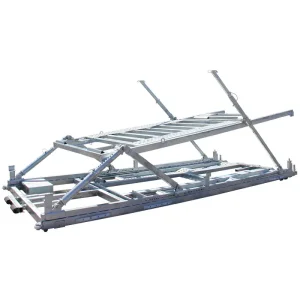
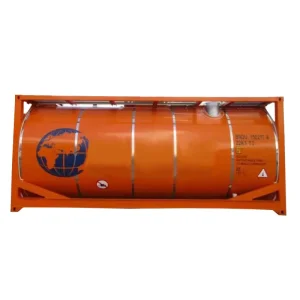
Explore chemical ISO tank containers, modular expandable units, mobile transport racks, and integrated electric reefer systems built to strict commercial tolerances.