
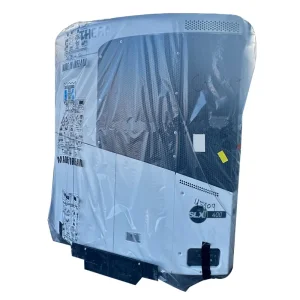
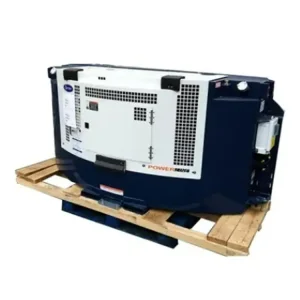
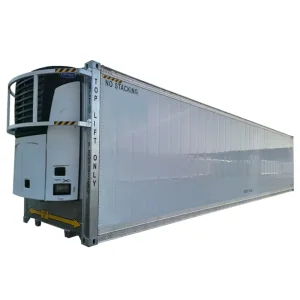
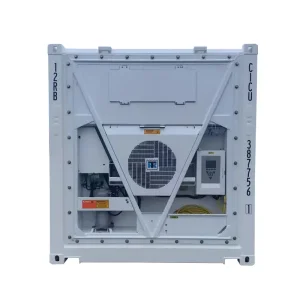
Reefer Genset Systems
Discover our premier selection of factory-certified ISO and specialized mobile equipment, engineered to withstand extreme maritime environments, rigorous land-bridge routes, and bespoke energy storage conversions.
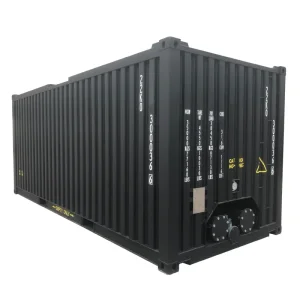
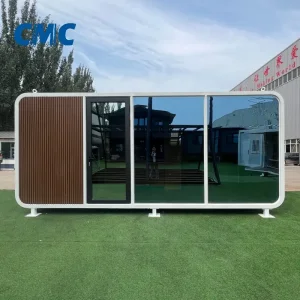
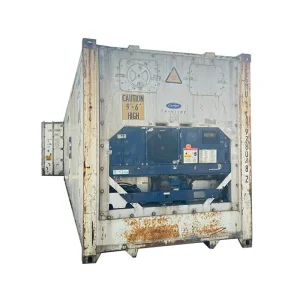
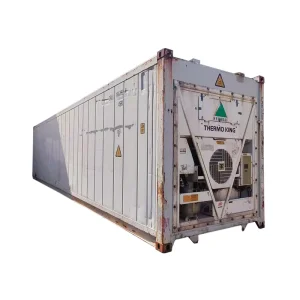
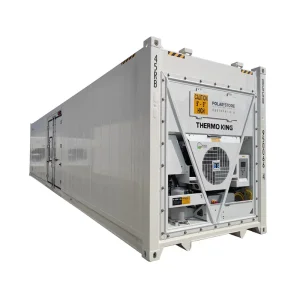
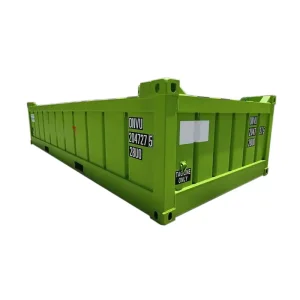
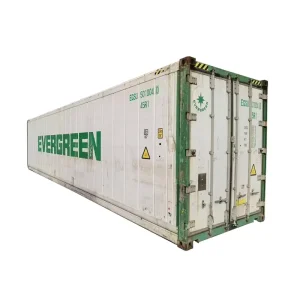
The 20-foot shipping container (1 TEU – Twenty-Foot Equivalent Unit) remains the bedrock of global multimodal commerce. Beyond standard dry freight, original design manufacturing (ODM) has catalyzed an industrial shift toward specialized, high-stress containerized payloads.
Global TEU Inventory in Active Circulation
Global Production Concentrated in China Hubs
Standard Max Gross Weight (ISO 668 Rating)
CSC Structural Safety Certification Threshold
While 40-foot containers accommodate voluminous consumer freight, 20-foot units dominate the dense, high-mass sector. Commodities such as mineral ore, industrial machinery parts, chemicals, bitumen, and liquids transported via ISO tank systems rely exclusively on 20ft platforms to satisfy strict bridge-load regulations and axle-weight ceilings on international rail and highways.
The transition toward renewable energy has transformed the 20ft container from a passive steel box into an active power infrastructure enclosure. Grid-scale Battery Energy Storage Systems (BESS), hydrogen electrolyzers, water purification plants, and data centers now leverage reinforced ODM 20ft chassis engineered with pre-installed HVAC cutouts, structural firebreaks, and UL9540A compliance.
Commercial fleets demand structural integrity under violent ocean motions (heave, sway, surge, roll, pitch, and yaw). Standard ISO containers offer standard racking resistance; however, industrial ODM engineering provides Charpy V-notch impact toughness down to -40°C, offshore DNV 2.7-1 dynamic sling test capabilities, and marine anti-corrosion coatings reaching ISO 12944 C5-M levels.
China's leadership in intermodal container fabrication is an engineered ecosystem combining localized raw metallurgical access, fully automated robotic manufacturing lines, and deepwater coastal proximity in northern industrial hubs like Tianjin and eastern bases like Suzhou.
| Manufacturing Dimension | CIMIC Chinese Production Facilities | Conventional Regional Fabricators | Procurement Impact |
|---|---|---|---|
| Raw Material Supply | Direct mill coupling with Baosteel / Ansteel; Certified Corten-A (SPA-H) coils | Secondary market steel procurement; variable alloy compositions | Guaranteed Tensile Yield (≥ 355 MPa) |
| Automated Welding | Robotic submerged arc welding (SAW) + multi-axis MIG seam trackers | Manual arc welding; high reliance on individual welder stamina | Zero defect porosity, watertight seals, 100% radiographic consistency |
| Surface Pre-Treatment | Automated whole-box shot blasting to SA 2.5 standard + Zinc-rich priming | Spot manual sanding or partial grit blast; uneven surface profiles | Guaranteed 25-year corrosion protection under ISO 12944 marine exposure |
| Port Proximity & Dwell | Tianjin Xingang & Shanghai gateways < 100 km; rapid FOB/CIF dispatch | Inland factories requiring 600+ km feeder transit before terminal arrival | Saves $600-$1,200 per TEU in domestic drayage; zero missing feeder loops |
| Quality Approvals | In-house BV, ABS, DNV, Lloyd's Register surveying stations with automated testing | Third-party batch testing requiring weeks of booking delays | Immediate CSC stamping and fast customs manifest release |
Modern China container plants deploy 2,000-ton hydraulic cold-pressing lines that turn Corten-A steel sheets into corrugated side panels with zero micro-fracturing. The structural corrugation geometry is calculated through Finite Element Analysis (FEA) to distribute side-wall bursting stresses from fluid, grain, or vehicle shifting in rough seas.
Modern ODM factories have transitioned entirely to waterborne paint systems, eliminating toxic VOC emissions without compromising anti-corrosive performance. Automated spray booths utilize 6-axis robotic arms that apply uniform dry film thickness (DFT 120-150 µm) across intricate understructures and corner joints.
Unlike inflexible mass-line operators, specialized manufacturers maintain a dedicated ODM engineering team. Detailed 3D SolidWorks and AutoCAD submittals, including custom access hatches, thermal insulation channels, blast-resistant bulkheads, and heavy equipment mounting studs, are finalized within 72 hours.
Standard dimensions give way to custom structural reinforcements. Discover the core deployment environments where 20-foot ODM shipping containers deliver calculated thermal, static, and dynamic advantages.
In North Sea or Gulf of Mexico operations, crane transfers from workboats to floating rigs subject cargo containers to extreme kinetic shocks. Our offshore-grade 20ft dry cargo and half-height ore boxes are fabricated with specialized structural steel (EN 10025 S355J2), four-point lifting slings with safety pad eyes, and zero-loss dynamic testing down to -40°C.
Viscous industrial goods like asphalt, heavy fuel oils, and specialty polymers freeze during transit. Specialized 20ft heated asphalt containers integrate longitudinal flame tubes, direct diesel burner ports, and mineral wool insulation jackets that enable direct on-site thermal liquification without external transfer vats.
In remote mining concessions, humanitarian camps, and military deployments, 20ft flat-pack and high-cube rigid structures deliver instant operational readiness. Pre-fitted with rockwool acoustic and thermal barriers, concealed fire-retardant wiring conduit, integrated HVAC ducts, and sanitary plumbing hookups, they transform into command pods within hours.
The global logistics equipment sector is undergoing profound technological changes driven by carbon accounting, intelligent IoT visibility, and advanced metallurgy.
Modern 20ft containers are rapidly becoming self-reporting digital nodes. Integrated low-power transceivers monitor internal temperature, humidity shock index, door-opening status, and spatial coordinates via GPS and low-earth orbit constellations, streaming real-time telemetry straight to SAP or enterprise ERP dashboards.
Scope 3 carbon reduction mandates from maritime carriers have driven container foundries to adopt hydrogen-reduced iron and electric arc furnace (EAF) steel plates. This structural Corten-A reduces embodied carbon by up to 60%, delivering verified Environmental Product Declarations (EPD) to European and American logistics enterprises.
Traditional reefer dependency on diesel clip-on generator sets is shifting to integrated lithium-ion buffer packs paired with solar-reflective Aerogel composite insulation walls. These hybrid 20ft reefer platforms ensure continuous cold-chain stability across 72 hours of remote rail haulage without direct combustion emissions.
Container lifecycle models are transitioning toward cradle-to-cradle designs. Floorboards made of traditional tropical hardwood (Apitong) have been replaced by sustainably harvested bamboo composites and recyclable high-strength steel corrugated floors, eliminating biosecurity quarantine fumigation steps with methyl bromide.
Procuring customized 20-foot intermodal equipment directly from Chinese ODM facilities requires structured supplier audits, tight mechanical verification, and lifecycle total cost of ownership (TCO) assessments.
Defining functional payload tolerances, internal point loads, dynamic center of gravity, and aperture reinforcements. SolidWorks simulations verify racking strength (up to 150 kN) before tooling begins.
Verifying mill test certificates (MTC) for SPA-H Corten steel and WPS/PQR welding compliance. Factory technicians carry EN ISO 9606-1 and AWS D1.1 certifications for high-stress joints.
Full-scale static load testing witnessed by classification society surveyors (BV, DNV, ABS, or CCS). Includes floor strength test, roof load test, transverse racking, and weather-tightness water spraying at 2 bar.
Shipper Owned Container (SOC) documentation issuance. Units can be directly loaded with cargo to offset one-way positioning freight, yielding significant logistics savings.
A common sourcing misconception is prioritizing lowest upfront capital expenditure ($/unit) over corrosion resistance and structural longevity. Standard paint coatings and non-Corten mild steel save roughly 12% at the factory gate, but accelerate rust perforation in aggressive offshore or tropical environments, requiring major rehabilitation within 4 years. Specifying certified SPA-H Corten-A steel, robotic hot-dip galvanized corner posts, and double-lip EPDM silicone door seals extends the operational lifecycle to 20+ years, reducing annualized asset depreciation by 43%.
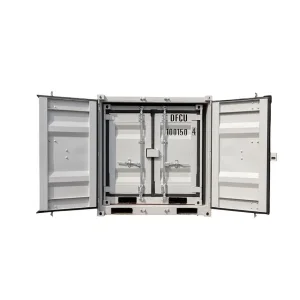
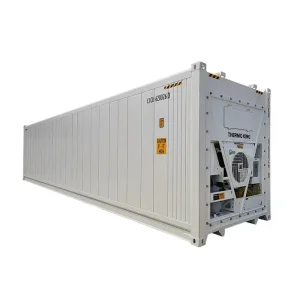
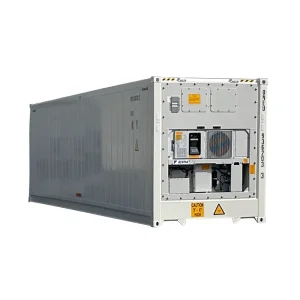
Complement your 20-foot core inventory with specialized auxiliary units: nested mini-storage modules, certified DNV offshore lifters, integrated generator sets, and high-cube refrigeration platforms.


Clear, documented answers by senior structural engineers covering international CSC approvals, metallurgy standards, customization lead-times, and offshore certification protocols.