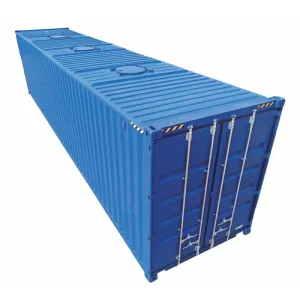
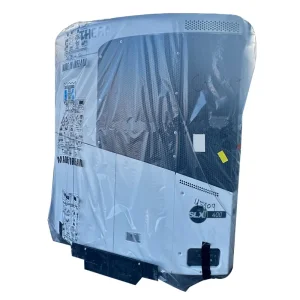
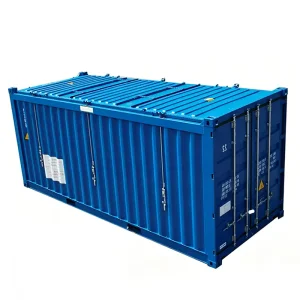
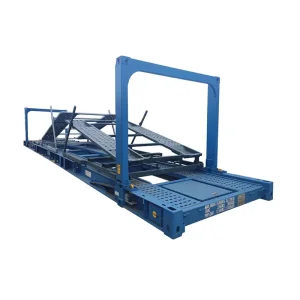
Precision-manufactured shipping containers engineered for maritime transport, chemical storage, high-density modular habitation, and active temperature-regulated reefer supply chains.
Tracing seven decades of structural engineering breakthroughs: How a standardized steel enclosure revolutionized global macroeconomics, trade logistics, and automated manufacturing.
Before the mid-1950s, international commercial freight was governed by ancient break-bulk cargo handling methodologies. Cargo was transported in mismatched crates, wooden barrels, jute sacks, and metal drums. At seaport terminals worldwide, thousands of longshoremen loaded and unloaded ships piece by piece using manual winch ropes, rope slings, and handcarts. A standard cargo freighter frequently spent over 50% to 65% of its total operational voyage time docked idly in port terminals, incurring crippling demurrage overheads, acute freight loss from pilferage, mechanical cargo crushing, and devastating maritime salt-air moisture exposure.
Freight loading throughput rarely exceeded an agonizing 1.5 to 2.0 tons per hour per hatch gang. This break-bulk logistics bottleneck kept international ocean freight rates exorbitant, rendering transcontinental supply chains unviable for low-margin finished goods and limiting global consumer access to high-tariff luxury commodities or essential raw minerals.
The true international breakthrough occurred when American entrepreneur Keith Tantlinger patented the twistlock corner casting mechanism and released the patents royalty-free to the International Organization for Standardization (ISO). This historic gesture paved the way for the seminal ISO specifications that dictate international freight equipment today:
Malcom McLean launches Sea-Land Service. Tantlinger designs the universal corner casting and spreader clamp interface, proving intermodal freight efficiency.
Ratification of ISO 668 (external dimensions/ratings) and ISO 1496 (internal structural integrity tests), establishing the universal 20ft and 40ft TEU benchmark.
Enactment of the International Convention for Safe Containers (CSC). Shift from Western shipbuilders to Asian industrial hubs (Japan, South Korea, Taiwan).
Rise of integrated Chinese heavy manufacturers (Tianjin, Yangtze River Delta), capturing over 95% of worldwide container production with automated lines.
Examining the current commercial deployment of over 25 million Twenty-Foot Equivalent Units (TEUs) across automated maritime corridors and cold-chain infrastructure.
The international active shipping container fleet hovers between 25.5 and 28 million TEUs. Over 90% of non-bulk global dry commodities, electronics, pharmaceuticals, and perishable agro-products move in standardized intermodal boxes across transpacific, Asia-Europe, and intra-regional sea lanes.
Modern ocean transit demands uncompromising metallurgical resilience. Corten-A (SPA-H) structural steel alloys form an insoluble ferric copper-chromium patina upon atmospheric exposure, preventing rust penetration under punishing oceanic salt-spray (ISO 12944 C5-M environment classification).
Containerization has transformed into an intelligent, digitized network. Modern ODM refrigerated and dry containers feature solar-powered wireless IoT telematics, logging GPS location, relative humidity, impact g-force, door-breach alerts, and internal temperature profiles in real time via satellite links.
| ISO Container Variant | Standard External Dimensions (L×W×H) | Max Gross Mass (MGM) | Tare Weight Range | Primary Industrial Application |
|---|---|---|---|---|
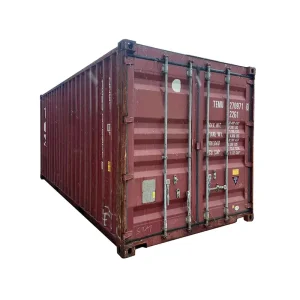
| 20ft General Purpose (GP) | 6,058 × 2,438 × 2,591 mm (20' × 8' × 8'6") | 30,480 kg (67,200 lbs) | 2,180 – 2,300 kg | Heavy mineral ores, machinery, bulk chemicals, industrial parts |
| 40ft High-Cube (HC) | 12,192 × 2,438 × 2,896 mm (40' × 8' × 9'6") | 32,500 kg (71,650 lbs) | 3,800 – 3,980 kg | Voluminous manufactured goods, e-commerce cargo, consumer apparel |
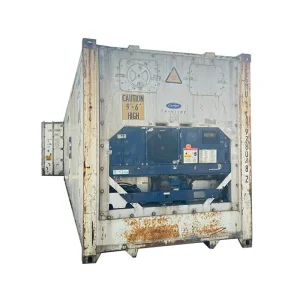
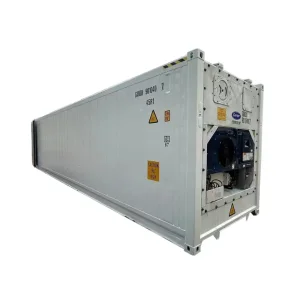
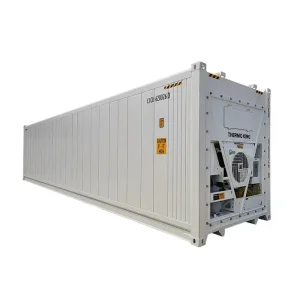
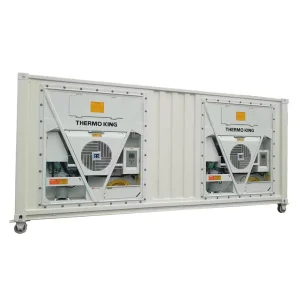
| 40ft HC Reefer (Cold Chain) | 12,192 × 2,438 × 2,896 mm (Carrier/Thermo King) | 34,000 kg (74,950 lbs) | 4,480 – 4,750 kg | Pharmaceuticals, fresh fruits, frozen meat/seafood (-30°C to +30°C) |
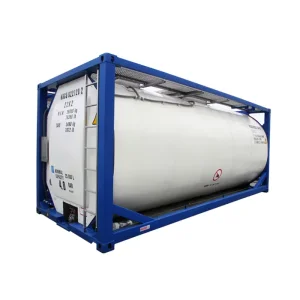
| 20ft ISO Tank (T11/T14) | 6,058 × 2,438 × 2,591 mm (316L Stainless Steel) | 36,000 kg (79,366 lbs) | 3,450 – 3,700 kg | Hazardous liquid chemicals, food-grade edible oils, liquid fuels |
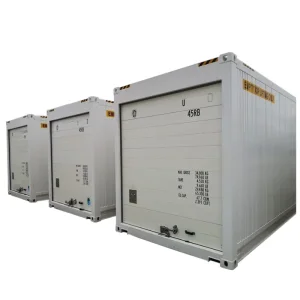
| DNV 2.7-1 Offshore Unit | Custom (10ft / 20ft / Half-Height) | Varies by offshore sling rating | Reinforced Pad Eyes | Subsea drilling rigs, offshore wind platforms, harsh marine lifting |
How Chinese heavy-equipment clusters in Tianjin and the Yangtze River Delta unified raw metallurgical supplies, robotic automation, and deepwater maritime port logistics.
China's undisputed leadership in intermodal container production—accounting for greater than 90% of global output annually—is not simply a product of labor scale. Rather, it represents an advanced, highly integrated ecosystem of raw material sourcing, automated metallurgical manufacturing lines, stringent quality inspection systems, and immediate deepwater seaport proximity.
In key industrial centers such as Tianjin, container fabrication plants operate within a ~100 km radius of deepwater marine terminals. This geographical synergy eliminates inland transportation bottlenecks, enabling containers to transition straight from the final automated paint-curing oven to port staging yards under one-way export loading contracts (SOC - Shipper Owned Containers).
Direct alignment with major Chinese steel mills guarantees traceable heats of Corten SPA-H steel plate, eliminating supply lag and guaranteeing ASTM A242 yield strengths exceeding 345 MPa.
Multi-axis robotic submerged arc welding and fiber laser cutting lines deliver absolute dimensional repeatability across corner post profiles and corrugation panel pitch tolerances within ±1.0 mm.
Automated shot-blasting to Swedish Standard Sa 2.5 coupled with three-coat waterborne paint systems (zinc primer, epoxy intermediate, polyurethane finish) eliminates VOC emissions while guaranteeing C5-M durability.
Native partnerships with global cold-chain machinery brands (Carrier Transicold, Daikin, Thermo King) ensure factory-installed reefer warranties, PTI test compliance, and international service access.
Every production batch undergoing ODM custom fabrication must withstand catastrophic load certifications before receiving valid CSC safety approval plates.
Simulating extreme vessel stack dynamics, vertical hydraulic rams apply 848 kN of compressive load simultaneously to all four corner posts for 5 minutes without post-buckling or weld displacement.
A loaded forklift axle of 7,260 kg (16,000 lbs) traverses the 28mm Apitong marine plywood floor panels, confirming structural integrity under repeated mechanical loading cycles.
Water nozzles blast all door gaskets, roof sheets, and corner fittings at 2 bar (29 psi) pressure from a distance of 1.5 meters, verifying zero water ingress under marine storm conditions.
The evolution of intermodal architecture into highly specialized modular enclosures, mobile energy storage, offshore exploration, and architectural living systems.
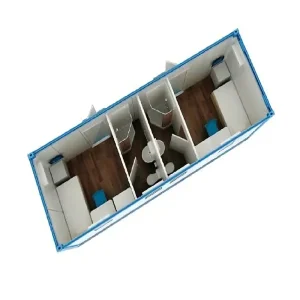
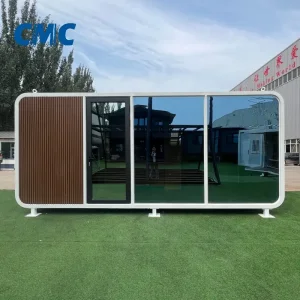
Leveraging the structural rigidity of ISO steel corner frames, modular container housing provides instant living quarters, luxury glamping pods, and remote worksite field offices. Engineered with polyurethane foam insulation, tempered low-E double glazing, and integrated CE/UL certified electrical wiring conduits.
Custom ODM modified ISO boxes engineered to house high-density lithium iron phosphate (LiFePO4) energy storage racks. Fitted with automated aerosol fire suppression systems, thermal HVAC management, explosive relief roof vents, and structural floor reinforcement supporting loads over 40 tons.
Specifically reinforced for offshore crane lifting in choppy waters (North Sea, Gulf of Guinea). Manufactured using high-impact Charpy V-notch tested steel at -20°C, fitted with certified 4-point wire rope rigging slings, ensuring complete personnel and payload safety on offshore exploration platforms.
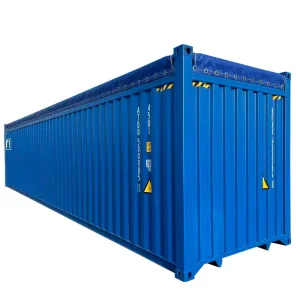
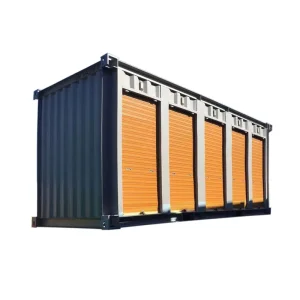
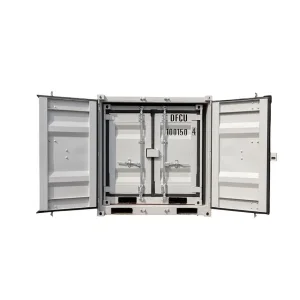
Expanding global fleet flexibility: Discover roll-up storage units, blast freezers, car carriers, mobile genset cooling systems, and compact mini-storage containers.
An engineer's roadmap for international corporate procurement teams: Navigating classification society surveys, factory audit criteria, and Total Cost of Ownership (TCO).
Never procure uncertified inventory. Ensure units bear authentic CSC approval plates sanctioned by Bureau Veritas (BV), American Bureau of Shipping (ABS), Lloyd's Register (LR), or China Classification Society (CCS), validating compliance with IMO design guidelines.
Dramatically reduce intercontinental delivery expenditure by capitalizing on Shipper-Owned Container (SOC) programs. New containers can be leased or provided to shipping lines for a single revenue-earning cargo voyage, delivering your asset directly to European or American ports with near-zero deadhead freight fees.
For reefer procurement, mandate documented Pre-Trip Inspection (PTI) certificates. The automated test cycles verify compressor electrical draw, refrigerant charge, evaporator defrost efficiency, and setpoint pull-down speeds from ambient (+30°C) to deep freeze (-25°C) within four hours.
Direct technical answers to the most critical mechanical, regulatory, and logistical questions encountered by corporate buyers, fleet managers, and engineering contractors.
ISO shipping containers are engineered for land-based and container-vessel cellular guides, where stacking and vertical compression are handled via eight corner castings. In contrast, DNV 2.7-1 / EN 12079 certified offshore containers are designed for dynamic lifting in open marine sea states where waves impart severe snatch acceleration. DNV containers feature heavy-gauge structural box sections, high-grade Charpy impact-tested steel, certified four-point padeyes welded directly to main frames, and undergo stringent Non-Destructive Testing (NDT) to prevent brittle failure under freezing offshore conditions.
An active refrigerated (reefer) container integrates an electrically driven refrigeration condensing and evaporating unit (e.g., Daikin, Carrier, Thermo King) requiring a 380V/460V 3-phase power supply to actively pull down, freeze, or heat interior temperatures across -30°C to +30°C. An insulated container, conversely, relies purely on passive high-density polyurethane foam or vacuum insulation panels (VIP) sandwiched between internal stainless steel and external Corten walls. It requires no electrical input and is utilized for short-duration transit of temperature-stable cargo that must avoid temperature spikes.
Corten SPA-H (JIS G3125) is an atmospheric weathering steel alloyed with copper, chromium, and nickel. Unlike ordinary carbon steel which sheds expanding rust flakes and progressively corrodes, Corten forms a dense, passivated, insoluble oxide layer (patina) upon exposure to alternating wet and dry maritime environments. This barrier protects the base metal, extending container service lifetimes beyond 15–20 years in harsh oceanic salt-fog conditions.
Standard ISO dry and catalog reefer containers generally have minimal order thresholds, often starting from 1 to 2 units for port-stock assets. For bespoke ODM/OEM engineering requiring specialized tooling, customized dimensions (e.g., mini-storage nests, roll-up shutter configurations, internal structural bulkheads, or electrical BESS battery modifications), production runs typically commence at 5 to 10 TEUs to offset robotic jig calibration and classification society prototype stress-testing.
Cargo Worthy (CW) designates that a retired fleet container has passed structural survey verifying that the corner castings, floor crossmembers, door gaskets, and main posts meet safety requirements to hold a valid CSC plate for international sea carriage under loaded conditions. IICL-5 is a significantly stricter standard formulated by the Institute of International Container Lessors, dictating tight limits on wall dent depth (often < 25mm), zero floor delamination, clean welds, and minimal surface corrosion, making IICL-5 units prime candidates for high-value leasing or architectural conversions.
Tianjin represents Northern China’s premier industrial maritime gateway. Container fabrication plants situated roughly 100 km from Tianjin Port enjoy seamless bonded expressway corridors directly to deepwater container berths. This infrastructure bypasses domestic rail congestion, reduces inland drayage costs, and allows custom-fabricated or used container fleets to be positioned, CSC-inspected, and loaded onto ocean vessels within 48 to 72 hours of manufacturing completion.