Engineered to handle trans-Eurasian railway vibration and desert route thermal absorption. Fully configured for Tashkent, Samarkand, and Fergana distribution nodes.
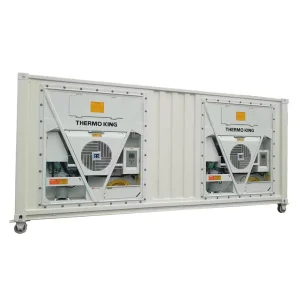
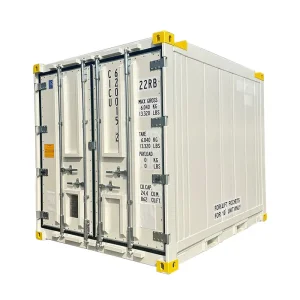
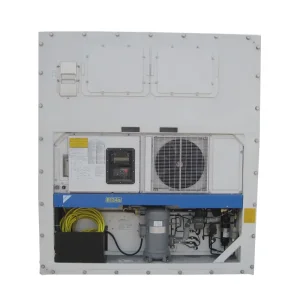
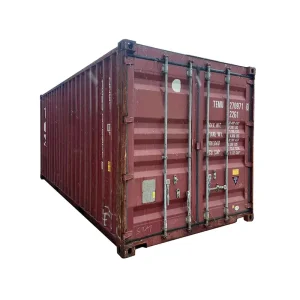
Uzbekistan is rapidly emerging as the central agro-industrial export powerhouse of Central Asia. The government’s nationwide agrarian modernization directives have transformed thousands of hectares in the Fergana Valley, Samarkand, Surkhandarya, and Tashkent regions into high-density orchards exporting sweet cherries, apricots, pomegranates, and table grapes to the Eurasian Economic Union (EAEU), China, and Gulf nations.
However, traditional cold storage facilities in Central Asia often rely on static freon-based warehouse chillers that induce severe moisture depletion and cellular rupture. During the peak harvest months of June and July, ambient temperatures across the Kyzylkum and Karakum desert corridors routinely exceed +45°C. Standard holding reefers simply lack the refrigeration compressor displacement and static airflow pressure necessary to remove field heat (sensible heat) rapidly.
This fundamental thermodynamic limitation causes massive post-harvest spoilage—exceeding 28% in vulnerable stone fruits. Modern Blast Reefer Containers (Quick-Freezing ISO modules) bridge this infrastructural chasm by providing decentralized, immediate cryogenic-equivalent freezing directly at regional aggregation yards, locking in turgor pressure, cellular membrane integrity, and export-grade Brix levels.
The international cold chain sector is undergoing a massive engineering transition. Regulatory pressures under the Kigali Amendment to the Montreal Protocol demand immediate phase-down of high-GWP hydrofluorocarbons (HFCs) such as R404A in favor of low-GWP refrigerants like R452A, R513A, and natural CO2 (R744) systems.
Concurrently, the expansion of the "Middle Corridor" (Trans-Caspian International Transport Route) and the accelerated construction of the landmark China-Kyrgyzstan-Uzbekistan (CKU) Railway are rerouting continental freight flows away from maritime detours onto overland rail ribbons. Intermodal containerized freezing modules must endure rigorous dynamic vibrations, long diesel-generator runtimes across non-electrified desert track spans, and gauge-switch transshipment shocks (from standard 1,435 mm to Russian 1,520 mm rail bogies).
A blast reefer is not merely a chilled box; it is an industrial thermodynamic shock machine designed for massive latent heat removal.
| Performance Specification | Industrial Blast Reefer Container (CIMIC Grade) | Standard Conventional Maritime Reefer | Operational Significance for Uzbekistan Exporters |
|---|---|---|---|
| Operating Temperature Range | +20°C down to -40°C / -60°C (Deep Cryo) | +25°C down to -25°C | Essential for shock freezing raw beef, lamb, poultry, and shock-chilling cherries for premium shelf life in Moscow and Beijing supermarkets. |
| Evaporator Airflow Velocity | Dual/Triple High-Static Blowers (>6,800 m³/h) | Single/Dual Standard Blowers (~3,200 m³/h) | High CFM penetrates deep pallet cores, stripping heat boundary layers instantly to eliminate internal hot spots. |
| Compressor Architecture | Multi-Stage Semi-Hermetic / Digital Scroll (30–45 HP) | Single-Stage Scroll / Reciprocating (5–9 HP) | Handles sudden thermal shock loads when loading 15 tons of ambient +35°C fresh-picked produce without tripouts. |
| Insulation & Thermal Barrier | 85mm–100mm High-Pressure Cyclopentane Polyurethane + VIP | 50mm–65mm Standard Polyurethane Foam | Guarantees K-value < 0.32 W/m²K, preventing cold leakage across burning 48°C Karakum Desert rail tracks. |
| Internal Floor Geometry | Deep High-Flow Extruded Aluminum T-Floor (75mm Profile) | Standard Shallow T-Floor (45mm Profile) | Maintains unobstructed aerodynamic air return even when cargo is fully floor-loaded on non-palletized configurations. |
| Defrosting Mechanism | Intelligent Hot-Gas Bypass + High-Output Electric Heaters | Timed Electric Resistance Heaters | Clears frost buildup within 12 minutes without raising internal product temperature above critical frozen thresholds. |
Advanced VFD modulating compressors adjust stroke volume continuously to match real-time thermal load. Eliminates harsh start-up amperages, making them completely compatible with portable Central Asian rail diesel generators (Gensets).
Fabricated using SPA-H anti-corrosion Corten steel structural corner posts and side rails. Treated with marine-grade 3-layer zinc-rich epoxy paint systems that resist the saline dusting of the Aral Sea basin and mineral transport exposure.
Optional nitrogen purge and O2/CO2 scrubber modules retard cellular respiration in climacteric fruits. Extends export life for Samarkand grapes and Fergana apples up to 45 days for rail freight delivery to the Far East.
Custom-engineered thermal solutions resolving geographic bottlenecks in agriculture, logistics, and healthcare.
Deployable mobile blast freeze stations situated directly adjacent to horticulture aggregation clusters. Rapid core-temperature chilling of fresh sweet cherries and peaches preserves export grade texture, eliminating weight loss from moisture transpiration during customs transit.
Navoi International Airport serves as Uzbekistan's primary multimodal air-and-rail cargo crossroads. Multi-temperature blast units provide buffer holding and shock consolidation for perishables before air-freighting to Frankfurt, Incheon, and Dubai.
The Tashkent Pharma Park and national vaccine distributors require ultra-strict validation (+2°C to +8°C cold chain, and -20°C to -70°C deep freeze). Our units fulfill WHO Good Distribution Practice (GDP) protocols, with redundant dual compressors ensuring zero single-point failure.
Uzbekistan Railways (O‘zbekiston Temir Yo‘llari) operates on 1,520 mm track gauge. Our blast units are reinforced with heavy corner casting assemblies and dynamic tie-downs compliant with UIC and AAR railway standards for continuous shock exposure.
Livestock slaughterhouses processing beef and mutton require immediate deep shock freezing to -35°C to halt microbial propagation and achieve veterinary certification for export to Saudi Arabia and the UAE.
Large-scale gas processing facilities in Ustyurt and gold mining operations in Muruntau demand autonomous cold storage resilience. Ruggedized container bodies protect perishable camp provisions against sandstorms, dust infiltration, and severe voltage dips.
Connect with our technical engineering group for complete thermodynamic pull-down simulations, customized CAD blueprints, and turnkey DAP Tashkent quotations.
Strategic advancements advancing efficiency, off-grid endurance, and predictive digital maintenance across overland supply routes.
Eliminating fluorinated greenhouse gases through ultra-high pressure CO2 refrigeration cycles. Delivering higher volumetric cooling capacities and vastly superior thermodynamic performance under freezing sub-zero ambient winter environments.
Integrating flexible thin-film photovoltaic arrays on container roof panels to power electronic telematics, evaporative fan arrays, and auxiliary battery banks during daytime rail staging stops, cutting diesel burn by 35%.
Machine-learning sensors detect exact ice crystal accretion on cooling fins via infrared delta-T differentials, triggering defrost cycles only when necessary instead of fixed time intervals, preserving thermal stability.
Critical engineering considerations, electrical guidelines, and customs routing facts for supply chain planners.
A conventional holding reefer is engineered solely to maintain the temperature of already-frozen or pre-chilled goods. Loading warm produce (+25°C to +35°C) into a standard reefer causes prolonged thermal stagnation, requiring 24 to 48 hours to reach frozen state, which severely degrades cell walls. In contrast, an industrial Blast Reefer utilizes oversized compressors (30+ HP) and high-CFM blowers to pull down full core temperatures from +25°C to -18°C within 3 to 6 hours, safeguarding cellular integrity.
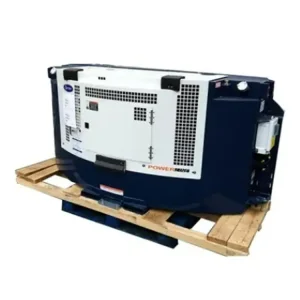
During trans-Eurasian rail freight movements across non-electrified desert segments, our blast reefer units are powered via heavy-duty clip-on diesel generator sets (Gen-sets) mounted directly to the container header or rail flatcar chassis. These units feature large-capacity fuel tanks (typically 450–500 Liters) ensuring uninterrupted operational autonomy exceeding 120 continuous hours, backed by automatic dual-frequency (50/60Hz) power switching.
All export containers arrive with full International Convention for Safe Containers (CSC) approval plates, Bureau Veritas (BV) or China Classification Society (CCS) certificates, ISO 1496/2 refrigeration test documentation, and TIR carnet compatibility sealing fixtures. This guarantees swift, tariff-compliant clearance at inland customs terminals such as "Ark-Buloq" and "Chukursoy" in Tashkent.
Yes. Our tropicalized condenser coils are engineered with hydrophobic micro-channel aluminum fins and multi-circuit copper tubing specifically designed for heat dissipation up to +55°C ambient temperatures. Coupled with 100mm high-density polyurethane wall insulation containing cyclopentane blowing agents, the heat ingress coefficient is strictly constrained below 0.32 W/m²·K.
Direct overland rail transit from our manufacturing and staging yards near Tianjin/Lianyungang to Tashkent (via Khorgos / Alashankou and Dostyk borders) typically requires 14 to 18 transit days. Units are thoroughly pre-trip inspected (PTI) with validated calibration charts issued before rail car loading.
Yes. We regularly supply tailored OEM configurations including stainless steel meat hanging rails (with 1,200kg per track linear rating), side-access inspection hatch doors, internal emergency release escape plungers, and non-slip checkered aluminum floor overlays suited for heavy forklift driving operations.
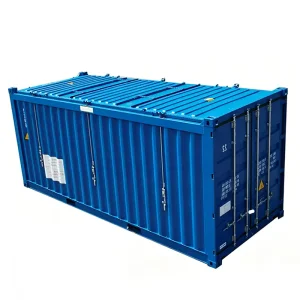
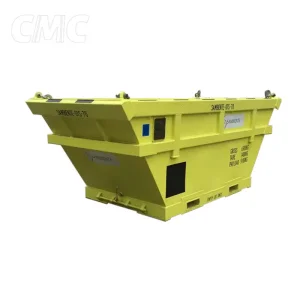
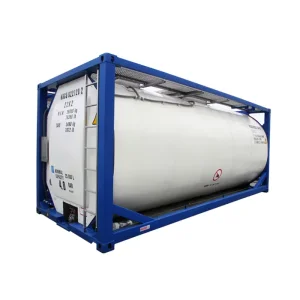
Complete multi-modal container assets: gen-set auxiliaries, heavy open-top units, offshore baskets, chemical ISO tanks, side-door reefers, and modular field structures.
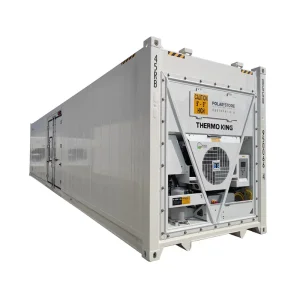
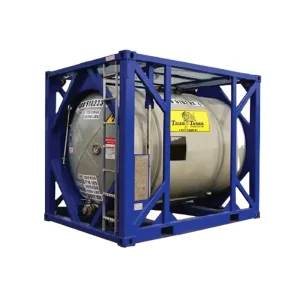
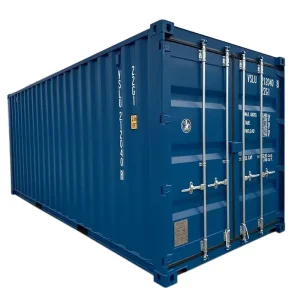
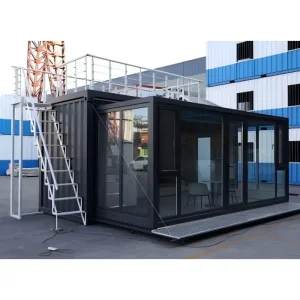
From initial thermal capacity sizing to delivery at Tashkent customs terminals, our engineering and export dispatch team guarantees certified quality, full warranty coverage, and verified temperature performance.
