
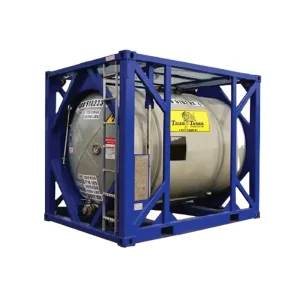
Fully compliant with dynamic loading requirements, marine offshore pad-eyes, multi-leg wire rope slings, and deepwater safety standards.
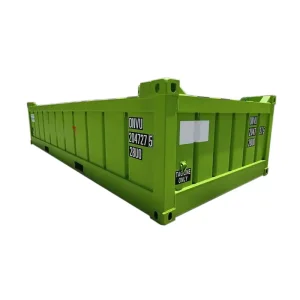
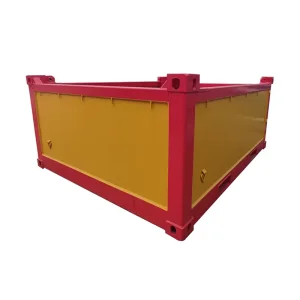
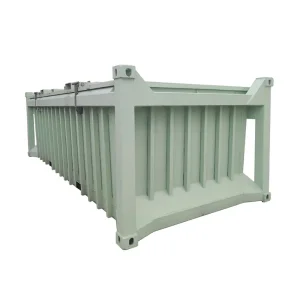
A rigorous review of energy exploration logistics, maritime safety protocols, and supply base integration throughout the Indonesian archipelago.
Jakarta functions not only as the administrative nexus of Indonesia’s oil, gas, and energy initiatives under SKK Migas, but also serves as the operational headquarters for procurement and maritime engineering. With deepwater exploration accelerating across the East Kalimantan Makassar Strait, the Natuna Sea basin, and the Masela block, Jakarta acts as the critical supply consolidation hub. High-integrity Offshore Containers, Cargo Carrying Units (CCUs), and specialized tank containers imported via Jakarta’s primary maritime gateway—Tanjung Priok—form the backbone of supply vessel logistics feeding drilling rigs, FPSO units, and production platforms across the nation's 17,000 islands.
Standard ISO shipping containers fail drastically under offshore lifting environments due to unpredictable sea states, wave impacts, and extreme acceleration dynamics during vessel-to-rig crane transfers. Consequently, marine safety regulations enforced by Ditjen Perhubungan Laut (Hubla) demand absolute adherence to global benchmarks such as DNV 2.7-1 (standard for offshore containers), ISO 10855, and EN 12079. For logistics engineers and project procurement leads in Jakarta, sourcing certified CCUs directly from premier Chinese container manufacturing hubs guarantees regulatory compliance, third-party certification (Bureau Veritas, DNV, Lloyd's Register), and extended operational lifespans under corrosive equatorial climates.
On a macro scale, the global offshore container industry is experiencing a profound transition driven by the dual imperatives of offshore energy revitalization and strict environmental safety protocols. The global offshore CCU market, historically dominated by leasing models in the North Sea and Gulf of Mexico, is registering double-digit expansion across Southeast Asia. As subsea projects reach deeper waters and subsea tie-backs expand, the standard payload-to-tare ratio of cargo units has come under heightened scrutiny.
Moreover, global supply chains have increasingly shifted toward integrated turn-key manufacturing. High-grade Corten steel (SPA-H), low-temperature impact testing down to -20°C (or -40°C for extreme applications), and multi-stage C5-M marine epoxy paint systems have transitioned from optional upgrades to mandatory industry baselines. As shipping lines adjust trade lanes, Jakarta benefits from direct maritime corridors connecting heavy industrial ports like Tianjin and Shanghai, giving Jakarta-based EPC contractors, mining consortiums, and subsea operators rapid logistical advantages over traditional re-export routes.
Every offshore container undergoes exhaustive finite element analysis (FEA), 2.5x dynamic drop and tilt testing, and non-destructive weld testing (NDT/MPI) by accredited classification societies before shipping to Tanjung Priok.
Jakarta and Indonesian offshore waters present extreme relative humidity and salt aerosol conditions. Our CCUs are sandblasted to SA 2.5 and layered with zinc-rich marine primer and polyurethane topcoats exceeding 300μm DFT.
Engineered for violent dynamic accelerations at sea. Heavy structural cross-members, integrated internal lashing rings (rated to 5 tonnes), and reinforced checker plate flooring safeguard payloads during heavy swell transfers.
Tailored structural configurations engineered to solve distinct field engineering hurdles in Indonesian waters.
Drilling operators servicing offshore platforms from bases in Marunda Center or Tanjung Priok require continuous replenishment of barite, bentonite, drill bits, and downhole logging equipment. Offshore Dry Cargo and Open-Top Containers facilitate rapid top-loading via crane, fitted with certified 4-leg wire rope slings with master links, ready for immediate offshore offloading from Platform Supply Vessels (PSVs) under sea states reaching Beaufort Scale 6.
Subsea drilling operations demand 30ft to 70ft cargo baskets designed to carry tubular casings, drill collars, and production tubing. Our offshore tool baskets feature reinforced sidewalls, multiple internal tie-down eyes, integrated drainage ports to prevent corrosive saltwater pooling, and certified side-loading doors for rapid access on restricted rig decks.
With Indonesia’s booming nickel, bauxite, and gold processing industries, half-height ore carrier containers have become fundamental to multi-modal logistics. Moving heavy, high-density mineral aggregates from remote island pits to transshipment barges requires low-profile, reinforced steel CCUs that withstand continuous 30-tonne excavator drops and rapid tipper unloading without structural degradation.
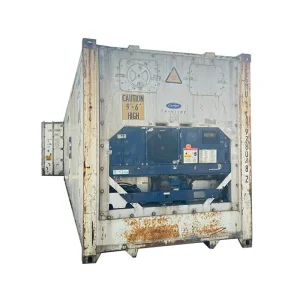
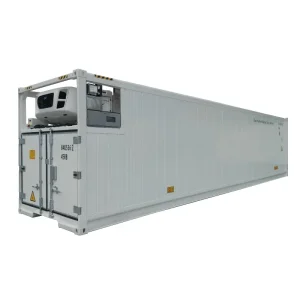
Crew safety and food logistics on remote accommodation barges and offshore drillships hinge on reliable refrigeration. DNV-certified Offshore Reefer Containers featuring Daikin, Carrier, or Thermo King units operate continuously under 45°C ambient tropical heat, ensuring uninterrupted cold storage for critical offshore crews.
Integrating telemetry, circular materials, and structural intelligence into offshore logistics.
Integration of ATEX/IECEx Zone 1 certified GPS, acceleration sensors, and internal temperature monitors for real-time tracking across remote maritime zones.
Adoption of ultra-high-yield low-alloy steels and impact-resistant lightweight composite wall panels to reduce tare weight by up to 18% while enhancing payload capacity.
Embedded strain-gauge sensors within pad-eyes and primary corner pillars to calculate structural fatigue cycles and predict maintenance before offshore lifting failure.
Hydrogen fuel cell and solid-state auxiliary battery hybrid cooling systems eliminating diesel generator reliance during extended offshore supply vessel standby.
Ensuring frictionless procurement, international maritime compliance, and accelerated delivery cycles from China to Indonesia.
Purchasing capital equipment for marine offshore energy mandates uncompromising quality control. Every batch fabricated for deployment in Jakarta undergoes certified material analysis (3.1 Material Certificates for steel plates and structural hollow sections), Charpy V-Notch impact testing at -20°C, and 100% visual and magnetic particle inspection of dynamic load-bearing welds. Final proof-load testing is conducted under the witness of internationally recognized certifying authorities such as Bureau Veritas, DNV, or ABS. Comprehensive technical data dossiers (MDR - Manufacturer's Data Record), including slinging calculations, weld maps, and coating adhesion logs, are delivered concurrently with physical shipment, enabling swift regulatory clearance by Indonesian port customs and offshore safety inspectors.
Headquartered proximate to North China's premier deepwater shipping berths (Tianjin Xingang Port), our export operations eliminate inland bottlenecks. For projects requiring deployment in Jakarta, Balikpapan, Batam, or Sorong, our supply chain teams coordinate direct vessel bookings with premier international container carriers. We arrange "One-Way Cargo Shipped" logistics (SOC - Shipper Owned Container) or flat-rack stowage for oversized offshore baskets, reducing ocean transit times to 7–14 days and dramatically minimizing demurrage risk at Tanjung Priok port terminals.
Clear, definitive answers to the most common questions raised by procurement managers and maritime logistics directors.
Standard ISO containers are engineered for static stacking and horizontal shipboard transport. Offshore containers must withstand severe dynamic impacts, snatch loads, and horizontal tilts during open-sea crane lifts from moving supply vessels. Standard ISO corner castings cannot handle these multidirectional dynamic stresses, making DNV 2.7-1 / ISO 10855 certified CCUs with dedicated pad-eyes mandatory under Indonesian offshore maritime law.
Each unit ships with complete certification stamped by DNV, Bureau Veritas (BV), or Lloyd's Register. Documentation includes the DNV 2.7-1/EN 12079 Certificate of Conformity, Material Test Reports (EN 10204 3.1), Welder Qualification Records, NDT Reports, Proof Load Test Certificates, and Slings/Shackle Certificates.
Yes. Our in-house engineering team provides complete OEM/ODM design services. We model custom skids, heavy equipment housings, acoustic compressor enclosures, and specialized tool baskets using advanced CAD and FEA structural validation to guarantee compliance with DNV standards before fabrication.
Standard certified inventory can be released and loaded at the port within 7 days of inspection clearance. Custom-built units typically require 4–6 weeks for precision fabrication, dynamic testing, and DNV witness inspection, followed by a direct 7–14 day ocean voyage to Tanjung Priok, Jakarta.
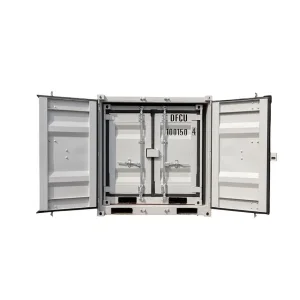
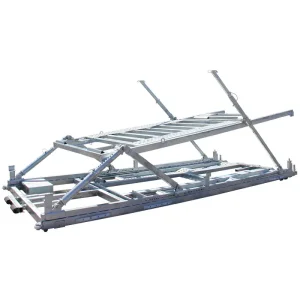
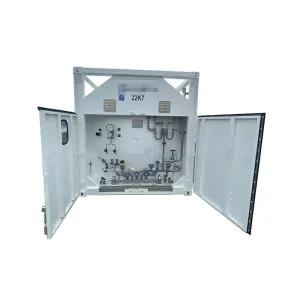
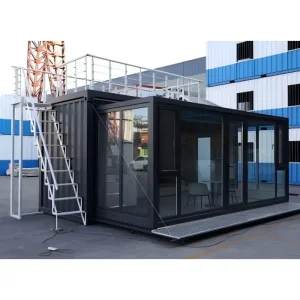
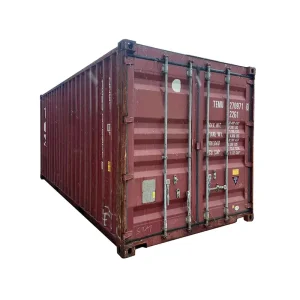
Browse our extensive certified product catalog engineered for maritime transshipment, refrigerated storage, and modular site infrastructure.
Connect with our senior maritime structural engineering team. Get comprehensive technical schematics, verified DNV certification dossiers, and competitive CIF Tanjung Priok quotes within 24 hours.