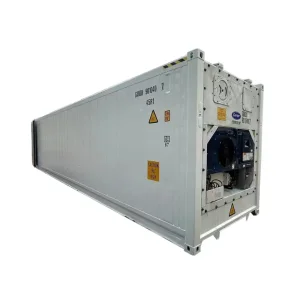
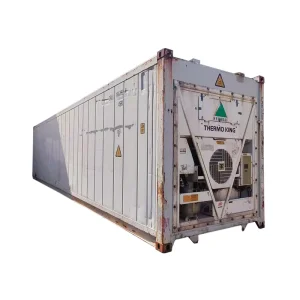
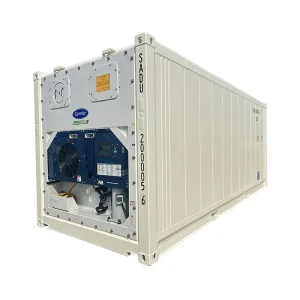
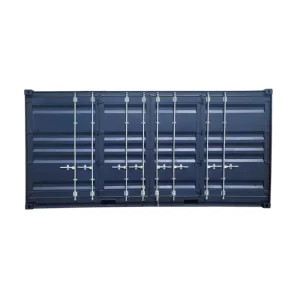
Pre-engineered configurations tailored to PPECB (Perishable Products Export Control Board) compliance, featuring hygienic stainless steel carcass loading mechanisms, high-efficiency refrigeration units, and custom door profiles for rapid dock integration.
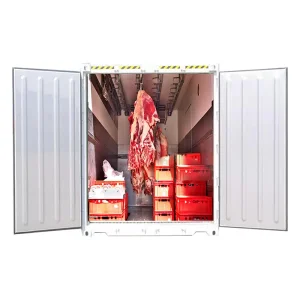
Understanding the unique convergence of geographical transit hurdles, red meat supply chain protocols, and energetic resilience requirements across the Republic of South Africa.
The South African commercial red meat industry—anchored by major beef feedlots in the Free State, Mpumalanga, and the North West, as well as premium Karoo mutton and extensive game culling operations in Limpopo and the Eastern Cape—demands uncompromised cold chain preservation. Unlike conventional palletized dry freight or boxed chilled foods, transported carcasses (beef sides, quarters, whole mutton, pork, and venison) represent a severe structural and thermodynamical challenge. The suspended mass dynamic alters the center of gravity of intermodal shipping containers, exposing the structural roof envelope to extreme dynamic loads during heavy haulage over national routes (such as the N3 corridor between Gauteng and Durban Port, and the N1 connecting to Cape Town).
Furthermore, South Africa’s logistics landscape has been severely tested by infrastructure bottlenecks and persistent electrical grid instability (load-shedding). In this complex operating environment, meat producers, abattoirs, and cold chain logistics operators can no longer rely on standard dry-freight conversions. Modern transport demands China-manufactured meat hanging reefer containers (also known as hook reefers) that merge Corten-steel external structural integrity, integrated food-grade AISI 304/AISI 316 stainless steel roof-rail loading systems, high-density cyclopentane-blown polyurethane insulation, and dual-power hybrid refrigeration packages capable of seamless operation on both 380V/460V 3-phase dock/vessel power and independent clip-on diesel generator sets (gensets).
A comprehensive mechanical analysis of China's heavy-duty roof-beam integration, anti-sway bracing, and thermal bridge mitigation designed for rough African terrain.
Fabricated using continuous structural hot-rolled Corten-A top cross-members combined with cold-formed internal longitudinal stringers. Carries 4 to 5 parallel AISI 304 stainless steel hanging tracks anchored with high-tensile shear pins to absorb up to 2.5G of lateral shock when negotiating mountain passes like Van Reenen's Pass on the N3.
Proprietary polyamide thermal-break spacers situated between the container’s structural roof bows and the meat hanging rail assemblies. This architecture completely prevents condensation channeling and frost accumulation at the roof skin, eliminating localized hot spots that lead to microbial spoilage.
Equipped with high-profile extruded aluminum T-bar flooring offering 75mm deep duct channels. When paired with high-static-pressure evaporator fans, cold air travels along the floor, ascends through the hanging carcasses, and returns to the cooling unit with balanced laminar velocity, ensuring total temperature uniformity within ±0.25°C.
| Technical Parameter | 40ft High Cube Hanging Meat Reefer | 20ft Standard Hanging Meat Reefer | SADC Operational Benefit |
|---|---|---|---|
| External Dimensions | 12,192 x 2,438 x 2,896 mm (9'6" HC) | 6,058 x 2,438 x 2,591 mm (8'6" Std) | Maximized volumetric carcass clearance |
| Internal Lining Material | Food-Grade HG AISI 304 / 316 Stainless Steel | Food-Grade HG AISI 304 Stainless Steel | Resistant to high-pressure chemical washdowns |
| Rail Track Configuration | 4 or 5 Longitudinal Slide/Roller Lines | 3 or 4 Longitudinal Slide Lines | Accommodates standard European & SA abattoir hooks |
| Dynamic Suspended Payload | Up to 24,000 kg (Beef Quarters / Halves) | Up to 12,500 kg (Pork / Mutton Carcasses) | Engineered for rough intermodal road & rail shocks |
| Insulation Core & Density | High-Density Polyurethane (42-45 kg/m³) | High-Density Polyurethane (42-45 kg/m³) | Low heat leakage coefficient (K-value ≤ 0.38 W/m²K) |
| Refrigeration Machine Options | Carrier PrimeLINE / Thermo King Magnum+ | Daikin LXE10E / Carrier ThinLINE | Global spares availability at Durban & Cape Town |
How Chinese high-precision manufacturing resolves the critical cost, durability, and availability bottlenecks facing South African abattoirs, freight forwarders, and logistics conglomerates.
The international reefer container manufacturing sector is overwhelmingly concentrated in China's state-of-the-art coastal production hubs (Tianjin, Qingdao, Shanghai, Ningbo). Chinese fabricators have perfected automated robotic laser welding, pressurized polyurethane foaming jigs, and standardized ISO 1496-2 certified structural testing. For South African buyers, direct sourcing from premier Chinese exporters eliminates layers of European intermediaries, reducing capital expenditure per TEU by 22% to 35% while providing direct engineering customization for African track gauges, rail hook geometries, and ambient heat loads exceeding +45°C in the Kalahari basin.
In South Africa, the application spectrum extends far beyond conventional port-to-port maritime shipment:
Anticipating the next decade of decarbonization, intelligent telemetry, and structural light-weighting for African intermodal transport.
Integration of low-earth-orbit (LEO) satellite transceivers and 4G/5G dual-mode modems. Provides real-time cloud tracking of carcass core temperatures, relative humidity, door-opening alerts, and shock-event recording across isolated corridors where GSM infrastructure is unavailable.
Deployment of eutectic phase-change materials (PCM) along the ceiling boundary alongside intelligent variable-speed scroll compressors. Enables the unit to maintain safe carcass temperatures for up to 8 hours without active power, directly overcoming Eskom terminal port power delays.
Transitioning from R-134a and R-404A towards ultra-low global warming potential alternatives including R-452A, R-513A, and natural CO2 (R-744) transcritical cycle machinery, ensuring complete compliance with the Kigali Amendment and upcoming South African environmental taxation.
Bridging the operational divide between production farm gates, inland processing facilities, and deep-water container terminals.
Our meat hanging reefer containers can be customized with bi-directional slide extension rails that lock directly onto abattoir overhead processing tracks. Carcasses exit the dressing line and chiller room directly into the container envelope without manual handling, avoiding broken cold chains, eliminating physical bruising, and reducing transfer times from hours to minutes.
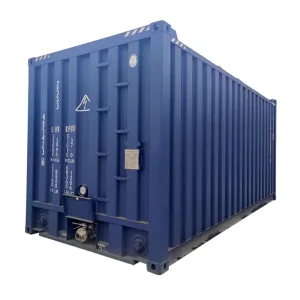
In response to road freight congestion on the N3 and escalating diesel transport costs, China OEM reefers are built with reinforced side posts and ISO bottom corner castings compliant with corner-casting dynamic twist locks on Transnet Freight Rail wagons. This enables cost-effective rail transport from rural inland feedlots directly into the Port of Durban’s Pier 1 and Pier 2 container terminals.
South Africa’s premier ports—Durban, Cape Town, and Port Elizabeth (Gqeberha)—rank among the world's most corrosive maritime atmospheres due to intense salt-laden sea fog and high humidity. Our containers undergo a multi-stage anti-corrosion coating protocol: zinc-rich epoxy primer, high-build epoxy intermediate coating, and UV-stabilized polyurethane topcoats exceeding 120 microns total dry film thickness (DFT). Refrigeration condenser coils are factory-protected with electro-coated Blygold or e-coat dip barriers to stop salt pitting.
Essential guidance covering customs duties, PPECB validation, refrigeration maintenance, and carcass structural capacities.
Our standard 40ft High Cube meat hanging reefer is engineered for a maximum dynamic carcass payload of 24,000 kg and a static suspended capacity of up to 28,000 kg, distributed evenly across 4 or 5 overhead rails. Structural calculations account for dynamic vertical and transverse G-forces encountered during rough rail transit and emergency braking.
Yes. Every container exported to South Africa conforms to ISO 1496-2 and TIR regulations, and is pre-configured with the specific sensor insertion ports and temperature datalogger brackets required for PPECB inspection officers to conduct rapid pulp temperature validation prior to vessel boarding.
We partner with premier global refrigeration brands (Carrier Transicold, Thermo King, and Daikin). Authorized service centers, certified field technicians, and complete OEM spare parts inventories are permanently established in Durban, Johannesburg, Cape Town, and Port Elizabeth.
Yes. The rail system is engineered with modular quick-release cross-locking pins. In under two hours, maintenance crews can unbolt the longitudinal tracks and hooks, converting the container into an unobstructed standard reefer for backhaul palletized citrus, table grapes, or frozen poultry, maximizing two-way freight profitability.
Units are fitted with 380V/460V dual-voltage capabilities and can be paired with front-mounted clip-on or underslung diesel generator sets (gensets). Automatic power source switching logic prevents compressor lockouts during abrupt grid interruptions.
Direct ocean transit from Tianjin, Qingdao, or Shanghai to Durban is typically 22 to 28 days, and 26 to 32 days to Cape Town. Standard stock units ship within 7 days of deposit; custom roof-rail configurations require 15 to 20 days fabrication time.
Explore our complete manufacturing spectrum—ranging from offshore exploration containers to heavy dry logistics and high-capacity modular storage units certified for African commercial operations.