Direct manufacturing and rapid export to major Japanese ports including Yokohama, Kobe, and Kitakyushu with full material traceability (3.1 inspection certificates) and NDT verification.
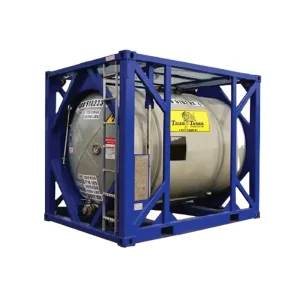
DNV Certification 10ft Offshore Tank Container for Japan Operations
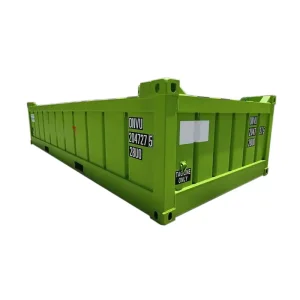
Offshore Half-Height Open Top Container for Heavy Industrial Cargo
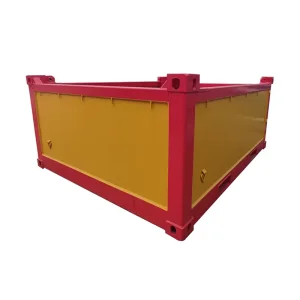
High-Quality Offshore Basket Container for Drilling and Wind Turbines

ODM New Half Height Ore Carrier Container for Offshore Heavy Minerals
Addressing the shifting landscape from traditional oil and gas to utility-scale floating offshore wind (FOW) and next-generation hydrogen fuel supply chains.
Under Japan's Renewable Energy Sea Area Utilization Law, rapid wind farm developments in Akita, Niigata, and Goto City mandate certified lifting hardware engineered for the severe sea states and wave dynamics of the Sea of Japan.
Our offshore units feature specialized high-tensile micro-alloy steels (e.g., S355ML, Corten SPA-H) with Charpy V-Notch impact test values exceeding 27 Joules at -20°C and -40°C, countering both winter icing in northern Hokkaido and summer super-typhoon gales.
Bridging Chinese engineering precision with Japanese maritime regulatory bodies. Our designs are ready for seamless Nippon Kaiji Kyokai (ClassNK) approvals, alongside existing BV and DNV type certificates.
Located in the core industrial clusters of Tianjin and Suzhou, directly connected to international deep-water ports for reduced inland transit, rapid prototyping, and streamlined export documentation.
Automated submerged arc and multi-axis robotic welding cells guarantee penetration profiles and reduce stress concentrations along critical pad-eye junctures and boundary profiles.
ISO 12944 compliant 3-coat paint schemes (Zinc-rich primer + Epoxy tie coat + Polyurethane finish) delivering minimum 250µm DFT for high-salinity Pacific Ocean atmospheres.
Each unit leaves the plant accompanied by full NDT reports (MPI/DPI), sling certs, welding procedure specifications (WPS/PQR), and classification society approval data packs.
Built strictly for offshore operations, cargo transfer, and modular accommodation across international and Japanese EPC contractors.
| Parameter / Feature | Standard Marine Build | Arctic & Sea of Japan Specialized Build | Heavy Duty / Bulk Handling (ODM) |
|---|---|---|---|
| Design Standards | DNV 2.7-1, EN 12079, ISO 10855 | DNV 2.7-1 / DNV 2.7-2, ClassNK, IMO MSC/Circ.860 | DNV 2.7-1, ISO 1496-1, CSC Approved |
| Operating Temperature | -20°C to +50°C | -40°C Extreme Arctic Tier | -20°C to +60°C |
| Main Structural Steels | S355J2 / Corten Steel with 3.1 Certs | S355ML / S460ML Low-Temperature Alloy | High-Strength Hardox / S355 Composite |
| Corrosion Protection | 250µm Total DFT (Epoxy / Polyurethane) | Hot-Dip Galvanized + C5-M Coating Scheme | Anti-abrasion internal linings + C5-M Exterior |
| Pad-Eyes & Lifting Slings | 4-Point Welded Pad-Eyes (45° angle rating) | Forged Integrated Lifting Eyes + DNV Slings | High-Tensile Reinforced Side Lift & Pad-Eyes |
Explore our complete export series designed for cold-chain, hazardous chemical containment, and offshore workcamp logistics.
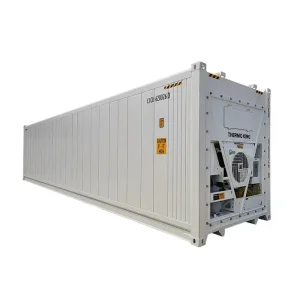
40ft High-Cube Certified Reefer Shipping Cargo Container for Cold Logistics
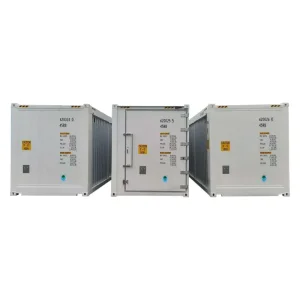
China OEM 40ft High-Cube Three-in-One Combination Reefer Container
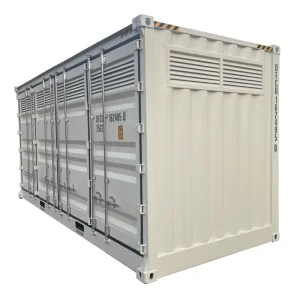
ODM 20ft High-Cube Dangerous Goods Container Side Open with Ventilation
ODM Heavy-Duty Half Height Ore Carrier Offshore Container Manufacturer
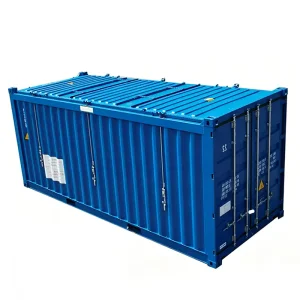
ODM 20ft New Hard Open Top Shipping Container for Machinery
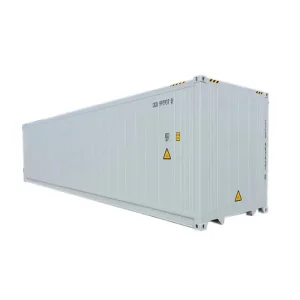
40ft High Cube Thickened Foam Insulation Container for Stable Transit

10ft Certified Thermo King Freezer Container for On-Site Vessel Catering
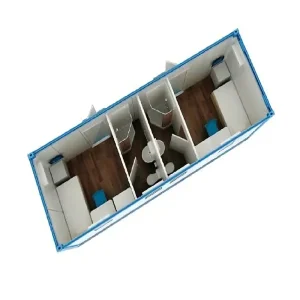
ODM 20ft 40ft Accommodation Modular Container for Offshore Teams
Key information regarding international lifting certifications, structural steels, logistics corridors, and customs documentation.
Standard ISO containers are engineered for steady vessel stack transport and handled with corner casting spreaders. DNV 2.7-1/EN 12079 units are built with dynamic lifting coefficients to withstand ocean wave motions, snatch loads, and continuous multi-leg sling lifts in open seas, featuring high-grade steel impact properties down to -20°C or -40°C.
Yes. Our factory offers full ODM engineering services. We tailor deck footprints, height clearances, and floor payloads to match specialized deck spaces on Japanese platform supply vessels (PSVs) and cable-laying ships supporting offshore wind farms.
Every unit arrives with a complete Manufacturer Data Report (MDR), including Mill Test Certificates (EN 10204 3.1), Non-Destructive Testing (NDT) reports for welds, DNV / ClassNK / BV design verification and inspection certificates, proof load test reports, and sling assembly certifications.
With our production hubs situated in Tianjin and Suzhou, maritime transport to major Japanese ports (Tokyo, Yokohama, Nagoya, Osaka, Kobe, Kitakyushu) takes approximately 3 to 7 days once loaded, enabling prompt turnaround for urgent offshore energy projects.
Consult with our lead container engineers to request detailed engineering drawings, DNV certification documents, and tailored commercial quotations for Japanese deployment.
