Pre-engineered to meet stringent Fennoscandian logistics standards, deep-freeze temperature profiles, and European intermodal gauge limits.
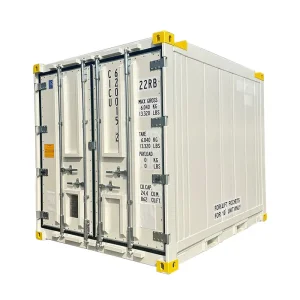
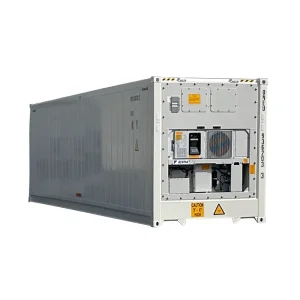
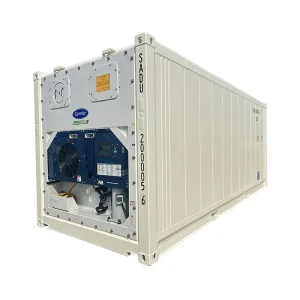
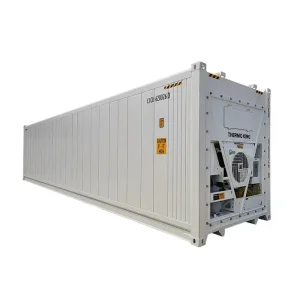
A comprehensive examination of intermodal integration, sub-zero structural mechanics, and the strategic transition toward net-zero supply chains across the Nordic territory.
Sweden occupies a commanding logistical position in Northern Europe, anchoring critical trade corridors that connect the Scandinavia-Mediterranean TEN-T corridor to Baltic maritime arteries. The Port of Gothenburg (Göteborgs Hamn), acting as Scandinavia's largest maritime freight hub, handles over 50% of Sweden's total containerized volume. This freight density demands specialized container equipment capable of transitioning effortlessly between deep-sea container vessels, short-sea feeder links to Finland and the Baltic States, and electrified national rail corridors.
Industrial procurement departments operating in manufacturing powerhouses such as Stockholm, Malmö, Västerås, and Jönköping demand containers that strictly comply with ISO 668 and ISO 1496-1 series standards. Crucially, Sweden's severe sub-arctic winters introduce structural design hurdles that standard ISO dry boxes cannot withstand over multi-year duty cycles. Steel embrittlement at temperatures reaching -30°C necessitates the implementation of specialized SPA-H Corten steel configurations paired with high-impact Charpy V-notch tested corner castings to mitigate catastrophic structural shear during port crane spreader engagement.
International industrial procurement teams face major friction points when sourcing ISO standard shipping containers, modular data housings, and offshore skid modules from manufacturing centres in East Asia. Nordic logistics firms place premium weight on total life-cycle cost (LCC), verified environmental footprints, and compliance with the EU Corporate Sustainability Due Diligence Directive (CSDDD). Standard low-tier container production lines often fail to provide verified documentation on non-toxic waterborne paint applications, VOC emission mitigation, and sustainable timber certifications for container floorboard components (such as PEFC/FSC certified laminated bamboo or eco-friendly composite planks).
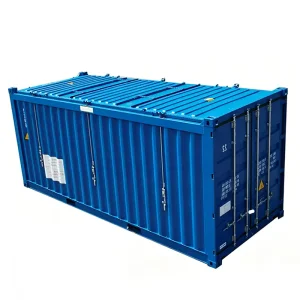
Furthermore, Swedish heavy industries—ranging from iron ore mining giants in Kiruna to automotive factories in Torslanda—require bespoke container variants. The demand is not restricted to dry cargo vans; it extends heavily to open-top units with swinging header beams for top-loading machinery, half-height high-payload boxes for mineral concentrates, and dual-zone telematics-enabled reefer boxes for export-grade pharmaceuticals and processed food distributions.
Operating intermodal equipment inside the Arctic Circle requires engineered thermal barriers and advanced metallurgy. CIMIC's OEM production line deploys specific engineering upgrades for containers bound for Swedish and Nordic deployment:
Full CAD/CAM structural re-engineering for special footprints, side-opening bulk access, electrical battery enclosures (BESS), and hydraulic roll-up doors adapted to Swedish industrial handling equipment.
Every batch comes complete with official classification certs from Bureau Veritas (BV), DNV, ABS, or Lloyd's Register, including permanent CSC plates for seamless intermodal customs transit.
DDP and CIF logistics models routing directly to ports in Gothenburg, Helsingborg, Stockholm Norvik, and Malmö with inland haulage connectivity to regional logistics parks.
Manufacturing Heritage Established
CSC, ISO & DNV Compliance
Sub-Zero Nordic Impact Integrity
Direct Tianjin Sea Port Access
Architecting container hardware to seamlessly align with circular economies, autonomous Baltic shipping routes, and European decarbonization mandates.
Strategic transition toward fossil-free steel (HYBRIT-aligned processes) lowering embodied carbon by up to 60%, responding directly to Swedish procurement frameworks prioritizing low Life Cycle Emissions (LCE).
Transitioning standard reefer compressor lines to natural refrigerants, including R744 (CO₂ systems) with zero ODP and a Global Warming Potential (GWP) of 1, satisfying future revisions of the EU F-gas regulations.
Edge AI IoT integrations embedded directly within structural corrugations for self-diagnosing weld integrity, floor deflection loads, and predictive maintenance alerts dispatched across fleet cloud dashboards.
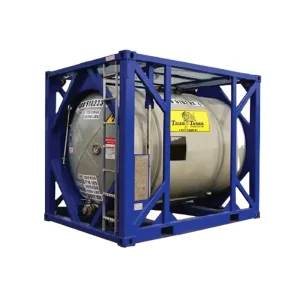
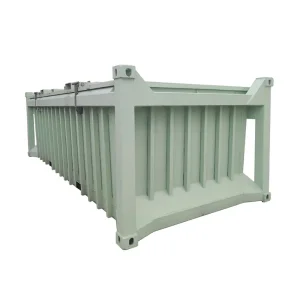
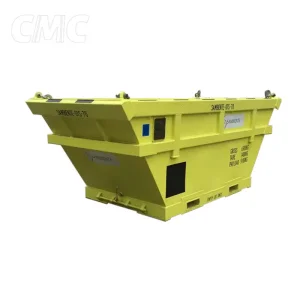
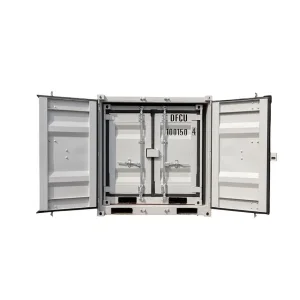
Browse our complete catalog of certified dry freight boxes, offshore lifting baskets, platform chassis, and specialized heavy mining equipment.

Mitigating cross-border friction via pre-cleared customs documentation, structural safety guarantees, and robust EU standards conformity.
All delivered containers arrive fitted with validated stainless steel CSC plates, TIR customs seals approval, and complete mill test certificates (MTC 3.1) for metallurgical tracing.
Rigorous offshore fabrication meeting Swedish and Norwegian offshore exploration criteria, validated for repeated crane hoist cycles in violent North Sea conditions.
Every Swedish fleet buyer is assigned a senior mechanical design engineer to manage finite element analysis (FEA), internal racking customizations, and port handling logistics.
Detailed technical, commercial, and shipping answers addressing common procurement inquiries from European logistics buyers.
Our containers bound for Sweden and Nordic deployment utilize high-tensile SPA-H Corten steel that retains fracture toughness at temperatures down to -40°C. Door gaskets are fabricated from heavy-duty EPDM rubber formulations that resist cryogenic hardening and seal degradation, preventing interior moisture ingress and ice-locking.
Standard ISO production runs require 2 to 3 weeks following design drawing sign-off. Maritime transit from our primary loading facilities in Tianjin Port to Gothenburg (Göteborgs Hamn) or Helsingborg typically spans 32 to 38 days via direct oceanic carrier strings or rapid continental transshipment.
Yes. As an OEM/ODM manufacturer, we perform bespoke factory modifications prior to painting and certification. Options include full-side bi-folding doors, heavy-duty unistrut electrical racking, integrated fire-rated insulation panels, explosion-proof ventilation, and reinforced flooring for high axle-load forklifts.
Every used and certified reefer container undergoes a comprehensive Pre-Trip Inspection (PTI) protocol overseen by certified refrigeration technicians. We evaluate compressor amperage, refrigerant pressures, defrost cycle functionality, and insulation integrity, supplying comprehensive operational telemetry records prior to release.
Offshore container assets are constructed in strict alignment with DNV 2.7-1 (BS EN 12079) criteria. Packages delivered to clients include the official DNV manufacturing survey certificate, non-destructive testing (NDT) reports on structural welds, material test reports for structural hollow sections, and four-leg lifting sling proof-load certifications.
Standard catalog units and port-stocked used boxes have an MOQ of 1 unit. For fully bespoke OEM structural fabrications involving specialized stamping molds or unique dimensional profiles, the typical MOQ is 2 to 4 units (or one 40ft slot equivalent) to optimize international freight utilization.
Accelerate your Scandinavian logistics operations with certified, durable, and thermal-efficient ISO containers. Request an itemized technical proposal and CIF quotation within one business day.
Send Inquiry Now