Explore our certified manufacturing line of high-cube, marine-grade refrigerated, open-top, and specialized transport containers configured for demanding global freight lines.
A strategic overview of intermodal payload dynamics, corten anti-corrosion metallurgy, and tier-1 container manufacturing infrastructure serving transcontinental supply corridors.
In modern multimodal supply networks, the container is not merely a steel shell; it is a standardized, structural envelope that ensures the velocity of global trade. When global enterprises seek to buy 24 container inventory—ranging from 24-pallet-wide continental configurations, 20-to-24-foot customized industrial shelters, to bulk multi-unit batch consignments—procurement officers face a complex matrix of structural durability, tare weight optimization, cold-chain thermal integrity, and stringent cross-border regulatory certifications.
Since 1983, Tianjin Cimic Imp&Exp Co., Ltd. (CIMIC Group) has stood at the nexus of maritime heavy engineering. With production clusters located strategically in Tianjin and Suzhou—approximately 100 kilometers from primary deep-water berths—we mitigate domestic transit bottlenecks while delivering continuous factory-to-shipment oversight. This whitepaper deconstructs the key parameters involved in procuring containerized systems, establishing empirical benchmarks for engineering resilience and international compliance.
Manufactured using high-tensile SPA-H Corten atmospheric corrosion-resistant steel, capable of forming a protective chromium-copper patina that withstands aggressive offshore salt sprays and extreme climatic shifts (-40°C to +80°C).
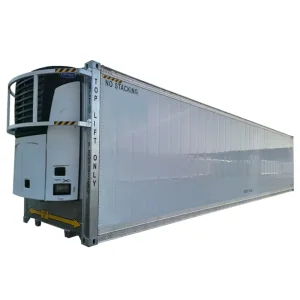
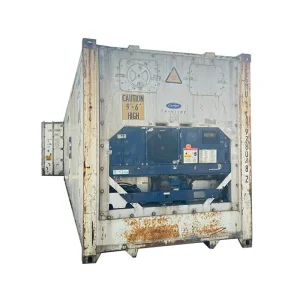
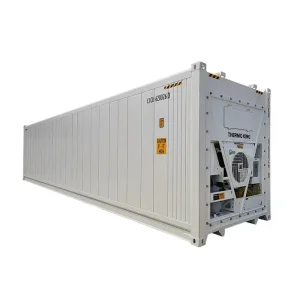
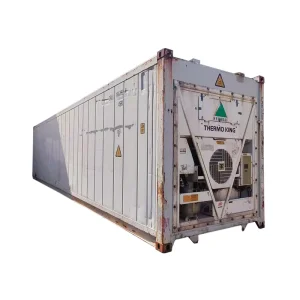
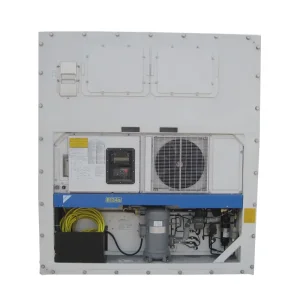
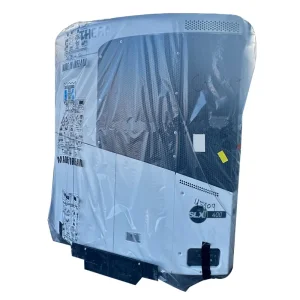
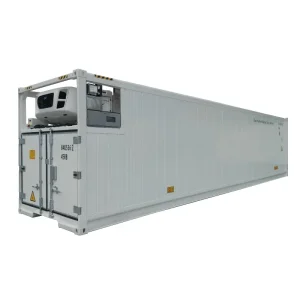
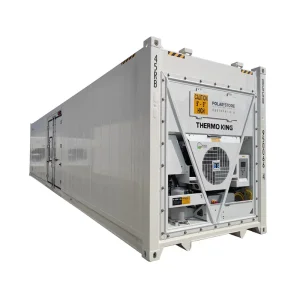
Factory-fitted with global Tier-1 refrigeration architectures from Thermo King, Carrier, and Daikin, coupled with cyclically blown polyurethane foam achieving micro-thermal conductivity ratings below 0.020 W/m·K.
Every unit conforms strictly to Bureau Veritas (BV) standards, ISO 1496/1 freight specifications, and DNV 2.7-1 / EN 12079 criteria for harsh offshore dynamic lifting and continuous multi-tier stack loading.
Macroeconomic shifts and geopolitical reroutings—such as the Belt and Road intermodal rail corridors—demand higher cubic efficiency. The standard 20ft and 40ft units are now complemented by specialized pallets-wide layouts and high-cube configurations. CIMIC engineers container frameworks that optimize corner post yield strength (minimum 345 MPa) and flooring shear loads (capable of enduring forklift axle loads in excess of 7,260 kg), providing an uncompromised foundation for heavy machinery, bulk dry cargo, or fragile cold-stored pharmaceutical items.
Evaluating raw material cost structures, production automation, and structural performance in intermodal freight markets.
The global shipping container market represents a multi-billion-dollar bedrock of modern commerce. Industrial buyers are shifting from off-the-shelf commoditized boxes toward application-customized equipment designed for prolonged return on investment. The life-cycle cost of containers is largely dictated by metallurgical purity, primer passivation, and weatherproofing integrity.
Standard carbon steel containers rapidly deteriorate under salt-fog atmospheric pressure, resulting in delamination and structural failure within 3 to 5 years. CIMIC utilizes high-grade SPA-H alloy containing micro-additions of Copper, Nickel, and Chromium. When exposed to alternating moisture and dry air cycles, it develops an insoluble, self-healing iron oxide barrier layer. This metallurgy lowers total life-cycle maintenance costs by up to 65% over a 15-year service life, making it the preferred choice for cross-continental fleets and harsh marine environments.
Our automated production facilities in Tianjin and Suzhou utilize robotic submerged arc welding and fiber laser cutting tables. Automated fixturing ensures that each ISO corner casting, crossmember, and corrugation maintains sub-millimeter diagonal dimensional tolerances. This precision guarantees seamless integration with automated straddle carriers, intermodal twist-locks, and gantry cranes across global maritime terminals.
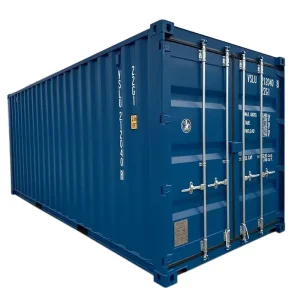
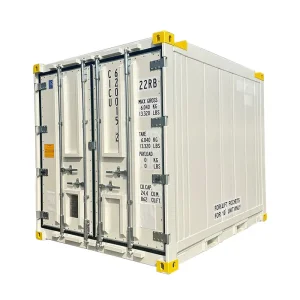
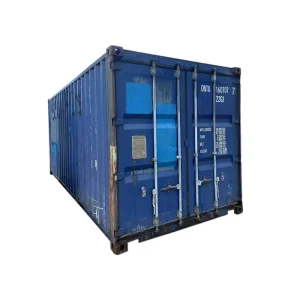
Available in 10ft, 20ft, 40ft, and 45ft formats, including high cube and double-door options, with marine-grade 28mm hardwood plywood flooring treated against pest infestations.
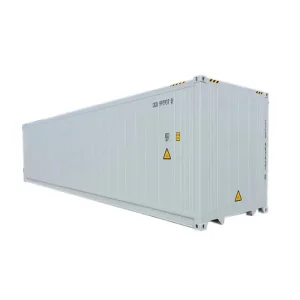
High-efficiency scroll compressors, multi-temperature digital zone controllers, and dual cooling/heating functions maintaining stable temperatures between -30°C and +30°C.
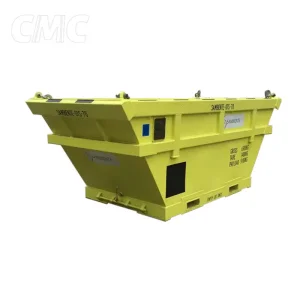
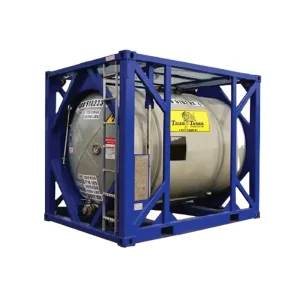
Reinforced padeyes, specialized silt baskets, and high-tensile four-part sling sets engineered to withstand dynamic sea state accelerations during vessel-to-rig transfers.
Tailored OEM/ODM engineering for mobile substations, BESS battery enclosures, mobile labs, data center modules, and insulated mining site shelters.
Ensuring compliance with international shipping authorities and customs unions across all maritime and railway borders.
Deploying heavy container hardware internationally requires adherence to strict global safety treaties. Non-compliant units can cause vessel delays, customs holds, and severe liability in the event of structural failure at sea. CIMIC integrates quality control at every phase, from raw steel sheet intake to the riveting of CSC safety plates.
Every commercial container carries a stainless steel International Convention for Safe Containers (CSC) data plate, stamped with certified maximum gross weight, stacking load test ratings (typically 86,400 kg for 9-high stacking), and racking values.
All CIMIC manufacturing lines operate under ISO 9001, ISO 14001, and BV marine type-approval schemes. Structural welds undergo non-destructive ultrasonic and magnetic particle testing to ensure defect-free joinery.
Our offshore units, mud skips, and silt baskets are engineered and batch-tested to withstand extreme dynamic impacts, low-temperature Charpy V-notch fracture tests at -20°C, and rigorous multi-point sling lifting loads.
In addition to structural integrity, our reefer and cold-chain containers comply with ATP (Agreement on the International Carriage of Perishable Foodstuffs), and food-grade interior stainless steel linings (grades 304 and 316) meet international health and phytosanitary criteria for continuous agricultural and seafood transport.
| Container Model / Type | External Dimensions (L x W x H) | Max Gross Mass (MGM) | Payload Capacity | Primary Certification |
|---|---|---|---|---|
| 20ft Standard Dry Cargo (Cort-Steel) | 6,058 x 2,438 x 2,591 mm | 30,480 kg (67,200 lbs) | 28,280 kg (62,350 lbs) | ISO 1496/1, CSC, BV |
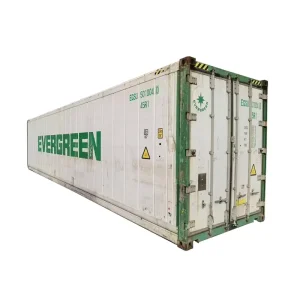
| 40ft High Cube Reefer (Thermo King/Carrier) | 12,192 x 2,438 x 2,896 mm | 34,000 kg (74,950 lbs) | 29,420 kg (64,860 lbs) | ISO 1496/2, ATP, CSC, BV |
| 10ft DNV Offshore Cargo/Tank Unit | 2,991 x 2,438 x 2,591 mm | 10,000 kg (22,046 lbs) | 7,850 kg (17,306 lbs) | DNV 2.7-1, EN 12079, ISO 10855 |
| 40ft Thickened Foam Insulated Container | 12,192 x 2,438 x 2,896 mm | 32,500 kg (71,650 lbs) | 28,100 kg (61,950 lbs) | ISO Standard, CSC, TIR |
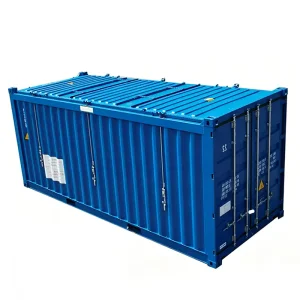
| 20ft Full Side-Open Door Intermodal | 6,058 x 2,438 x 2,591 mm | 30,480 kg (67,200 lbs) | 26,880 kg (59,260 lbs) | CSC, UIC 592, BV |
Examining field-proven implementations across marine logistics, intermodal rail lines, offshore energy platforms, and cold-chain hubs.
Protecting high-value perishable fruits, pharmaceuticals, and fresh seafood across 30+ day ocean voyages. Units utilize active microprocessor controllers with continuous event logging, automatic fresh-air ventilation flaps, and advanced DePrime defrosting algorithms.
Engineered to handle severe vibrational dynamics and sudden thermal drops through Siberia and Central Asia. Custom diesel generator sets (gensets) ensure autonomous cooling when railway flatcars traverse non-electrified track networks.
Operating under aggressive marine atmospheric zones in the North Sea, Gulf of Guinea, and South China Sea. Built with pad-welded structural lifting points and heavy internal tie-down lashing rings capable of securing heavy drilling bits and subsea toolsets.
Pioneering advancements in low-GWP refrigerants, satellite IoT telemetry, and structural composite weight reduction.
As international environmental regulations tighten under the IMO 2030/2050 greenhouse gas reduction strategies, container manufacturers are modernizing structural design and cooling technologies. CIMIC focuses engineering resources across three primary innovation pillars:
Transitioning reefer machinery away from legacy hydrofluorocarbons to modern, climate-compliant refrigerants like R-513A, R-1234yf, and natural carbon dioxide (CO2 R-744), reducing direct global warming potentials while improving cooling coefficient of performance (COP).
Embedding low-power GPS, cellular LTE-M, and satellite transceivers directly into the container frame. Cargo managers receive real-time updates for internal chamber temperatures, door openings, humidity levels, shock occurrences, and automated pre-trip inspection (PTI) diagnostics.
Developing vacuum insulation panels (VIP) layered with high-density polyurethane matrices. This delivers superior thermal insulation while reducing wall thickness, increasing internal usable volume by up to 2.4% for pallet-dense dry and refrigerated goods.
Key technical, operational, and commercial insights directly from CIMIC engineering staff.
In industry procurement contexts, "24 container" typically refers to either 24-pallet-wide Euro-container configurations designed to fit 24 standard pallets without void gaps, specialized 24-foot equipment shelters built for industrial machinery enclosures, or high-volume wholesale batch procurement orders. CIMIC provides custom engineering to support standard ISO frames alongside tailor-made dimension profiles to match exact regional logistics infrastructure.
All dry and reefer containers are constructed using SPA-H Corten atmospheric weathering steel. After automated grit-blasting to an SA 2.5 surface cleanliness profile, our multi-stage paint line applies a zinc-rich primer, an epoxy intermediate coating, and a polyurethane topcoat. This produces a resilient dry film thickness (DFT) exceeding 120 microns, designed to resist salt-fog degradation for over 15 years.
Yes. As an authorized OEM builder, CIMIC integrates Thermo King, Carrier, and Daikin machinery based on the buyer's cargo profiles, local service technician availability, and spare parts supply networks. We also supply mobile generator sets (gensets) for continuous power along intermodal highway or rail transits.
An active reefer container includes an electrically driven mechanical compressor that actively controls chamber temperatures from -30°C to +30°C. An insulated container uses thickened polyurethane foam walls to maintain cargo temperatures passively over shorter domestic runs without requiring electrical power or mechanical maintenance.
Every shipment is delivered with a complete documentation dossier, including the original CSC safety certificate, Bureau Veritas (BV) classification papers, factory weld non-destructive testing reports, paint thickness validation records, and for reefer units, a pre-trip inspection (PTI) operational clearance log.
Our manufacturing and container storage operations in Tianjin and Suzhou sit approximately 100 km from major deep-water seaports. This close proximity shortens domestic transit times, mitigates port staging surcharges, and ensures rapid vessel departures toward African, European, Middle Eastern, and American trading hubs.
Yes. In addition to custom OEM builds, CIMIC maintains inspected stocks of used 20ft and 40ft dry cargo and refrigerated units across major Chinese coastal hubs. Each unit is inspected for structural squareness, flooring integrity, weather-tight gaskets, and cooling machinery performance before release.
For standard catalog configurations and verified yard inventory, orders can be fulfilled starting from single units. For customized OEM structural modifications, specialized side doors, bespoke equipment bases, or custom colors, the MOQ is evaluated against steel coil slitting and automated tooling setup needs.
Review our specialized reefer machinery, offshore baskets, double-door dry cargo boxes, and heavy-duty cold storage hardware.