
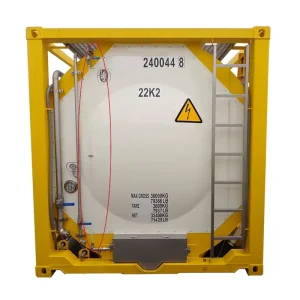
Direct factory access to standardized ISO intermodal containers, chemical tanks, cryogenic vessels, and specialized heavy-gauge units built strictly under Bureau Veritas and CSC quality conventions.
Modern global trade relies on over 50 million Twenty-Foot Equivalent Units (TEUs) circulating across maritime routes. Understanding geopolitical trade lane reallocation, commodity flow trends, and equipment lifecycles is critical for corporate procurement decisions.
The global ocean shipping container industry has transitioned from post-pandemic inventory whiplash into a high-precision, demand-driven structural cycle. Ocean shipping containers are no longer considered merely static steel boxes; they are critical intermodal capital assets engineered to satisfy stringent maritime safety regimes, multimodal transport protocols, and carbon-abatement mandates. Modern maritime logistics operators, international chemical conglomerates, and national defense contractors demand containers fabricated from anti-corrosive weathering steel (SPA-H Corten steel) capable of resisting decades of extreme maritime salinity and mechanical racking stresses up to 30,480 kg (67,200 lbs) Gross Capacity.
Concurrently, cross-border supply chains face tighter regulatory scrutiny under the International Maritime Organization (IMO) conventions, demanding lower thermal loss coefficients on refrigerated units and enhanced spill-containment parameters on dangerous goods cargo containers. As procurement executives seek to offset freight rate volatility, direct volume acquisitions from tier-one Chinese manufacturing plants have emerged as the standard risk mitigation mechanism. Mill-direct container procurement eliminates brokerage premiums, guarantees documented mill test certificates (MTC), and enables custom floor reinforcement for high-density industrial cargo.
Operating since 1983, CIMIC Group leverages advanced manufacturing infrastructure in Tianjin and Suzhou, situated roughly 100 kilometers from prime deep-water container wharves.
China’s indisputable preeminence in container engineering stems from complete upstream and downstream industrial integration. From domestic high-tensile metallurgical foundries rolling precision Corten corrugated steel sheets to integrated robotic shot-blasting, multi-layer zinc-rich primer application lines, and automated submerged arc welding systems, China’s industrial ecosystem operates at an unrivaled economy of scale.
For global industrial buyers, geographical proximity between production facilities and embarkation terminals is the primary determinant of inland transit expenditure and loading lead times. Situated in the Tianjin FTA Pilot Area (Airport Economic Zone) and Suzhou, CIMIC’s manufacturing complexes sit within a lean 100-kilometer radius of major container berths. This logistical configuration prevents inland transit delays, shields newly finished units from transit wear, and facilitates streamlined vessel booking and Customs clearance under free-on-board (FOB) or delivered-at-place (DAP) trade terms.
Established in 1983, CIMIC has pioneered cold-chain thermal barriers, cryogenic containment, and heavy off-shore containers, commanding over 50% market trust across specialized logistical segments.
Production lines incorporate SA2.5 automated grit-blasting, eco-friendly waterborne epoxy primers, and robot-guided multi-pass seams to secure longevity in C5-M extreme marine corrosive zones.
Approximately 100km from Tianjin Port terminal infrastructure, our staging yards can mobilize 500+ TEU fleet orders directly into global carrier feeder streams without rail-head choke points.
A detailed technical overview of tare weight, payload capacity, internal volume, and certification baselines across the primary ocean container classes.
| Container Classification | Standard Dimensions (L×W×H) | Tare Weight (Avg) | Max Gross Payload | Internal Volume | Key Classification Norms |
|---|---|---|---|---|---|
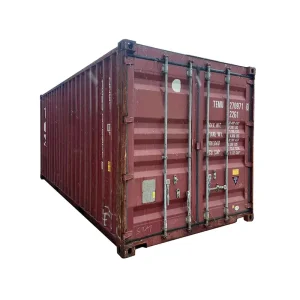
| 20ft Standard Dry ISO | 6,058 × 2,438 × 2,591 mm | 2,200 kg (4,850 lbs) | 28,280 kg (62,350 lbs) | 33.2 m³ (1,172 cu ft) | ISO 668, ISO 1496-1, CSC, BV |
| 40ft High Cube Dry ISO | 12,192 × 2,438 × 2,896 mm | 3,900 kg (8,598 lbs) | 28,600 kg (63,052 lbs) | 76.4 m³ (2,698 cu ft) | ISO 668, ISO 1496-1, TIR, UIC |
| 40ft High Cube Reefer | 12,192 × 2,438 × 2,896 mm | 4,600 kg (10,140 lbs) | 29,400 kg (64,815 lbs) | 67.5 m³ (2,385 cu ft) | ATP, ISO 1496-2, Daikin/Carrier/TK |
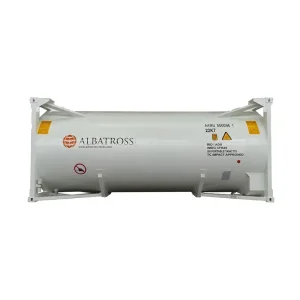
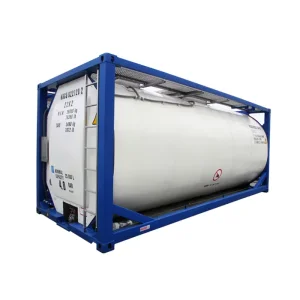
| 20ft ISO Tank (UN Portable) | 6,058 × 2,438 × 2,591 mm | 3,600 kg (7,936 lbs) | 32,400 kg (71,430 lbs) | 25,000 Liters | IMDG, ASME Section VIII, ADR/RID |
| DNV Offshore Cargo Unit | 3,048 × 2,438 × 2,591 mm (10ft) | 2,100 kg (4,630 lbs) | 10,000 kg (22,046 lbs) | 15.8 m³ (558 cu ft) | DNV 2.7-1, EN 12079, Lloyd's Register |
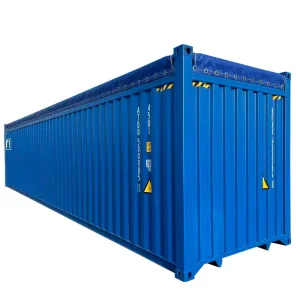
| 40ft Open Top Tarpaulin | 12,192 × 2,438 × 2,896 mm | 4,100 kg (9,038 lbs) | 27,900 kg (61,508 lbs) | 73.0 m³ (2,578 cu ft) | ISO 1496-1, Removable Header |
Modern shipping container designs serve as rugged, modular enclosures for energy grids, hazardous industrial storage, remote cold rooms, and extreme offshore environments.
Structural ISO integrity allows 9-high container stacking for modular field hospitals, remote workforce camps, containerized edge data servers, and modular switchgear enclosures engineered with A60 fire-rated thermal insulation.
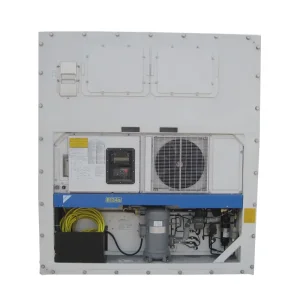
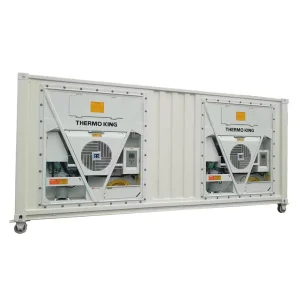
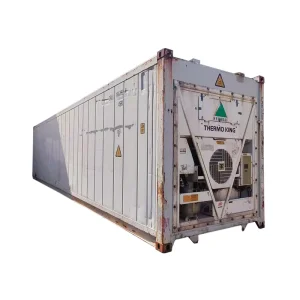
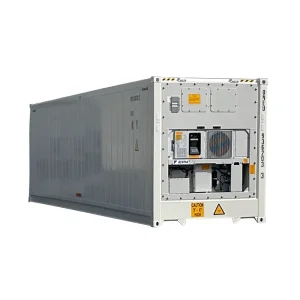
Equipped with Daikin, Carrier, or Thermo King refrigeration machinery, blast freezers preserve pharmaceutical biomaterials, seafood, and horticultural produce from -40°C deep freeze up to +30°C climate stabilization.
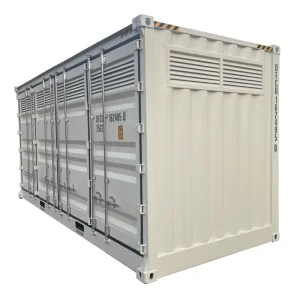
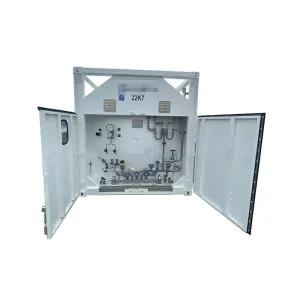
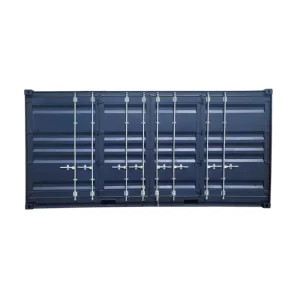
Custom side-opening units with spark-resistant non-sparking floors, heavy-duty louvered ventilation grills, spillage bund basins, and explosion-proof exhaust fans built strictly to ADR, RID, and IMDG Class compliance.
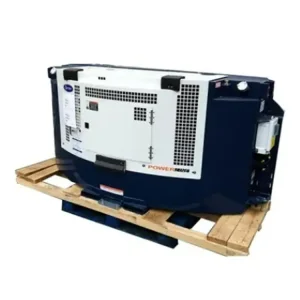
High-cube structural chassis re-engineered as stationary power battery enclosures (Lithium Iron Phosphate / Sodium Ion), reinforced with HVAC ducting, aerosol fire-suppression manifolds, and seismic anchor points.
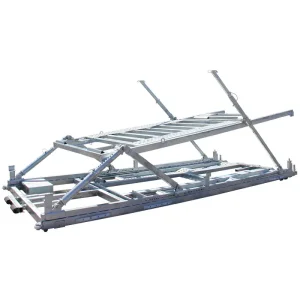
Half-height open-top containers and self-tipping roll-over bins built with Hardox 450 abrasion-resistant wear plates, facilitating seamless, dust-suppressed discharge of iron ore concentrates, lithium spodumene, and aggregates.
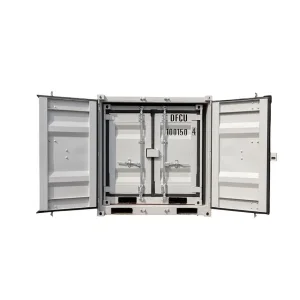
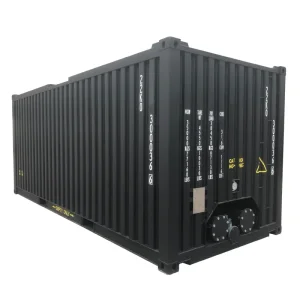
Severe-duty mini cargo baskets and offshore pressurized labs equipped with pad-eyes, lifting slings, and proof-load testing to withstand deep-sea dynamic impacts during vessel-to-rig crane transfer under sea state 6 conditions.
Mitigate compliance risk when purchasing sea containers from Chinese mills. Follow our engineering audit protocol to verify structural compliance and protect capital investment.
Purchasing ocean shipping containers at commercial scale involves rigorous verification of metallurgical certificates, weld integrity testing, and classification approvals. Sub-standard containers with counterfeit certification plates risk terminal rejection, insurance voidance, and catastrophic racking failure during heavy maritime transit.
Verify that the Convention for Safe Containers (CSC) data plate is made of corrosion-proof stainless steel or brass, permanently riveted to the left door, detailing maximum gross weight, allowable stacking weight (typically 216,000 kg), and transverse racking test values.
Ensure that all structural members—including corner castings, bottom side rails, header crossmembers, and corrugated wall panels—are hot-rolled SPA-H or equivalent atmospheric corrosion-resistant Corten steel conforming to JIS G3125 standards.
Measure dry film thickness (DFT). Heavy maritime duty requires zinc-rich epoxy primer (minimum 30 μm), an epoxy intermediate coat (40 μm), and a polyurethane topcoat (40 μm), achieving total DFT ≥ 110–120 μm withstanding over 1,000 hours of continuous salt-spray testing.
Inspect hardwood marine plywood flooring (minimum 28mm thickness, 19-ply). Plywood must be treated against pest contamination in strict compliance with Australian Quarantine and Inspection Service (AQIS) standards, accompanied by valid fumigation certificates.
Audit corner casting joint welds via Ultrasonic Testing (UT) or Magnetic Particle Inspection (MPI). Joint integrity must tolerate severe torsional flexure without micro-cracking across all 8 standard ISO cast corners.
Procure certified unit-level inspection sign-offs from global classification societies including Bureau Veritas (BV), Lloyd's Register (LR), or the American Bureau of Shipping (ABS) prior to customs clearance and dispatch.
The ocean shipping container sector is adopting smart IoT sensors, composite insulation materials, and circular lifecycle design to satisfy global emissions and tracking standards.
Three primary technological frontiers are reshaping modern intermodal shipping container assets: the rapid proliferation of autonomous Internet of Things (IoT) telematics, the adoption of scrap-based electric arc furnace (EAF) green steels, and next-generation composite aerogel insulation panels.
Integrated GPS, accelerometers, and ambient atmospheric monitors transmit door status, shock impacts, humidity, and temperature data via hybrid satellite-cellular channels directly to enterprise ERP systems.
Accelerating towards Net-Zero 2050, top-tier factories are rolling Corten formulations generated via renewable-powered Electric Arc Furnaces, reducing embodied carbon by up to 60% per manufactured TEU chassis.
Replacing traditional polyurethane foam with aerogel composite panels improves internal volume by 7.5% while outperforming standard insulation thermal conductivities, decreasing reefer energy consumption during long intermodal routes.
Engineered for cold chain preservation, high-viscosity liquid transit, and heavy equipment transport. Directly certified and exported worldwide by CIMIC Group.
Expert engineering insights resolving complex procurement inquiries on customs documentation, modifications, certifications, and volume shipment logistics.
Partner directly with Tianjin Cimic Imp&Exp Co., Ltd. (CIMIC Group). Connect with our senior container engineering division to review technical drawings, schedule mill inspections, or request firm volume pricing for your global projects.