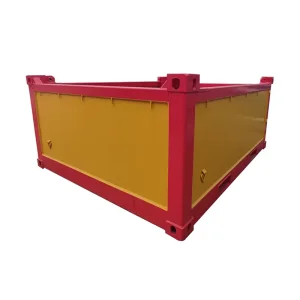
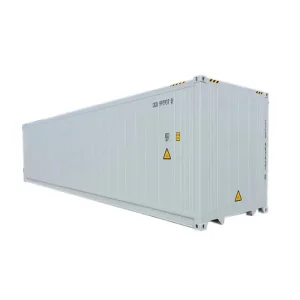
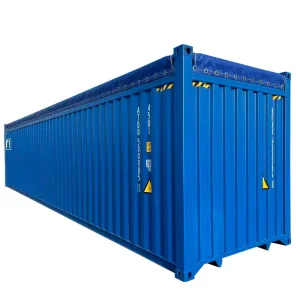
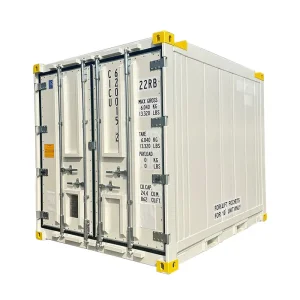
Pre-inspected sea containers certified for international CSC rail, maritime transit, and heavy modular duty.
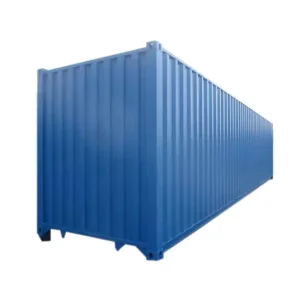
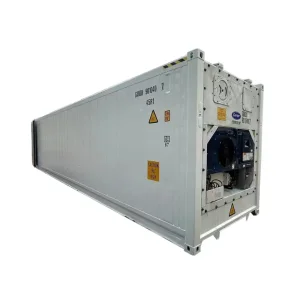
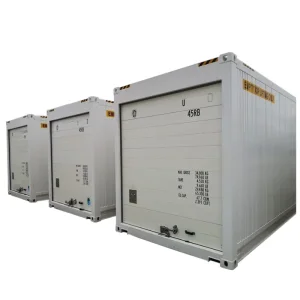
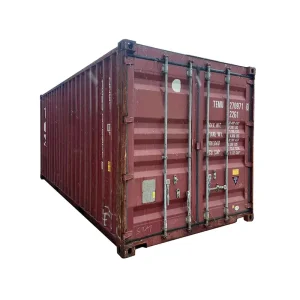
The People's Republic of China produces over 90% of the world's intermodal shipping equipment. Sourcing 40ft sea containers—including standard dry freight (40ft DC), high cube (40ft HC), open-top, flat-rack, and cold-chain reefers—directly from established Chinese fabricators delivers unparalleled metallurgical consistency, cost efficiency, and supply chain security.
China’s domestic blast furnaces furnish specialized SPA-H weather-resistant Corten steel coils directly to coastal manufacturing plants. This raw material synergy eliminates transatlantic tariffs, preserves metallurgical yield strength (minimum 345 MPa), and guarantees copper-phosphorus alloy protection against aggressive salt-spray oxidation during marine voyages.
Modern container production lines incorporate high-precision multi-axis MIG/MAG welding robots, ensuring complete penetration along top side rails, bottom side rails, and corner castings. Robotic SA 2.5 grit blast preparation followed by automated zinc-rich epoxy multi-coat primer systems delivers flawless adhesion exceeding 350-micron nominal dry film thickness (DFT).
Tier-1 Chinese factories operate under permanent surveillance by international classification societies including Bureau Veritas (BV), ABS, Lloyd's Register (LR), and China Classification Society (CCS). Every 40ft unit receives an authentic CSC (Convention for Safe Containers) safety approval plate rated for 30,480 kg to 32,500 kg maximum gross mass (MGM).
Selecting between a 40ft General Purpose (GP) container and a 40ft High Cube (HC) variant dictates volumetric efficiency, intermodal routing headroom, and weight-to-payload distribution across transoceanic container vessels and intermodal flatbed railways.
| Dimensional & Mechanical Parameters | 40 Ft ISO Standard Dry (40' DC) | 40 Ft High Cube Container (40' HC) | 40 Ft High-Cube Reefer (Thermo King / Carrier) |
|---|---|---|---|
| External Dimensions (L × W × H) | 12,192 × 2,438 × 2,591 mm (40' × 8' × 8'6") | 12,192 × 2,438 × 2,896 mm (40' × 8' × 9'6") | 12,192 × 2,438 × 2,896 mm (40' × 8' × 9'6") |
| Internal Clear Dimensions | 12,032 × 2,352 × 2,393 mm | 12,032 × 2,352 × 2,698 mm | 11,584 × 2,290 × 2,544 mm |
| Usable Internal Capacity | 67.7 m³ (2,390 cu.ft) | 76.4 m³ (2,698 cu.ft) — +12.8% Gain | 67.5 m³ (2,383 cu.ft) |
| Tare Weight (±2%) | 3,730 kg (8,223 lbs) | 3,900 kg (8,598 lbs) | 4,620 kg (10,185 lbs) |
| Maximum Payload Allowance | 26,750 kg (58,973 lbs) | 28,600 kg (63,052 lbs) | 27,880 kg (61,464 lbs) |
| Floor Construction | 28mm Keruing / Apitong Marine Plywood (720kg/m³) | 28mm Bamboo-Composite or Hardwood Veneer | Heavy-Duty Extruded Aluminum T-Bar Aeration Floor |
| Stacking Test Capacity (CSC Rule) | 9-High Stacking @ 216,000 kg total gross | 9-High Stacking @ 216,000 kg total gross | 8-High Stacking approved for reefer bay cells |
| Thermal Core / Insulation Coefficient | N/A (Ambient solid Cor-Ten wall) | Optional closed-cell thermal lining | Polyurethane Cyclopentane Injected (K=0.38 W/m²·K) |
The international shipping apparatus is experiencing an unprecedented structural transformation. Chinese fabricators are shifting from basic sheet-metal bending to smart, sustainable, highly integrated logistics platforms that support decarbonization, cargo trackability, and digital chain of custody.
Mandated by international IMO greenhouse abatement benchmarks and Chinese green factory standards, top foundries utilize ultra-low VOC waterborne epoxy primers and acrylic topcoats. Coupled with scrap-based electric arc furnace (EAF) Corten production, each 40ft box yields up to 38% less embodied carbon during stamping and furnace runs.
Factory-embedded IoT modules are rapidly replacing retrofitted trackers. New Chinese 40ft dry and reefer boxes feature flush-mounted solar-powered satellite transceivers communicating via BLE 5.0, NB-IoT, and 5G networks, tracking GPS coordinates, ambient humidity, geofence violations, door breach events, and dynamic structural shock forces in real time.
The global renewable energy transition has catalyzed massive demand for modified 40ft high cube structures purpose-engineered for Battery Energy Storage Systems (BESS). Chinese factories manufacture reinforced floor stringers capable of holding up to 45 tons, integrated thermal management channels, fire-rated insulation rockwool, and pre-fabricated explosion-relief roof hatches.
The ubiquitous 40-foot footprint transcends basic vessel stowage. Due to standardized ISO corner block geometry and predictable torsional rigidity, these structures serve as modular building blocks across challenging environments worldwide.
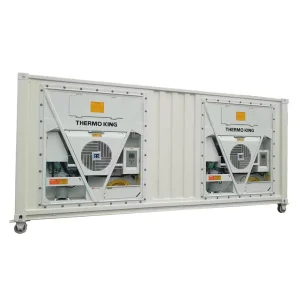
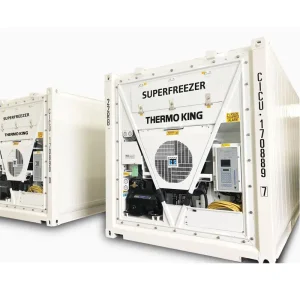
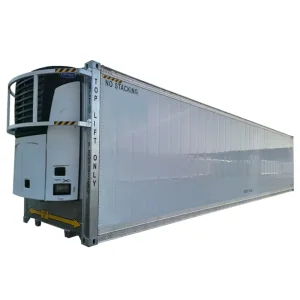
40ft HC reefers powered by Daikin, Carrier Transicold, or Thermo King machinery preserve fresh agricultural produce, seafood, and biopharmaceuticals across multi-week maritime voyages with temperature precision within ±0.25°C from -35°C to +30°C.
Sustaining rigorous longitudinal acceleration tests on China-Europe railway corridors (CR Express), double-stack flatcars, and national road haulage, ensuring dry cargo protection without container deflection or door gasket ingress.
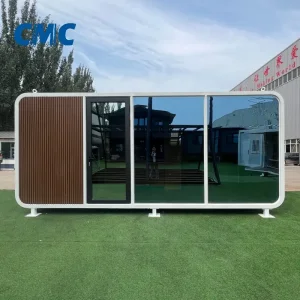
Structural 40ft frames serve as the backbone for high-end prefabricated homes, executive mobile field offices, mining accommodation camps, and hospital isolation modules compliant with regional building codes (IBC/Eurocodes).
Engineered containerized enclosures accommodate high-density computing servers, immersion liquid cooling setups, solar inverters, and utility-scale lithium iron phosphate (LiFePO4) storage banks for off-grid operations.
When contracting volume allocations from Chinese container manufacturers, international logistics operators and EPC infrastructure contractors must implement systematic inspection gates to avoid delivery delays, customs rejections, or premature corrosion.
Mandate Mill Test Reports (MTRs) according to EN 10204 Type 3.1 certifying SPA-H chemical composition. Verify minimum Yield Strength ≥ 345 N/mm² and Ultimate Tensile Strength ≥ 490 N/mm². Ensure flooring plywood satisfies Australian Quarantine and Inspection Service (AQIS) chemical treatment benchmarks for long-tail biological quarantine clearance.
Require Factory Acceptance Test (FAT) witnessing: 100% high-pressure water spray testing at 1 bar nozzle pressure across door seals, roof panels, and wall corrugations per ISO 1496-1 guidelines. Light transmission testing via internal dark-room inspection reveals pinholes in automated weld seams before priming.
Factor inland transit distances from foundry to container berths. Tier-1 foundries clustered around Tianjin Port, Qingdao Port, Shanghai, and Ningbo eliminate prolonged road haulage fees and facilitate "One-Way Free Use" export arrangements, where outward containers carry revenue export cargo directly into your destination hub.
Critical technical, logistical, and commercial clarifications provided by our senior marine engineering and container export specialists.
Certified equipment engineered for specialized liquids, cold storage logistics, mining, and architectural conversions.