Famous Over Sea Containers Products & Engineering Quotes

Global Logistics Engineering Whitepaper & Industrial Supply Specifications | Direct Manufacturer Export Port-Side from Tianjin

Featured Intermodal & Reefer Cargo Inventory

Discover immediate dispatch availability for certified cold chain, specialized dangerous goods, and offshore intermodal assets engineered to strict BV, ISO, and DNV maritime approvals.
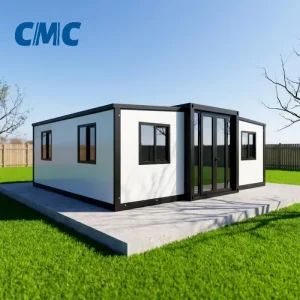
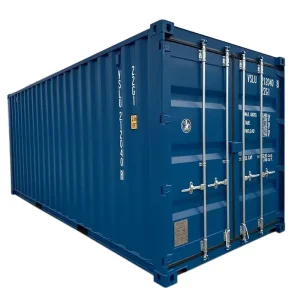
Famous 20ft Modular Container Houses Expandable Steel Container House
Famous 20ft Modular Container Houses Expandable Steel Container House Excellent Thermal Insulation and Sealing Performance Manufacturer, Exporters
Get Specs & Instant Quote
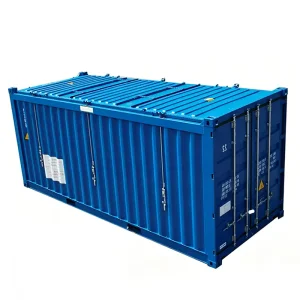
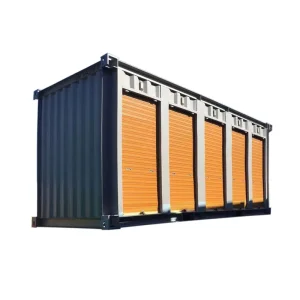
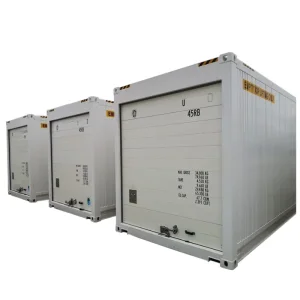
ODM 20FT High-cube Dangerous Goods Container Side Open Door
ODM 20FT High-cube Dangerous Goods Container Side Open Door with Ventilation Opening Pricelist, Quotes
Get Specs & Instant Quote
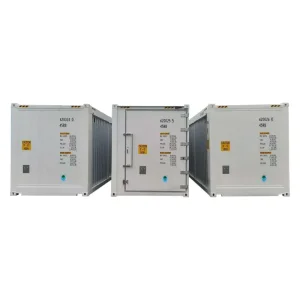
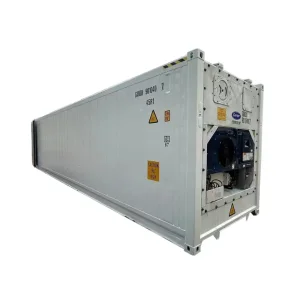
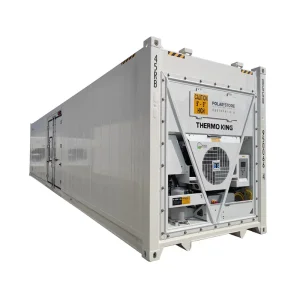
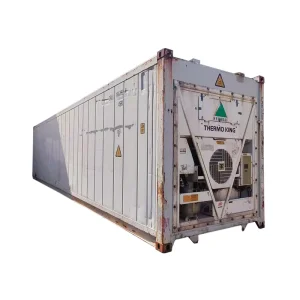
China OEM 40ft High-Cube Customized Three-in-One Combination Reefer Storage Container
China OEM 40ft High-Cube Customized Three-in-One Combination Reefer Storage Container Pricelist, Exporters
Get Specs & Instant Quote

Global Over Sea Container Market Dynamics & Procurement Analysis

The intermodal sea container landscape is experiencing a paradigm shift driven by digital telematics, decarbonization regulations, and geopolitical repositioning. Modern procurement strategies require balancing asset capital expenditures against operational total cost of ownership (TCO).

Next-Gen Smart Cold Chain

Global demand for temperature-sensitive pharmaceuticals and perishable proteins requires precision engineering. Modern refrigerated containers integrate AI-assisted diagnostics, controlled atmospheric (CA) regulating valves, and real-time remote IoT micro-controllers that decrease energy draws while maintaining sub-zero thermal stability down to -40°C.

Specialized ISO Tank & Hazards

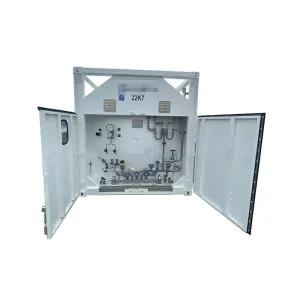
Industrial supply lines are shifting from intermediate bulk drums to high-integrity T75 cryogenic liquid and heated bitumen storage containers. Chemical manufacturers prioritize ADR, RID, and IMDG-compliant specialized structural designs engineered to endure extreme thermal expansion and maritime acceleration vectors.

Modular Structural Repurposing

Beyond traditional intermodal logistics, container architecture has disrupted civilian, defensive, and resource sectors. Corten-steel framed modular buildings provide turnkey, seismically certified deployments for remote mining camps, pop-up telecom edge computing centers, and rapid-response disaster housing arrays.

China Factory 4.0: Supply Chain Resilience & Port-Side Efficiency

Headquartered in the Tianjin Free Trade Zone and Suzhou industrial nodes, our facilities deploy end-to-end automated manufacturing protocols that ensure uncompromising metallurgy, zero-defect robotic welding, and streamlined port clearance.

Manufacturing Dimension Legacy Industry Benchmarks CIMIC Factory 4.0 Standards Strategic Procurement Value
Metallurgical Base Standard Mild Carbon Steel SPA-H High Corrosion Corten Steel Tripled lifecycle durability in aggressive maritime saline environments
Welding Precision Manual Stick / Semi-Auto MIG Multi-Axis Panasonic Robotic Tracking Hermetic structural sealing, certified under rigorous DNV/BV burst tolerances
Thermal Insulation Manual Spray Glass-Wool / EPS Automated Cyclopentane High-Pressure Injected PU Zero thermal bridging, exceptional K-value insulation metrics (≤ 0.38 W/m²K)
Surface Protection Solvent-borne standard primer Zinc-Rich Epoxy + Polyurethane Topcoat (120µm) Passes rigorous 1,500-hour Salt Spray ISO 12944-C5I marine testing
Port Proximity Advantage Inland factories (>500 km transport) ~100 km to Tianjin Major Deepwater Hub Minimizes secondary drayage logistics fees and prevents vessel cut-off delays

Supply Capability & Quality Engineering Benchmarks

Backed by four decades of ISO 9001 and Bureau Veritas manufacturing compliance, delivering mission-critical logistics hardware across Africa, the European Union, the Americas, and Australasia.

1983
Foundational Heritage
40+
Years Production Mastery
100M+
Annual Turnkey Capacity (USD)
100%
CSC & DNV Compliance Tested

Localized Engineering Use Cases & Custom Deployments

Intermodal containers must be precision-configured to match their intended operational context. Below is an engineering overview of our core deployment classes.

Agricultural & Perishables Transit

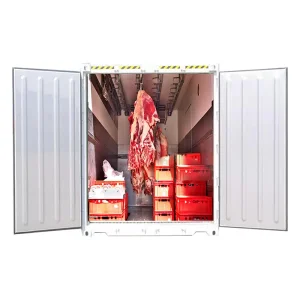
Equipped with specialized heavy-gauge stainless-steel inner liners and food-grade internal hanging rail systems, these specialized hanging meat containers eliminate cross-contamination while supporting bulk carcase transport. Daikin, Carrier, or Thermo King refrigeration units maintain exact dew points to eliminate condensation spoilage.

Hazardous Cargo & Chemical Storage

Engineered for compliance with international chemical transit rules, our side-open hazardous material units feature non-sparking aluminum honeycomb flooring, explosion-proof exhaust louvers, and dual-layer leak containment sumps designed to mitigate catastrophic spills during heavy roll-pitch vessel voyages.

Offshore Energy & Rig Support

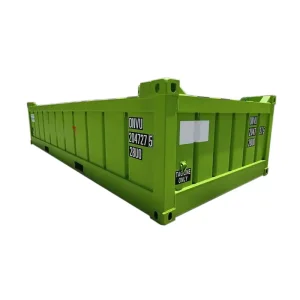
Offshore environments present brutal dynamic shock risks during lifting. Fabricated strictly to DNV 2.7-1 / EN 12079 criteria, our half-height ore bins and tool baskets utilize full-penetration structural node welding and Charpy V-notch tested steel designed to eliminate brittle fractures at -20°C ambient marine operational thresholds.

Engineered Containers, Tanks & Dry Cargo Stock

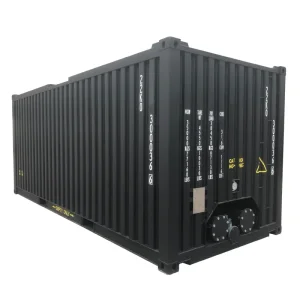
Explore customized roll-up configurations, double-ended accessibility units, mobile power solutions, and ISO tank conversions available for global procurement.
Technical Procurement & Engineering FAQ

Critical answers to questions surrounding structural testing, export documentation, thermal ratings, and custom modification workflows.

What standard container profiles and custom dimensions does your facility engineer?
Our automated fabrication lines support standard 10ft, 20ft, 20ft High Cube (HC), 40ft, and 40ft HC profiles. Additionally, our engineering wing builds bespoke special sizes, such as 45ft/48ft/53ft domestic and international intermodal frames, 1/2-height open tops for heavy mining ores, dual-compartment combined refrigeration lockers, and custom side-opening configurations tailored to match specific machinery load profiles.
Which active refrigeration machine platforms are deployed across reefer assets?
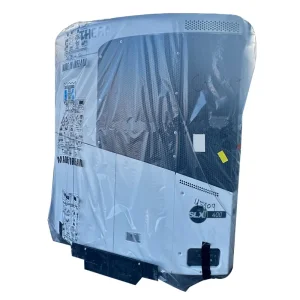
We partner with major global refrigeration equipment providers, including Daikin (Zestia/LXE series), Carrier Transicold (PrimeLINE/ThinLINE), and Thermo King (Magnum Plus). Units are tuned for specific cargo transit windows, from ultra-low sub-zero temperatures (-40°C) for frozen fish to controlled temperature and humidity settings for delicate fruit and produce lines.
What international classification certificates and survey stamps accompany shipments?
Every container manufactured carries full compliance documentation, including CSC (Convention for Safe Containers) safety approval plates certified by Bureau Veritas (BV), ABS, or China Classification Society (CCS). Offshore units comply with DNV 2.7-1 / EN 12079 structural load and pad eye pull-test criteria, while tank units carry ASME and IMDG T-code certifications for hazardous international multi-modal carriage.
How does passive insulated container efficiency compare against active reefer equipment?
Reefer containers contain an integrated electrical compressor cooling plant requiring a constant external 380V/440V 3-phase power supply to dynamically modulate internal air temperatures. In contrast, passive insulated containers rely solely on high-density cyclopentane-foamed walls (50mm–100mm polyurethane thickness) with zero active moving parts. Passive units are well suited for shorter intermodal rail corridors or regional routes where products only require insulation against ambient thermal spikes without continuous freezing.
What is the inspection and quality validation process for used and refurbished stock?
Our depot inventory of used shipping line fleet boxes undergoes comprehensive 7-point structural inspections across major Chinese maritime hubs (Tianjin, Qingdao, Shanghai, Ningbo). We verify frame alignment, corner casting integrity, door seal elasticity, floor plank dryness, and ensure dry units are strictly IICL-5 wind-and-water-tight (WWT). Used reefer assets receive complete pre-trip inspections (PTI) and software diagnostics run by certified technicians prior to export clearance.
What are the lead times and minimum order quantities (MOQ) for custom OEM/ODM modifications?
Stock standard dry and reefer units can be booked and released within 48 to 72 hours from container depots. For OEM and ODM builds requiring customized structural layouts, specialized door positions, explosion-proof electrics, or private exterior fleet coatings, our standard MOQ begins at 1 to 2 units for high-value offshore or hazardous goods classes, with volume production runs typically completing within 20 to 35 business days depending on certification complexities.