Industrial-grade standard and modified intermodal dry, refrigerated, and specialized units manufactured under ISO 9001 and Bureau Veritas maritime quality assurance.


Analyzing nominal external footprints versus dynamic cubic volume utility in international multimodal transport networks.
In global intermodal logistics, container lengths are governed strictly by the ISO 668 classification standard to ensure uniform slot allocation aboard container vessels, intermodal rail spine cars, and specialized container trailers. However, real-world supply chain efficiency requires Original Design Manufacturers (ODM) to continuously balance exterior envelope footprints with maximum usable internal floor span and cubic capacity.
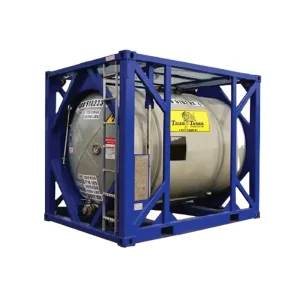
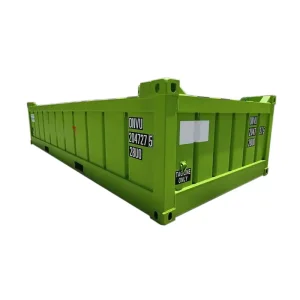
Nominal Length: 2,991 mm (9' 9.75"). Primarily built for offshore exploration (DNV 2.7-1 / EN 12079), compact site installations, and dangerous goods transport. Custom ODM engineering couples two 10ft units into a standard 20ft slot using corner twist-lock bridge fittings for maritime repositioning.
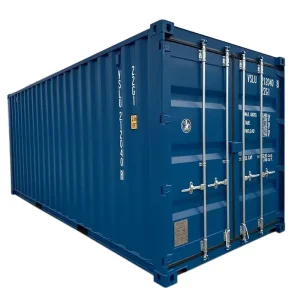
Nominal Length: 6,058 mm (19' 10.5"). The fundamental building block of Twenty-Foot Equivalent Unit (TEU) metrics. Highly optimized for high-density, heavyweight shipments (ores, liquids, machinery) where floor weight rating thresholds are reached before volumetric cubic bounds are exhausted.
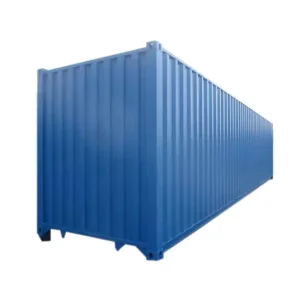
Nominal Lengths: 12,192 mm (40' 0") and 13,716 mm (45' 0"). Engineered to maximize volumetric payload for consumer goods, textiles, and reefer perishables. High Cube variations add 305 mm (1 foot) in vertical clearance, expanding cubic capacity from 67.7 m³ to 76.4 m³ without altering the physical ship cell footprint.
| Dimensional Category | Nominal Exterior Length | Usable Internal Floor Length | Cubic Capacity (Std / HC) | Maximum Gross Mass (MGM) | Primary Industrial Application |
|---|---|---|---|---|---|
| 10ft Offshore / Special | 2,991 mm (9' 9.75") | 2,840 mm (9' 3.8") | 15.8 m³ / N/A | 10,000 kg | Rig operations, DNV lifting, hazardous chemical storage |
| 20ft Standard Intermodal | 6,058 mm (19' 10.5") | 5,898 mm (19' 4.2") | 33.2 m³ / 37.4 m³ | 30,480 kg | Concentrated dry bulk, heavy equipment, standard sea freight |
| 40ft High-Cube Intermodal | 12,192 mm (40' 0") | 12,032 mm (39' 5.6") | 67.7 m³ / 76.4 m³ | 32,500 kg | General cargo, cold chain reefer, automotive parts |
| 45ft Pallet-Wide High Cube | 13,716 mm (45' 0") | 13,556 mm (44' 5.7") | 86.0 m³ / 89.2 m³ | 34,000 kg | Pan-European shortsea, domestic rail, pallet logistics (33 Euro-pallets) |
Facilitating smooth supply transitions from automated industrial lines to global shipping hubs.
Our fabrication plants deploy SPA-H atmospheric corrosion-resistant Corten steel exclusively. This metallurgy produces a stable, regenerative oxide patina upon ambient exposure, stopping structural decay across extreme oceanic salinity and aggressive intermodal climates.
Every customized length container is stamped with an accredited CSC safety approval plate (Convention for Safe Containers), tested under classification guidelines by Bureau Veritas (BV), ABS, or DNV to verify transverse racking, longitudinal bending, and stacking limits up to 216,000 kg.
Operating continuous submerged arc roll-forming lines, automated corrugation presses, and robotic shot-blasting suites. Every base longitudinal rail, side wall corrugated panel, and corner casting assembly complies with strict ISO dimensional tolerances (±2 mm to ±5 mm).
From demanding offshore energy installations to modular structures, how customizable lengths enable specialized performance.
Sub-lengths like 8ft, 10ft, and half-height containers custom-built with pad eyes certified to DNV 2.7-1 / ISO 10855. Engineered to handle vertical and horizontal dynamic wave acceleration forces during offshore supply vessel crane lifts in the North Sea and Gulf of Guinea.
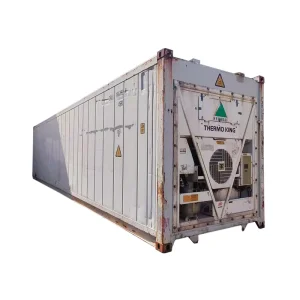
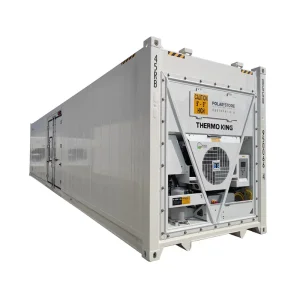
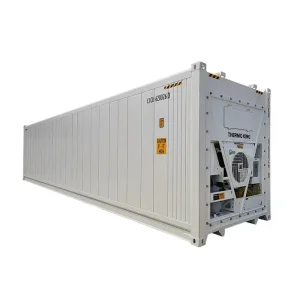
20ft and 40ft lengths fitted with Carrier, Thermo King, or Daikin refrigeration plants. Built with precision extruded aluminum T-bar floors and high-pressure polyurethane cycloisocyanate insulation, sustaining precise cargo environments between -30°C and +30°C during trans-equatorial journeys.
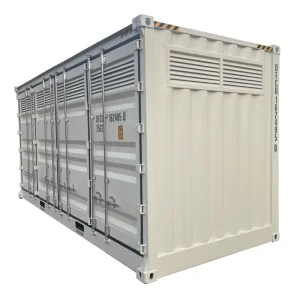
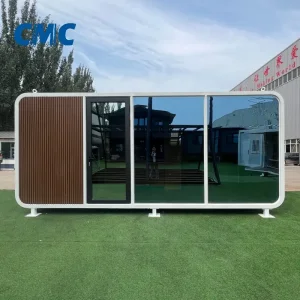
Converting structural container length envelopes into expandable offices, high-efficiency equipment pods, and living cabins. Integrated with customized window cutouts, thermal bridges, and side-opening configurations while maintaining structural corner-post integrity.
Integrating light-weight composite metallurgy, IoT telematics, and circular manufacturing philosophies.
Replacing conventional floor panels and side sheeting with fiber-reinforced plastics (FRP) and ultra-high-yield low-alloy steels. This reduces container tare weight by up to 18%, enabling higher cargo payload capacity per container movement and cutting ton-kilometer carbon footprints.
Integrating solar-harvested sensor nodes into container roof corrugations. These monitor internal temperature, relative humidity, door-seal integrity, dynamic shock loads, and precise satellite GPS positioning across high-seas routes.
Transitioning finishing facilities entirely to water-borne epoxy priming systems and high-solids polyurethane topcoats. These eliminate harmful volatile emissions during production while maintaining a 5-year marine protective coating lifecycle guarantee.
Explore our full line of specialized containers: bulk intermodal, side open reefers, and certified offshore logistics units.
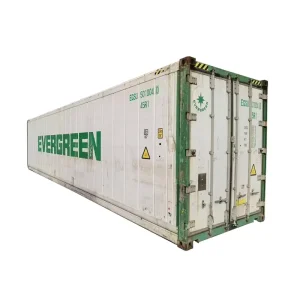
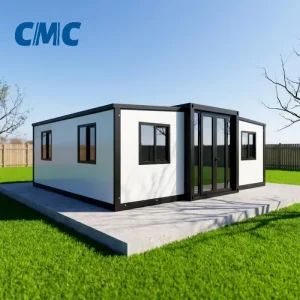
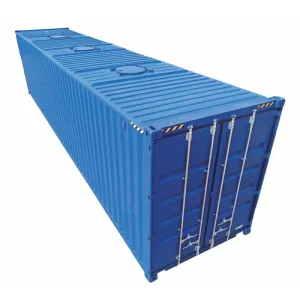
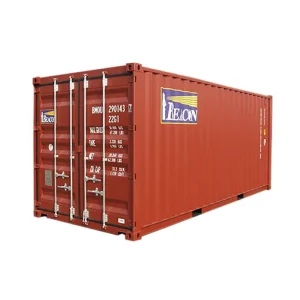
Key engineering details on ISO tolerances, structural customizations, and class certifications.
Standard ISO container lengths are measured between the outer surfaces of corner castings. However, internal usable lengths are reduced by end frame corner posts (approx. 100 mm per post), corrugation depth (typically 36-50 mm), and end-door swing clearances. For example, a nominal 20ft container has an external length of 6,058 mm, yielding an internal usable length of 5,898 mm. For refrigerated units, internal length is further reduced by 350-450 mm to fit the refrigeration machinery and baffle bulkheads.
Ocean container vessels utilize cellular guide systems sized strictly for ISO standard 20ft and 40ft lengths. Non-standard ODM lengths (e.g., 10ft, 30ft, 45ft) must either incorporate standard ISO corner casting centers at the 20ft or 40ft intermediate positions, or travel as out-of-gauge (OOG) breakbulk or flat-rack cargo. However, two 10ft containers coupled with certified bridge fittings can clear standard 20ft lifting cells under CSC compliance.
All shipping containers must have a valid CSC safety approval plate (Convention for Safe Containers) issued by an authorized Classification Society (e.g., Bureau Veritas, ABS, Lloyd's Register). Units handling hazardous materials must comply with IMDG (International Maritime Dangerous Goods) standards. Offshore units deployed onto oil and gas platforms must carry DNV 2.7-1 / EN 12079 / ISO 10855 type-approval certificates.
Shippers often face axle load restrictions before hitting total container weight caps. A 20ft container concentrated with 28,000 kg of dense cargo places a heavy load on highway chassis axles. Conversely, 40ft and 45ft lengths spread cargo weight across a broader wheel footprint, but are susceptible to longitudinal sag if cargo is not evenly distributed across the bottom side rails.
Our plants construct frames and corrugated panels from SPA-H Corten atmospheric corrosion-resistant steel, which provides a minimum yield strength of 345 MPa. For critical load-bearing structural parts, such as corner castings, SCW480 cast steel is used to withstand high vertical forces from 9-high fully laden shipboard stacking.
Production cycles for custom-dimension, side-open, or offshore containers depend on structural testing requirements. General OEM/ODM manufacturing timelines range from 25 to 45 business days. This covers CAD modeling, finite element analysis (FEA), Bureau Veritas physical load testing, and final marine painting and finishing.
