Engineered to ISO, CSC, and DNV maritime classifications. Fully customizable door arrangements, interior lining profiles, and thermal performance matrices.


Evaluating how supply chain disruptions, energy transition infrastructure, and distributed logistics models are transforming container architecture from static metal boxes to intelligent, high-density industrial assets.
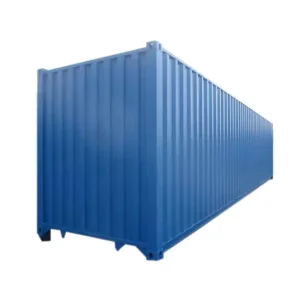
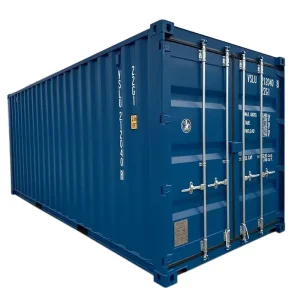
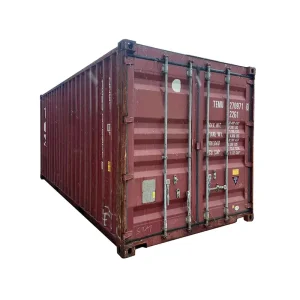
Global manufacturing and enterprise supply chains have definitively shifted from pure Just-in-Time (JIT) paradigms to fortified Just-in-Case (JIC) networks. Enterprise buyers increasingly utilize heavy-duty ISO dry containers and side-opening high-cube units as permanent and semi-permanent yard infrastructure. This decentralized storage drastically reduces expensive warehouse leasing costs while providing instantaneous inventory accessibility for manufacturing components, agricultural harvests, and emergency spares.
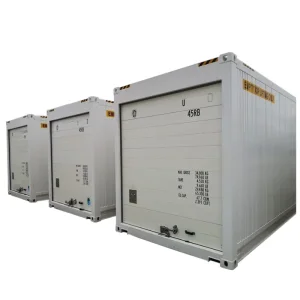
The explosive transition toward utility-scale Battery Energy Storage Systems (BESS) and hydrogen generation has propelled container engineering into extreme thermal management and safety envelopes. Standard containers fall short; project developers require ODM non-combustible Corten framing with built-in aerosol fire suppression tracks, explosion-proof HVAC ducting, and dynamic internal racking profiles capable of handling multi-ton lithium battery banks safely under seismic load ratings.
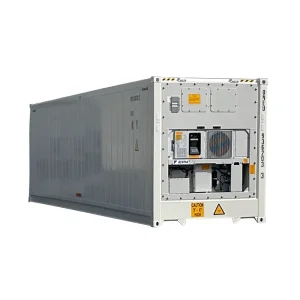
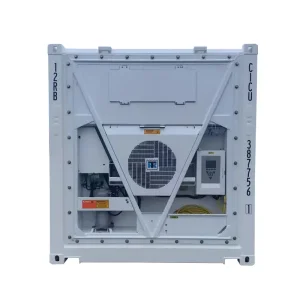
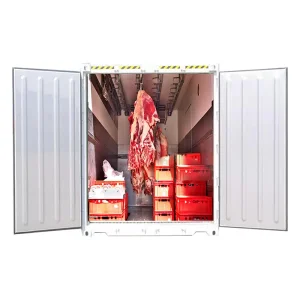
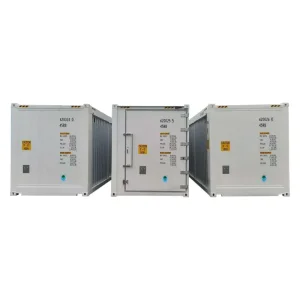
Global perishables logistics and pharmaceutical distribution require point-of-harvest chilling to curtail spoilage. Intermodal cold storage containers equipped with carrier-grade Daikin, Thermo King, and Carrier compressors allow logistics operators to bridge the gap between harvest and overseas freight. These units double as static, ultra-reliable deep-freeze storage chambers (-30°C to +30°C) with precision micro-atmosphere modulations, safeguarding perishable capital value directly in agricultural hubs.
Strategic Industry Insight: The convergence of modular prefabricated architecture, specialized chemicals compliance, and offshore marine operations has shifted procurement focus from standard stock units to tailored Original Design Manufacturing (ODM). Industrial operators save up to 38% in lifecycle CAPEX by engineering custom structural dimensions, dual-entry doors, and certified load points prior to factory roll-out rather than retrofitting after delivery.
Understanding why China remains the undisputed global center for ISO, reefer, and high-cube container manufacturing: integrated raw material supply chains, robotic metallurgy, and unmatched seaport logistics.
Our Tianjin and regional facilities are directly integrated with world-leading steel rolling complexes. We exclusively employ SPA-H weathering steel, which develops a self-healing protective oxide patina that prevents oxidation in harsh maritime environments. This raw material security protects international clients from sudden raw material spot spikes and guarantees uniform tensile strength across every corner casting.
Manual welding discrepancies are entirely eliminated via 6-axis continuous robotic seam welding cells. Every corrugation panel, bottom crossmember, and corner post is laser profiled with sub-millimeter tolerances (±0.5mm). This guarantees that our containers exceed ISO 1496 diagonal distortion limits and withstand high transverse racking loads up to 150 kN.
Inland logistics represent a major hidden surcharge for overseas purchasers. With production facilities positioned within a 100km corridor from Tianjin Port and regional hubs, our direct factory-to-quay pipeline eliminates inland drayage bottlenecks. Finished containers undergo instantaneous customs clearance and roll on-board as shipper-owned containers (SOC), cutting demurrage to zero.
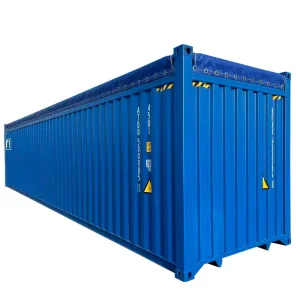
Unlike rigid western fabricators that require multi-month tooling setups, our flexible manufacturing lines transition seamlessly between standard dry freight boxes and complex custom orders—including roll-up door assemblies, split-zone insulated partitions, open-top soft tarps, and DNV offshore baskets—with lead times up to 45% faster than European counterparts.
Comprehensive engineering breakdown comparing materials, certifications, testing pressures, and environmental resistance across commercial container tiers.
| Technical Parameter | Standard ISO Dry Storage | High-Cube Multi-Door / Hazmat | DNV 2.7-1 Offshore Unit |
|---|---|---|---|
| Base Steel Specification | SPA-H Corten Weathering Steel (3.0mm–4.5mm) | SPA-H Corten Reinforced Profiles (4.0mm–6.0mm) | High-Yield Structural Steel EN 10025 S355J2 / Corten |
| Flooring System | 28mm Marine Grade Apitong Plywood (6-ply) | Checkered Steel Plate / Steel Grate (4.5mm–6mm) | Heavy-Duty Steel Floor Plate with Drainage Channels |
| Max Gross Weight (M.G.W.) | 30,480 kg (67,200 lbs) | 32,500 kg to 35,000 kg | Up to 25,000 kg (Dynamic Offshore Rating) |
| Corrosion Protection | Zinc-rich primer + Epoxy + Polyurethane (120μm) | Marine C4 System with Polyurea Anti-Spill Liners | ISO 12944 C5-M Extreme Offshore System (≥280μm) |
| Operating Temperature | -40°C to +80°C | -40°C to +80°C (Ventilated Hazmat) | -20°C to +50°C with Impact Toughness @ -20°C |
| International Certifications | ISO 1496-1 / CSC / BV | ISO / CSC / EN 12079 / BV | DNV 2.7-1 / EN 12079 / Lloyd's Register |
| Drop & Impact Testing | Standard ISO Static Roof/Floor Testing | Enhanced Floor Deflection Analysis | Dynamic 4-Point Lift & 45° Drop Impact Tested |
Real-world integration blueprints illustrating how our specialized container configurations resolve complex storage, transportation, and modular utility challenges worldwide.
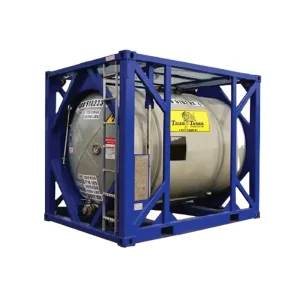
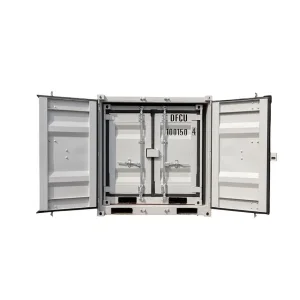
Industrial chemical handlers and mining operations require segregated, blast-mitigating storage solutions. Our 20ft and 40ft Hazmat units incorporate full-length side bifold doors, explosion-proof louvers, non-sparking aluminum interior flooring, and built-in liquid containment sumps. These sumps capture accidental leakages up to 25% of internal fluid capacity, ensuring seamless adherence to EPA, OSHA, and global ADR regulations without cost-prohibitive concrete bunds.
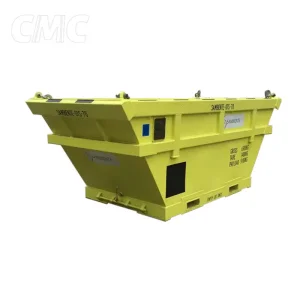
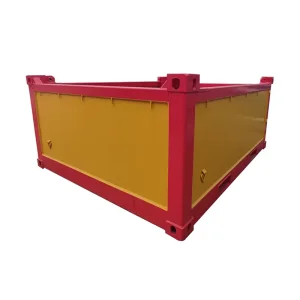
Offshore oil platforms, subsea construction barges, and wind turbine installations operate in violent sea states where conventional containers crumple under dynamic lifting shock. Our certified DNV 2.7-1 / EN 12079 offshore cargo baskets and silt containers are fitted with certified four-leg pad eyes, specialized sling sets, and low-temperature impact-tested steel. Every weld is 100% NDT (Non-Destructive Testing) certified by Bureau Veritas.
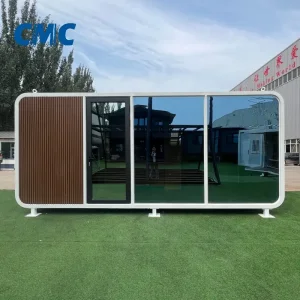
Construction management, mining barracks, and high-tech site offices require turnkey habitable structures that deploy in hours. Our 20ft flat-pack modular pods and stylized "Apple Cabins" utilize thermal-break galvanized steel frameworks, integrated rockwool fireproof sandwich panels, double-glazed panoramic low-E curtain walls, and concealed pre-wired electrical grids meeting CE, UL, and AS/NZS specifications.
A rigorous checklist designed for corporate supply managers, logistics directors, and international EPC contractors procuring customized containers from China.
Always demand verified 3.1 Material Test Certificates confirming Corten SPA-H chemistry (Carbon ≤ 0.12%, Chromium 0.50–1.25%, Copper 0.25–0.55%). Ensure yield strength meets or exceeds 345 MPa to prevent buckling under 9-high fully laden stack loads.
Execute Dry Film Thickness (DFT) testing across corners and understructures. Standard exterior coating must measure ≥120μm total thickness (zinc primer 30μm + epoxy intermediate 40μm + polyurethane topcoat 50μm), passing cross-hatch adhesion tests according to ASTM D3359.
Mandate a 100% light-leak test: an inspector enters the sealed container in a dark room or checks from inside during full sunlight. For reefer and specialized containers, require dynamic water hose testing at 100 kPa from a 1.5-meter distance to confirm absolute gasket compression.
Confirm that the CSC (International Convention for Safe Containers) safety approval plate is authenticated by Bureau Veritas (BV), Lloyd's Register (LR), or DNV. For offshore containers, verify that the sling sets possess individual DNV Type Approval certificates and load-test tags.
Engineered for harsh operating environments, chemical handling, bulk mining logistics, and fast-track prefabricated accommodation.
Anticipating structural engineering shifts driven by decarbonization benchmarks, IoT tracking architectures, and advanced composite materials.
Next-generation containers are evolving into intelligent, self-monitoring nodes within the global supply chain matrix. We now integrate low-profile solar-harvesting satellite communicators, internal door optical sensors, and atmospheric monitors. Fleet owners obtain continuous real-time data on shock impacts (3-axis G-force), humidity thresholds, thermal gradients, and unauthorized breach events through cloud APIs.
Environmental compliance has overhauled container paint line operations across China. We have completely transitioned away from toxic solvent-based primers to advanced waterborne epoxy and polyurethane coatings. This shift decreases volatile organic compound (VOC) emissions by over 85% while matching marine C5-M high-salinity corrosion endurance ratings exceeding 15 years.
Traditional hardwood flooring (Apitong) is rapidly being superseded by recycled structural composite boards and basalt fiber sandwich panels. These lightweight floors eliminate pesticide methyl bromide fumigation requirements at Australian and North American ports, reduce tare weight by up to 280 kg per 40ft container, and provide complete resistance against oils, acids, and rot.
In-depth technical answers addressing operational specifications, cold-chain units, certifications, and international logistics logistics.
Original Equipment Manufacturing (OEM) produces containers to an existing, pre-engineered client specification or drawing. Original Design Manufacturing (ODM) involves our dedicated engineering team developing the concept from functional requirements—such as dynamic FEA stress analysis, thermal load calculations, specialized opening door frames, and customized internal tie-downs—supplying certified CAD/3D designs, classification society approvals (BV/DNV), and full turnkey production.
SPA-H is an atmospheric corrosion-resistant copper-chromium-phosphorus alloyed steel. Unlike standard structural carbon steel (like Q235), SPA-H develops a dense, stabilizing rust-like patina when exposed to maritime humidity and salt aerosols. This passive layer drastically retards the rate of oxygen diffusion into the base metal, extending structural integrity by 4 to 6 times in harsh marine conditions.
Selection depends on target set-points and operational profiles. Daikin machinery excels in accurate modulation for fresh produce and sensitive pharmaceuticals due to its inverter scroll compressor technology. Carrier Transicold is the global benchmark for standard sea-freight availability with ubiquitous parts networks. Thermo King provides exceptional deep-freeze pull-down speed, making it optimal for blast-freezing meats and fisheries down to -35°C or lower.
True offshore containers must be supplied with an authoritative third-party Classification Society Certificate (such as Bureau Veritas or DNV GL), an integrated DNV Data Plate affixed to the outer shell, Material Test Reports (MTR) confirming steel impact test toughness at -20°C, Non-Destructive Testing (NDT) reports for critical padeye welds, and certified four-leg wire rope sling proof-load test certifications.
When shipping containers overseas, utilizing ocean carrier-owned containers (COC) exposes the importer to aggressive demurrage and detention tariffs if cargo clearance or offloading encounters inland delays. Purchasing an SOC unit allows the buyer to use the box indefinitely as secure on-site storage upon arrival, eliminating demurrage risks entirely and often qualifying for one-way freight discounts.
For standard ISO dimensions with simple modifications (such as additional vents, customized door configurations, or non-standard exterior paint color schemes), MOQs can be as low as 1 to 2 units. For complete ODM custom dimensional projects requiring custom stamping dies, new roll-forming setups, or distinct classification testing, typical minimum runs start at 5 to 10 TEUs (Twenty-Foot Equivalent Units).
