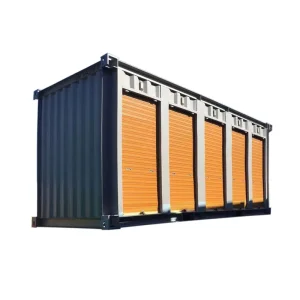
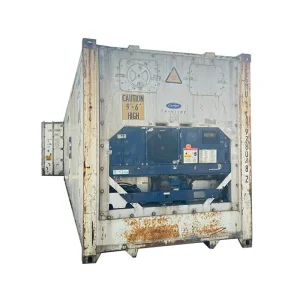
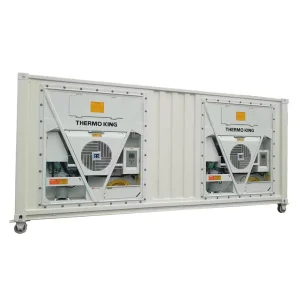
Direct factory supply of ISO certified standard dry cargo containers, specialized modifications, modular structures, and offshore carriers manufactured under strict Bureau Veritas and DNV quality controls.
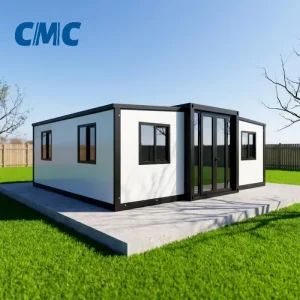
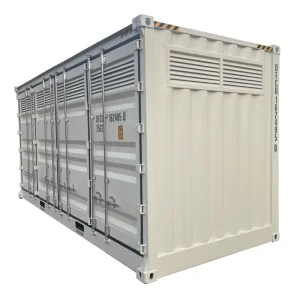
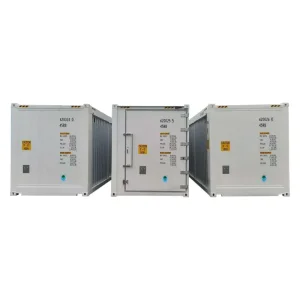

Comprehensive whitepaper examining structural container engineering, marine grade metallurgy, ISO standardization, and supply chain continuity across intermodal rail, short-sea, and deep-sea routes.
In modern multimodal logistics, the standard dry shipping container (ISO 668 Series 1 general cargo container) serves as the primary standardized transport module for over 90% of global non-bulk freight. Originally pioneered to streamline freight handling across deep-sea marine vessels, rail wagons, and highway chassis, the dry container has evolved from a simple steel enclosure into an advanced, precision-engineered industrial asset. With international trade facing unpredictable route disruptions, geopolitical realignment, and strict environmental mandates, the demand for high-durability, custom Original Design Manufacturer (ODM) standard dry containers has surged among shipowners, leasing conglomerates, mining operations, and modular logistics integrators.
Unlike commodity containers manufactured strictly to minimum baseline tolerances, an ODM dry container integrates tailor-made technical attributes: reinforced floor crossmembers rated for heavy axle loads, specialized internal lashing points for non-standard machinery, corrosion-resistant Corten steel alloys, and customized exterior dimensions ranging from 10ft mini-cube modules to 53ft domestic high-cube configurations. As containerized transport transitions toward lifecycle optimization, international enterprise procurement teams must balance initial capital expenditure (CAPEX) with operational performance factors such as tare weight reduction, stacking strength capacity, paint durability under ISO 12944 C5-M marine exposure conditions, and total structural lifespan.
Technical Insight: Standard dry cargo shipping containers are governed by ISO 668 (classification and dimensions) and ISO 1496-1 (specification and testing for general cargo). Containers engineered under ODM parameters can achieve a corner post test load rating of 86,400 kg per post, permitting safe marine vessel cell-guide stacking up to 9 or 10 tiers high even under severe pitch-and-roll dynamic marine forces.
Analyzing the automated fabrication processes, metallurgical supply chain clusters, and direct deep-water port proximity driving Chinese production leadership.
Leading Chinese manufacturing yards in Tianjin, Qingdao, and Suzhou deploy high-speed robotic submerged arc welding and fiber laser cutting tables. Automated roll-forming machines corrugate 1.6mm to 2.0mm SPA-H Corten steel panels with dimensional variances below ±0.5mm, ensuring airtight weld seams and high torsional rigidity across every standard dry unit.
Proximity to national tier-1 steel mills (such as Baosteel, HBIS, and Ansteel) guarantees an uninterrupted supply of certified atmospheric corrosion-resisting steel (SPA-H/Corten-A). This tight upstream integration eliminates international raw material freight markups, lowers raw steel inventory holding times, and stabilizes unit pricing for large-scale enterprise dry container build cycles.
Situated within 50 to 100 kilometers of northern and eastern commercial maritime gateways (Tianjin Xingang, Shanghai, Ningbo-Zhoushan), Chinese container manufacturers offer seamless export handling. Shippers take advantage of 'One-Way Free Use' repositioning programs, loading export commercial cargo into newly minted ODM dry containers to offset inland ocean freight delivery costs entirely.
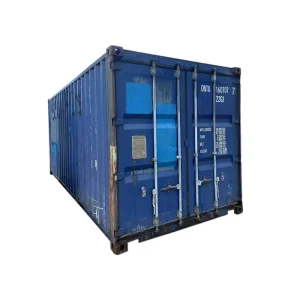
Standard Dry Containers (20GP, 40GP, 40HC, and 45HC) manufactured to ISO 1496-1, CSC, and Customs Convention on Containers (CCC/TIR) standards.
| Technical Parameter | 20ft Standard Dry (20GP) | 40ft Standard Dry (40GP) | 40ft High-Cube Dry (40HC) | 45ft High-Cube Intermodal |
|---|---|---|---|---|
| External Dimensions (L x W x H) | 6,058 x 2,438 x 2,591 mm (20'0" x 8'0" x 8'6") |
12,192 x 2,438 x 2,591 mm (40'0" x 8'0" x 8'6") |
12,192 x 2,438 x 2,896 mm (40'0" x 8'0" x 9'6") |
13,716 x 2,438 x 2,896 mm (45'0" x 8'0" x 9'6") |
| Internal Dimensions (L x W x H) | 5,898 x 2,352 x 2,393 mm | 12,032 x 2,352 x 2,393 mm | 12,032 x 2,352 x 2,698 mm | 13,556 x 2,352 x 2,698 mm |
| Door Opening (W x H) | 2,340 x 2,280 mm | 2,340 x 2,280 mm | 2,340 x 2,585 mm | 2,340 x 2,585 mm |
| Internal Cubic Capacity | 33.2 m³ (1,172 cu.ft) | 67.7 m³ (2,390 cu.ft) | 76.4 m³ (2,698 cu.ft) | 86.5 m³ (3,055 cu.ft) |
| Max Gross Mass (MGM) | 30,480 kg (67,200 lbs) / Opt. 32,500 kg | 30,480 kg (67,200 lbs) / Opt. 32,500 kg | 32,500 kg (71,650 lbs) | 34,000 kg (74,950 lbs) |
| Tare Weight (Nominal) | 2,200 kg (4,850 lbs) ± 2% | 3,700 kg (8,157 lbs) ± 2% | 3,900 kg (8,598 lbs) ± 2% | 4,700 kg (10,360 lbs) ± 2% |
| Max Payload Capacity | 28,280 kg (62,350 lbs) | 26,780 kg (59,040 lbs) | 28,600 kg (63,052 lbs) | 29,300 kg (64,590 lbs) |
| Base Flooring System | 28mm Hardwood Plywood (19-ply Apitong/Keruing) / AQIS-Treated | 28mm Hardwood Plywood (19-ply Apitong/Keruing) / AQIS-Treated | 28mm Marine Hardwood / Eco-Bamboo Composite | 28mm Eco-Bamboo Composite / Steel Checkerplate Optional |
| Wall / Roof Sheet Thickness | 1.6mm / 2.0mm SPA-H Corten Steel Corrugated Panels | 1.6mm / 2.0mm SPA-H Corten Steel Corrugated Panels | 1.6mm / 2.0mm SPA-H Corten Steel Corrugated Panels | 1.6mm / 2.0mm SPA-H Corten Steel Corrugated Panels |
The operational longevity of a standard dry cargo container operating in aggressive marine environments relies on high-grade weathering steel. Under ASTM standard specifications, SPA-H Corten steel forms an adherent, dense copper-phosphorus oxide layer (patina) upon exposure to atmospheric moisture, slowing corrosion down to one-tenth the rate of standard structural carbon steels (such as Q235B).
Advanced Chinese ODM manufacturing facilities use multi-stage surface treatments compliant with ISO 8501-1 Sa 2.5 automated abrasive centrifugal shot-blasting. The standard coating stack consists of:
How customized standard dry containers drive efficiency across intermodal transshipment, industrial field infrastructure, and remote logistics operations.
On transcontinental freight corridors like the China-Europe Railway Express, containers endure extreme continental temperature shifts, severe vibration harmonics, and intense shunting impacts. ODM standard dry units are built with reinforced side rails and upgraded EPDM door gaskets that stay elastic down to -40°C, keeping high-value electronics and automotive parts moisture-free across high-altitude Siberian routes.
The green energy transition has created strong demand for modified dry container shells to house lithium iron phosphate (LFP) utility-scale battery banks. ODM modifications integrate structural HVAC cutout frames, NFPA 68 explosion-relief roof hatches, thermal insulated rockwool linings, and reinforced floor grids capable of carrying concentrated static loads exceeding 35 metric tons.
Exporting electric vehicles (EVs) and heavy construction assemblies requires specialized internal securing. ODM containers feature laser-welded recessed floor tie-down cups (rated at 5,000 kg each), internal height extensions, and removable internal racking mounts. This lets logistics teams double-stack vehicles inside a single 40ft High Cube without risking structural damage during sea transit.
Operating in harsh mining regions across Africa, Latin America, and Western Australia requires secure, dustproof, and vermin-resistant on-site storage. High-cube standard dry containers serve as secure lockups for hydraulic spares, ammonium nitrate explosives, and field workshops, holding up against heavy dust, tropical monsoon rains, and intense ultraviolet exposure.
Key considerations for B2B fleet buyers: smart IoT telematics, structural lightweighting, life-cycle decarbonization, and comprehensive RFQ compliance.
Historically, dry containers were unpowered, passive steel assets tracked only via manual optical character recognition (OCR) gates and bill-of-lading timestamps. Modern ODM production incorporates smart dry container telemetry. Solar-harvesting micro-transceivers mounted directly into the corrugated roof ribs transmit real-time GPS locations, geofencing milestones, shock and vibration data (indicating cargo shift), door-open security warnings, and internal ambient humidity levels via low-power satellite and 5G cellular networks. Global fleet operators use this real-time visibility to minimize detention/demurrage fees, streamline customs clearance, and reduce insurance claims.
Environmental, Social, and Governance (ESG) mandates have transformed container manufacturing standards. Traditional solvent-based paints have been phased out across major Chinese facilities in favor of zero-VOC or ultra-low-VOC waterborne coatings. Flooring systems have also shifted: traditional Apitong/Keruing tropical hardwood veneers are increasingly replaced with renewable, high-density hot-pressed composite bamboo flooring. Engineered with structural phenolic resin, this bamboo composite provides equal bending strength (over 80 N/mm²) and meets Australian Quarantine Inspection Service (AQIS / DAWE) biosecurity treatment mandates.
When compiling a Request for Quotation (RFQ) for ODM standard dry containers, corporate procurement managers must outline clear, measurable technical specifications to avoid quality variations. Critical checklist items include:
Direct engineering insights regarding dimensional tolerances, steel metallurgy, customs compliance, and container sourcing from China.
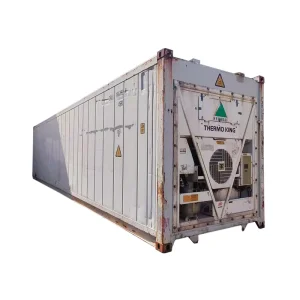
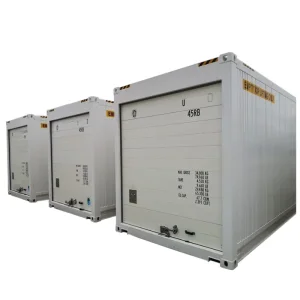
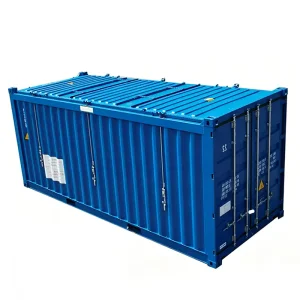
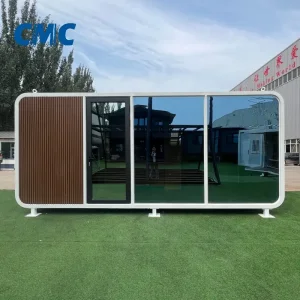
Explore our extended series of temperature-controlled reefers, open-top heavy machinery carriers, offshore modules, and customized container solutions.