Direct OEM manufacturing and factory export specifications compliant with Bureau Veritas (BV), ISO 1496-1, and CSC container regulations.
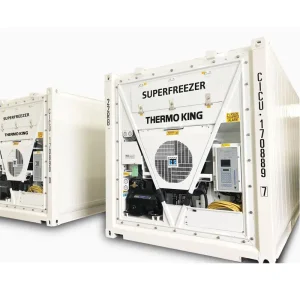
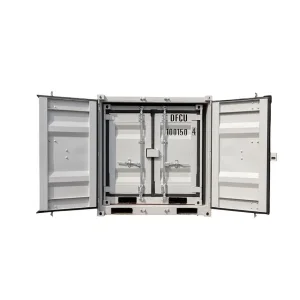
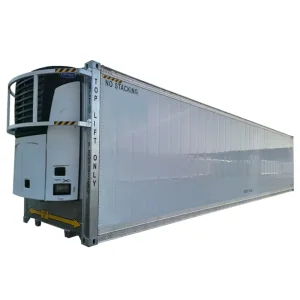
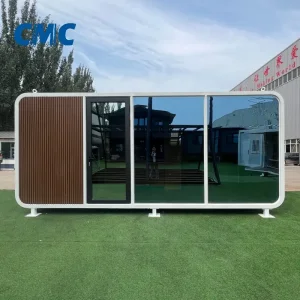
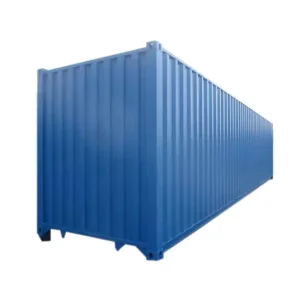
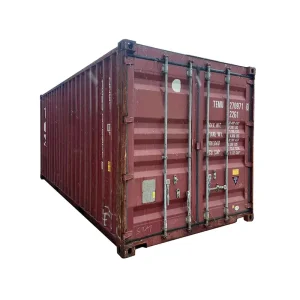
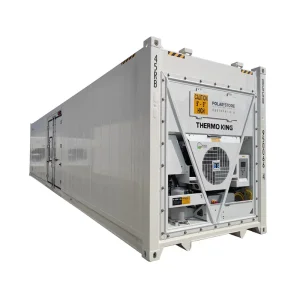
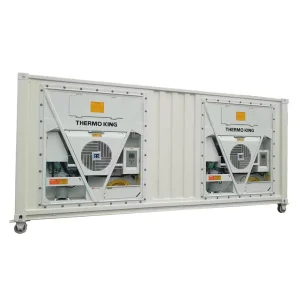
Deconstructing the role of the Twenty-Foot Equivalent Unit (1 TEU) as the foundational benchmark for modern multi-modal commerce, port automation, and heavy payload freight handling.
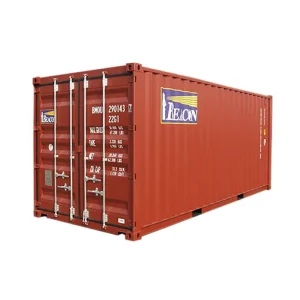
The standard 20-foot general purpose dry cargo container remains the undisputed cornerstone of global supply chain architecture. While 40-foot High-Cube (HC) configurations predominate volume-sensitive consumer goods lanes between East Asia, North America, and Northern Europe, the 20-foot ISO intermodal container is the global baseline for high-density, heavyweight industrial freight. Mining concentrates, heavy machinery parts, chemicals, agricultural raw products (such as cocoa, grain, and coffee beans), and liquid flexitanks rely almost exclusively on the structural rigidity and superior weight-to-volume ratio of the 20ft enclosure.
In modern seaport terminal economics, containerization rates reflect direct intermodal synchronization. Operating under the rigorous guidelines of the International Convention for Safe Containers (CSC 1972) and the standards established by ISO 668 and ISO 1496-1, OEM manufacturers must construct these units to withstand immense compressive forces. A standard 20ft dry container is engineered to support a static superimposed stacking weight of up to 216,000 kg—equating to nine fully loaded tiers aboard Ultra Large Container Vessels (ULCVs) undergoing 1.8G dynamic accelerations in rough sea states.
As an OEM exporter positioned in critical hub ports such as Tianjin and Qingdao, supplying certified 20ft dry containers requires more than standard metal fabrication. It demands comprehensive metallurgy traceability, precision robotic arc welding, automated abrasive blast cleaning to SA 2.5 standards, and multi-tier quality assurance approved by international classification societies like Bureau Veritas (BV), ABS, and Lloyd’s Register.
40ft containers frequently cube out before hitting gross vessel weight caps. Conversely, 20ft dry units optimize payload weight for dense metals, mineral grains, and liquid totes, avoiding deadweight penalties on intermodal flatbed rail cars.
In developing transport corridors across Africa, Central Asia, and Latin America, secondary roads and bridge weight capacities restrict 40ft/45ft articulated chassis. Single 20ft units navigate restrictive urban gates and steep off-road access paths.
Shorter continuous span members equate to lower torsional deflection over dynamic rail humping, rough switchyard shunting, and ocean wave slamming, ensuring minimal panel fatigue and extending asset life cycles beyond 15-20 years.
Exacting material standards, automated welding processes, and protective coating formulations designed for high-salinity oceanic environments.
The manufacturing blueprint of a high-performance 20ft dry container is governed by SPA-H / Corten-A weathering steel (JIS G3125 or GB/T 4171). Unlike commercial structural carbon steels, weathering steel incorporates micro-alloying elements—including Copper (Cu), Chromium (Cr), and Nickel (Ni). When exposed to cycling atmospheric wet-dry conditions, Corten steel forms a dense, adherent amorphous iron oxide hydroxide patina that passivates the core substrate, retarding corrosion penetration rates by a factor of 4 to 8 compared to mild steel.
Key structural components, specifically the ISO 1161 corner castings, are forged from low-carbon cast steel (Weldable Grade SCW 480 or equivalent) subjected to 100% radiographic or non-destructive ultrasonic testing. The top and bottom side rails, front and door header crossmembers, and the critical corner posts undergo heavy press-braking to achieve ultimate tensile strengths exceeding 490 MPa, accommodating racking forces up to 150 kN applied to top corner castings during transit.
| Dimensional / Mechanical Parameter | Standard 20ft General Purpose (GP) | 20ft High Cube (HC) Variant | Engineering Compliance Standard |
|---|---|---|---|
| External Length / Width / Height | 6,058 mm / 2,438 mm / 2,591 mm (8'6") | 6,058 mm / 2,438 mm / 2,896 mm (9'6") | ISO 668:2020 / Series 1 Freight Containers |
| Internal Length / Width / Height | 5,898 mm / 2,352 mm / 2,393 mm | 5,898 mm / 2,352 mm / 2,698 mm | ISO 1496-1 Cargo Clearance Limits |
| Door Opening Dimensions (W x H) | 2,340 mm x 2,280 mm | 2,340 mm x 2,585 mm | Full 270-degree swing clearance |
| Internal Usable Volume | 33.2 m³ (1,172 cu. ft.) | 37.4 m³ (1,320 cu. ft.) | Maximum net interior envelope |
| Tare Weight (±2%) | 2,180 kg – 2,250 kg | 2,340 kg – 2,420 kg | Baseline tare including floor system |
| Maximum Gross Mass (MGM) | 30,480 kg (67,200 lbs) | 32,500 kg (optional heavy-tested) | CSC International Safety Convention |
| Maximum Net Payload | 28,230 kg – 28,300 kg | 28,080 kg – 30,080 kg | High-density freight optimization |
| Flooring System Specification | 28mm Hardwood Marine Plywood / Bamboo | 28mm Bamboo / Steel Chequered Plate | ISO 1496-1 (7,260 kg axle load test) |
| Surface Protection System | Zinc-rich epoxy primer (30µm) + Polyurethane (40µm) | Waterborne Acrylic or High-Build Epoxy | ISO 12944 Corrosivity Category C4/C5-M |
Side panels and roof sheets are joined via automated multi-head CO2 gas-shielded submerged arc welding, eliminating micro-porosity and ensuring 100% weather-tight and air-tight joints.
Floors undergo rigorous dynamic forklift wheel tests simulating 7,260 kg front axle weight across a 284 cm² contact patch, supported by cold-formed C-channel cross members.
Dual-lip high-elasticity EPDM rubber gaskets fitted with stainless steel retainers provide hermetic closure, resisting ozone, ultraviolet degradation, and marine salt crystallization.
Total Dry Film Thickness (DFT) reaches 100-120 microns through shot blasting to SIS Sa 2.5 profile, zinc-rich basecoats, intermediate epoxy barriers, and polyurethane UV topcoats.
How the container manufacturing industry is decarbonizing raw material inputs, shifting to bio-composite flooring, and embedding digital IoT intelligence.
The manufacturing sector for dry cargo containers is undergoing a profound structural shift driven by Scope 1, 2, and 3 emissions mandates from international shipping consortia (such as Maersk, CMA CGM, and MSC) and European Union Corporate Sustainability Due Diligence directives. As a Tier-1 OEM exporter, manufacturing processes have transitioned away from solvent-heavy paints toward advanced waterborne coatings (VOC < 250 g/L), reducing volatile organic compound emissions by over 80% during factory application.
Simultaneously, ecological concerns over tropical hardwood deforestation have catalyzed the universal adoption of sustainably harvested bamboo composites and hybrid engineered timber. Bamboo flooring panels undergo hot-pressing with low-emission phenolics, resulting in modulus of elasticity (MOE) and tensile parameters superior to traditional Apitong or Keruing timber, while fully complying with Australian Department of Agriculture, Fisheries and Forestry (DAFF) phytosanitary standards for timber pest prevention.
Utilizing Electric Arc Furnace (EAF) production lines driven by clean energy scrap melting, steelmakers produce certified Corten-A coils with up to a 60% lower embedded carbon footprint compared to blast-furnace/basic-oxygen-furnace routes.
OEM dry containers are progressively equipped at the factory level with autonomous, solar-powered telematics modules embedded inside door corrugations or front recesses, delivering end-to-end cargo transit visibility.
Post-maritime lifecycle analysis proves the 20ft dry container retains over 75% structural strength upon line retirement. Factory refurbishing redirects retired shells into modular infrastructure, cold storage conversions, and remote work sites.
Engineering modifications tailored to regional terrains, extractive mineral operations, remote field clinics, and grid-scale energy storage enclosures.
High-density lithium concentrates, copper cathodes, and iron ores are loaded into reinforced 20ft containers fitted with interior tie-down rings, heavy-gauge steel floors, and roof hatches for rapid terminal gravity discharge.
Modified 20ft enclosures serve as certified housings for utility Battery Energy Storage Systems (BESS). Structural upgrades include internal fire-resistant mineral wool insulation, HVAC ports, and explosion relief hatches.
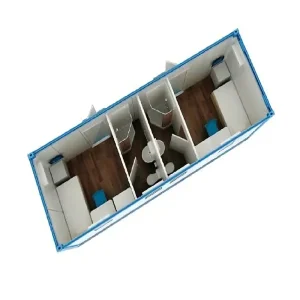
Rapid deployment of modularized 20ft containers in humanitarian relief, civil defense, and offshore drilling platforms. Units arrive pre-wired with electrical conduits, insulated sandwich panels, and plumbed facilities.
Equipped with passive natural ventilation louvers (labyrinth vents) or dehumidifying desiccant holders to prevent "container sweat" during transit of bagged agricultural commodities across tropical convergence zones.
Pioneering advancements in structural lightweighting, zero-carbon composite matrices, and AI-driven automated terminal interface standards.
Looking toward the 2030–2035 development horizon, the humble 20ft intermodal container is evolving into an intelligent node within automated logistics networks. The convergence of Autonomous Container Trucks (ACTs), fully automated rail-mounted gantry (ARMG) cranes, and blockchain-verified bill of lading protocols requires containers with machine-readable passive RFID matrixes, high-accuracy corner casting alignment slots, and integrated tare weight sensors.
In materials engineering, R&D efforts focus on lightweighting without sacrificing stacking yield strength. High-strength micro-alloyed steels (HSLA) with yield points exceeding 700 MPa are being tested alongside basalt fiber-reinforced polymers (BFRP) for structural roof and floor joists. Achieving a 250 kg reduction in 20ft container tare weight allows a fleet operator shipping 100,000 TEU per year to move an extra 25,000 metric tons of net cargo annually within the same vessel fuel consumption profile.
Next-generation telematics will eliminate external batteries by utilizing vibration-energy harvesting and printed solar skins laminated onto roof corrugations, powering 15-year autonomous sensor arrays.
Nanotechnology-enhanced primer coats integrating graphene nanoplatelets create impermeable barriers against chloride ions, pushing maintenance recoat intervals past 15 years in severe splash zones.
Eliminating wood adhesives, future floor systems utilize 100% recyclable, thermo-formable bio-composite matrices made from agricultural waste straw and non-toxic polymers that are fully repel pests and water.
How CIMIC Group leverages over 40 years of direct container manufacturing experience, port-side logistics, and bespoke engineering support to mitigate supply chain risk.
Procuring intermodal equipment from China requires navigating international trade friction, currency volatility, structural homologation, and tight sailing schedules. Situated approximately 100 km from major northern seaports in Tianjin, our manufacturing and logistics hub provides seamless OEM and ODM engineering support tailored to exact project tenders.
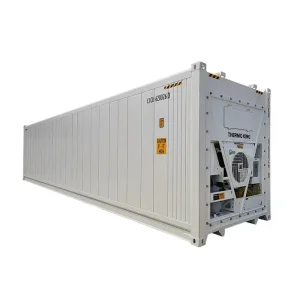
From CAD/CAM prototyping to complete production runs inspected by independent surveyor agencies (such as Bureau Veritas or SGS), our production facilities ensure every unit is delivered with a valid CSC safety approval plate, customs seal records, and full steel mill test certificates (MTRs). Whether ordering custom side-door access reefers, heavy-capacity mineral containers, or nested mini-storage units, buyers secure direct access to the manufacturing floor without intermediary delays.
Every dry and modified container is stamped with internationally recognized certification plates from Bureau Veritas (BV), ABS, or DNV, ensuring uninterrupted acceptance across worldwide ocean lines and rail terminals.
Dedicated engineering teams work directly with enterprise procurement directors to draft 3D structural blueprints for specialized access doors, internal cargo lashing systems, insulation layers, and roll-up shutters.
Shipper Owned Container (SOC) options allow clients to load export cargo directly from Chinese factories, repositioning empty container investment into profitable outbound freight lanes.
Detailed technical, compliance, and logistics clarifications addressing real-world concerns from enterprise buyers, shipowners, and project contractors.
Engineered multi-modal solutions spanning specialized heavy bulk transport, railway cold chain systems, and modular accommodation structures.