Engineered to strict ISO, DNV 2.7-1, and CSC specifications. Below are eight core OEM/ODM container configurations designed for intermodal reliability, offshore rigs, and active temperature-controlled supply chains.

Ruggedized offshore dry container built to DNV 2.7-1 / EN 12079 standards for extreme marine environments and platform logistics.
View Specifications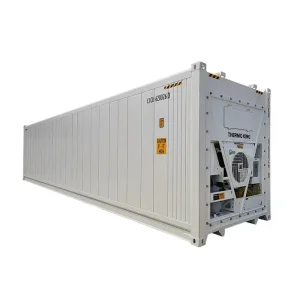
Heavy-duty 40ft HC refrigerated container integrated with premium cooling units for long-distance global cold chain transportation.
View Specifications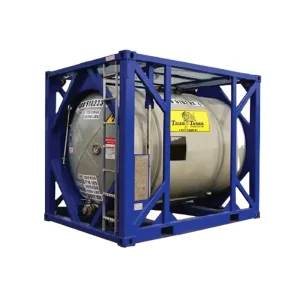
Specialized 10ft offshore liquid storage tank built with crash-frame protection and certified for offshore dynamic hoisting.
View Specifications
Compact 10ft deep-freeze container engineered with high-efficiency Thermo King refrigeration for localized cold storage.
View Specifications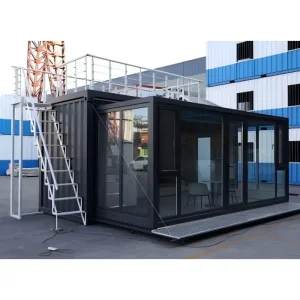
Innovative expandable container module with integrated plumbing, optimized for rapidly deployable workforce housing.
View Specifications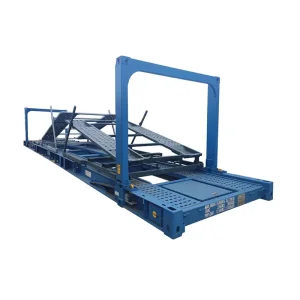
Custom automotive transport container outfitted with internal racking systems for safe multi-vehicle intermodal export.
View Specifications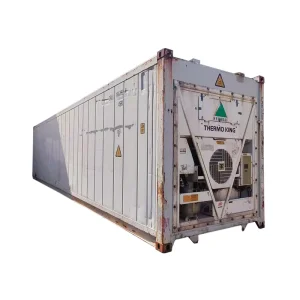
High-capacity 40ft freezer box offering precise temperature retention down to -30°C for perishables and pharmaceutical cargo.
View Specifications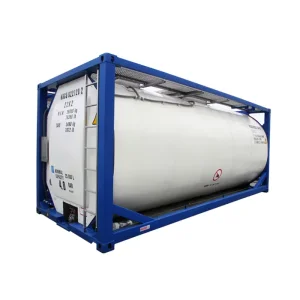
UN Portable Tank container constructed with 316L stainless steel for safely carrying hazardous and non-hazardous liquid chemicals.
View SpecificationsThe global intermodal cargo freight container industry serves as the structural backbone of international trade, facilitating over 90% of non-bulk global cargo movement. Following recent supply chain realignments, the global container market has evolved from a simple volume-driven supply model into a highly specialized engineering sector. Demand is increasingly dominated by requirements for specialized dry freight boxes, temperature-sensitive refrigerated (reefer) containers, offshore units compliant with dynamic stress standards, and modular infrastructure solutions.
Modern supply chain resilience demands strict adherence to international standardization (ISO 668, ISO 1496) alongside customized OEM modifications. Global logistics conglomerates, leasing enterprises, and industrial contractors no longer seek off-the-shelf equipment alone; they require purpose-built intermodal units capable of enduring multi-modal transit cycles involving ocean vessels, rail flatcars, and heavy-duty highway chassis without structural deformation.
Utilization of high-tensile SPA-H Corten steel for corrugated side walls, corner posts, and cross members, providing exceptional atmospheric corrosion resistance and structural endurance.
Every batch produced undergoes mandatory certification by international classification societies including Bureau Veritas (BV), ABS, LR, and DNV for offshore deployments.
Next-generation OEM container builds integrate low-power IoT sensing nodes for real-time monitoring of temperature, humidity, door openings, and structural impact forces.
China's strategic dominance in the global container manufacturing market is rooted in complete supply chain integration, advanced robotic automation, and unparalleled scale efficiencies. Factories operating within key industrial coastal hubs—such as Tianjin and Suzhou—benefit from immediate proximity to major steel mills and deep-water ocean terminals. This positioning eliminates excessive inland transportation overheads and enables rapid export turnarounds.
From an OEM/ODM perspective, Chinese manufacturers provide extensive customizable engineering capabilities that Western suppliers often cannot match at scale. Advanced automated line processes—such as robotic laser welding, multi-stage automated shot-blasting, and eco-friendly waterborne zinc-rich primer application—guarantee consistent weld integrity, paint adhesion, and extended operational lifespans under aggressive maritime exposure.
OEM Information Gain Insight: Modern Chinese manufacturing complexes employ continuous automated assembly lines capable of turning out a finished 40ft High Cube container every 3 to 5 minutes, while simultaneously allowing full customized modifications to floor reinforcement, side door dimensions, dynamic lashing rings, and thermal insulation barrier thicknesses.
| Manufacturing Dimension | Standard Global Industry Benchmark | Advanced OEM China Factory Benchmark |
|---|---|---|
| Structural Steel Grade | Standard Carbon Steel / Mild Steel | SPA-H Corten Weathering Steel (High Tensile) |
| Welding Precision | Manual MIG / TIG Spot Welding | Full Robotic Continuous Submerged Arc & Gas Shielded Welding |
| Surface Protection | Single/Double Coat Solvent Paint | Zinc-rich Epoxy Primer + Waterborne Topcoat System (80-120μm) |
| Floor Structure Load Capacity | 5,460 kg (Standard ISO axle load) | Up to 7,260 kg Reinforced Heavy Duty Floor (Forklift Rated) |
| Offshore Lifting Safety (DNV) | Static Load Testing Only | Dynamic Multi-Axis Shock & Drop Testing (2.5G Rating) |
Offshore exploration and heavy mining demand specialized containers built to withstand abusive mechanical stresses and marine environments. DNV 2.7-1 certified dry containers and offshore baskets feature integrated pad-eyes, heavy-duty sling sets, and high-yield steel frames designed to prevent structural failure during high-seas crane transfers.
Refrigerated (reefer) and insulated containers are essential for pharmaceutical exports, agriculture, and seafood logistics. Featuring polyurethane foam cores, stainless steel internal T-bar flooring, and integrated HVAC units (Carrier, Thermo King, Daikin), these units maintain thermal performance within tight set-points ranging from -30°C to +30°C.
ISO Tank containers provide safe transport for bulk liquids, liquefied gases, and high-viscosity asphalt. Constructed with passivated 316L stainless steel shells encased in protective ISO spaceframes, these tanks incorporate steam/electric heating systems and calibrated pressure relief valves designed for hazardous material transport.
Converting intermodal structural frames into modular expandable homes, mobile offices, and equipment shelters represents a major growth sector. Integrated with thermal sandwich panels, internal wiring, and sanitary plumbing, these modular houses offer rapidly deployable structural solutions for remote commercial camps.
When procuring OEM cargo freight containers from international manufacturers, procurement managers and enterprise logistics planners must institute a rigorous technical evaluation framework. Ensuring structural integrity, certification compliance, and material authenticity prevents costly operational downtime, container rejection at port terminals, and ocean-transit structural failures.
Prior to order finalization, buyers must verify that the manufacturing factory provides certified documentation for the following mandatory standards:
Engaging in an OEM/ODM manufacturing contract follows a structured technical workflow to ensure design accuracy before mass line assembly:
Initial engineering generation of 3D CAD models accompanied by Finite Element Analysis (FEA) to simulate load distribution and dynamic stress factors.
Fabrication of a physical prototype unit subjected to full destructive load tests, door seal weather-tightness water testing, and lifting frame deflection tests.
Inline Third-Party Inspection (TPI) by classification societies (e.g., BV, ABS, DNV) monitoring paint dry-film thickness (DFT), weld non-destructive testing, and final dimensional checks.
The container manufacturing industry is undergoing a dual transition driven by environmental mandates and supply chain digitization. Leading Chinese OEM manufacturers are investing heavily in eco-friendly production systems, such as waterborne low-VOC primers, bio-based polyurethane thermal insulation foams, and low-GWP refrigerants (e.g., R-513A) in reefer units to align with global net-zero logistics targets.
Simultaneously, the integration of smart IoT telematics is redefining container fleet management. Embedded cellular/satellite sensors track ambient internal temperatures, detect shock loads during rail humping or vessel loading, and provide real-time GPS tracking. Lightweight high-tensile steel alloys and composite floor panels are also being deployed to reduce tare weight, maximizing net cargo payload capacities while reducing vessel fuel consumption per TEU-kilometer.
Explore additional specialized builds, heavy industrial containers, genset power solutions, and inspected used fleet units available for fast deployment.
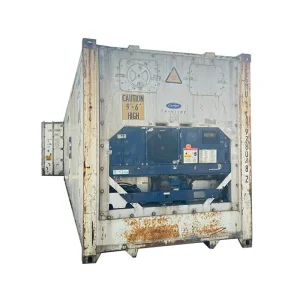
Fully inspected, ocean-ready 40ft High Cube second-hand refrigerated box offering cost-effective thermal storage capacity.
View Specifications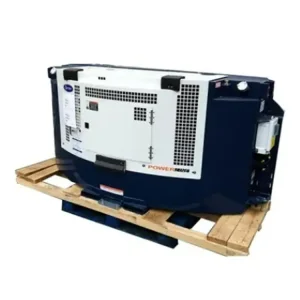
Heavy-duty clip-on diesel generator sets engineered to deliver uninterrupted power to reefer units during overland transit.
View Specifications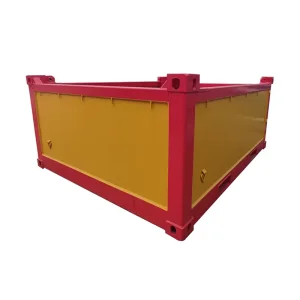
Open-top heavy-duty offshore basket container designed for safely transferring pipework, tools, and long industrial cargo to offshore rigs.
View Specifications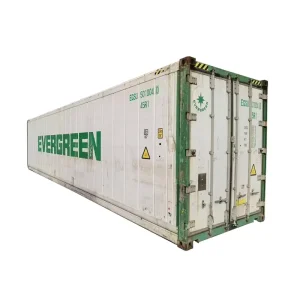
Refreshed and certified 40ft high cube refrigerated shipping container optimized for stationary farm cold storage and regional logistics.
View Specifications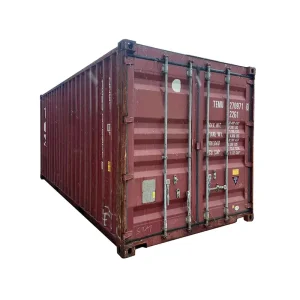
Standard 20ft used cargo box inspected for wind-and-water-tight (WWT) integrity, ideal for secure job-site material storage.
View Specifications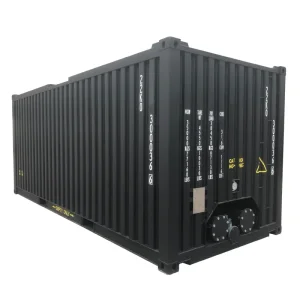
Specialized bitumen tank container equipped with high-output internal thermal heating coils for maintaining bulk liquid asphalt temperatures.
View Specifications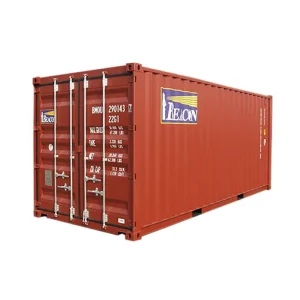
Brand-new standard 40ft general purpose dry freight container constructed from Corten steel with valid CSC safety plating.
View Specifications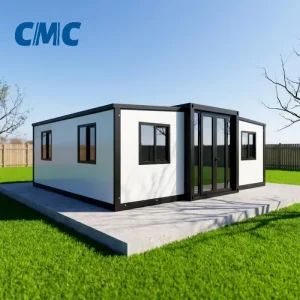
High-insulation modular prefab unit engineered with fireproof sandwich panels for comfortable modular living and site office deployment.
View SpecificationsExpert insights addressing critical technical, certification, and procurement queries for global container buyers.
