
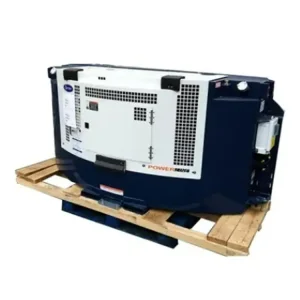
Direct-from-factory cold chain units optimized for PSA Tuas Port intermodal transit, high-humidity tropical operation, and long-range ocean transport.
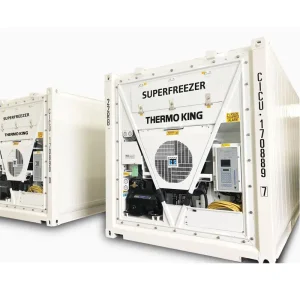
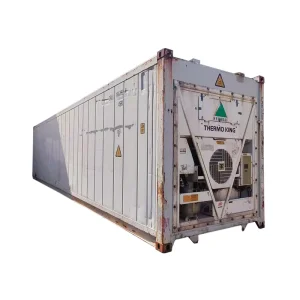
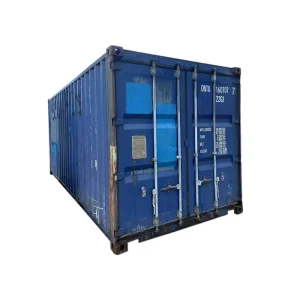
Singapore anchors the world’s most demanding transshipment gateway. Operating at the confluence of the Malacca Strait and South China Sea, procurement teams face distinct operational hurdles driven by equatorial humidity, dense urban cold-storage footprints, and rigorous food security imperatives.
Tuas Port is projected to handle 65 million TEUs annually upon completion. The facility integrates thousands of smart reefer monitoring points requiring standardized, telematics-enabled containers capable of automated pre-trip inspections (PTI) and immediate power coupling to eliminate port dwelling temperature spikes.
The Singapore Food Agency (SFA) mandates rigorous cold resilience to safeguard national nutrition targets. Commercial reefer boxes act as critical modular cold storage buffers across Jurong, Woodlands, and Pasir Panjang, insulating meat, dairy, and perishables against supply chain shocks without the CapEx of permanent warehouses.
As Asia's biomedical manufacturing epicentre (Tuas Biomedical Park), Singapore requires GDP-compliant reefer containers. These units must guarantee tight set-point stability between +2°C and +8°C, alongside ultra-low cryogenic profiles down to -70°C for mRNA biologics and active pharmaceutical ingredients (APIs).
Refrigerated shipping containers are structural thermodynamic systems engineered to solve real-world logistical bottlenecks. Below is how our factory architectures map to mission-critical Singapore industry applications.
Singapore acts as the primary regional distribution hub for global pharmaceutical giants. Our specialized high-cube reefer containers feature dual-circuit refrigeration systems (Thermo King Magnum Plus or Carrier PrimeLINE) equipped with micro-channel condenser coils and automated dehumidification control.
For Jurong Island offshore engineering firms, FPSO builders, and marine logistics providers supporting deep-water exploration in the South China Sea, standard ISO containers are legally and structurally inadequate.
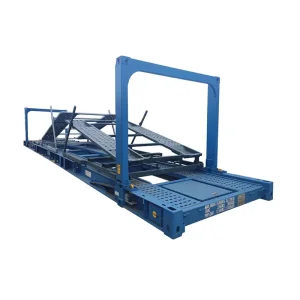
We manufacture DNV 2.7-1 / EN 12079 certified offshore refrigerated skids engineered to withstand severe marine dynamic loads, impact forces, and salt-laden corrosion. Units include integrated multi-point certified pad eyes, four-part sling sets, and intrinsically safe ATEX-rated explosion-proof electrical fittings for hazardous deck zones.
Direct comparative parameters illustrating how our factory designs solve equatorial thermal degradation and high sea-humidity challenges in the Singapore Strait.
| Technical Parameter | Standard Commercial Reefer | CIMIC Tropical Heavy-Duty Build (Singapore Spec) | Strategic Advantage for Buyers |
|---|---|---|---|
| Outer Shell Metallurgy | Standard Corten-A (1.6mm panels) | Enhanced SPA-H Corten Steel (2.0mm) + Zinc-rich primer | Prevents marine corrosion in Singapore's high-salinity air |
| Insulation Core | 40 kg/m³ Polyurethane Foam | 45-48 kg/m³ High-Density Cyclo-Pentane Injected PU | 18% lower heat leakage rate (U-factor ≤ 0.35 W/m²K) |
| Refrigeration Machineries | Generic Reciprocating units | Carrier PrimeLINE / Daikin LXE / Thermo King Magnum+ | Readily available spare parts in Singapore depots |
| Floor Profile | Standard 50mm Aluminum T-Bar | 65mm Deep T-Bar with heavy-duty forklift scuff threshold | Handles 5.5-tonne pallet trucks without floor deflection |
| IoT Telematics Integration | Manual chart recorders | Dual Satellite/4G micro-loggers with remote PTI & alarm trip | Zero-touch integration with modern PSA Tuas port APIs |
| Ambient Operating Range | -30°C to +40°C | -40°C to +52°C with anti-condensation heated door gaskets | Zero door-freeze lockup during Singapore monsoon seasons |
Headquartered in Tianjin with advanced automated fabrication facilities spanning Suzhou, our manufacturing capability eliminates traditional middleman costs while accelerating order-to-quay velocity.
Our plants utilize robotic GMAW (Gas Metal Arc Welding) fixtures for all corner casting joints and side corrugations. This delivers structural weld integrity with zero slag, satisfying Bureau Veritas and ISO 1496-2 strength standards for dynamic 9-high fully laden container stacking.
Complying with the strictest international VOC standards, container panels undergo full-immersion zinc shot-blasting (Sa 2.5) followed by multi-coat automated waterborne paint baking. The resulting dry film thickness (DFT ≥ 120 μm) resists high-salinity exposure along the Singapore Jurong coastline.
Located within ~100 km of primary export berths, new units move seamlessly from production lines directly onto direct container lines calling at the Port of Singapore. Average transit times range between 6 to 9 days, drastically cutting project lead times compared to inland competitors.
As Singapore transitions toward net-zero maritime hubs and decarbonized logistics under the Singapore Green Plan 2030, our engineering roadmap leads the industry in emissions mitigation, remote telemetry, and aerodynamic design.
With regulatory phase-downs of legacy HFCs (R-134a, R-404A) gaining traction under Singapore's National Environment Agency (NEA) guidelines, we are rolling out next-generation CO2 (R-744) transcritical reefer units. Offering an ultra-low Global Warming Potential (GWP = 1) and exceptional thermal efficiency, these units future-proof your asset fleet against carbon taxation.
For transshipment cargo involving exotic fruits, premium produce, and live flora moving between Southeast Asia, Australasia, and Europe via Singapore, standard temperature control is insufficient. Our automated CA suites actively regulate O2 and CO2 levels (±0.1% accuracy), suppressing metabolic decay and extending cargo shelf life by up to 300%.
Equipped with intelligent sensor arrays, our reefer controller algorithms analyze evaporator coil frost accumulation dynamically. By eliminating scheduled timer-based defrost cycles, energy consumption is curtailed by up to 26%, drastically lowering electrical overhead in shore-power plug depots.
Complete asset visibility is paramount. All exported containers support cloud-integrated telematics featuring multi-carrier 4G/5G, BLE probe mesh networks, and secondary Iridium satellite failovers, giving Singapore operations teams instantaneous tracking over temperature, humidity, power draw, and door openings.
Procuring industrial equipment for deployment in Singapore requires strict adherence to statutory codes. We ensure every unit lands with verified credentials ready for immediate commissioning.
Our reefer enclosures conform strictly to the Singapore Standard SS 668:2020 code of practice for cold chain management. Units provide verified thermal retention mapping, pre-cooling validation documentation, and calibrated data logger outputs required by SFA audit teams.
Every sea container carries a valid International Convention for Safe Containers (CSC) safety approval plate. Structural calculations and prototype testing are witnessed and certified by Bureau Veritas (BV) or China Classification Society (CCS), ensuring seamless entry through Singapore customs.
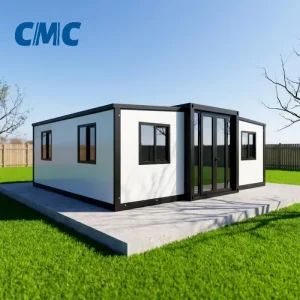
For modular containerized storage deployed at temporary yards across Jurong or Tuas, structural engineering documentation and anchor calculations are provided to assist your local Qualified Persons (QP) with Building and Construction Authority (BCA) temporary permit approvals.
When procuring reefer assets in Singapore, CFOs and Procurement Directors balance outright capital expenditure against long-term operational leases. Understanding the total cost of ownership (TCO) reveals why direct factory procurement is the industry's preferred model.
Commercial leasing rates across Singapore container depots carry substantial premiums due to high yard storage costs and leasing company financing overheads. Sourcing brand-new or near-new reefer units directly from factory production typically amortizes within 14 to 18 months when compared to ongoing leasing expenditure.
Furthermore, owning your container equipment allows complete control over machine firmware, custom shelving, meat hanging rail retrofits, and telematics API configurations, mitigating third-party dispute costs during off-hire inspections.
Request a Custom TCO Feasibility ReportReal-world engineering and procurement inquiries answered by our senior container designers and international logistics directors.
Explore our full OEM/ODM product portfolio built to project specifications, including DNV offshore modules, double-door intermodal units, and multi-temperature reefer boxes.
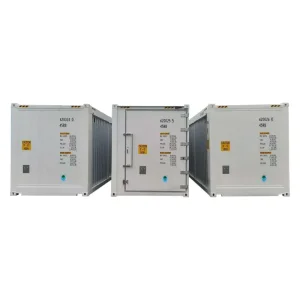

Whether you require standard 40ft High Cube reefer units for Tuas Port transshipment, DNV-rated offshore cold boxes, or custom biopharma storage enclosures, our technical sales office delivers full drawings and formal quotes within 24 hours.