Engineered for sub-arctic ambient stability, high-frequency dock loading, and intermodal compatibility across Trans-Canada rail corridors.
Addressing severe thermal fluctuations, localized logistics bottlenecks, and the structural transformation of Canadian industrial storage facilities.
Across the ten provinces and three territories of Canada, industrial storage demands have undergone a structural paradigm shift. From the congested urban industrial logistics corridors of Ontario’s Golden Horseshoe (Highway 401 ribbon) and Quebec's Greater Montreal distribution ring, to the resource-dense extraction frontiers of the Athabasca Oil Sands in Alberta, traditional end-opening cargo containers frequently fail to meet modern efficiency benchmarks. Standard swing-cargo doors require a clear swing radius of at least 8 to 10 feet, rendering them highly impractical inside tight urban fulfillment yards, high-density self-storage facilities, and snow-banked northern exploration camps.
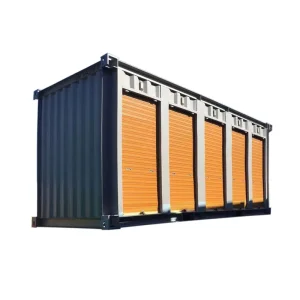
Roll-up door containers solve this mechanical constraint by replacing rigid exterior double swing doors or solid corrugated sidewalls with vertically retracting, high-tensile curtain shutter doors. When customized for Canadian environmental operating regimes, these units must withstand extreme climatic conditions: winter temperatures plummeting below -40°C in Saskatchewan, heavy snowpack loads in the Rocky Mountains and Laurentians, and continuous maritime salt fog exposure across British Columbia and Nova Scotia.
Real estate valuations in Toronto, Vancouver, and Montreal necessitate maximum space utilization. Multi-door roll-up containers allow operators to subdivide a single 40ft High Cube container into up to four independent, secure mini-storage compartments without ground-level door clearance clearances.
Standard cargo doors suffer from frozen hinge pins and jammed locking bars when ice encases the exterior cam keepers. Industrial roll-up shutters with dual-fin EPDM bottom seals, insulated thermal curtains, and heated bottom guides maintain smooth manual or motorized operation down to -45°C.
In Northern Ontario, the Northwest Territories, and Northern British Columbia, mining operations demand rapid-access equipment shelters. Roll-up doors enable side-loading of crated drill parts, machinery spares, and hazardous waste containment via standard 5-ton rough-terrain forklifts.
Metallurgical compositions, thermal break frameworks, and mechanical curtain architectures designed for structural permanence.
Standard ISO shipping containers derive structural integrity from corrugated corten side walls working in tension and compression with corner posts. Cutting openings for single or multiple roll-up doors fundamentally compromises this shear diaphragm. Our factory engineers roll-up units from the baseplate up rather than conducting field modifications. We integrate cold-formed structural box hollow sections (HSS 100x50x4.0mm) as vertical structural jambs, seamlessly tied into cold-rolled heavy gauge C-channel top lintels.
Every structural member utilizes high-strength weathering Corten-A steel (SPA-H chemistry). The inclusion of specific alloying elements—0.12% Carbon, 0.20-0.50% Copper, and 0.50-1.25% Chromium—ensures that the steel forms an adherent, dense amorphous patina upon exposure to moisture, delivering atmospheric corrosion resistance up to four to six times superior to conventional structural carbon steels (such as Q235B).
| Engineering Parameter | Standard Commercial Grade | CIMIC Sub-Zero Canadian Grade | Operational Impact |
|---|---|---|---|
| Base Steel Metallurgy | Q235 Mild Steel / Mild Carbon | Corten-A (JIS G3125 SPA-H) | Prevents structural rust progression in coastal and salt-treated road environments. |
| Roll-Up Curtain Slat Profile | 26-Gauge Single Skin Steel | 22-Gauge Hot-Dip Galvanized / Insulated Foam Core | Resists wind uplift pressures up to 130 km/h; eliminates slat bowing under snow. |
| Insulation R-Value | Uninsulated (R-1) | CFC-Free Polyurethane Core (R-12 to R-18.5) | Controls internal condensation ("container sweat") during freeze-thaw cycles. |
| Guide Rail Weatherstripping | Standard Brush Seal | Dual EPDM Thermoplastic Extrusion + Arctic Grease Guides | Prevents frozen ice entrapment inside the guide channel tracks down to -45°C. |
| Snow & Roof Load Rating | 1.8 kPa (Standard ISO Test) | Up to 4.2 kPa Reinforced Roof Transverses | Fully complies with the National Building Code of Canada (NBC) zone requirements. |
The single greatest operational hazard in Canadian container storage is interior condensation caused by extreme ambient thermal gradients. When warm, humid air inside encounters bare steel walls chilled by sub-zero ambient exterior air, moisture rapidly precipitates, creating condensation storms that damage stored contents, machinery, and paper documents.
Our Canadian-destined Roll-Up Door Containers incorporate an integrated thermal barrier envelope. We deploy continuous closed-cell polyurethane foam (SPF) insulation applied at 50mm to 75mm thickness, or interior sandwich paneling with high-density polyisocyanurate (PIR) cores. Thermal breaks are mechanically fastened between the roll-up door steel lintel and the curtain barrel enclosure, eliminating conductive thermal bridges that lead to frost accumulation on interior mechanical mechanisms.
Total conformance with provincial building codes, electrical safety acts, and intermodal transport conventions.
All structural frame modifications, perimeter lintel welds, and corner casting reinforcements are executed in our factory by certified technicians in alignment with Canadian Welding Bureau (CWB) structural steel standards. Submerged arc welding (SAW) and flux-cored arc welding (FCAW) ensure continuous, porosity-free structural bonds resistant to fatigue from intermodal rail shunting.
For electrified units featuring motorized roll-up doors, perimeter LED lighting, and internal thermal trace heating, electrical components carry genuine CSA (Canadian Standards Association) or cULus certification. Control boxes feature NEMA 4X / IP66 enclosures rated for wet, freezing outdoor conditions with low-temperature rated wiring harnesses.
Units intended for dynamic cargo repositioning across CN (Canadian National) and CPKC (Canadian Pacific Kansas City) rail networks are provided with full International Convention for Safe Containers (CSC) data plates issued by Bureau Veritas (BV) or ABS. Stacking loads up to 192,000 kg and racking tolerances conform rigorously to ISO 1496-1 parameters.
Permanent or semi-permanent installations across Canadian municipalities require conformity with the National Building Code of Canada (NBC 2020/2025). Our engineering department supplies complete finite element analysis (FEA) reports and structural stamped calculation packages for municipal permitting across Ontario, Alberta, and British Columbia.
Factory Direct Compliance Guarantee: Every single container unit exported to Canadian ports undergoes 100% pre-delivery inspection (PDI), including ultrasonic weld testing, door curtain torque tests, light-leak water ingress testing at 2 bar pressure, and full document package verification for the Canada Border Services Agency (CBSA).
Versatile deployment profiles ranging from high-yield self-storage assets to rugged resource exploration infrastructure.
Converting open land into cash-flowing mini-storage assets across Calgary, Edmonton, and outer GTA suburbs. We supply 20ft and 40ft containers configured with 2, 3, or 4 roll-up doors per side, complete with interior corrugated steel partition bulkheads, heavy-duty latch systems compatible with disc padlocks, and sloped condensation drain channels.
From the Site C clean energy project in BC to highway twinning corridors across Northern Ontario, roll-up containers serve as roadside equipment vaults. Workers can instantly retrieve high-value surveying gear, hydraulic fittings, and power tooling without fighting windblown swing doors during blizzard conditions.
Canadian municipalities maintain contingency reserves for flood, wildfire, and ice storm response. Specialized roll-up door containers house mobile pumps, water purification kits, generator sets, and emergency medical supplies, stationed on concrete pads for rapid side-loading onto tilt-deck trailers.
Combining 40+ years of ISO container manufacturing heritage with automated robotics and seaport-adjacent logistics.
Tianjin Cimic Imp&Exp Co., Ltd. (CIMIC Group), established in 1983, leverages four decades of heavy logistics equipment engineering. Situated strategically in Tianjin and Suzhou, our core manufacturing plants sit approximately 100 kilometers from major northern and eastern deepwater shipping terminals. This strategic proximity drastically reduces inland drayage transit times and insulates international procurement schedules from domestic transit gridlock.
Unlike regional Canadian conversion shops that manually torch-cut openings into second-hand containers in open yards, CIMIC containers are fabricated on automated Industry 4.0 assembly lines. CNC fiber laser cutters profile structural roll-up door frame apertures with dimensional tolerances within ±0.5mm. Robotic welding gantries execute structural joins under active shield gas envelopes, guaranteeing structural frame squareness that prevents shutter jamming over thousands of opening cycles.
Corrosion resistance begins with surface preparation. All steel profiles undergo total automated centrifugal shot-blasting to Swedish Standard SA 2.5, entirely stripping mill scale and surface oxides. Immediately following blasting, components receive an automated three-coat protective system: a zinc-rich epoxy primer (providing cathodic sacrificial protection), an epoxy intermediate barrier coat, and an ultra-durable acrylic or polyurethane topcoat totaling over 120 microns Dry Film Thickness (DFT). This marine coating system resists extreme highway de-icing salts (calcium chloride and magnesium chloride) universally applied across Canadian roadways.
Direct ocean routing, CBSA customs compliance, and inland rail intermodal dispatch across Canada.
Canadian procurement directors evaluate container acquisitions on a strict Total Cost of Ownership (TCO) basis. Purchasing locally retrofitted containers in Canada typically incurs high domestic labor costs, irregular weld quality from manual torch cutting, and elevated domestic freight charges. Sourcing direct from CIMIC in Tianjin provides significant economies of scale, delivering brand-new, factory-certified equipment at landed costs 30% to 45% below North American fabricated equivalents, even after accounting for trans-Pacific ocean freight.
| Canadian Destination | Primary Entry Seaport | Transit Routing & Intermodal Mode | Average Ocean + Rail Lead Time |
|---|---|---|---|
| Vancouver / Lower Mainland, BC | Port of Vancouver (Centerm/Deltaport) | Direct Trans-Pacific Ocean Freight | 16 - 22 Days |
| Prince Rupert / Northern BC | Port of Prince Rupert (Fairview Terminal) | Direct Great Circle Pacific Route | 14 - 18 Days |
| Calgary / Edmonton, AB | Vancouver or Prince Rupert | Bonded Intermodal Rail (CN / CPKC) | 22 - 28 Days |
| Winnipeg, MB | Vancouver / Prince Rupert / Montreal | Trans-Canada Intermodal Rail | 25 - 32 Days |
| Toronto / Hamilton (GTA), ON | Port of Montreal or Vancouver Intermodal | St. Lawrence Seaway Feeder or Direct Rail Spine | 26 - 34 Days |
| Montreal / Quebec City, QC | Port of Montreal (Cast/Racine) | Direct Trans-Atlantic / Suez or Rail Connector | 28 - 36 Days |
| Halifax / Atlantic Canada | Port of Halifax (Southend Container Terminal) | Direct Maritime Route | 30 - 38 Days |
We provide full documentation sets for frictionless clearance by Canadian customs brokers under the Canada Border Services Agency (CBSA) guidelines. This includes commercial invoices with accurate HS Tariff Classifications (HS 8609.00 for cargo containers), Clean on Board ocean bills of lading, packing lists, and certified mill test certificates. Containers arriving with valid CSC safety plates can frequently be loaded with one-way commercial export cargo ("one-trip revenue loading"), substantially offsetting ocean transit costs to Vancouver or Montreal.
IoT telematics, automated solar-electric curtain drives, and lightweight nano-composite slat profiles.
Real-time status monitoring for unpowered remote locations in the Canadian North. Integrated sensors transmit door cycle counts, perimeter security breach alerts, internal relative humidity, and temperature variations via low-power Iridium satellite links.
Low-profile monocrystalline photovoltaic panels embedded flush into the container roof corrugations recharge sub-zero LiFePO4 battery banks. This powers 24V brushless motor actuators, providing smooth push-button or RFID access without requiring grid tie-ins.
Advanced R&D is pioneering continuous basalt-fiber and recycled aluminum composite curtain slats. These profiles offer 35% weight reduction over steel, zero thermal conductivity, and absolute immunity to electrochemical corrosion from severe coastal exposure.
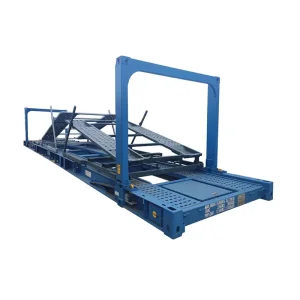
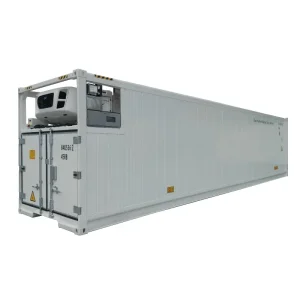
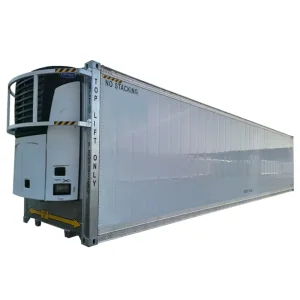
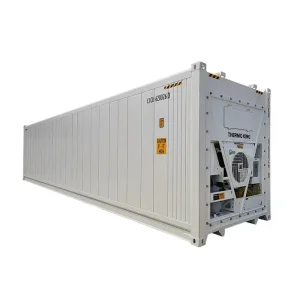
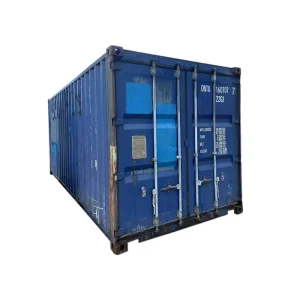
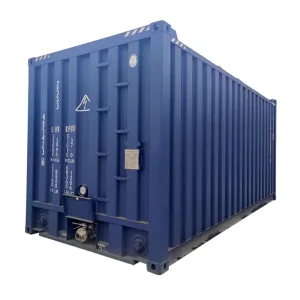
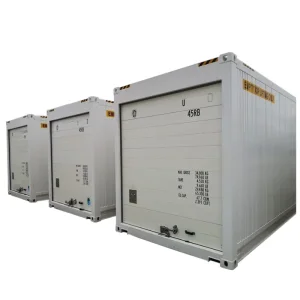
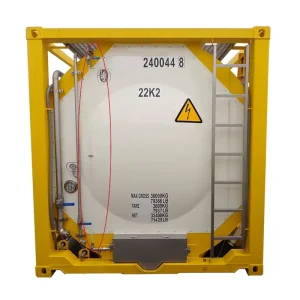
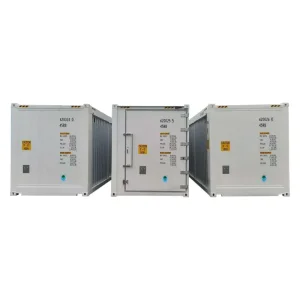
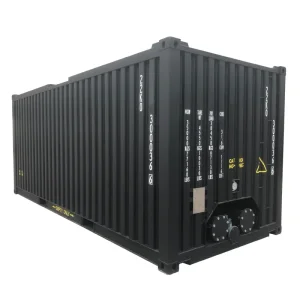
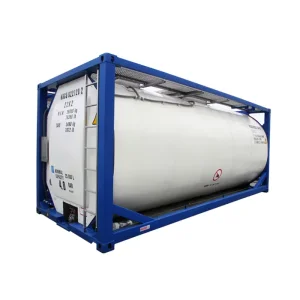
Complete certified equipment portfolio: refrigerated, insulated, chemical ISO tanks, asphalt transport, and modular dry units.
Direct answers covering structural calculations, winterization, offloading logistics, and customs duties.
Connect with CIMIC’s senior container engineering team. Receive detailed structural CAD shop drawings, finite element load analysis, and landed DDP/DAP ocean-and-rail quotes to any Canadian industrial postal code within 24 hours.
