Pre-configured units engineered for tropical Andean elevations, variable Caribbean humidity, and standard Colombian 220V single-phase electrical junctions.
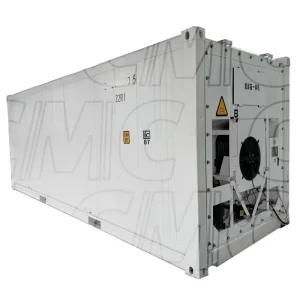
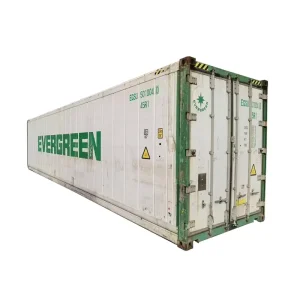
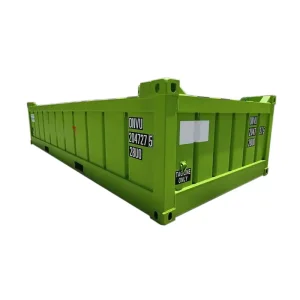
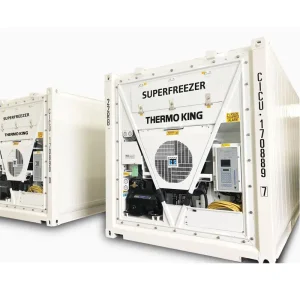
Colombia stands as an agro-industrial powerhouse in Latin America, celebrated for its world-class Arabica coffee, cut flowers (ranking as the world's second-largest exporter), Hass avocados, exotic fruits (physalis, passionfruit, gulupa), and aquaculture. However, agricultural producers and supply-chain logistics operators face a chronic structural hurdle: the first-mile cold storage deficit.
Topographically dominated by the three cordilleras of the Andes Mountains, Colombia’s primary agricultural regions—such as Antioquia, the Eje Cafetero (Caldas, Risaralda, Quindío), Huila, Tolima, and Cundinamarca—are geographically fragmented. While metropolitan centers like Bogotá, Medellín, and Cali feature reliable industrial infrastructure, rural packaging sheds and farm gate collection centers frequently lack three-phase 380V/440V high-voltage power grids. Commercial electrical access in remote Colombian fincas is predominantly single-phase 110V or 220V, subject to severe voltage fluctuations and frequent load shedding.
By pairing high-efficiency Variable Refrigerant Flow (VRF) DC Inverter compressors with rooftop monocrystalline photovoltaic arrays and modular LiFePO4 battery banks, these units eliminate the need for three-phase line drops. They run effortlessly on standard 220V single-phase rural feeds, solar power, or seamless hybrid combinations, slashing post-harvest spoilage rates from 18% down to under 2%.
Overcomes the massive 60A inrush current of traditional compressors. Our single-phase DC inverters ramp up smoothly with an inrush of under 5A, completely safe for rural Colombian transformers.
Equipped with tier-1 bifacial monocrystalline solar modules with up to 22.8% conversion efficiency, optimized for both intense Andean UV radiation and tropical cloud cover.
Integrated Lithium Iron Phosphate battery banks with smart Battery Management Systems (BMS), providing up to 24–36 hours of continuous cooling during overcast days or grid blackouts.
Globally, the cold chain logistics industry is undergoing a structural paradigm shift driven by stringent environmental regulations, including the International Maritime Organization's (IMO) decarbonization targets and EU corporate sustainability due diligence directives. Traditional transport refrigeration units (TRUs) that rely on mechanical diesel auxiliary engines produce significant nitrogen oxides (NOx) and greenhouse gases. Furthermore, surging fossil fuel costs have rendered diesel-dependent stationary cold rooms economically unsustainable.
Worldwide, agricultural suppliers and retail giants are replacing traditional fixed cold warehouses with modular, relocatable solar-powered refrigerated containers. This decentralized architecture enables producers in developing agricultural corridors across South America, Southeast Asia, and Sub-Saharan Africa to preserve product freshness immediately post-harvest. By pre-cooling produce at the exact farm gate coordinates before dispatching to deepwater container ports such as Buenaventura, Cartagena, Rotterdam, or Shanghai, exporters eliminate qualitative decay, mold growth, and weight loss during intercontinental sea voyages.
| Performance Dimension | Traditional 3-Phase Reefer Container | Diesel Generator-Assisted Unit | Single-Phase Solar DC Inverter Container |
|---|---|---|---|
| Power Grid Requirement | 3-Phase 380V/460V (High Voltage Only) | Independent Diesel Gen-set | Single-Phase 220V 50/60Hz + Autonomous Solar PV |
| Starting Inrush Current | High (50A to 75A spike) | N/A (Engine direct-drive) | Ultra-Low (<5A Soft-Start DC Inverter) |
| Fuel / Operating Cost | High grid utility commercial tariff | Extreme ($4.00–$5.50/hr diesel consumption) | Zero daytime cost (Solar); minimal night grid power |
| Carbon Footprint (CO2e) | Grid-dependent emissions | Heavy direct exhaust emissions | Near-Zero Net Operational Emissions |
| Suitability for Colombia Fincas | Poor (Requires industrial power infrastructure) | Moderate (High fuel transport cost & maintenance) | Optimal (Plug-and-play on 220V rural grid + solar) |
For more than four decades since our establishment in 1983, CIMIC Group (Tianjin Cimic Imp&Exp Co., Ltd.) has defined the technological frontier of marine container fabrication, specialized intermodal units, and refrigerated transport machinery. While regional Latin American workshops assemble containers using third-party scrap boxes, our dedicated mega-facilities in Tianjin and Suzhou deploy automated robotic structural welding, CNC continuous bending, and high-pressure cyclic polyurethane vacuum foaming lines.
Located just 100 kilometers from Northern China’s premier maritime hub, the Port of Tianjin, our production complex minimizes inland drayage expenses and ensures predictable ocean freight schedules directly to Colombian entry ports (Buenaventura on the Pacific coast, and Cartagena, Barranquilla, or Santa Marta on the Caribbean coast). Our end-to-end industrial chain yields a decisive 30% to 45% capital expenditure advantage over European and North American container modifiers without compromising structural integrity or thermal retention.
Every single-phase solar refrigerated container manufactured in our facilities undergoes rigorous thermal dissipation stress-testing, automated helium leak detection across the hermetic refrigeration circuits, and structural load testing adhering to ISO 1496-2 standards. Units bound for international multimodal transit are delivered with certified CSC (Convention for Safe Containers) safety approval plates, verified by Bureau Veritas (BV) and compliant with DNV offshore lifting parameters where required.
Built with marine-grade SPA-H Corten weathering steel, blasted to SA 2.5 standards and coated with zinc-rich epoxy paint to endure the aggressive salt spray of Colombian ports.
Cyclopentane polyurethane insulation walls with 45 kg/m³ density, delivering exceptional thermal conductivity (K-factor ≤ 0.024 W/m²K) to lock in low temperatures even when solar input fluctuates.
Custom designs engineered to client specifications: roller shutter doors, split chambers (chiller + deep freezer), side-opening doors, custom branding, and specialized hanging beef rails.
Engineered to resolve real microclimate and logistical challenges across Colombia's diverse economic topography.
Controlled low-temperature anaerobic coffee cherry fermentation requires stable 14°C to 18°C environments. Our single-phase solar containers provide micro-lot producers with precision atmospheric fermentation chambers directly on remote plantations.
Rapid core-temperature pull-down within 6 hours of harvest is mandatory to prevent anthracnose and over-ripening. Solar-assisted pre-cooling preserves the pulp firmness of Hass avocados destined for Rotterdam and Miami ports.
Export roses, hydrangeas, and carnations demand non-fluctuating 2°C to 4°C environments with precise humidity control to avoid condensation mold. Single-phase inverter units ensure constant thermal stability during grid spikes.
Transparent benchmark costing from our Tianjin & Suzhou manufacturing bases. Prices reflect FOB Tianjin Port and estimated CIF Buenaventura / Cartagena delivery.
| Model Specification | Dimensions & Internal Vol. | Cooling Unit & Electrical | Solar & Battery Pack | FOB China (USD) | CIF Colombia Port (USD) |
|---|---|---|---|---|---|
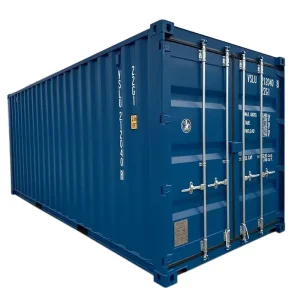
| 20ft Standard Solar Hybrid Reefer | 6,058 × 2,438 × 2,591 mm (28.4 m³) | Single-Phase 220V 50/60Hz DC Inverter (-20°C to +15°C) | 3.5 kW Monocrystalline PV + 10 kWh LiFePO4 Bank | $14,800 – $17,500 | $17,600 – $20,500 |
| 20ft High-Cube Off-Grid Pure Solar | 6,058 × 2,438 × 2,896 mm (32.8 m³) | Ultra-Low Starting Inverter Unit Dual Cooling Zones | 5.2 kW High-Yield PV + 20 kWh LiFePO4 Energy Bank | $18,900 – $22,400 | $21,700 – $25,400 |
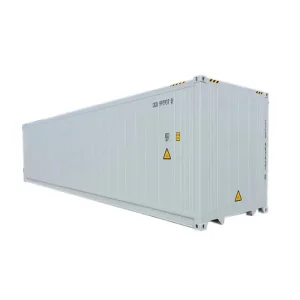
| 40ft High-Cube Hybrid Solar Reefer | 12,192 × 2,438 × 2,896 mm (67.5 m³) | Commercial Single-Phase 220V DC Twin-Rotary Inverter | 7.5 kW Monocrystalline PV + 25 kWh Industrial Battery | $24,500 – $28,900 | $28,500 – $33,200 |
| 40ft HC Roll-Up Door Dual-Temp Reefer | 12,192 × 2,438 × 2,896 mm (Custom internal split) | Heavy-Duty Carrier/Thermo King or DC Inverter Option | Modular Solar Array Bracket + Grid Auto-Switch Controller | $27,200 – $32,000 | $31,200 – $36,500 |
| 40ft Deep Freezer Offshore Reefer | 12,192 × 2,438 × 2,896 mm (Heavy-Duty Frame) | DNV 2.7-1 / EN 12079 Standard -40°C Deep Freeze Unit | Heavy Shock-Proof Marine Enclosure + Hybrid Solar Ready | $32,000 – $38,500 | $36,500 – $43,000 |
Procuring solar-powered refrigerated containers from overseas manufacturing plants requires meticulous due diligence to avoid operational bottlenecks. Our engineering department recommends evaluating suppliers across five decisive criteria:
Verify that the factory provides genuine single-phase (monofásico) 220V 60Hz compressors. Many suppliers merely install basic phase converters that produce energy-wasting harmonics and burn out motors under Colombia’s 60Hz frequency.
Confirm the K-factor insulation rating. Low-grade suppliers use glued EPS foam. Demand continuous cyclopentane polyurethane injection with minimum 75mm wall thickness and airtight triple-lip silicone door seals.
For high-humidity Colombian tropical zones, require IP67 moisture-resistant battery enclosures with smart CAN-bus BMS communication to prevent thermal runaway and balance cell degradation over 4,000+ charge cycles.
Detailed technical, commercial, and operational queries answered by our senior container engineers.
Yes. When sized with our High-Yield Off-Grid PV Solar Package and 25kWh LiFePO4 battery storage, the container operates completely self-sufficiently. During standard Colombian daylight hours (4.5 to 5.5 peak sun hours), solar panels power the cooling compressor while simultaneously charging the lithium batteries to sustain overnight cooling.
Our intelligent hybrid charge controller features automated tri-mode prioritization: Solar First > Battery Second > Grid/Gen-set Backup. If heavy cloud cover persists and the battery state-of-charge drops below 20%, the system automatically switches to auxiliary single-phase 220V grid power or triggers a small backup generator without temperature deviation.
Colombia operates on a 60Hz electrical grid frequency, unlike parts of South America that use 50Hz. Running standard 50Hz European compressors on a 60Hz line causes 20% higher rotational speed, severe overheating, and premature compressor seizure. Our motors and inverters are engineered specifically for 60Hz single-phase input.
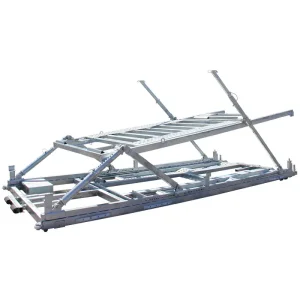
We engineer customized fold-flat or sliding mounting racks using structural galvanized steel. For transport through winding Andean corridors, panels lock securely flush against the roof or side channels. Once parked at the farm or warehouse, the rack effortlessly tilts to the optimum angle for solar capture.
Standard ocean transit from Tianjin or Shanghai Port to the Port of Buenaventura is approximately 28 to 35 days, and to Cartagena/Barranquilla approximately 32 to 38 days. Production lead times for custom units typically range between 15 and 25 calendar days depending on configuration.
Yes. We maintain a large inventory of premium retired shipping reefers (Carrier, Daikin, Thermo King) stored at major Chinese ports. Our technical team retrofits these units with new single-phase DC inverter units and solar setups, offering a budget-friendly option for smaller farms.
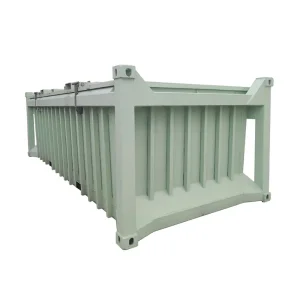
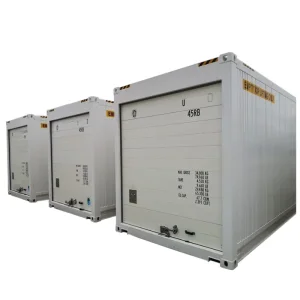
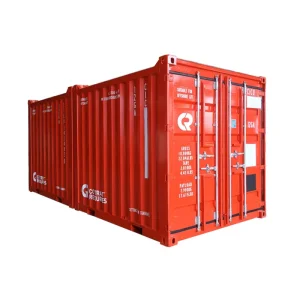
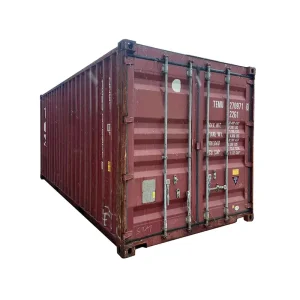
Explore our complete export catalog engineered to international CSC, ISO, and DNV maritime certifications.
Whether you require a single pilot 20ft solar reefer unit for an avocado packaging facility in Antioquia or a multi-unit container fleet for intermodal cold chain distribution, our factory specialists provide bespoke technical blueprints and CIF delivery quotes within 24 hours.
