
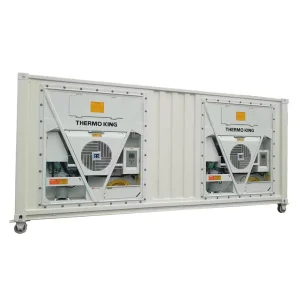
Engineered for equatorial port environments, maritime intermodal transit, and accelerated core-temperature pull-down across the Isthmus of Panama.
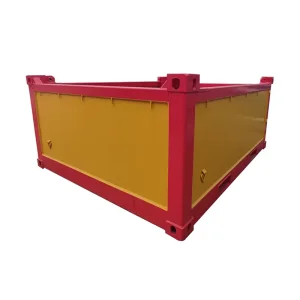
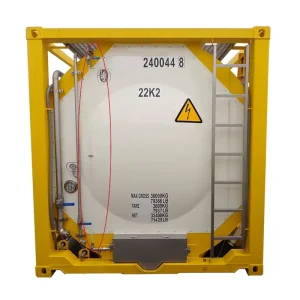
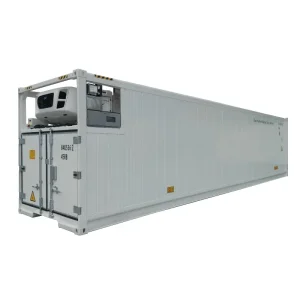
The Republic of Panama represents one of the world's most critical multimodal junctions. With the expansion of the Neopanamax Locks across the Panama Canal, over 14,000 vessels transit annually, linking the Pacific Ocean and Caribbean Sea. Terminal clusters including PSA Panama International Terminal, Balboa on the Pacific, and Manzanillo International Terminal (MIT), Cristóbal, and Colon Container Terminal (CCT) on the Atlantic side handle massive transshipment volumes.
However, the equatorial maritime climate of Panama presents unprecedented thermal friction. With year-round relative humidity exceeding 85% to 95% and average ambient temperatures fluctuating between 32°C and 37°C, conventional standard refrigerated containers fail to maintain the thermal velocity required for ultra-low temperature preservation. For seafood processors, agricultural aggregators in Chiriquí, and transshipment operators within the Colón Free Trade Zone (Zona Libre de Colón), temperature breaches mean rapid biological spoilage.
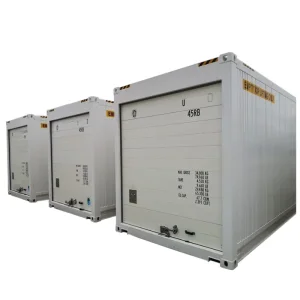
Blast reefer containers bridge this critical vulnerability. Unlike standard reefer containers designed merely to sustain pre-cooled cargo temperatures between -25°C and +25°C, industrial ODM blast reefer containers possess ultra-high refrigeration capacities engineered to extract latent heat rapidly, plunging core temperatures down to -40°C or even -60°C within hours.
A standard reefer is a storage vault; a blast reefer is a thermodynamic machine. When fresh Yellowfin Tuna, Pacific mahi-mahi, or freshly harvested tropical fruit enters a container at ambient +28°C, a standard unit requires 48 to 72 hours to achieve -18°C, forming macro ice crystals that puncture cellular walls and destroy texture. Our ODM blast reefers generate 80,000+ BTU/hr of net cooling capacity, forcing air through high-velocity floor plenums to cross the critical freezing zone (-1°C to -5°C) in under 180 minutes.
Operating as a primary redistribution node for Central America, the Caribbean, and northern South America, companies in the Colón Free Zone require modular, plug-and-play deep-freezing infrastructure. Our containers serve as scalable cold rooms without requiring expensive fixed civil engineering permits, easily relocated along port terminals or railheads.
Addressing international decarbonization, food waste mitigation under FAO frameworks, and Good Distribution Practice (GDP) pharma integrity through cutting-edge container engineering.
Utilizing dual-stage semi-hermetic scroll and reciprocating compressors paired with variable-frequency drives (VFD). Delivers instantaneous torque response to high ambient shock, slashing energy draw by up to 34% during stabilizing cycles.
External chassis manufactured from SPA-H Corten atmospheric corrosion-resistant steel. Internally lined with high-finish grade 304/316 stainless steel sheets, seamless robotic seam welds prevent fluid penetration and bacteria colonization.
Custom deep 70mm extruded heavy-duty aluminum T-bar flooring capable of resisting 7,260 kg forklift axle weights while facilitating laminar floor-to-ceiling air distribution exceeding 6,200 cubic meters per hour.
Comprehensive engineering parameters for procurement officers, maritime fleet managers, and cold chain logistics specialists.
| Technical Parameter | Standard ISO Reefer Container | CIMIC Industrial Blast Reefer (20ft) | CIMIC Super-Freezer Blast Reefer (40ft HC) |
|---|---|---|---|
| Operating Temperature Range | -25°C to +25°C | -40°C to +10°C (Ultra-Fast Pull-Down) | -60°C to -10°C (Sashimi Deep Freeze) |
| Compressor Architecture | Single-stage Scroll / Semi-hermetic | Dual-stage Compound Semi-Hermetic | Cascade / Twin Screw Inverter-Driven |
| Cooling Capacity @ -35°C Evap | ~3,200 - 4,500 W | 14,800 W | 28,500 W |
| Air Circulation Rate (CFM) | 2,800 - 3,200 m³/h | 5,800 m³/h @ High Static Pressure | 7,200 m³/h Continuous Laminar |
| Insulation Composition | 50-60mm Polyurethane Core | 85mm Cyclopentane-blown High-Density PU | 100mm Vacuum Insulation Panels (VIP) + PU |
| Internal Wall Cladding | MGSS / Aluminum | 1.2mm Food-Grade Stainless Steel 304 | 1.5mm Marine-Grade SS316 Anti-Pitting |
| Floor Strength Rating | ISO 1496-1 (5,460 kg) | Reinforced Forklift (7,260 kg axle) | Heavy Duty Track Floor (9,000 kg axle) |
| Power Interface | 380/460V 3-Phase 50/60Hz | Dual Voltage 220V/440V + Genset Plug | 380V-460V 3-Phase + Clip-on Genset Link |
| Certifications Available | CSC, ISO | CSC, BV, ISO 1496-2, DNV 2.7-1 | CSC, BV, DNV, ABS, Lloyd’s Register |
Targeted solutions engineered for the specific physical, economic, and climatic requirements of the Panamanian market.
Panama's commercial fishing fleets land tens of thousands of metric tons of Yellowfin Tuna, Snapper, Dorado, and Pacific white shrimp annually. Traditional dockside chilling methods lead to histaminic degradation and texture softening. By deploying dockside 20ft and 40ft ODM Blast Reefers right at Puerto Caimito and Vacamonte, fish catches are chilled from seawater temperature (+24°C) to a core temperature of -40°C in under 4 hours, qualifying them for Japanese sashimi markets and EU export quotas under strict health approvals.
Ocean carriers transiting the canal experience tight berthing windows and terminal wait times. When transshipping temperature-sensitive reefer boxes between Pacific and Atlantic terminals via the Panama Canal Railway, dwell times on the tarmac in 36°C tropical heat can compromise temperature consistency. Our mobile blast units with integral clip-on diesel generator sets (Genset) act as high-capacity intermodal cold stations, rapidly restoring setpoint temperatures before vessel loading.
The fertile volcanic highlands of Tierras Altas and Boquete produce world-renowned specialty commodities, including Geisha Coffee cherries, exotic berries, organic avocados, and leafy microgreens. To prevent moisture respiration and fungal development before air-freight dispatch from Enrique Malek International Airport or Tocumen, blast cooling cycles rapidly stabilize the respiration rates of perishable crops without inducing frostbite damage.
Panama acts as the "Hub of the Americas" for pharmaceuticals. Biologics, vaccines, and active pharmaceutical ingredients (APIs) passing through the Tocumen International Airport logistics zone require uninterrupted cold-chain compliance under MINSA and international GDP protocols. Our ultra-deep blast containers operating at -60°C and -70°C provide the critical cryogenic backup infrastructure required for temperature-sensitive healthcare logistics.
Procuring specialized thermal equipment for Panama demands precise compliance with regional electrical architectures, harsh coastal atmospheres, and strict shipping registry demands. Tianjin Cimic Imp&Exp Co., Ltd. integrates 40+ years of container manufacturing expertise to provide turnkey export and on-site readiness.
With factories situated approximately 100 km from Tianjin seaport, our supply chain guarantees expedited vessel booking directly to Colon (Manzanillo / Cristobal) or Balboa via direct trans-Pacific liner services. Typical ocean transit times range from 24 to 28 days, with complete export documentation handled in-house:
Anticipating next-generation maritime cold-chain regulations, alternative refrigerants, and intelligent autonomous monitoring systems.
Complete deployment of R452A and transitioning towards transcritical CO2 (R744) systems, anticipating Montreal Protocol Kigali Amendment mandates for Central American imports.
Integration of real-time dual-band 4G/5G and Iridium satellite modules delivering live GPS location, internal airflow velocity, door-open alerts, and automated compressor fault diagnosis.
Machine-learning controllers that assess relative ambient humidity, evaporator coil frost loading, and cargo enthalpy to initiate hot-gas defrost only when strictly required, saving 18% net energy.
Flexible photovoltaic roof cladding integrated with supercapacitor banks to buffer electrical surges during gantry transfer and reduce diesel genset fuel consumption during intermodal canal transit.
Explore our complete export catalog engineered for maritime, port, storage, and specialized logistical operations across the Americas.

Actionable guidance on technical parameters, Panama shipping logistics, power configurations, and operational parameters.
Consult directly with our container refrigeration engineering team. Get comprehensive technical schematics, thermodynamic pull-down curves, and transparent factory-direct pricing for your project today.