High-specification container assets certified to ISO, DNV, and BV marine codes, actively deployed across the Port of Sines, Leixões, and major multimodal European distribution gateways.
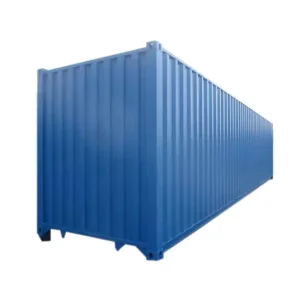

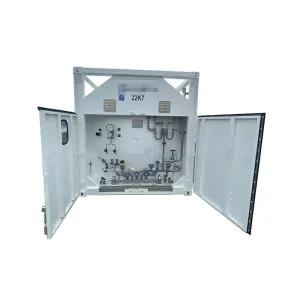
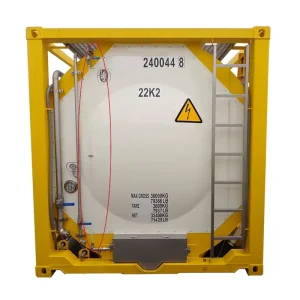
With deep-water port infrastructures, expanding trans-European rail integrations, and intensive maritime commerce, Portugal represents a vital node for global containerization.
As Portugal’s leading deep-water facility capable of receiving the world’s largest ultra-large container vessels (ULCVs) without tidal restrictions, Terminal XXI at Sines processes massive transatlantic flows linking the Americas, Northern Europe, and West Africa. Sines demands high-end structural integrity in dry cargo containers and specialized cryogenic gas equipment for its expanding energy hub.
Serving the industrial heartland of Porto, Braga, and Aveiro, Leixões drives the movement of machinery, automotive components, ceramics, textiles, and premium Douro wines. The region requires specialized side-door reefers, food-grade ISO tanks, and heavy-payload dry boxes optimized for short-sea European circuits and rapid warehouse cross-docking operations.
Portugal’s strategic investment in the Trans-European Transport Network (TEN-T) Atlantic Corridor and the modernisation of its rail links to the Spanish border (Elvas-Badajoz line) accelerate the transition from long-haul trucking to intermodal rail freight. Containers engineered with reinforced corner castings, high-strength gooseneck tunnels, and lightweight tare weights enable maximum payload efficiency.
Global enterprise procurement teams face stringent technical, regulatory, and environmental challenges when sourcing high-value intermodal equipment for the Portuguese and wider European markets.
Operating along the exposed Atlantic seaboard subjects container fleets to relentless salt-fog exposure, violent sea states, and cyclic humidity. Conventional mild-steel containers degrade rapidly, leading to door gasket failures, corner post corrosion, and costly structural condemnations.
The Engineering Solution: CIMIC exclusively deploys certified SPA-H atmospheric corrosion-resistant Corten steel across top and bottom rails, side corrugations, and end frames. Surface pre-treatment includes automatic shot blasting to ISO 8501-1 Sa 2.5 standards, followed by a multi-stage marine coating system: zinc-rich epoxy primer (30μm), high-build epoxy intermediate coat (40μm), and chlorinated rubber or polyurethane topcoats (40μm), delivering total Dry Film Thickness (DFT) exceeding 110μm and certified compliance with ISO 12944 C5-M extreme marine durability environments.
Portugal’s export economy relies heavily on temperature-sensitive commodities: Douro and Alentejo fine wines, Algarve soft fruits, Ribatejo tomato concentrates, and high-value frozen seafood from Peniche and Matosinhos. A thermal fluctuation of merely ±1.5°C can induce irreversible degradation, oxidation, or crystallization, invalidating European supermarket intake criteria.
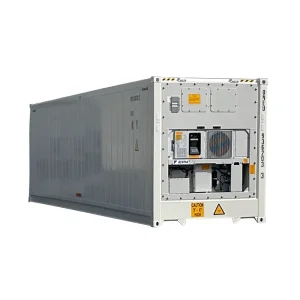
The Engineering Solution: Our ODM high-cube refrigerated containers incorporate state-of-the-art Daikin, Carrier Transicold, and Thermo King machinery capable of micro-precision set-point control (±0.25°C). Utilizing cyclically foamed high-density polyurethane (PU) insulation with low-conductivity cyclopentane blowing agents, our thermal box bodies achieve heat transmission coefficients ($U$-values) lower than 0.36 W/(m²·K), completely complying with the Agreement on the International Carriage of Perishable Foodstuffs (ATP Class FRC).
With Portugal's commercial development of floating offshore wind energy—exemplified by the pioneering WindFloat Atlantic project off Viana do Castelo—logistics operators require specialized offshore containers, cargo baskets, and certified equipment capable of withstanding dynamic offshore crane lifting in significant wave heights ($H_s \ge 3.0\text{ m}$). Standard ISO 1496 units cannot legally or structurally operate on offshore installation vessels.
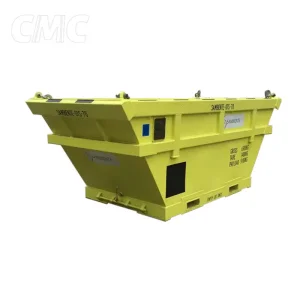
The Engineering Solution: Our offshore engineering series is designed and rigorously tested according to DNV 2.7-1 / EN 12079 and ISO 10855 standards. Welded by DNV/BV certified welders using Charpy V-notch impact-tested structural steels ($E_v \ge 27\text{ J}$ at -20°C), each unit is supplied with four-point master wire-rope sling sets, forged shackles, NDT weld inspections (100% MPI and UT), and formal certificate packages endorsed by third-party classification societies.
Procuring ISO tank containers for Portugal’s industrial chemical clusters (Estarreja, Sines) and bulk beverage exporters demands absolute hygiene, non-reactive interior vessel chemistry, and seamless intermodal road-rail-sea safety certifications across borders without transloading risks.
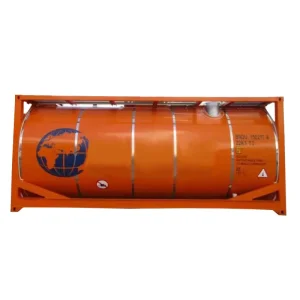
The Engineering Solution: Our ISO liquid and gas tank containers comply thoroughly with UN Portable Tank (T11/T75), IMDG Code, ADR, and RID regulations. For food-grade wine and potable liquids, vessels are fabricated from AISI 316L stainless steel with inner surface mechanical polishing and chemical passivation to Ra ≤ 0.4μm, integrated with steam heating channels, rockwool thermal jackets, and anti-spill top walkways.
Aligning with European Green Deal directives and industrial IoT standards, our ODM engineering roadmap embeds sustainable thermodynamics, autonomous tracking, and high-strength metallurgical designs.
Integrated two-way cellular/satellite transceivers monitoring internal container temperature, ambient humidity, oxygen/CO2 concentrations, power availability, and GPS geofencing with autonomous automated alarming.
Transitioning to environmentally compliant refrigerants with GWP < 150 (such as R-513A, R-452A, and transcritical CO2 R-744 systems) meeting EU F-Gas Regulation (EU 2024/573) ahead of statutory compliance deadlines.
Hybrid insulation wall panels utilizing nano-porous aerogels and vacuum insulation cores, achieving up to 35% reduction in reefer power consumption and extending passive holding time for temperature-sensitive pharmaceuticals.
Utilization of electric arc furnace (EAF) low-carbon Corten steel, water-borne primers, and completely recyclable interior stainless-steel lining systems, yielding full environmental product declarations (EPD).
Engineered container equipment configured precisely around the specialized logistics requirements of Portugal's agriculture, wine exports, industrial manufacturing, and offshore clean energy.
Transporting Portugal’s bulk Port wine, Vinho Verde, and extra virgin olive oil without aromatic degradation requires specialized 20ft food-grade ISO tanks. Equipped with top-discharge and bottom-discharge configurations, insulated shell enclosures, and high-efficiency external glycol/steam tracing jackets, these units preserve organoleptic properties throughout global sea transit.
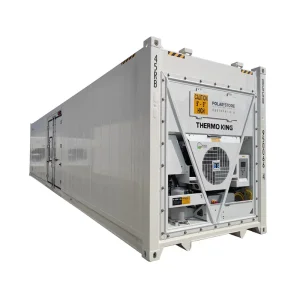
For high-throughput distribution hubs in Lisbon and Porto, our 40ft High Cube side-opening reefer containers eliminate bottlenecking during pallet loading. Forklifts can access the entire cargo space simultaneously via bi-folding side doors, minimizing temperature loss during loading dock operations and safeguarding delicate fruit and seafood shipments.
With Portugal's national strategic focus on creating the Sines Green Hydrogen Valley, transport of cryogenic industrial gases (liquid nitrogen, liquid oxygen, argon, and liquefied methane) requires T75 cryogenic tank containers. Built with high-vacuum multi-layer insulation and inner vessels of cryogenic-grade austenitic stainless steel, these units offer holding times exceeding 60 days without venting.
Every container shipped from our manufacturing base to Portuguese destinations undergoes stringent third-party verification to assure unhindered clearance, interchange, and operation.
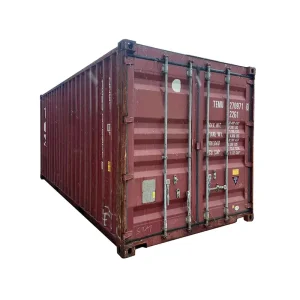
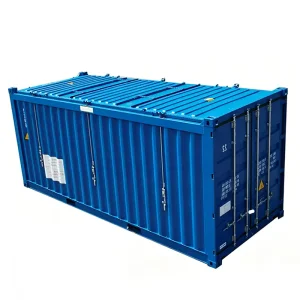
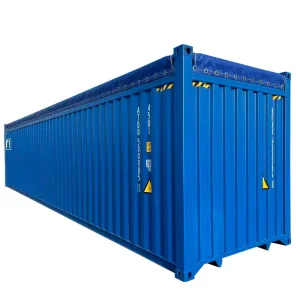
All dry, reefer, and open-top containers are manufactured in conformity with the International Convention for Safe Containers (CSC 1972) and ISO 668/1496. Units feature a corrosion-proof stainless-steel CSC safety approval plate showing maximum gross weight, stacking capability (minimum 216,000 kg for 9-high stacking), and transverse racking test values.
Containers entering Portugal carry full Customs Approval Plates (TIR / Transports Internationaux Routiers), guaranteeing seamless passage through the Portuguese Tax and Customs Authority (Autoridade Tributária e Aduaneira) at ocean container terminals.
Specialized and offshore containers carry type-approval certificates issued by Bureau Veritas (BV) or DNV. Refrigeration units and electric controls feature complete CE marking under the Machinery Directive (2006/42/EC), Low Voltage Directive (2014/35/EU), and Electromagnetic Compatibility Directive (2014/30/EU).
Tank units comply with international regulations for the carriage of dangerous goods by sea (IMDG), rail (RID), and road (ADR), accompanied by calibrated ullage tables, clean vessel inspection documents, and certified hydro-test documentation.
Explore our complete range of certified new, refurbished, reefer, open-top, and specialized ISO storage assets configured for Portuguese and international intermodal buyers.
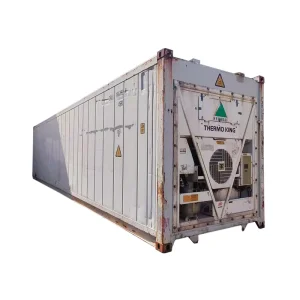
Authoritative insights and procedural guidance direct from our chief container engineers to facilitate smooth procurement, delivery, and homologation.
Consult with our container engineering specialists to review specifications, verify European homologation codes, and receive a formal commercial quotation within 24 hours.
