Direct manufacturer supply conforming to US DOT, ASME, CSC, and ISO intermodal freight specifications.
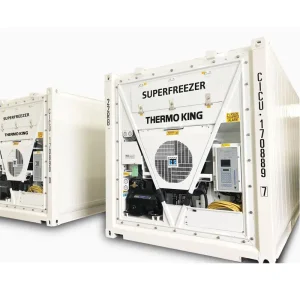
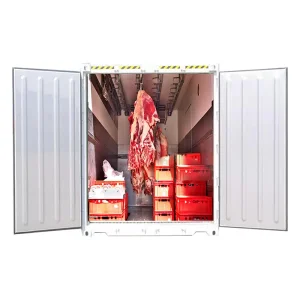
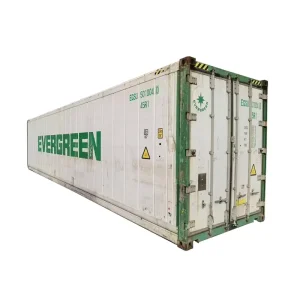
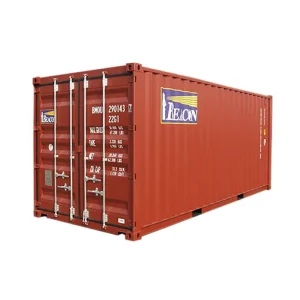
Across the United States, logistics networks are undergoing a transformative shift toward ultra-low temperature (ULT) containment infrastructure. While conventional reefer containers operate efficiently within the range of -25°C to +25°C (-13°F to +77°F), critical commercial sectors require deep thermodynamic stabilization down to -60°C and -80°C. North American food processing conglomerates, institutional seafood suppliers, biomedical manufacturers, and cryogenic research facilities face a severe shortage of localized deep-freeze storage space.
Cold storage real estate investment trusts (REITs) like Lineage and Americold have expanded centralized cold storage facilities in primary hubs such as Chicago, Dallas-Fort Worth, and the Inland Empire. However, decentralized peripheral transit—bridging deep-sea ports in Long Beach, Seattle-Tacoma, and Savannah to regional distribution hubs—remains vulnerable to thermal leakage. Super freezer containers engineered to withstand intense ambient heat gradients without internal temperature drift provide decentralized cold chain integrity. Regulatory compliance under the FDA's Food Safety Modernization Act (FSMA) and Title 21 CFR Part 11 mandates uninterrupted temperature logging, driving massive demand for mobile, self-contained, ISO-certified super freezer assets.
Globally, shipping lines, 3PL providers, and port terminal operators face strict decarbonization mandates under the International Maritime Organization (IMO 2030/2050 framework). Furthermore, the United States Environmental Protection Agency (EPA) via the American Innovation and Manufacturing (AIM) Act has accelerated the phasedown of high-Global Warming Potential (GWP) hydrofluorocarbons (HFCs). Marine refrigeration units utilizing R-404A and high-leakage refrigerants are actively being replaced by low-GWP hydrofluoroolefins (HFOs) and natural cascade refrigerants such as CO2 (R-744) and R-290.
Super freezer engineering represents the absolute pinnacle of container thermal engineering. It relies on a two-stage cascade compression cycle or specialized dual-compressor systems capable of shedding heat efficiently under external ambient temperatures exceeding +45°C (+113°F). Global multi-nationals require standardization across ISO 1496-2 criteria, ensuring that mobile cryogenic units transition seamlessly between deep-sea cellular container vessels, double-stack Class I railcars, and over-the-road chassis.
A precision-engineered synergy of metallurgical mastery, automated PU insulation foaming, and direct seaport logistical clustering.
Fabricated entirely from high-tensile SPA-H anti-corrosive weathering steel, sandblasted to SA 2.5 standards and coated with multi-layer marine epoxy zinc-rich primers to survive aggressive oceanic salt fog and marine environments.
Equipped with computerized high-pressure cyclopentane polyurethane injection (130-150mm wall thickness). Core insulation reaches densities of 45-50 kg/m³, achieving exceptional thermal conductivity ratings under 0.020 W/m·K.
Integrated cooling heads engineered in partnership with Carrier, Thermo King, and Daikin. Cascade loops utilizing specialized scroll and screw compressors ensure continuous pull-down speeds from +20°C to -60°C within 180 minutes.
| Engineering Specification | Standard Commercial Reefer | CIMIC OEM Super Freezer Container | Operational Impact for US Importers |
|---|---|---|---|
| Operating Temperature Floor | -25°C to -30°C (-13°F to -22°F) | -60°C to -70°C (-76°F to -94°F) | Prevents cell damage in tuna, crab, biomaterials, and APIs. |
| Refrigerant Loop Cycle | Single-Stage Direct Expansion (DX) | Cascade Dual-Compressor / Dual Loop | Maintains sub-zero pressure lift without high compressor burnout risks. |
| Core Insulation & Wall Depth | 65mm - 80mm Standard PU | 130mm - 150mm High-Density Vacuum PU | Drastically lowers power consumption (kWh) during summer transit. |
| Interior Shell Material | Standard Aluminum 3003 | Food-Grade Stainless SUS 304 / 316L | Resists aggressive acids, sanitize washing, and brine degradation. |
| Telematics & Remote Auditing | Basic On/Off Microcontroller | IoT Cellular + Satellite Cloud Telematics | Full 21 CFR Part 11 compliance with real-time GPS & temp alerts. |
From sub-arctic fisheries to high-volume pharmaceutical manufacturing corridors.
In ports like Dutch Harbor, Kodiak, and Seattle, premium catches of wild sockeye salmon, Pacific bluefin tuna, and red king crab must be flash-frozen at point-of-catch or immediately at shore-side processing plants. Standard commercial cold storage degrades the sashimi-grade texture through cellular drip loss. Our 20ft and 40ft Super Freezer containers provide modular, dockside, and vessel-loaded storage at -60°C, allowing fisheries to bypass intermediary cold depots and ship direct to high-end Tokyo, San Francisco, and New York wholesale seafood markets.
The acceleration of advanced biologics, mRNA-based vaccines, monoclonal antibodies, and active pharmaceutical ingredients (APIs) has broken the limits of standard clinical cold storage. Cold-shocking, molecular degradation, and cold chain breach can ruin multi-million-dollar clinical batches. Our custom OEM deep-freeze ISO containers are equipped with redundant dual-cascade refrigeration systems, onboard generator integration (genset mount points), and automated backup dry ice injection portals to guarantee strict adherence to FDA and USP guidelines.
Deepwater offshore oil and gas rigs operating in the Gulf of Mexico require extreme-durability storage containers capable of surviving Class 1 Division 2 hazardous environments. Our DNV 2.7-1 and EN 12079 certified offshore refrigerated and tank containers are engineered with high-impact sling attachments, spark-proof electrical enclosures, and non-corrosive marine grade 316 stainless cladding to guarantee safe offshore crane transfers and reliable catering logistics under extreme maritime storms.
Processing facilities across Iowa, Nebraska, and Kansas require heavy-duty meat-hanging rail systems within deep-freeze units. Our custom OEM hanging meat containers handle up to 30 tons of beef, pork, or poultry carcasses without structural roof sag. The integrated continuous air ducting design ensures zero stagnant heat pockets throughout the container cabin, allowing direct transfer from slaughterhouse floor to intermodal rail freight traversing the BNSF and Union Pacific networks.
Evaluating the lifecycle financial metrics of direct OEM procurement versus domestic lease arrangements.
The next generation of ultra-low temperature storage integrates three major technological breakthroughs: Vacuum Insulated Panels (VIP), intelligent frequency-inverter scroll compressors, and multi-sensor predictive maintenance telematics.
1. VIP Hybrid Insulation: By sandwiching nano-porous silica vacuum insulated panels within conventional polyurethane foam cores, overall thermal conductivity drops below 0.015 W/m·K. This reduces the heat transfer coefficient (K-value) by 32%, allowing refrigeration compressors to cycle down, dramatically slashing continuous electricity draw and prolonging compressor service intervals.
2. Inverter-Driven Cascade Cryogenic Loops: Traditional reefer compressors operate on binary on/off duty cycles, creating sudden mechanical thermal shock. CIMIC's variable-speed cascade refrigeration dynamically modulates cooling capacity between 15% and 100%, stabilizing container internal temperatures to within an ultra-tight ±0.5°C margin regardless of external weather variations.
3. Automated Cloud Telematics: Incorporating redundant 4G/5G, Iridium satellite, and BLE sensor networks, fleet managers across North America can audit cabin temperatures, evaporator defrost cycles, compressor discharge pressures, and door-opening timestamps from an intuitive central API dashboard, providing instant audit-ready records for regulatory agencies.
When enterprise purchasers in North America evaluate super freezer acquisitions, the upfront capital expenditure represents merely 35% to 42% of the overall 10-year lifecycle cost. Operational expenditures—governed heavily by compressor electrical efficiency, thermal leakage prevention, and repair downtime—constitute the bulk of operational expense.
| Cost Factor | Standard Refurbished / Broker Units | CIMIC Factory-Direct OEM Custom Builds | 10-Year Financial Variance |
|---|---|---|---|
| Initial Capital Investment (Capex) | Higher Markups through Reseller Tiers | Factory-Direct OEM Baseline Pricing | 30% - 45% Upfront Capital Conservation |
| Annual Energy Consumption | Degraded Aged Foam (High K-Value) | Optimum 0.020 W/m·K Vacuum PU Core | Saves $3,200 - $5,400 annually per container in utility draw |
| Unscheduled Cargo Loss Risks | Higher Risk of Single-Stage Failure | Dual Cascade Loops + Redundant Safety | Guards against multi-million dollar biologic or seafood spoilage |
| Marine Survey / CSC Certification | Expired or Recertification Needed | Factory Fresh BV, ISO & CSC Plates | Eliminates inspection delays and ocean terminal gate rejection fees |
Engineering-grade answers to help your procurement, operations, and logistics teams evaluate our super freezer fleet.
All our US-destined Super Freezer containers are wired for dual 460V / 380V 3-phase power at 60Hz/50Hz, compatible with standard US industrial grids. We can integrate factory-installed step-up dual-voltage transformers (e.g., 208V/230V to 460V) as well as quick-mount clip-on or underslung diesel generator sets (Gensets) to ensure autonomous cooling during road and rail transit.
Starting from an ambient cabin temperature of +20°C (+68°F), our cascade dual-stage refrigeration systems pull down to -60°C (-76°F) within approximately 180 to 240 minutes, provided the container is empty and sealed. Internal thermal air circulation velocities exceed 3,500 m³/h via heavy-duty stainless T-bar floor profiles.
Yes. We install multi-channel digital microprocessors equipped with NIST-traceable PT100 temperature sensors positioned across supply air, return air, and cargo boundary zones. Data logs are encrypted and transmitted continuously to cloud databases, generating automated tamper-proof PDF audit certificates for FDA, USDA, and EU health authorities.
Every container leaves our Tianjin / Suzhou production facilities complete with full Bureau Veritas (BV) or Lloyd's Register certification, valid CSC (Convention for Safe Containers) safety approval plates, ISO 1496-2 thermal compliance reports, and pre-trip inspection (PTI) operational clearance documentation.
Standard production lead times for customized OEM super freezer runs range from 25 to 35 business days. Direct ocean transit from Tianjin / Qingdao to US West Coast ports (Long Beach, Oakland, Seattle) takes approximately 14 to 18 days, while East Coast ports (Savannah, Norfolk, New York) take approximately 28 to 32 days via all-water routes.
Absolutely. Our one-to-one engineering team designs reinforced ceiling hanging-rail systems, full-access bi-folding side doors, hydraulic rear roller doors, modular stainless steel shelving racks, and explosion-proof interior lighting configurations tailored to your specific logistical application.
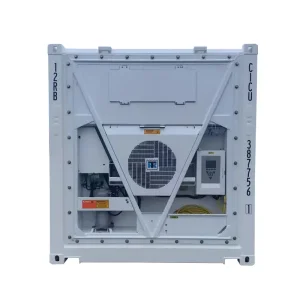
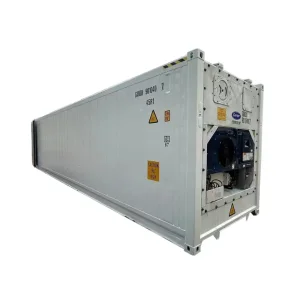
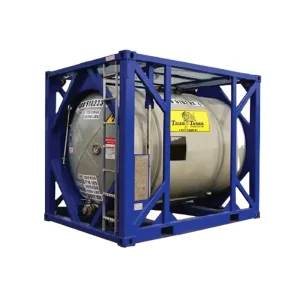
Engineered for extreme maritime lifting, intermodal rail operations, and specialized cryo-containment.

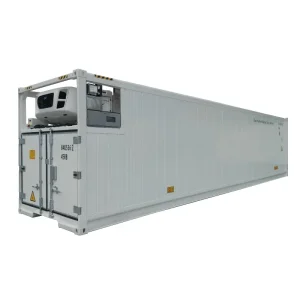
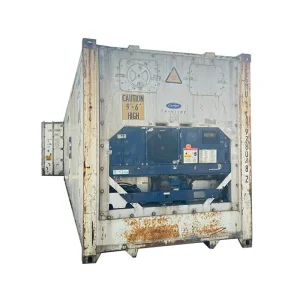
Consult with our cold chain engineering team today. We provide full thermodynamic calculations, 3D CAD container drawings, and firm CIF shipping quotes to any US port within 24 hours.
