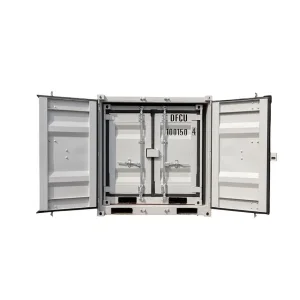
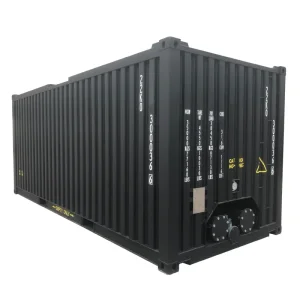
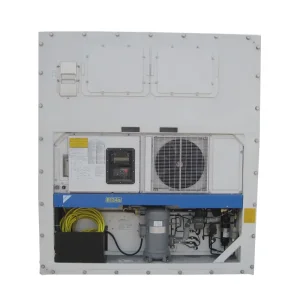
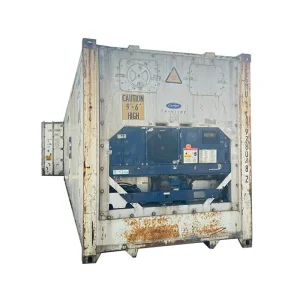
Precision-manufactured containers certified under CSC, ISO 1496-1, and UIC standards to serve high-frequency intermodal transitions between deep-sea terminals, national rail lines, and regional highway fleets.

Israel's freight transit ecosystem is defined by critical maritime choke-points and rapidly expanding inland logistics networks. Handling more than 3 million TEUs annually across the gateway ports of Haifa (Bayport) and Ashdod (Hadashot), national logistics providers face escalating congestion along Highway 4, Highway 2, and the central Route 6 toll corridor. To alleviate commercial transport stress, Israel Railways (Rakevet Yisra'el) has embarked on a multi-billion-shekel modernization initiative to double rail-freight tonnage by optimizing flatcar utilization and inland dry ports in locations such as Emek Yizreel, Mishor Rotem, and Ramat Hovav.
Consequently, transport containers operating within Israel must fulfill a demanding dual-mission profile. They must survive the heavy vertical forces of terminal gantry cycles and maritime stacking, while meeting rigorous structural fatigue parameters mandated for repeated rail shunting, emergency dynamic braking, and high-speed highway chassis vibrations under sustained desert ambient temperatures exceeding 42°C in the Negev and Arava valleys.
Coastal Salinity Resistance: Haifa Bay and Ashdod have high atmospheric sodium chloride concentrations. Corten steel (SPA-H) with 120-micron epoxy zinc primers is mandatory to prevent structural pitting.
Thermal Gradient Insulation: Desert-to-coast day/night fluctuations induce severe thermal shock, driving the adoption of high-density cycloisopentane polyurethane core panels.
Longitudinal Shock Certification: Full compliance with UIC 592/596 standards for flatcar pocket wagons and container lock engagement during dynamic shunting operations.
Engineered intermodal containers tailored to the exact supply chain requirements of Israeli manufacturing, agricultural export, chemical extraction, and high-tech manufacturing corridors.
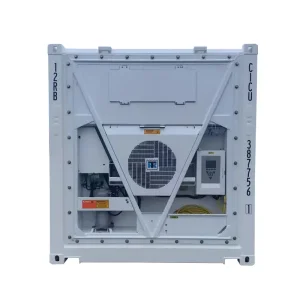
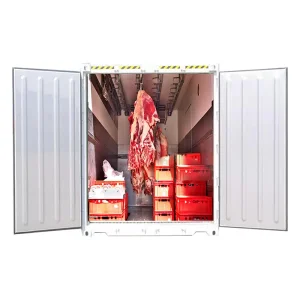
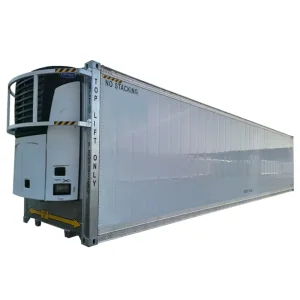
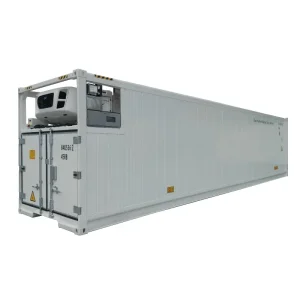
Export crops—including Medjool dates from the Jordan Valley, Arava greenhouse peppers, and citrus from the Sharon plains—require unbroken temperature precision. Our dual-electric and diesel Carrier/Thermo King integrated reefers preserve temperatures from +4°C to -25°C throughout long road haulage to Ashdod and subsequent Mediterranean sea routing.
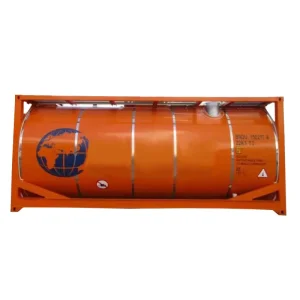
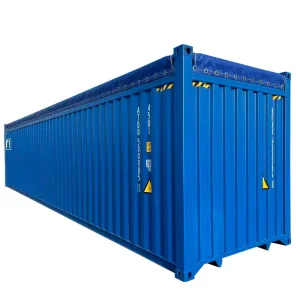
The transport of potash, phosphates, and bromine compounds from Dead Sea Works (ICL) and Ramat Hovav requires specialized heavy-payload containers. Half-height open-top containers and custom 20ft ISO liquid tank units with anti-corrosive PTFE/PE linings ensure zero degradation under aggressive chemical abrasion and intense UV exposure.
Silicon wafer fabrication facilities (such as Intel Kiryat Gat) and defense contractors require shock-isolated, dust-tight transportation. Modified dry containers featuring air-ride suspension brackets, EMI shielding coatings, and multi-point telemetry sensors eliminate vibration harmonics and prevent electrostatic discharge during road-rail transitions.
| Container Parameter | Road-Rail Dry Cargo (20ft / 40ft HC) | Cold-Chain Reefer (Carrier X4 / Daikin) | Heavy Industrial / Half-Height |
|---|---|---|---|
| Base Construction Material | High-Tensile Corten Steel SPA-H | Stainless Outer / Food-Grade SS 304 Inner | Ultra-High Yield Structural Steel (Q345D / Q460) |
| Maximum Gross Mass (MGM) | 30,480 kg to 32,500 kg | 34,000 kg (High Payload Optimized) | 38,000 kg (Heavy Bulk Mining Class) |
| Anti-Corrosion Surface Spec | Zinc-rich primer + Epoxy intermediate + PU (C5-M) | Marine grade PU topcoat over Passivated SS | Hot-Dip Galvanized / Heavy Mastic Polyurethane |
| Israeli Standards (SII) & Global Compliance | ISO 1496-1, CSC, TIR, UIC 592 Intermodal | ATP Certified (Class FRC), EN 12830, CE | DNV 2.7-1 / EN 12079, ISO 1496-3/4 |
| Rail Shunting Buffing Resistance | 2.0g Longitudinal Shock Absorbing Rails | Cushion-mounted refrigeration compressors | Reinforced corner castings & heavy perimeter sills |
Direct access to the world's most consolidated steel fabrication ecosystem in Tianjin, ensuring uncompromised material integrity, certified automation, and resilient supply lines to the Eastern Mediterranean.
Our production facilities utilize automated continuous sub-arc welding, robotic laser cutting beds, and full-immersion electrophoresis pre-treatment tanks. Every container undergoes structural end-wall deflection tests, floor load bearing tests exceeding ISO 1496-1 (7,260 kg axle loads), and computerized rain-booth testing under 2.5 bar water pressure to ensure hermetic sealing.
By controlling the raw metallurgical supply chain through premier domestic mills (Baosteel, HBIS), we ensure that all structural members—from corner castings to cross-members and corrugated side walls—use certified SPA-H weathering steel, eliminating premature corrosion risks commonly seen in unverified fabrications.
Located roughly 100 kilometers from Tianjin Port, our plant eliminates complex overland transport overheads. We facilitate direct ocean dispatch through major container carriers servicing Haifa, Ashdod, and regional transfer transshipment hubs without handling delays.
Full Mill Test Certificates (MTC) supplied with every batch, validating chemical composition (Cu, Cr, Ni alloy content) and mechanical tensile strengths surpassing 490 MPa.
Bureau Veritas and ISO certified production procedures. Individual unit punch-plates, CSC safety verification, and customized laser-etched owner identification prefixes.
In-house CAD/FEA design engineering accommodating non-standard dimensions, pallet-wide configurations (2,500 mm internal), side-loading doors, and combined rail floor locks.
How advancements in telematics, material sciences, and regional cross-border logistics initiatives are reshaping container specifications across the Middle East.
Integration of real-time multi-spectral sensor arrays transmitting via hybrid GSM/Satellite. Monitoring internal temperature, relative humidity, oxygen/CO2 balances for controlled atmosphere cargo, shock thresholds (3-axis g-force), and door aperture alerts throughout the transit from port cranes to rail wagons.
Preparation for stringent F-Gas regulations via low-GWP refrigerants (R-1234yf, R-513A, and natural CO2 systems). Auxiliary solar PV roof-panel integration supplies trickle-charge power to controller microprocessors, GPS beacons, and telematics nodes, reducing diesel genset cycling by up to 22%.
Long-term initiatives such as the "Tracks for Regional Peace" concept aim to connect the Mediterranean Port of Haifa through rail links across Jordan and the Gulf States. Forward-looking fleets are standardizing on multi-gauge, UIC-certified swap bodies and lightweight high-cube containers to capture seamless trans-continental freight velocity.
Authoritative insights addressing technical conformity, Israeli import regulations, structural modifications, and logistics handling.
Explore our full engineering portfolio of certified tank, modular storage, asphalt-heated, offshore, and heavy-duty transport assets built for demanding commercial duty cycles.