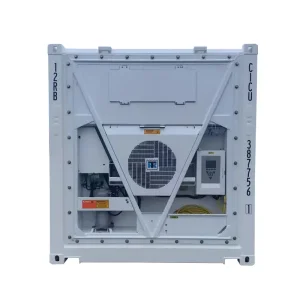
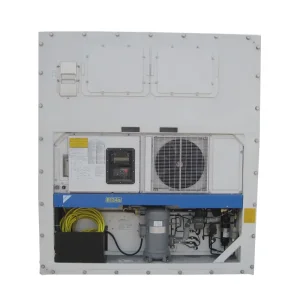
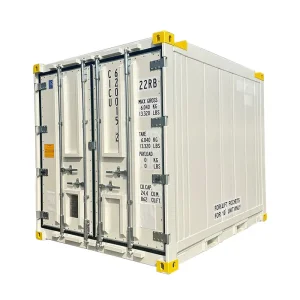
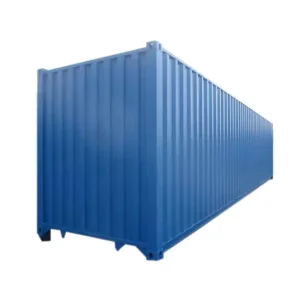
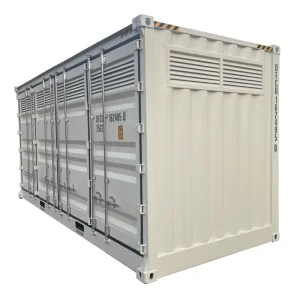
Engineered to resist harsh ocean environments, saltwater spray, dynamic wave loads, and non-stop operational stress. Built under strict Bureau Veritas and DNV offshore safety certifications.
Modern offshore drilling rigs, floating production storage and offloading (FPSO) units, and subsea construction vessels require continuous temperature-controlled supplies under extreme marine conditions. Manufacturing certified offshore reefer containers demands specialized metallurgy, certified welding architectures, thermal engineering, and international safety approvals.
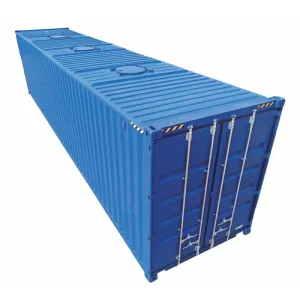
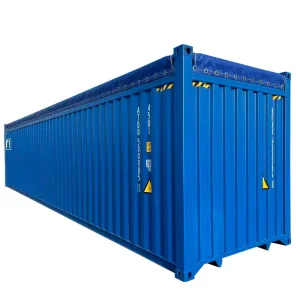
Unlike standard ISO shipping boxes, offshore containers are subject to severe dynamic g-forces during open-sea crane lifts. Modern Chinese manufacturing plants utilize robotic submerged arc welding and Charpy impact-tested structural steel (such as Corten-A, SPA-H, and Q345E) capable of withstanding dynamic wave surges and -20°C to -40°C arctic impacts without brittle fracture.
Thermal stability offshore is mission-critical. Our factories integrate automated, high-pressure cyclopentane polyurethane foam injection (exceeding 42 kg/m³ density) sandwiched between food-grade 304 or 316L stainless steel interior linings and anti-corrosive exterior plates. This guarantees heat leak values far lower than conventional commercial standard refrigerated reefers.
Offshore installations endure constant salinity, UV radiation, and heavy sea spray. China-based facilities enforce strict multi-tier ISO 12944 C5-M industrial marine coating systems: automated abrasive blasting up to Sa 2.5 standard, zinc-rich epoxy primers, high-build epoxy intermediate coats, and polyurethane topcoats offering over 15 to 25 years of corrosion resistance.
The offshore logistics sector is shifting from basic thermal containment toward automated, explosion-proof, IoT-connected cold chain systems. Discover key engineering trends dominating global procurement cycles.
Real-time edge IoT units monitor cargo internal temperature, relative humidity, power supply frequency, and compressor pressures. Dual-band satellite transponders send automatic telemetry directly to energy company headquarters even in remote deepwater fields.
Hazardous area certification is mandatory when transferring containers near oil wellheads, gas processing plants, and flare lines. Modern offshore reefers use intrinsically safe electrical circuits, explosion-proof cooling fans, and hermetic electrical junctions.
High-value catering goods, biological offshore field samples, and specialty deep-sea chemical reagents demand zero downtime. Redundant dual-circuit refrigeration power units automatically engage backup compressors if primary cooling circuits fail.
Offshore container factories have phased out high-GWP refrigerants in favor of R452A, R513A, and natural CO2 (R744) units. These refrigerants provide ultra-low global warming impact without compromising thermal efficiency in tropical waters.
Offshore containers bridge the supply chain gap between shore bases and oceanic production assets. Below are the operational environments relying on specialized offshore reefer units manufactured in China.
Oil platforms and drilling rigs house hundreds of specialists for months at a time. Offshore reefers maintain dual-zone chilled (+4°C) and deep-freeze (-25°C) environments, preserving meat, fresh vegetables, dairy products, and ready-to-eat rations through prolonged open-ocean transit.
Deep-sea drilling fluids, chemical catalysts, polymers, and marine geological core samples degrade if exposed to variable temperatures. Precise microprocessor temperature controllers maintain temperature limits within ±0.25°C, preserving critical core sample integrity for laboratory analysis.
Technicians maintaining offshore wind turbines require climate-controlled mobile storage for composite resins, curing agents, structural sealants, and precision instrumentation. DNV certified 10ft and 20ft offshore units function reliably on high-vibration support vessels and transformer topsides.
Leading EPC contractors, maritime supply chain operators, and offshore rental companies evaluate Chinese container factories across stringent criteria to verify safety compliance, supply chain strength, and product reliability.
Global procurement teams verify DNV 2.7-1, EN 12079, ISO 10855, and CSC plate certifications issued by reputable classification societies (Bureau Veritas, DNV, ABS, or Lloyd's Register) before issuing letters of credit.
Every offshore container must integrate certified four-point wire rope lifting slings, master links, and safety shackles proof-tested under certified classification society witnessing to guarantee safe handling in rough seas.
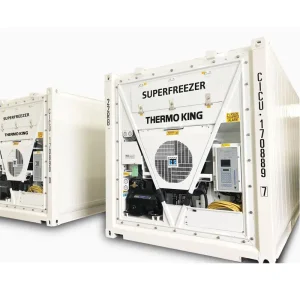
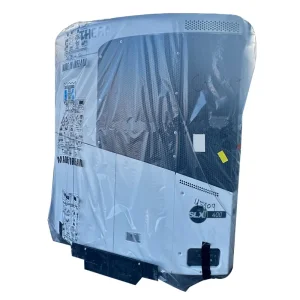
Buyers specify reliable marine cooling machinery from Carrier, Thermo King, or Daikin. Standardized spare parts availability in primary ports (Rotterdam, Houston, Singapore, Tianjin) is an essential commercial factor.
Factories must provide mill test certificates (EN 10204 3.1) verifying steel origin, tensile strength, yield points, and low-temperature Charpy V-notch energy impacts for every critical structural member.
Practical engineering, manufacturing, and operational insights answered by our offshore container specialists.
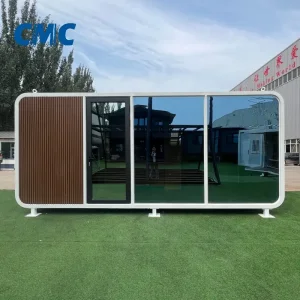
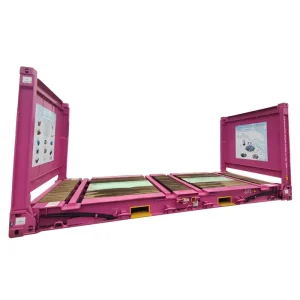
Explore our specialized range of deep-freeze cold storage enclosures, solar-powered mobile cold chains, and multi-purpose industrial container systems.