Direct supply from our Tianjin & Suzhou manufacturing bases. Explore standard, deep-freezer, offshore, and custom transport hardware engineered under ISO 9001 and Bureau Veritas maritime classification.
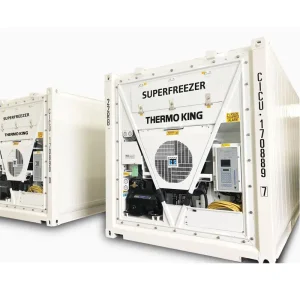
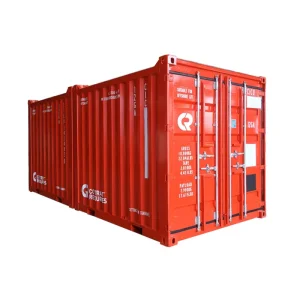
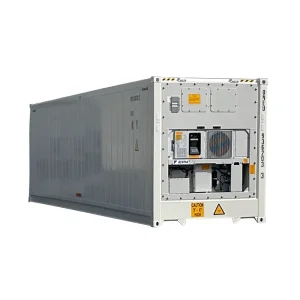



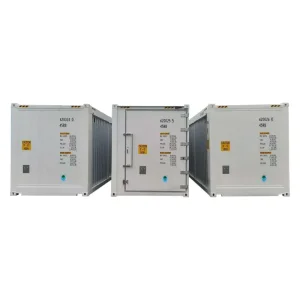
Modern international cold-chain supply operations are shifting rapidly away from conventional standard refrigeration (-20°C to -25°C) toward ultra-low cryogenic systems. Understanding the thermodynamic limitations of single-stage compression and cellular degradation is essential for enterprise procurement teams.
For premium sashimi-grade Bluefin and Bigeye tuna, storage at -20°C allows enzymatic oxidation to convert myoglobin into brownish metmyoglobin, destroying commercial flesh luster. At temperatures below -55°C, enzymatic water activity (aw) ceases entirely, eutectic crystallization remains locked, and organoleptic properties are preserved intact for over 24 months.
The expansion of lipid nanoparticle (LNP)-encapsulated mRNA vaccines, viral vectors, active pharmaceutical ingredients (APIs), and biological plasma matrices necessitates continuous temperature stability between -60°C and -80°C. Super freezer containers eliminate multi-point transshipment risks by acting as mobile, autonomous cGMP/GDP cryogenic cold rooms.
Standard single-stage compression reefers experience rapid volumetric efficiency loss below -30°C. CIMIC Super Freezers deploy a dual-stage cascade system (High-stage R-404A / R-452A combined with Low-stage R-23 / ultra-low GWP synthetic hydrocarbons), maintaining stable temperature coefficients even in tropical ambients exceeding +45°C.
A core barrier in ultra-low storage is thermal bridge leakage. Standard reefer containers employ 60–80mm polyurethane foam, resulting in a thermal heat transfer coefficient (K-value) of approximately 0.38 W/(m²·K). Our Super Freezer manufacturing protocol embeds custom vacuum insulation panels (VIP) within continuous high-pressure cyclopentane-blown polyisocyanurate (PIR) cores, suppressing the K-value down to an exceptional 0.22 W/(m²·K), slashing compressor runtime by 34%.
Industrial equipment pricing fluctuates based on cascade refrigeration machinery (Thermo King SuperFreezer vs. Daikin vs. Carrier Transicold vs. OEM Ultra-Cascade), interior metallurgical grades (SUS 304/316 vs. Food Grade Al-Mg alloy), and thermal insulation density. Below is our baseline factory pricelist matrix for international buyers (FOB Tianjin/Qingdao/Shanghai ports).
| Model / Size | Refrigeration Architecture | Temp Range | Wall / Insulation Core | Indicative Price Range (USD) | Typical Applications |
|---|---|---|---|---|---|
| 20ft Standard Super Freezer | Daikin LXE / Thermo King Single-Cascade modified | -35°C to -60°C | 100mm PIR + Corten-A outer, SUS 304 interior | $24,500 - $31,000 | Offshore platforms, pelagic transshipment, trial fisheries |
| 40ft High Cube Super Freezer | Thermo King MAGNUM Plus / Daikin Zestia Dual-Fan | -40°C to -65°C | 120mm VIP Embedded + Cyclopentane PIR | $36,000 - $46,500 | Commercial tuna export, deep-sea cod, long-haul intermodal |
| 20ft Ultra-Low Cryogenic Unit | Custom Dual-Stage Cascade (R452A / R23 Binary) | -60°C to -75°C | 125mm Enhanced VIP + Hermetic Thermal Breaks | $38,000 - $49,000 | Biomedical APIs, plasma storage, chemical elastomer cure |
| 40ft HC Cryogenic Vault (-86°C) | Dual Independent Semi-Hermetic Cascade Systems | -70°C to -86°C | 150mm Multi-layer VIP Core + Argon Seals | $58,000 - $75,000 | mRNA clinical storage, strategic disaster biomanufacturing |
| Combination 3-in-1 Multi-Temp | Multi-Evaporator Partitioned Split Systems | -60°C / -20°C / +4°C | Dual Internal Thermal Insulated Bulkheads | $42,000 - $54,000 | Remote mining camps, Arctic expeditions, naval support |
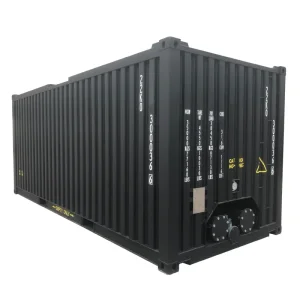
| DNV 2.7-1 Offshore Super Reefer | Explosion-Proof ATEX Zone 1/2 Certified Unit | -40°C to -60°C | Heavy-Duty Skid, Corten-A Structural Tube | $45,000 - $62,000 | Offshore drilling rigs, deepwater platform supply |
Operating within China’s Tier-1 industrial clusters in Tianjin and Suzhou, CIMIC integrates world-class metallurgical metallurgy, robotic welding, automated continuous polyurethane foaming, and rigorous testing protocols that outpace legacy Western production timelines.
Container corner castings, cross-members, and corrugated exterior panels are constructed exclusively from certified SPA-H weathering steel. When exposed to harsh marine environments, Corten-A forms a dense protective patina layer, resisting salt-spray oxidation for over 25 years without structural fatigue.
Thermal leaks frequently originate at minor door-gasket micro-fractures and welding seams. Our automated 6-axis robotic laser welding lines ensure a contiguous, gas-tight envelope. Floor pan welds undergo penetrant liquid dye testing and vacuum box checks to guarantee a totally hermetic seal.
Every single super freezer unit undergoes a mandatory 48-hour thermal chamber stress test. We verify rapid pull-down from ambient (+35°C) to -60°C within 180 minutes, monitor amperage fluctuations under simulated grid surges, and execute thermal thermography to verify zero insulation bridging.
From transshipment on high-seas fishing motherships to decentralized biomedical staging hubs, super freezer containers provide resilient, standalone cryogenic infrastructure where traditional brick-and-mortar cold storage is impractical or cost-prohibitive.
Vessels operating in the Western Pacific (WCPFC) and Atlantic (ICCAT) fishing zones deploy 40ft High Cube Super Freezers on deck. Direct flash-freezing of fish cores to -60°C within hours of catch prevents ice crystallization damage to cell membranes, locking in premium grade-1 sashimi texture and fetching up to 40% higher market auctions.
Global contract development and manufacturing organizations (CDMOs) establish distributed cryogenic depots using CIMIC super freezers. Fitted with redundant dual-cascade refrigeration systems and integrated cloud-based IoT temperature loggers, units meet rigorous FDA 21 CFR Part 11 and EU GDP validation mandates.
High-specification carbon-fiber prepregs, reactive aerospace resins, and specialized photochemicals begin irreversible room-temperature curing if unchilled. Super freezers maintain continuous -50°C stabilization during intercontinental maritime shipping, ensuring zero loss of molecular performance.
In-depth responses compiled by CIMIC’s lead cryogenic engineering group to resolve common technical, logistical, and operational queries before order placement.
Conventional reefer units utilize a single-stage scroll or reciprocating compressor operating on refrigerants like R-134a or R-404A. As evaporation temperatures drop below -30°C, compression ratios spike exponentially, resulting in severe volumetric efficiency drop-offs and compressor motor burnout. Super Freezers implement a true two-stage cascade cycle: a high-stage circuit cools the condenser of a low-stage circuit utilizing an ultra-low boiling point refrigerant (such as R-23 or specialty mixtures). This allows evaporation temperatures to safely plunge to -65°C to -86°C without overloading mechanical components.
Standard units require a 380V / 460V 3-phase, 50/60 Hz electrical supply, fitted with standard CEE 17 32A marine-grade plugs. Under initial high-ambient pull-down conditions, maximum power consumption reaches approximately 14–18 kW. Once the internal set point of -60°C is stabilized, continuous holding power requirements decline to 6–9 kW per hour depending on ambient air temperatures and door opening frequencies. Dual-voltage transformers (208V/230V step-up) can be factory installed for North American sites.
Traditional polyurethane foam degrades over 5–7 years due to ambient air diffusion into cellular voids, increasing thermal conductivity by up to 25%. CIMIC isolates the insulation sandwich by encapsulating VIP core layers inside multi-layer aluminum-barrier barrier films alongside desiccant getter materials. The external structural skin is seam-welded SPA-H Corten steel, while the inner lining is continuously welded SUS 304 food-grade stainless steel. This hermetic barrier halts atmospheric gas exchange, ensuring nominal K-value retention for 15+ years.
Yes. All CIMIC super freezer containers are manufactured to standard ISO corner-casting, width, and height dimensions (ISO 668, ISO 1496-2). Units carry a valid CSC (Container Safety Convention) plate certified by classification societies such as Bureau Veritas (BV), ABS, or CCS. They can be stacked up to 9-high fully loaded in vessel cell-guides and connected directly to standard shipboard reefer receptacles.
For standard in-catalog catalog configurations (such as 20ft and 40ft units fitted with Carrier or Daikin machinery), stock or rolling production allocations can dispatch within 10 to 18 business days from Tianjin or Qingdao ports. Bespoke engineering projects involving DNV 2.7-1 offshore lifting frames, explosion-proof ATEX retrofits, or multi-compartment bulkhead designs require 4 to 6 weeks from technical schematic sign-off to full factory acceptance testing.
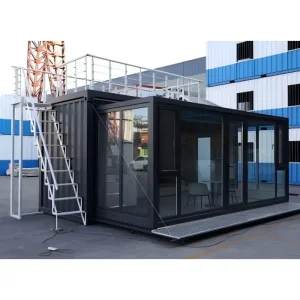
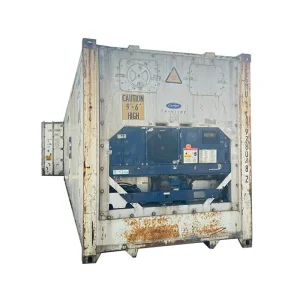
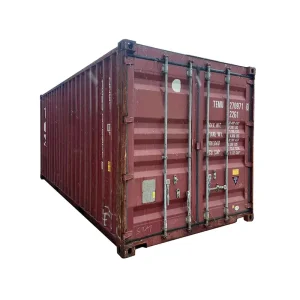
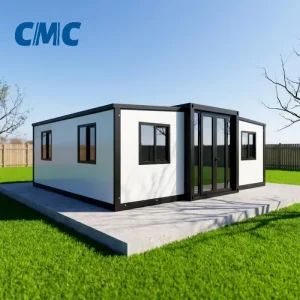
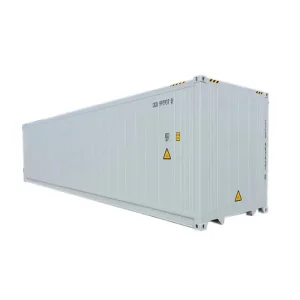
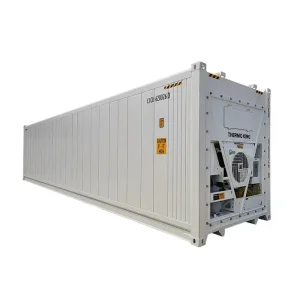
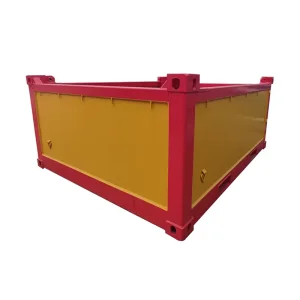
In addition to cryogenic deep freezers, explore our full manufacturing range encompassing modular container buildings, certified used shipping inventory, thickened foam passive insulated solutions, and offshore cargo containers.
Connect directly with CIMIC’s container design engineering office in Tianjin. We supply custom schematic drafts, thermodynamic load calculations, classification society certification packages, and itemized FOB/CIF quotations within 24 hours.
