
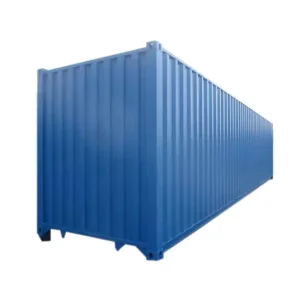
Heavy-gauge Corten steel containment reinforced for solid chemicals, dry hazardous commodities, and international bulk transport.
Review our top-tier containment solutions designed to comply with IMO, IMDG, CSC, and DNV GL standards for global hazardous and sensitive freight operations.
Heavy-gauge Corten steel containment reinforced for solid chemicals, dry hazardous commodities, and international bulk transport.

Dynamic-lift rated offshore refrigerated structure engineered to stabilize temperature-sensitive offshore chemical and marine supply loads.
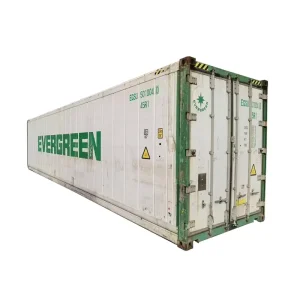
Pre-inspected structural integrity with high-output refrigeration engines designed for stationary or transshipment cooling setups.
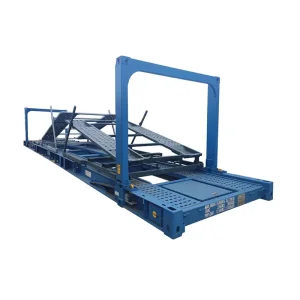
Specialized internal restraint and wheel racking framework for automotive export, EV chassis, and industrial transport reliability.
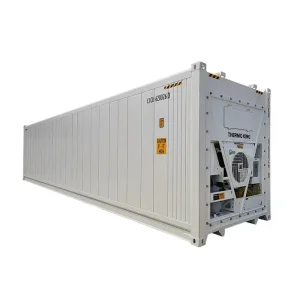
Deep-chill capable -30°C to +30°C temperature envelope designed to prevent thermal runaway in sensitive chemicals and polymers.
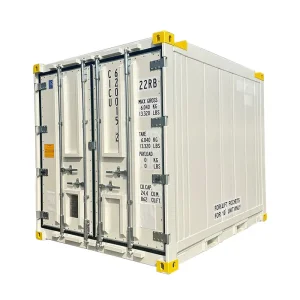
Small footprint 10ft refrigeration pod with Thermo King precision electronics for regional staging or on-site testing containment.

316L stainless steel cylindrical shell with multi-layer valve security, purpose-built for Class 3, 6, and 8 liquid chemical logistics.
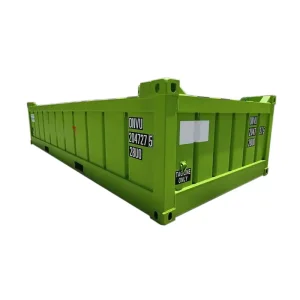
Ultra-dense mineral, slag, and pipe conveyance unit built with DNV certified pad eyes, heavy-duty lashing points, and offshore slings.
Navigating the global regulatory convergence of IMDG, ADR, RID, and OSHA demands a structural shift from passive storage boxes to engineered industrial safety cells.
Dangerous chemical logistics mandates rigorous spill control. Our specialized containers feature fully integrated continuous-welded steel bund sumps with high-capacity retention capacities (up to 110% of total vessel payload), chemical-resistant epoxy coatings, and non-sparking zinc-galvanized removable floor grating for effortless de-sludging and washdown operations.
In environments housing Class 1, 2, or 3 flammables and volatile organic compounds (VOCs), eliminating ignition risks is vital. Units are equipped with intrinsically safe mechanical extraction louvers, ATEX-rated explosion-proof air circulation blowers, certified earth-grounding terminals, and anti-static copper bonding strips designed to neutralize electrostatic potentials.
With the accelerated proliferation of commercial Lithium-Ion energy storage systems (BESS) and battery logistics, containers must withstand catastrophic thermal events. We incorporate high-density Rockwool ceramic insulation barriers, internal deluge piping networks, and calibrated burst pressure relief panels to vent excess kinetic shock safely upward.
Expanding industrial chemicals, biopharmaceuticals, hydrogen infrastructure, and EV battery distribution are transforming container demand into an engineering-intensive market.
Maritime hubs across Rotterdam, Singapore, and Houston have tightened demurrage protocols and port dwell-time regulations for classified hazardous substances. Operators increasingly deploy specialized modular DG containers at buffer depots to prevent astronomical carrier detention penalties, transforming high-spec containers into movable, fully compliant mini-warehouses that decouple factory run-rates from port congestion.
Offshore energy operations in the North Sea, West Africa, and Southeast Asia demand rugged containment capable of withstanding saltwater aerosol corrosion, dynamic shock loads during supply-vessel hoisting, and extreme cyclic pressures. The rapid shift toward green hydrogen, ammonia, and chemical offshore injection requires DNV 2.7-1/EN 12079 structural verification alongside ISO 1496 compliance.
International maritime boundaries require unequivocal documentation. Every container leaves our manufacturing facilities with complete mill test certifications, weld mapping, and independent surveyor approval.
| Regulatory Standard | Governing Jurisdiction | Key Engineering Mandates | CIMIC Assurance Standard |
|---|---|---|---|
| CSC (Safe Containers) | International Maritime Organization (IMO) | Stacking tests (up to 216,000 kg), racking load, floor deflection limits | Stainless CSC Plate Affixed |
| IMDG / ADR / RID | Global Maritime, European Road & Rail | Secondary liquid retention bunding, Class 1-9 label recesses, spark-free hardware | UN-Approved Prototype Tests |
| DNV 2.7-1 / EN 12079 | Offshore Exploration & Rig Infrastructure | Charpy impact resistance steel at -20°C, certified 4-point padeye sling geometry | Bureau Veritas / DNV Certified |
| ISO 1496 Series 1 | ISO Technical Committee TC 104 | Standardized twist-lock dimensional tolerances, corner casting metallurgy | 100% Dimensional Factory QA |
| AS 1940 / NFPA 30 | Australasia & North America | Natural & forced extraction ventilation rates, emergency escape release levers | Regional Customization Ready |
From remote mine sites to chemical refinery hubs, engineered dangerous goods containers provide scalable containment infrastructure without expensive permanent civil construction.
Isolated mining operations in Western Australia and South America rely on side-opening bunded containers for storing cyanide reagents, explosive emulsions, and high-flashpoint fuels safe from extreme environmental heat and ground contamination.
Deep-sea drilling units utilize DNV-certified half-height containers and cryogenic tanks to ferry drilling muds, caustic additives, and liquid nitrogen directly from dockside supply bases to floating platforms without risk of wave-impact structural failure.
Gigafactories and EV processing terminals utilize customized thermally insulated containers with early smoke/gas detection and automated aerosol fire suppressors to quarantine damaged or degraded lithium battery cells awaiting recycling.
Urban chemical suppliers use multi-door insulated containers with partitioned hazard separation bulkheads to isolate incompatible chemicals (e.g., oxidizing agents from flammable solvents) within single compact logistics yards.
Container manufacturing is integrating sensor telemetry, advanced metallurgy, and passive safety systems to anticipate hazards before failures materialize.
Integration of wireless ATEX Zone 1 sensors reporting internal VOC thresholds, temperature spikes, pressure anomalies, and door-seal breaches via satellite communication to central fleet dashboards.
Deployment of modular ceiling-mounted solid propellant gas generators that deploy clean extinguishing agents (Novec 1230 / FK-5-1-12) the instant an infrared sensor flags thermal runaway.
Adopting lightweight carbon-fiber reinforced pressure shells for T75 cryogenic units to double holding-times for liquid hydrogen and biomethane while reducing tare weights by 28%.
AI-driven venting systems that dynamically bleed and re-liquefy boil-off gases on extended multi-modal rail and sea journeys, eliminating hazardous venting in civilian-adjacent transport corridors.
Get answers from our structural and refrigeration design engineers before selecting custom or stock hazardous goods containment equipment.
A standard dry cargo shipping container is fundamentally an unvented, single-skinned Corten box designed for benign dry palletized goods. An engineered dangerous goods container integrates continuous-welded steel retention sumps with drain valves, high-flow spark-proof natural or mechanical ventilation, explosion-relief panels, interior safety release door mechanisms, earthing lugs to dissipate static charges, and specialized non-porous chemical resistance linings.
For sea freight, containers must hold a valid CSC (International Convention for Safe Containers) safety approval plate inspected and issued by recognized classification societies like Bureau Veritas (BV), ABS, Lloyd's Register, or DNV. Portable tanks for liquids or cryogenic gases must conform to the IMDG Code and ADR/RID directives, complete with valid UN pressure vessel stamping and 2.5/5-year hydro-test cycle documentation.
We supply standard 10ft, 20ft, 20ft high-cube, 40ft, and 40ft high-cube footprints. For hazardous storage and distribution yards, we regularly fabricate customized side-opening bi-fold doors (allowing full forklift side access), heavy-duty roll-up doors, partitioned multi-compartment containers with fire-rated separation walls, and half-height open-top configurations for dense ores and pipe handling.
Many reactive chemical formulations (such as organic peroxides and catalysts) carry strict Self-Accelerating Decomposition Temperatures (SADT). We manufacture certified reefer containers equipped with high-accuracy Thermo King, Carrier, or Daikin refrigeration machinery featuring redundant dual-circuit refrigeration systems and automated switch-over controls to prevent temperature variations from triggering dangerous reactions.
Yes. We source retired shipping line containers with verified structural integrity directly from our stockpiles in Tianjin and major Chinese ports. Our fabrication plant installs certified continuous bund floor sumps, installs engineered venting louvers, and resurfaces interiors with chemical-resistant primers. If international maritime transit is required, our engineering team manages recertification and issuance of an updated CSC safety plate.
For stocked dry cargo, reefer, and offshore units, dispatch from our staging facility can occur in as little as 3-7 days. For custom OEM or ODM containers requiring specialized blast-relief engineering, internal piping, or bespoke dimensions, prototype production runs typically range from 20 to 35 business days. Flexible MOQs are available, starting from a single unit for specialized bespoke builds.
Explore our precision-fabricated liquid gas tanks, cryogenic containers, and wide-access side door units built to rigid ISO and DNV manufacturing certifications.
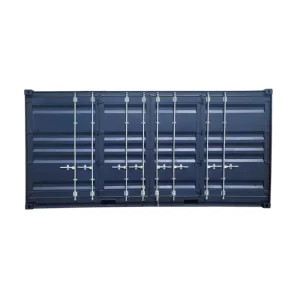
Full-side dual-folding doors engineered for unhindered forklift access and rapid loading of palletized hazardous chemicals.
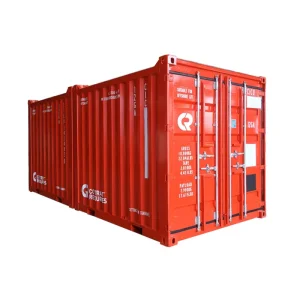
Heavy structural framing with integral corner pad eyes built specifically for dynamic offshore crane transfers to marine platforms.
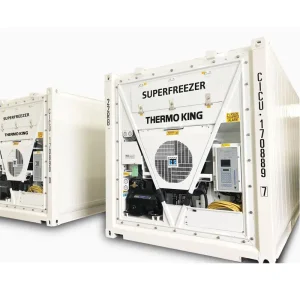
Ultra-low temperature refrigeration setup for deep-frozen biologics, reaction-inhibiting compounds, and specialized cargo safety.
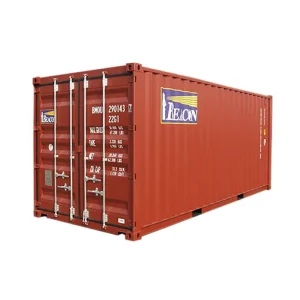
ISO-standard heavy dry freight container ready for export packaging, internal lining customization, or storage yard staging.
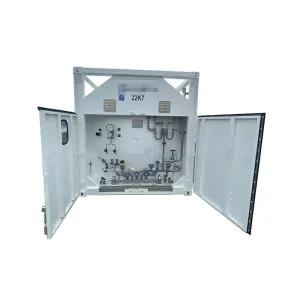
Double-walled vacuum multi-layer super-insulated container engineered for LNG, liquid nitrogen, oxygen, and argon transport.

25,000-liter certified vessel for liquefied petroleum gases, pressurized reagents, and hazardous chemical liquid transshipment.
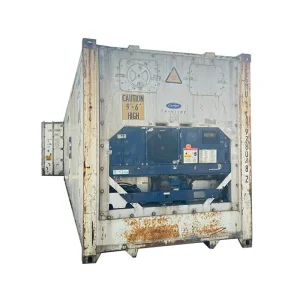
Cost-effective temperature management unit rigorously tested for marine insulation efficiency and compressor performance.
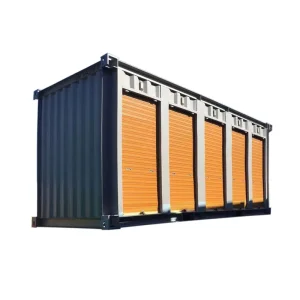
Smooth-operating roller door designed for distribution centers, hazardous materials tool rooms, and rapid access workshops.