Explore certified ISO standard 40ft units, customized roll-up reefers, deep freezer modules, and heavy-duty DNV certified offshore platforms fabricated with high-yield Corten-A steel.

The contemporary 40ft intermodal container serves as the fundamental unit of cross-border trade. Discover how precision manufacturing and specialized internal topologies solve intricate supply chain challenges.
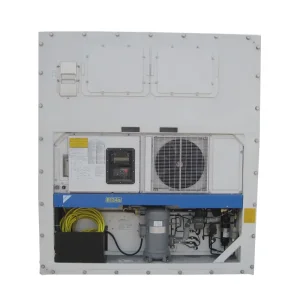
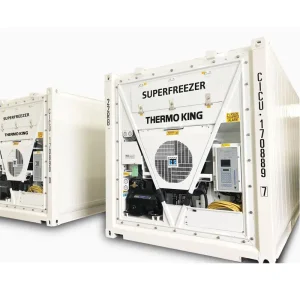
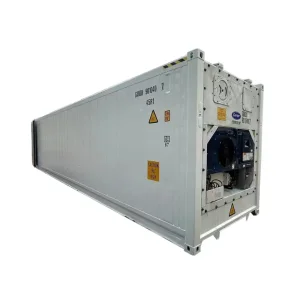
Modern pharmaceutical transport and high-value agricultural perishables demand continuous thermal preservation. Our 40ft High Cube refrigerated units integrate high-efficiency scroll compressors, microprocessor digital thermostats (Carrier Transicold, Thermo King, Daikin), and deep T-bar air distribution flooring. This continuous bottom-air delivery ensures less than 0.5°C temperature deviations from stem to stern across long trans-Pacific transit lanes.
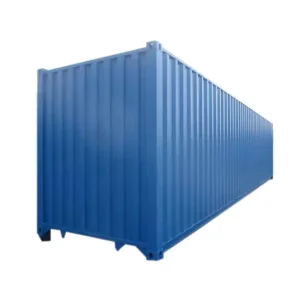
Moving high-density materials—such as raw mineral ore, automotive drivetrains, and industrial machinery—demands concentrated floor strength. We utilize 28mm marine-grade hardwood plywood treated with anti-termite sealant or optional 4.5mm checkered steel floor plates reinforced with high-frequency welded crossmembers. This structure mitigates floor deflection and prevents structural distortion during forklift operations up to 7,260 kg axle loads.
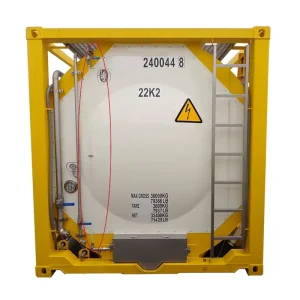
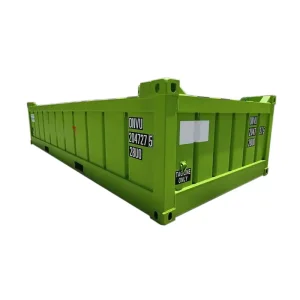
Standard maritime containers are vulnerable to wave slamming and high shock forces during offshore supply vessel (OSV) crane transshipments. Our offshore cargo carrying units (CCUs) are engineered to DNV 2.7-1 and EN 12079 structural criteria. Featuring primary load-bearing pad eyes, Charpy V-notch tested steel profiles capable of absorbing high impacts at -20°C, and certified four-part wire rope slings, they protect topside energy platforms.
Procurement teams require accurate dimensional parameters to balance TEU freight rates, stack heights, and internal volumetric packing efficiency.
| Dimensional & Mechanical Property | 40ft Standard ISO Dry (8ft 6in) | 40ft High Cube Dry (9ft 6in) | 40ft HC Active Reefer | Testing & Compliance Protocol |
|---|---|---|---|---|
| External Length / Width / Height | 12,192 x 2,438 x 2,591 mm | 12,192 x 2,438 x 2,896 mm | 12,192 x 2,438 x 2,896 mm | ISO 668 Dimensional Tolerances |
| Internal Cubic Capacity | 67.7 m³ (2,390 cu.ft) | 76.4 m³ (2,698 cu.ft) | 67.5 m³ (Usable cargo space) | Internal volume laser certified |
| Tare Weight (Average) | 3,650 kg (8,047 lbs) | 3,850 kg (8,487 lbs) | 4,480 kg (including cooling unit) | Certified weigh-scale calibrated |
| Max Gross Mass (Rating) | 30,480 kg / 32,500 kg | 32,500 kg (71,650 lbs) | 34,000 kg (Heavy Duty Option) | ISO 1496/1 Vertical Racking & Stacking |
| Payload Capacity | 26,830 kg - 28,850 kg | 28,650 kg | 29,520 kg | Structural Floor Strength Load Check |
| Base Construction Material | Corten-A (SPA-H) Anti-Corrosive | Corten-A (SPA-H) Anti-Corrosive | Corten-A + Stainless Outer Liner | GB/T 4171, JIS G3125 Standard |
| Floor Structure | 28mm Hardwood (19-ply) Plywood | 28mm Bamboo / Hardwood Hybrid | Extruded Aluminum T-Bar (50mm) | Chemical preservative treated, EPA/AQIS |
| Corner Post Stacking Strength | 86,400 kg per post (9-high stack) | 86,400 kg per post (9-high stack) | 86,400 kg per post | Bureau Veritas / ABS Static Compression |
Every structural member, corrugated sidewall (1.6mm / 2.0mm), and roof panel (1.5mm) is rolled from atmospheric corrosion-resistant steel. Exposure to marine salinity triggers the development of an inert, protective copper-phosphorus oxide patina. This self-healing surface prevents deep rust penetration, tripling operational service life compared to standard structural mild carbon steel.
Structural integrity depends directly on robotic continuous seam welding. All main structural interfaces—including bottom side rails, header corners, and corner casting perimeters—undergo non-destructive testing (NDT). We apply multi-lip EPDM compression gaskets around perimeter doors to guarantee airtight and watertight performance (TIR & UIC certified) across diverse sea conditions.
Understanding current factory production cycles in China, hot-rolled coil (HRC) steel market trends, and international maritime regulations ensures cost-efficient fleet investments.
Steel plate accounts for approximately 58% to 64% of total dry box manufacturing expenditure. Fluctuations in hot-rolled Corten coil prices, zinc primer, and polyurethane insulation directly influence unit pricing. Procuring straight from North China manufacturing clusters near major ports reduces inland transit surcharges and insulates international fleet buyers from high third-party intermediary markups.
Stricter emissions targets under the International Maritime Organization (IMO 2030/2050 framework) and the European Union Emissions Trading System (EU ETS) demand lighter tare weights and superior aerodynamics. Our advanced structural profiling lowers tare weight by up to 140 kg per 40ft HC unit without compromising stack strength, lowering carbon taxes and fuel surcharges across vessel transit cycles.
Positioned within 100 kilometers of deep-water hubs like the Port of Tianjin, units can be staged for rapid export dispatch. Buyers can leverage One-Trip ("one-way cabotage") options: containers are loaded with export commercial cargo on their maiden voyage, balancing freight costs and securing high-spec container capacity directly at discharge ports.
Compliance ensures zero customs delays and operational security across rail, sea, and road freight. Every container is certified by premier international classification societies before port departure.
Every newly manufactured shipping container carries a stainless steel International Convention for Safe Containers (CSC) safety approval plate. This plate certifies dynamic structural stacking capacity, transverse racking resistance (150 kN), and floor test verification under strict classification society oversight (Bureau Veritas, ABS, CCS, or Lloyd's Register).
Containers are engineered to meet the Customs Convention on the International Transport of Goods under Cover of TIR Carnets (TIR Convention) and Union Internationale des Chemins de fer (UIC). Locking rods, cam keepers, and hinge pins feature tamper-evident seal housings and protective covers that prevent cargo tampering during multimodal transit.
Reefer interiors feature food-grade stainless steel (SUS 304 / Grade 1.4301) lining or non-reactive food-contact aluminum alloys. Flooring timber treatment adheres fully to Australian Quarantine and Inspection Service (AQIS) guidelines, using copper-based eco-preservatives to stop invasive pest migration across borders.
Beyond traditional port-to-port ocean freight, modified and specialized 40ft container frames deliver turnkey performance in remote and demanding operating conditions.
As renewable solar and wind installations expand globally, 40ft HC containers are systematically converted into utility-scale Battery Energy Storage System (BESS) enclosures. Structural modifications include customized thermal insulation (Rockwool / PU fireproof cores), automated NFPA 855-compliant clean-agent fire suppression ducting, internal HVAC blast mitigation, and structural floor reinforcement designed to support 30+ tons of lithium-iron-phosphate (LFP) battery racks.
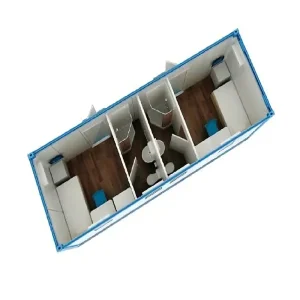
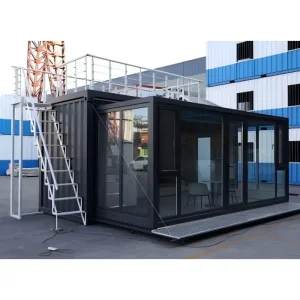
For resource extraction projects operating from the Pilbara desert in Australia to the sub-zero permafrost of Northern Canada, 40ft containers serve as rugged, stackable modular facilities. Equipped with high-density polyurethane insulation and explosion-proof electrical systems, these modified containers function reliably as remote engineering workshops, command centers, and secure off-grid living quarters.
Cross-Eurasian rail routes subject containers to intense longitudinal shunting impacts. Our heavy-duty 40ft dry containers are optimized with reinforced side corrugations and heavy gooseneck tunnel pocket assemblies that integrate cleanly onto double-stack spine cars and railway flatcars. This minimizes racking fatigue over long rail journeys.
The shipping container sector is evolving from basic structural boxes into connected, smart logistics assets. Modern container designs now integrate low-carbon refrigerants, smart telematics, and advanced insulation.
Our reefer and dry container fleets are engineered ready for smart telematics integrations (ORBCOMM, Traxens, Nexxiot). Solar-powered micro-transceivers securely mounted inside the door recess transmit real-time telemetry: precise GPS coordinates, door-opening logs, shock event data, internal atmosphere composition, and relative humidity. Cloud-based predictive models notify logistics managers before minor cooling deviations can impact cargo quality.
In step with Kigali Amendment environmental mandates and European F-gas directives, our refrigeration units support zero-ODP, ultra-low Global Warming Potential (GWP) synthetic blends like R513A and R452A. Furthermore, we are rolling out Natural Refrigerant CO2 (R-744) transcritical cooling systems. Operating at GWP=1, these units provide stable pull-down performance down to -40°C while drastically lowering lifecycle carbon footprints.
Maximizing internal cubic capacity without sacrificing thermal efficiency is a key challenge in cold-chain transport. We are testing ultra-thin Vacuum Insulation Panels (VIP) integrated directly into the polyurethane foam core. This advanced barrier reduces wall thickness by 25mm while improving thermal conductivity (K-value < 0.35 W/m²K), yielding valuable extra cubic meters for palletized cargo.
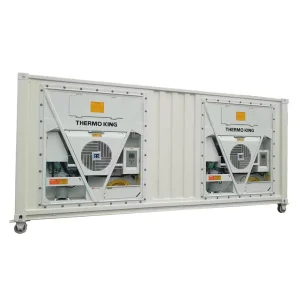
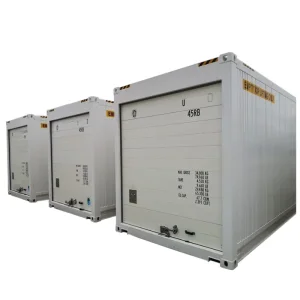
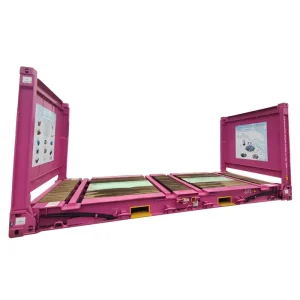
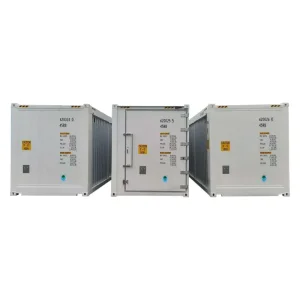
Review our specialized container designs: roll-up refrigerated configurations, multi-compartment storage units, hanging meat logistics systems, and modular structures built to international standards.
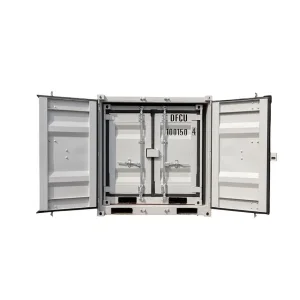
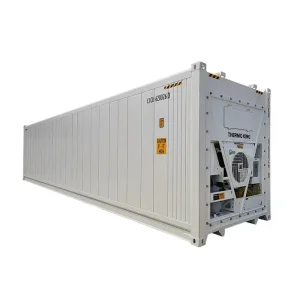
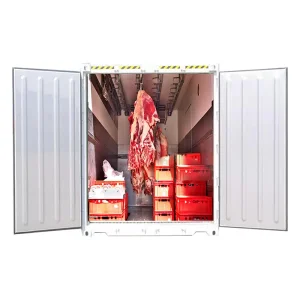
Evaluating initial procurement expenditures alongside long-term operating costs helps fleet managers protect capital and optimize their container assets over their full lifecycle.
Initial container pricing reflects steel quality and weld standards. Investing in Corten-A steel, a 30-micron zinc-rich primer coat, and a 40-micron topcoat significantly extends the repainting cycle. Over a 15-year operational lifecycle, this higher build quality reduces structural refurbishing costs and limits corrosion damage at sea.
For reefer operations, electrical power accounts for over 70% of total lifecycle operating costs. Outfitting containers with variable-speed digital scroll compressors and optimized polyurethane foam insulation can reduce power consumption by up to 35% compared to legacy reciprocating units, lowering costs during both ocean transits and depot cold storage.
Standard ISO 40ft High Cube containers retain strong residual value. Units retired from international maritime service after 10 to 12 years are readily repurposed in the domestic secondary market as ground storage units, modular architectural buildings, or agricultural sheds. This active secondary market ensures predictable residual recovery values.
Direct answers from our senior engineering team addressing technical specs, custom manufacturing limits, and global shipping logistics.
Whether you require standard 40ft High Cube containers, custom roll-up refrigerated configurations, or DNV-certified offshore CCUs, our engineering team in Tianjin provides detailed CAD layouts, payload analysis, and firm FOB/CIF factory quotes within 24 business hours.
