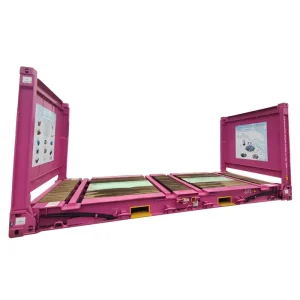
Direct factory deployments from our North China manufacturing hub. Fully certified under ISO, CSC, and DNV international standards across 10ft, 20ft, and 40ft length profiles.
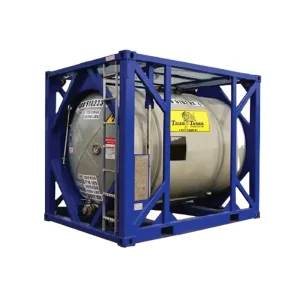
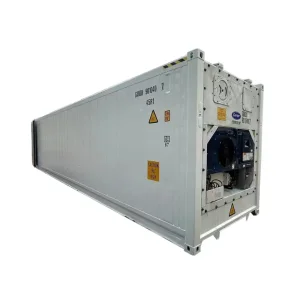
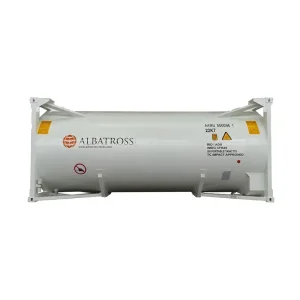
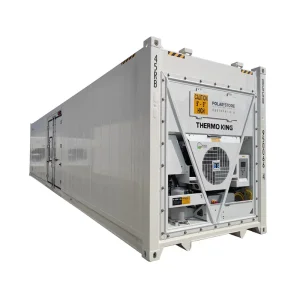
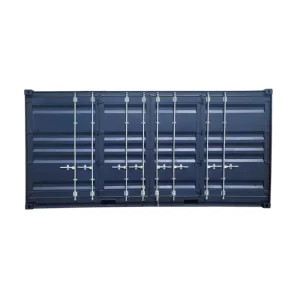
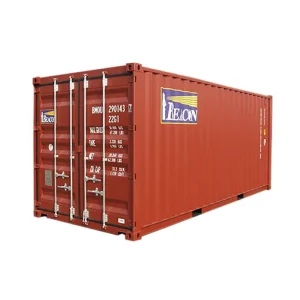
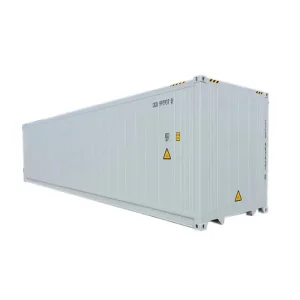
Understanding the structural physics, linear optimization, and spatial economics that define contemporary intermodal freight distribution systems across global corridors.
The length of a cargo container is the foundational variable dictating TEU (Twenty-foot Equivalent Unit) allocation on container vessels, double-stack railway well cars, and highway chassis. Precise dimensional engineering ensures optimal axle load distribution, mitigating tare-to-payload penalties during high-velocity multimodal transfers across European rail networks and North American transit lines.
Standard 20ft and 40ft lengths maintain distinct payload-to-volume ratios. For dense, high-mass breakbulk such as minerals, steel coils, and concentrated liquid gases, the 20ft profile prevents gross vehicle weight (GVW) overruns. Conversely, lightweight, high-cube e-commerce goods maximize economic return inside 40ft and 45ft formats, amortizing vessel slot rates across cubic capacity.
Length extensions create complex torsional, bending, and shear stress profiles. Containers manufactured from SPA-H Corten steel utilize precision-formed corrugation depths and specialized bottom side rail (BSR) flanges to withstand extreme maritime pitching and rolling moments while supporting dynamic stacking loads up to 216,000 kg (9-tier stack) at sea.
Verified engineering tolerances, internal usable lengths, cubic capacities, and tare metrics across standard and specialized container length classifications manufactured at our Tianjin facility.
| ISO Size Designation | External Length | Internal Length | External Height / Width | Usable Volume | Tare Weight | Max Gross Mass (MGM) |
|---|---|---|---|---|---|---|
| 10ft Offshore / Mini | 2,991 mm (9' 9.75") | 2,831 mm (9' 3.5") | 2,591 mm / 2,438 mm | 15.9 m³ (561 cu.ft) | 1,850 kg (4,078 lbs) | 10,000 kg (DNV Rated) |
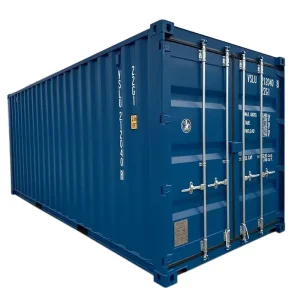
| 20ft Standard Dry (1CC) | 6,058 mm (19' 10.5") | 5,898 mm (19' 4.2") | 2,591 mm / 2,438 mm | 33.2 m³ (1,172 cu.ft) | 2,230 kg (4,916 lbs) | 30,480 kg (67,200 lbs) |
| 20ft High Cube (1CD) | 6,058 mm (19' 10.5") | 5,898 mm (19' 4.2") | 2,896 mm / 2,438 mm | 37.4 m³ (1,320 cu.ft) | 2,380 kg (5,247 lbs) | 30,480 kg (67,200 lbs) |
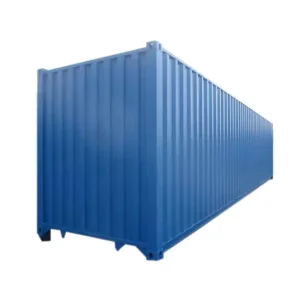
| 40ft Standard Dry (1AA) | 12,192 mm (40' 0.0") | 12,032 mm (39' 5.7") | 2,591 mm / 2,438 mm | 67.7 m³ (2,390 cu.ft) | 3,740 kg (8,245 lbs) | 32,500 kg (71,650 lbs) |
| 40ft High Cube (1AAA) | 12,192 mm (40' 0.0") | 12,032 mm (39' 5.7") | 2,896 mm / 2,438 mm | 76.4 m³ (2,698 cu.ft) | 3,900 kg (8,598 lbs) | 32,500 kg (71,650 lbs) |
| 40ft HC Reefer Active | 12,192 mm (40' 0.0") | 11,583 mm (38' 0.0") | 2,896 mm / 2,438 mm | 67.9 m³ (2,398 cu.ft) | 4,480 kg (9,876 lbs) | 34,000 kg (74,950 lbs) |
| 45ft High Cube Palletwide | 13,716 mm (45' 0.0") | 13,556 mm (44' 5.7") | 2,896 mm / 2,490 mm | 89.2 m³ (3,150 cu.ft) | 4,820 kg (10,626 lbs) | 34,000 kg (74,950 lbs) |
Under ISO 1161 standardization, the center-to-center longitudinal distance between corner casting holes on a 20ft frame is strictly 5,853 mm (±4.5 mm), and on a 40ft container frame is 11,985 mm (±6.0 mm). Ensuring exact factory tolerances prevents twistlock binding during automatic spreader operations at automated mega-terminals.
How physical infrastructure limits, highway weight laws, and port handling architectures govern container length selection across key geopolitical corridors.
While ocean carriers operate almost exclusively with 20ft and 40ft formats, the North American inland logistics grid is dominated by 53ft (16.15 m) domestic containers. Transported on intermodal rail corridors from West Coast seaports, cargo is cross-docked from three 40ft ocean containers into two 53ft domestic units, reducing driver hours and ton-mile fuel consumption.
Standard ISO containers are engineered around imperial dimensions, creating wasted space when stowing 1,200 mm × 800 mm Euro-pallets. Consequently, short-sea and rail transport across Western and Northern Europe prefers 45ft High Cube Palletwide containers (2.49 m interior width), accommodating 33 Euro-pallets compared to 27 in a standard 40ft marine container.
Across Africa, Southeast Asia, and South America, bridge weight restrictions and unpaved hinterland routes favor 20ft configurations. The shorter length distributes high-mass agricultural and mineral freight efficiently over dual-axle chassis without violating localized bridge formulas, protecting commercial equipment against premature frame shear.
Every cargo container manufactured at our facility conforms to rigorous international safety compacts, structural certifications, and quality audits.
Every unit carries an International Convention for Safe Containers (CSC) data plate verifying transverse racking resistance, floor strength (passable by 7,260 kg axle loads per ISO 1496), and dynamic lifting integrity before release.
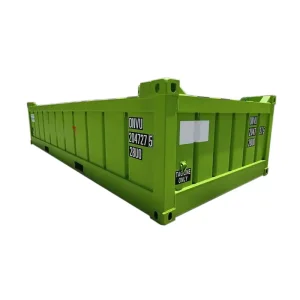
Offshore 10ft, 20ft, and half-height cargo units meet rigorous marine dynamic impact requirements. Fabricated using high-grade structural steels Charpy tested at -20°C to guarantee toughness against open-sea shock loads.
Our Tianjin manufacturing center maintains documented ISO 9001 quality management, alongside direct prototype destructive testing and surveillance audits certified by Bureau Veritas (BV) and the China Classification Society (CCS).
Engineered to comply with the Customs Convention on Containers (CCC/TIR). All hinges, locking rods, and door seals are fitted with tamper-evident security bezels to prevent unauthorized compartment access in transit.
How dimensional length adaptations deliver specific functional advantages across challenging commercial operating environments.
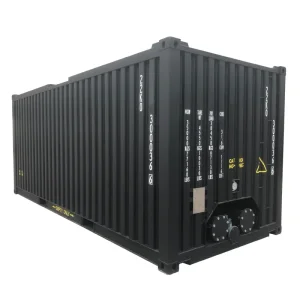
Profile: 10ft & Half-Height DNV Units. Extreme deck footprint constraints on drilling ships mandate 10ft length configurations. Equipped with integrated pad-eyes and dynamic rigging slings, these compact lengths transport heavy valve trees, tubular casings, and drilling muds under hazardous Class 1 Zone II conditions without crowding platform cranes.
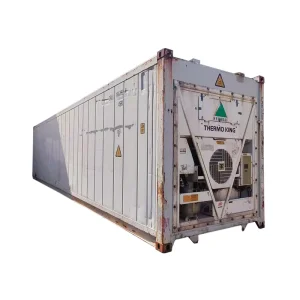
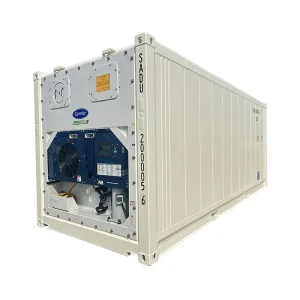
Profile: 40ft High Cube Active Reefer. High-value biological serums, tropical fruits, and frozen seafood rely on the 40ft HC length equipped with Carrier or Thermo King refrigeration machinery. The 11.58 m internal clearance enables longitudinal T-bar flooring airflow, preserving temperatures from -35°C to +30°C throughout 40-day transpacific voyages.
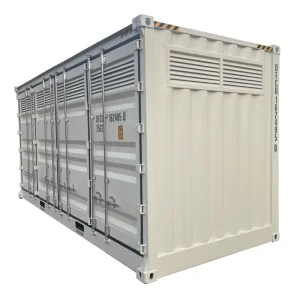
Profile: 20ft & 40ft Specialized High Cube. Grid-scale lithium iron phosphate (LiFePO4) Battery Energy Storage Systems (BESS) require reinforced 20ft and 40ft modified shells. Structural floor channels carry static loads exceeding 35 metric tons, integrated with explosion-relief roof hatches, thermal isolation coatings, and FM200 fire suppression channels.
Strategic research initiatives driving structural weight reduction, telemetry tracking, and environmental lifecycle improvements across our container production lines.
Integration of ultra-high-strength steel grades and recycled thermoplastic composite flooring panels to reduce tare weight by 14%, increasing dry cargo load capacity per haulage cycle.
Factory-integrated sensor arrays measuring longitudinal door strain, interior humidity, acceleration G-forces, and satellite geolocation powered by roof-embedded solar harvesters.
Standardized 20ft and 40ft ISO tank shells engineered with multilayer vacuum insulation and specialized thermal siphons for zero-boil-off transport of hydrogen and clean industrial fuels.
Next-generation corner castings featuring wireless inductive sensors and automated motorized alignment guides, accelerating loading operations for automated berth gantry cranes.
Direct technical answers from CIMIC Group's engineering division to support international buyers, freight forwarders, and infrastructure contractors.
To allow two 20ft containers to sit within the modular envelope of a single 40ft space on container vessel deck guides and chassis, a 3-inch clearance gap is engineered between them. Two 20ft units (19ft 10.5in each) plus the required 3-inch gap equals exactly 40ft (12,192 mm), enabling unified twistlock spacing across ship holds.
Highway transport authorities enforce Bridge Formula laws that restrict vehicle gross weight based on axle spread. While a 40ft container offers greater volume, a 20ft heavy-tested container (MGM 30,480 kg) concentrates high tonnage over shorter tandem chassis spans, often requiring specialized tri-axle chassis to maintain legal compliance on European and North American routes.
Both models feature an identical external length of 12,192 mm (40ft) and width of 2,438 mm (8ft). However, the High Cube (1AAA) profile adds 305 mm (1 foot) in vertical height (2,896 mm vs. 2,591 mm). This design incorporates deeper front gooseneck tunnel pressings to maintain legal overhead highway clearances on standard goose-neck chassis.
Yes. Through dedicated OEM/ODM engineering lines, we manufacture custom lengths from 6ft mini units to 53ft domestic formats. Non-standard builds are engineered with intermediate ISO corner casting blocks or custom handling interfaces to ensure lifting compatibility with standard spreaders or forklifts.
Reefer containers incorporate 75 mm to 100 mm of rigid polyurethane foam within the walls, alongside the integrated refrigeration machinery housing at the front end. Consequently, a 40ft reefer offers an internal length of approximately 11,583 mm, compared to 12,032 mm for a 40ft dry cargo box, representing a ~450 mm loss in linear stowage length.
Each unit is delivered with a complete classification certificate packet including the manufacturer's CSC safety approval certificate, BV or CCS type-approval documentation, mill test certificates for the SPA-H Corten steel, dry-film paint thickness logs, and structural dimensional inspection records.
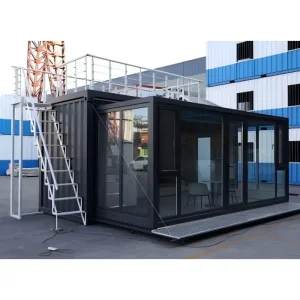
Explore purpose-engineered containers: dangerous goods storage, modular architecture, asphalt transport, and platform configurations ready for immediate dispatch.