Factory-direct intermodal containers certified for cross-border maritime shipping, offshore lifting, sensitive pharmaceutical logistics, and extreme climatic conditions.
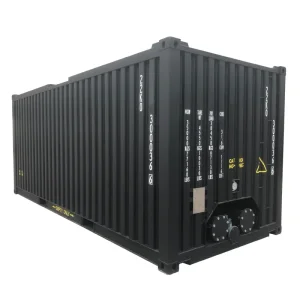

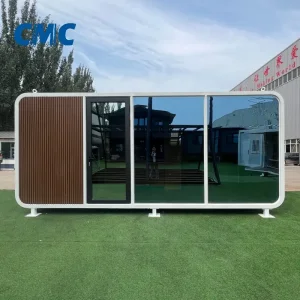
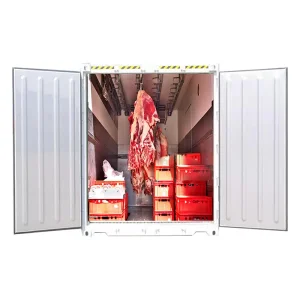
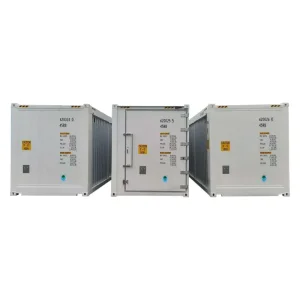
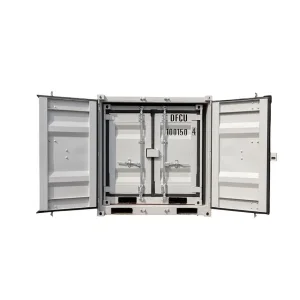
An analytical deconstruction of Corten-A metallurgical integrity, corner casting load distribution under dynamic ocean swell, and floor load flexure dynamics governed by ISO 1496-1 standards.
Engineering Core Principle: The Twenty-Foot Equivalent Unit (TEU) represents the foundational physical benchmark of global supply chain physics. While 40ft units dominate volumetric cargo, the 20ft container remains the uncontested platform for high-density, heavy-payload freight, hazardous goods, and specialized offshore transport. With an allowable Maximum Gross Weight (MGW) reaching up to 30,480 kg (67,200 lbs) for standard builds and exceeding 32,500 kg for reinforced offshore builds, the structural load per linear meter in a 20ft frame significantly exceeds that of longer containers.
Constructed utilizing cold-rolled SPA-H corrosion-resistant steel across all corrugated side panels, header beams, and bottom rails. Upon atmospheric oxidation, a passive, tightly adhered copper-chromium phosphate patina forms, arresting subsurface galvanic degradation across marine salt-spray exposures.
Precision cast steel corner fittings (SCW480) engineered according to ISO 1161. Finite Element Analysis (FEA) certifies corner post assemblies to absorb vertical compression forces exceeding 848 kN per post, enabling 9-high fully laden container vessel cellular guide stacking under sea-state 8 torsional stress.
Integrated 28mm marine-grade apitong or keruing hardwood plywood, chemically treated to satisfy Australian Department of Agriculture (AQIS) quarantine requirements. Bolted to cold-formed C-channel crossmembers spaced at 300mm centers to withstand 7,260 kg front axle forklift wheel loads.
| Dimensional & Performance Metric | 20ft Standard Dry (GP) | 20ft High-Cube (HC) | 20ft Offshore DNV 2.7-1 | 20ft ISO Tank Container |
|---|---|---|---|---|
| External Length / Width / Height | 6,058 × 2,438 × 2,591 mm | 6,058 × 2,438 × 2,896 mm | 6,058 × 2,438 × 2,591 mm | 6,058 × 2,438 × 2,591 mm |
| Internal Cubic Capacity | 33.2 m³ (1,172 cu.ft) | 37.4 m³ (1,320 cu.ft) | 31.8 m³ (Heavy Duty) | 21,000 – 26,000 Liters |
| Tare Weight (Nominal) | 2,180 kg (4,800 lbs) | 2,340 kg (5,160 lbs) | 3,900 – 4,800 kg (Reinforced) | 3,450 – 3,750 kg |
| Max Payload Capacity | 28,300 kg (62,400 lbs) | 28,140 kg (62,040 lbs) | 26,580 kg (Dynamic SWL) | 32,550 kg Max Liquid Mass |
| Certifications & Standards | ISO 1496-1 / CSC / BV | ISO 668 / CSC / ABS | DNV 2.7-1 / EN 12079 | ASME / IMDG / RID / ADR |
Analyzing the industrial cluster economics, precision robotic automation, metallurgical integration, and coastal maritime access that position Chinese container manufacturers at the pinnacle of cost-efficiency and build quality.
Operations based around the Tianjin Binhai New Area and Suzhou logistics corridors place container production within 100 kilometers of deep-water port berths. This eliminates prohibitive inland drayage costs, guarantees rapid empty positioning onto line vessels, and lowers FOB shipping expense per TEU.
Automated continuous welding lines execute tandem seam welds on side corrugations and heavy corner assemblies. This eliminates human fatigue variability, delivers non-destructive ultrasonic testing pass rates over 99.8%, and creates uniform structural weld beads capable of cycling millions of fatigue vibrations.
Fully enclosed surface preparation cells utilize steel grit blasting to achieve Swedish Standard SA 2.5 cleanliness. Applying zinc-rich epoxy primers combined with advanced waterborne acrylic topcoats guarantees dry film thickness (DFT) exceeding 120 microns, eliminating volatile organic compounds (VOCs).
From active satellite telematics and solar-hybrid DC inverters to ultra-low GWP refrigerants and smart atmospheric conditioning, the modern 20ft container has evolved into an intelligent cold-chain and logistics node.
Contemporary 20ft reefer and dry boxes incorporate solar-backed cellular and Iridium satellite telematics modules. Fleet managers track sub-minute GPS coordinates, internal multi-sensor temperature maps, relative humidity, door opening anomalies, and tri-axial g-force shock values during intermodal transit.
Integrating flexible roof-embedded monocrystalline photovoltaic (PV) arrays with 48V DC variable-speed inverter compressors. This technology eliminates diesel genset reliance on stationary distribution routes, cuts operating fuel expenditure by up to 65%, and maintains target cooling during short power blackouts.
In compliance with the Kigali Amendment and EU F-Gas regulations, 20ft reefer machinery is transitioning from legacy R-134a to R-513A and natural refrigerants like R-744 (Carbon Dioxide). Operating under high-pressure transcritical cycles, CO2 reefers achieve zero ozone depletion potential (ODP) and a Global Warming Potential (GWP) of 1.
Real-world operational configurations where 20ft containers solve specialized freight logistics challenges that cannot be resolved using standard 40ft equipment.
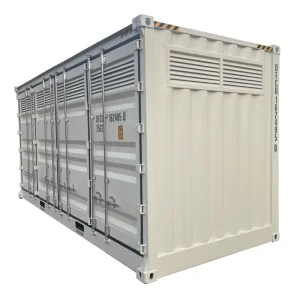
Standard 40ft units present safety hazards when loaded with volatile chemicals due to concentrated mass shifts. The 20ft Side-Opening Dangerous Goods Container integrates explosion-proof secondary containment sumps, flame-arresting mesh louvers, and spark-free stainless interior linings. Certified according to IMDG Code Class 3 through 9, these containers provide ground-level side forklift accessibility without hazardous shunting.
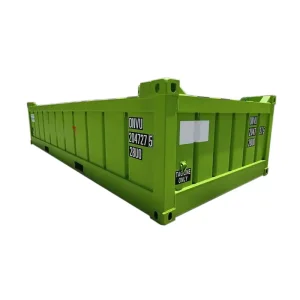
Offshore oil exploration rigs and floating offshore wind turbines require cargo equipment engineered for harsh dynamic crane transfers. The 20ft Offshore Refrigerated & Half-Height Ore Container uses high-tensile structural steel certified down to -20°C Charpy V-notch impact toughness. Equipped with certified four-part wire rope lifting slings, safety shackles, and internal padeyes to resist rogue ocean wave impacts.
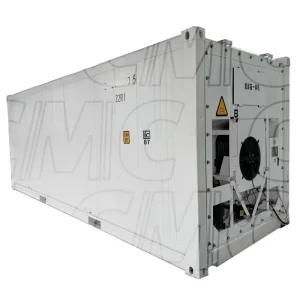
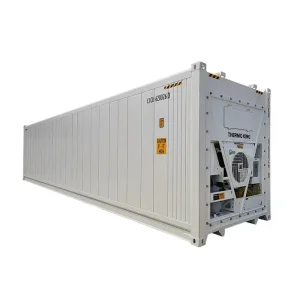
Transporting unpalletized animal carcasses requires specialized internal reinforcement. The 20ft Hanging Meat Container incorporates ceiling-mounted extruded aluminum monorail tracks with stainless steel hooks capable of bearing 12,000 kg of suspended load. Coupled with micro-gap Daikin or Thermo King variable frequency scroll compressors, it maintains -25°C to preserve cellular protein structure.
Across North America (Federal Bridge Gross Weight Formula) and the European Union (Directive 96/53/EC), dense commodities such as copper concentrates, stone, grain, and machinery trigger legal road weight limits long before a 40ft container is filled. Sourcing 20ft ISO Standard Containers prevents empty space shipping penalties and avoids overweight road transit fines.
Strategic procurement criteria for corporate supply chain directors evaluating factory capabilities, material traceability, certification validity, and life-cycle asset value.
Verify that the supplying Chinese factory provides comprehensive 3.1 Mill Test Certificates for every coil of Corten steel (SPA-H). Chemical ladle analysis must prove copper (0.25-0.55%) and chromium (0.30-1.25%) alloying percentages, guaranteeing authentic weathering characteristics and corrosion resistance.
Every dry cargo and specialized 20ft container bound for international transit must be stamped with a valid International Convention for Safe Containers (CSC) data plate approved by an IACS classification society (BV, LR, DNV, or ABS), verifying transverse racking and vertical stacking ratings.
While commercial container prices fluctuate with steel spot prices, authentic 20ft Corten containers hold residual salvage values exceeding 55% after 12 years of marine service. Lower-cost non-Corten alternatives suffer structural perforation within 4-6 years in coastal environments.
In-depth technical answers addressing dimensional standards, regulatory compliance, custom engineering modifications, and export delivery logistics.
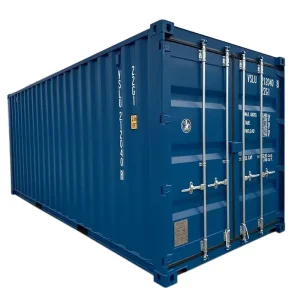
The 20ft Standard General Purpose (GP) container stands at 8ft 6in (2,591 mm) in height with an internal volume of approximately 33.2 m³. The 20ft High-Cube (HC) variant adds one vertical foot, measuring 9ft 6in (2,896 mm) in external height, expanding internal capacity to roughly 37.4 m³. High-cube variants are ideal for high-volume, lower-density cargo, side-door conversions, modular housing, and accommodating top-mounted reefer or ventilation systems without losing floor space.
Yes. In a standard container, the corrugated side walls provide essential shear strength to resist racking and bending. When constructing a 20ft side-opening unit, our engineering team reinforces the top side rail with high-tensile hollow structural steel sections (HSS) and incorporates heavier bottom side sills. The completed unit undergoes physical load and racking tests under third-party classification societies (BV, DNV, or ABS) to maintain full CSC compliance for international vessel transport.
Offshore containers cannot rely on basic ISO 1496/CSC standards because they undergo dynamic crane hoisting in open seas. They must be certified according to DNV 2.7-1 (Standard for Certification of Offshore Containers) and EN 12079 (ISO 10855). Requirements include structural steel with verified Charpy V-notch impact toughness at -20°C, non-destructive weld examinations (MPI/UT), permanent four-point padeyes, and certified lifting sling sets with safety bow shackles.
Standard ISO 20ft dry containers held in coastal port yards are ready for release within 3 to 7 business days. Custom OEM/ODM orders—such as insulated reefers, dangerous goods side-openers, bitumen heating containers, or mobile generator enclosures—typically require 25 to 40 days for fabrication, precision robotic welding, multi-coat paint curing, and CSC classification testing prior to berth staging.
Because international shipping lines bill ocean freight based on TEU slots, shipping an empty 20ft container can accumulate dead-freight. To maximize value, buyers can ship their units via 'One-Way Shipper Owned Container' (SOC) status laden with export cargo, purchase nested mini-sets (e.g., 4ft/6ft/8ft/10ft sets fitted inside a master 20ft unit), or connect two 20ft units together into a 40ft footprint using certified ISO twistlocks and bridge fittings.
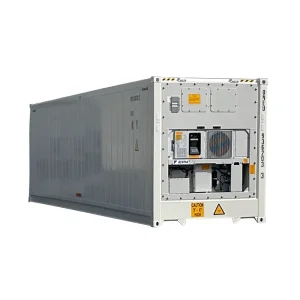
Standard insulated and refrigerated containers utilize high-pressure injected polyurethane (PU) rigid foam utilizing cycloisopentane blowing agents, achieving an insulation core density between 40 to 45 kg/m³. Internal walls are lined with grade 304 food-grade stainless steel or thermoplastic sheets. The overall heat transmission coefficient (U-value) is maintained below 0.38 W/(m²·K), preventing thermal leakage in tropical routes.
In active intermodal deep-sea line service, an authentic SPA-H Corten steel container typically maintains tier-1 ocean seaworthiness for 12 to 15 years. Following marine retirement, secondary site storage, modular conversions, and regional rail deployments often extend functional equipment life past 25 to 30 years with routine paint recoating and gasket maintenance.
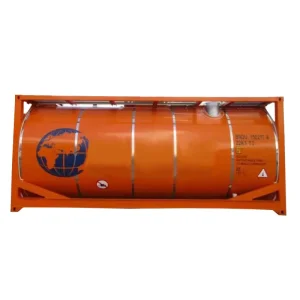
While disposable flexitanks placed inside dry 20ft boxes offer a lower initial entry cost for non-hazardous liquids, rigid ISO tank containers (IMO 1 / T11/T14 types) feature 316L stainless steel pressure vessels with steam or electric heating circuits. They safely carry dangerous hazardous chemicals under IMDG regulations, eliminate single-use plastic waste, resist puncture ruptures, and deliver an asset operational life exceeding 20 years.
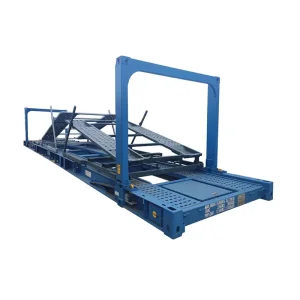
Complete your fleet portfolio with ISO liquid tank containers, heavy bulk ore carriers, auto-racking equipment, and standard dual-access configurations.