Engineered to international CSC, BV, ISO 1496-1, and DNV 2.7-1 specifications for immediate deployment across maritime and onshore networks.
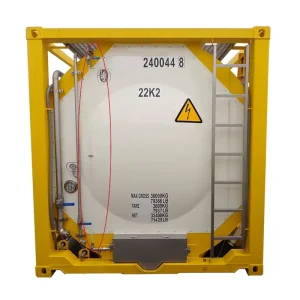
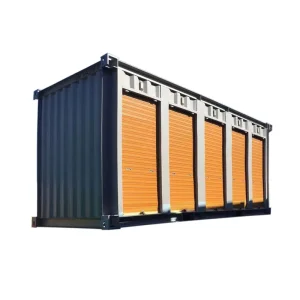
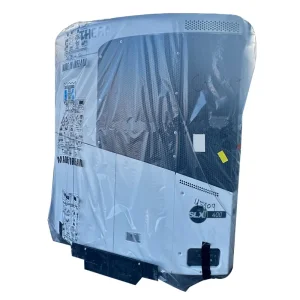
A rigorous examination of metallurgy, structural dynamics, and the manufacturing precision powering international supply chains.
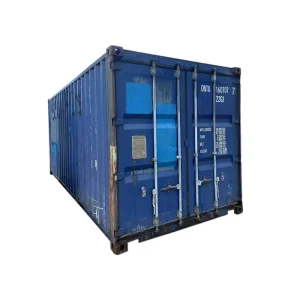
General Purpose (GP) containers—frequently classified as standard dry cargo shipping boxes or Conex intermodal units—represent the backbone of global maritime freight and cross-continental supply lines. Governed strictly by ISO 668 (classification, dimensions, and ratings) and ISO 1496-1 (specification and testing of general cargo containers), these units are subjected to static and dynamic stresses that require precise engineering calculations. Over 90% of global manufactured goods move through GP containers, making physical resilience, anti-corrosive longevity, and dimensional precision essential for global trade stability.
Modern GP containers diverge sharply from simple corrugated steel boxes. The manufacturing paradigm demands structural high-tensile SPA-H Corten steel (atmospheric corrosion-resistant steel), robotic continuous submerged arc welding, multi-stage shot-blasting, and zinc-rich epoxy paint application to resist the aggressive marine salt-spray environment (C5-M corrosion category according to ISO 12944). Leading manufacturers like CIMIC Container leverage over four decades of metallurgical mastery to design dry freight, insulated, modified side-door, and offshore variants that deliver consistent operational safety over a 15- to 25-year service lifecycle.
Analyzing structural advantages in raw materials, port clusters, industrial robotics, and logistical proximity.
China accounts for over 85% of global Corten steel production. Direct partnerships with domestic steel giants allow Tianjin and Yangtze River Delta facilities to eliminate raw material supply bottlenecks while guaranteeing strict chemical compositions (0.12% Carbon, 0.2-0.5% Copper, 0.3-0.65% Chromium) for maximum atmospheric passivation.
Tier-1 factories embed classification society surveyors on-site. Automated laser profile cutters, synchronized hydraulic jig-clamps, and continuous seam welders operate under Bureau Veritas (BV) and ISO 9001 quality supervision. Every unit receives an individual CSC plate, TIR custom approval, and UIC certification before staging.
Facilities situated within the Tianjin FTA Pilot Area and Suzhou Industrial Corridors maintain an operational perimeter approximately 100 km from premier deep-water container terminals (Port of Tianjin, Port of Shanghai). This proximity minimizes inland drayage costs, accelerates vessel slot booking, and shortens transit times across Africa, Europe, and the Americas.
The transition from passive steel structures to intelligent, eco-friendly intermodal assets.
Modern GP containers increasingly integrate solar-powered cellular/satellite IoT devices inside the exterior corrugation recessed pocket, tracking interior door openings, humidity, shock impact, and dynamic GPS coordinates.
In full alignment with international VOC mandates, factories deploy automated robotic airless spray booths applying solvent-free waterborne zinc paints, reducing volatile organic emissions by over 70% while improving salt-fog resistance.
Replacing traditional non-renewable apitong plywood with sustainably sourced, high-density bamboo composites and galvanized corrugated steel floors treated to meet strict Australian Quarantine Inspection (AQIS) biological standards.
FEA software optimizes corrugated sheet wave pitch (pitch depth, slope angle, and peak thickness) to shave tare weight while reinforcing top-rail tensile yield, maximizing permissible payload capacities.
From deep-sea container lines to high-arctic exploration hubs, GP units serve critical roles across primary industries.
Standard 20ft and 40ft High Cube GP units form the foundation of transcontinental double-stack rail systems (such as the China-Europe Railway Express) and ultra-large container vessels (ULCV). CSC-plated containers seamlessly interchange between flatbed tractor-trailers, rail well cars, and gantry spreaders without manual cargo handling.
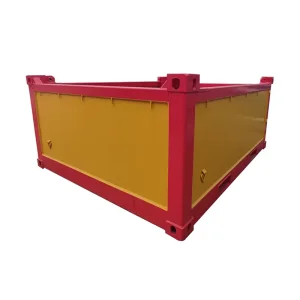
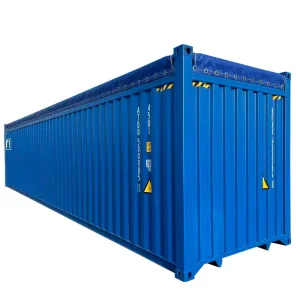
Reinforced half-height units and specialized open-top containers transport high-density concentrates, copper cathodes, and heavy drilling equipment directly into extraction basins across Western Australia, Central Africa, and Latin America, withstanding extreme torsional stress on unimproved haul roads.
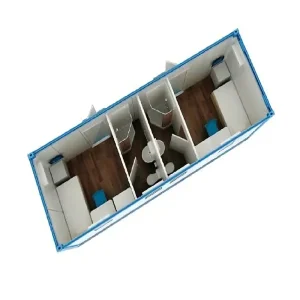
Because GP containers provide an inherently rigid, stackable structural envelope, engineering teams worldwide convert standard shells into modular data centers, mobile power battery energy storage systems (BESS), offshore living quarters, and field emergency medical clinics ready for immediate deployment.
Comparative structural dimensions, tare weights, and payload ratings complying with ISO 668 Series 1.
| Container Model Class | External Dimensions (L x W x H) | Internal Dimensions (L x W x H) | Door Opening (W x H) | Tare Weight | Max Payload Capacity | Cubic Volume |
|---|---|---|---|---|---|---|
| 20ft Standard GP (20GP) | 6,058 x 2,438 x 2,591 mm (20'0" x 8'0" x 8'6") |
5,898 x 2,352 x 2,393 mm (19'4" x 7'8" x 7'10") |
2,340 x 2,280 mm (7'8" x 7'5") |
2,230 kg (4,916 lbs) |
28,250 kg (62,280 lbs) |
33.2 m³ (1,172 cu ft) |
| 40ft Standard GP (40GP) | 12,192 x 2,438 x 2,591 mm (40'0" x 8'0" x 8'6") |
12,032 x 2,352 x 2,393 mm (39'5" x 7'8" x 7'10") |
2,340 x 2,280 mm (7'8" x 7'5") |
3,740 kg (8,245 lbs) |
26,740 kg (58,950 lbs) |
67.7 m³ (2,390 cu ft) |
| 40ft High Cube GP (40HC) | 12,192 x 2,438 x 2,896 mm (40'0" x 8'0" x 9'6") |
12,032 x 2,352 x 2,698 mm (39'5" x 7'8" x 8'10") |
2,340 x 2,585 mm (7'8" x 8'5") |
3,900 kg (8,598 lbs) |
26,580 kg (58,600 lbs) |
76.4 m³ (2,698 cu ft) |
| 20ft High Cube GP (20HC) | 6,058 x 2,438 x 2,896 mm (20'0" x 8'0" x 9'6") |
5,898 x 2,352 x 2,698 mm (19'4" x 7'8" x 8'10") |
2,340 x 2,585 mm (7'8" x 8'5") |
2,380 kg (5,247 lbs) |
28,100 kg (61,950 lbs) |
37.4 m³ (1,320 cu ft) |
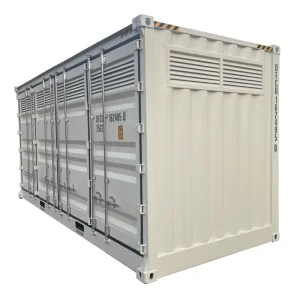
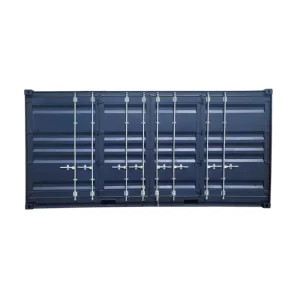
| 20ft Open Top / Side Open | 6,058 x 2,438 x 2,591 mm (20'0" x 8'0" x 8'6") |
5,898 x 2,318 x 2,344 mm (19'4" x 7'7" x 7'8") |
5,700 x 2,180 mm (Full Side Opening) |
3,180 kg (7,010 lbs) |
27,300 kg (60,186 lbs) |
32.0 m³ (1,130 cu ft) |
Strategic frameworks for logistics directors, procurement officers, and fleet operators.
Procuring dry general purpose containers at enterprise scale requires balancing Initial Capital Expenditure (CapEx) against Lifecycle Operating Expenditures (OpEx). While used shipping containers retired from primary ocean carrier fleets provide cost-effective static storage solutions, cross-border shippers must ensure their assets comply with IICL-6 (Institute of International Container Lessors) structural repair criteria to prevent rejection at maritime terminals.
Demand factory mill test certificates (MTC) proving that all corrugation profiles, corner posts, and cross-members originate from genuine SPA-H or equivalent atmospheric corrosion-resistant Corten steel. Lower-grade carbon steel substitutions accelerate rust through paint micro-fissures within 24 months of ocean service.
Corner castings (ISO 1161) must be manufactured from cast steel (SCW480 or equivalent) subjected to 100% magnetic particle or ultrasonic non-destructive testing (NDT). These eight anchor points bear all twistlock forces during vessel roll, pitch, and heave motions.
Marine-grade EPDM double-lip gaskets must be vulcanized at corner joints rather than glued. Verify locking gear rod diameters (minimum 34mm) and hinge pin grease fittings to ensure light-tight, weather-tight, and secure closures under heavy payload deflections.
Authoritative answers addressing engineering tolerances, logistics options, and custom manufacturing criteria.
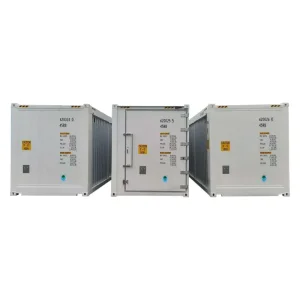
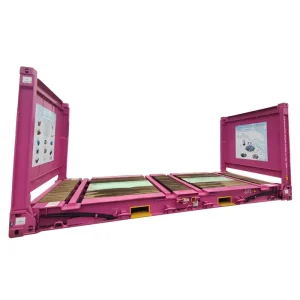
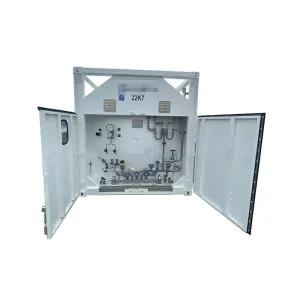
Certified dry, reefer, cryogenic, and platform units ready for international release and expedited vessel loading.
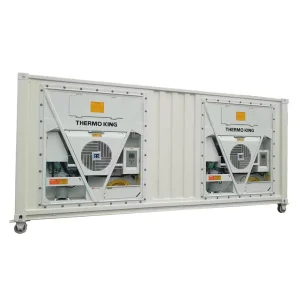
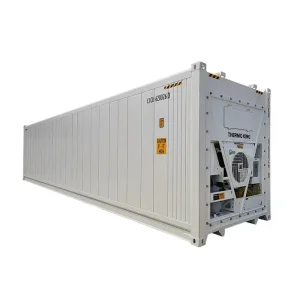
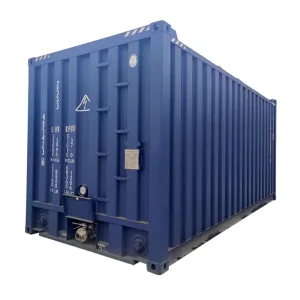
Whether you require standard 20ft/40ft General Purpose production runs or custom-engineered OEM/ODM container structures, our engineering specialists in Tianjin and Suzhou deliver full compliance verification within 24 hours.
