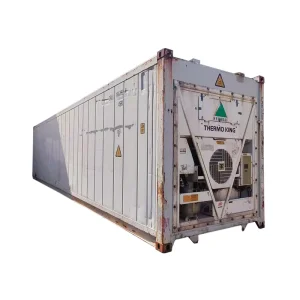
Immediate access to certified cold-chain reefers, DNV offshore modules, and high-tensile ISO intermodal inventory engineered to survive extreme maritime fatigue.

Global commerce has expanded beyond generic steel boxes. Fleet owners, tier-one 3PL providers, and infrastructure EPCs require engineered multimodal assets capable of withstanding corrosive maritime environments and regulatory carbon caps.
The container industry is adopting low-carbon Corten steel (SPA-H), waterborne ceramic thermal coatings, and recyclable floorboards. Maritime lines are evaluating containers with verifiable life-cycle carbon footprints to satisfy IMO 2030 and EU ETS compliance standards without compromising payload endurance.
Standard dry and refrigerated boxes are migrating to autonomous asset-tracking networks. Micro-sensor clusters track geolocation, internal temperature gradients, atmospheric pressure, door tamper status, and three-axis dynamic shock over satellite and cellular LPWAN backhauls.
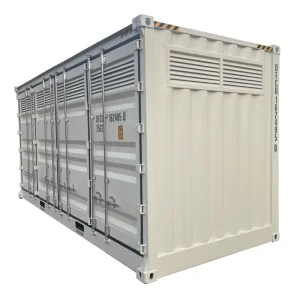
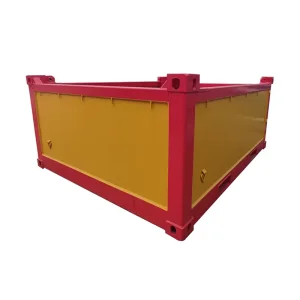
Subsea oil, gas exploration, and offshore wind development demand strict adherence to DNV 2.7-1 / EN 12079 structural criteria. Offshore transport units (baskets, dry cargo boxes, and half-height carriers) must resist extreme wave impact, dynamic crane snap loads, and marine salt corrosion.
Procuring international containers requires evaluating structural tolerances, interior cubic efficiency, payload ratios, and thermal transfer coefficients (U-values) against mission profiles.
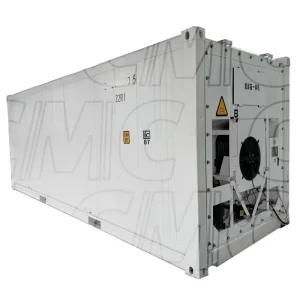
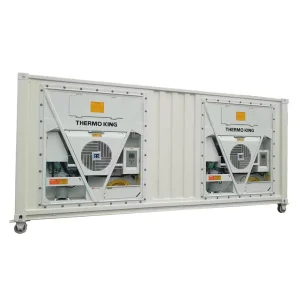
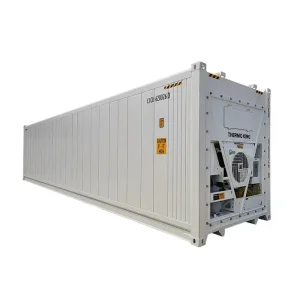
Integrated with Daikin, Carrier, or Thermo King machinery, reefer containers maintain set points between -30°C and +30°C. Deep-freeze units reach -70°C for biological plasma, sashimi grade tuna, and high-value APIs, using food-grade stainless interior linings and high-density CFC-free polyurethane foam.
Manufactured to DNV GL ST-E271 (DNV 2.7-1) and ISO 10855 benchmarks, offshore baskets and cargo boxes feature full radiographic weld verification, non-destructive testing (NDT), low-temperature Charpy impact resistance, and certified 4-leg sling padeye systems for open-sea crane transfers.
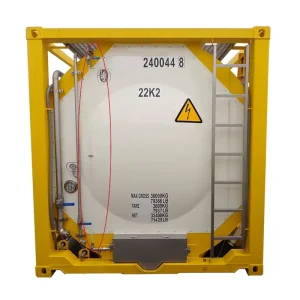
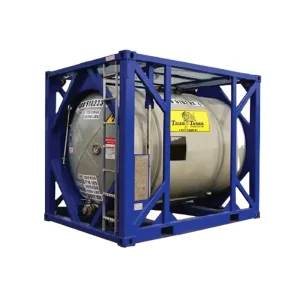
UN Portable T11/T14/T22 ISO tank containers feature 316L stainless pressure vessels, steam or electric heating jackets, and multi-layer vacuum thermal barriers. They are approved under IMDG, RID, and ADR frameworks for alcohols, chemical feedstocks, and food oils.
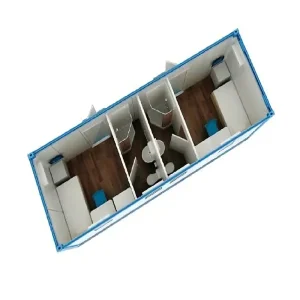
Converted ISO frames serve as telecommunications shelters, decentralized data centers, electrical substation battery containers (BESS), and site accommodation pods, engineered with acoustic insulation, firebreak bulkheads, and integrated utility chases.
| Container Classification | Structural Metallurgy | Max Gross Weight (Rating) | Payload Capacity | Primary Regulatory Standard | Operational Environment |
|---|---|---|---|---|---|
| 20ft Standard Dry ISO | SPA-H Corten Steel (1.6 - 2.0 mm) | 30,480 kg (67,200 lbs) | 28,300 kg (62,390 lbs) | ISO 1496-1 / CSC | Intermodal Rail, Ocean Liner, Highway |
| 40ft High-Cube Dry ISO | SPA-H Corten / Tensile Corner Castings | 32,500 kg (71,650 lbs) | 28,620 kg (63,090 lbs) | ISO 668 / TIR | Volumetric Freight & Consumer Logistics |
| 40ft HC Precision Blast Reefer | MGSS / AL Inner / PU Insulation Core | 34,000 kg (74,950 lbs) | 29,480 kg (64,990 lbs) | ISO 1496-2 / ATP | Biopharmaceuticals, Perishables, Cold Chain |
| DNV 2.7-1 Offshore Cargo Basket | High-Yield Structural Steel (EN 10025) | 12,000 - 18,000 kg | 10,500 - 15,200 kg | DNVGL-ST-E271 / EN 12079 | North Sea / Dynamic Wave Offshore Rigs |
| 20ft T11 ISO Liquid Tank | SS316L Vessel / Carbon Steel Frame | 36,000 kg (79,360 lbs) | 32,400 kg (71,430 lbs) | ASME VIII / IMDG / RID | Specialized Petrochemicals & Food Grade |
Procuring international containers requires evaluating structural integrity, manufacturing traceability, classification sign-offs, and residual lifecycle valuation.
Initial container acquisition accounts for less than 35% of cumulative asset cost. Fleet controllers prioritize corrosion-inhibiting finishes, standardized corner fittings, and cross-member reinforcement to reduce maintenance frequency, downtime, and terminal handling wear.
Production runs undergo testing monitored by Bureau Veritas (BV), Lloyd’s Register (LR), or ClassNK. Structural tests verify 9-high fully loaded stacking (up to 216,000 kg per corner post), transverse racking, end-wall flexure, and watertight sealing under high-pressure nozzle wash.
Positioning containers at main export gateways across China (Tianjin, Qingdao, Shanghai, Ningbo) reduces repositioning surcharges and customs dwell times. Units ship with complete documentation: CSC safety approval plates, customs clearance declarations, and factory conformity certs.
Container manufacturing is shifting toward smart telemetry, advanced thermal materials, and high-strength alloys to meet modern logistics demands.
Reefer container platforms are moving from traditional HFC blends toward R513A, R452A, and transcritical CO2 (R744) compression cycles. These systems maintain pull-down capacity while aligning with Kigali Amendment targets and regional environmental regulations.
Integrating vacuum-insulated panels (VIPs) with silica aerogel into container walls achieves high thermal resistance in a slimmer profile. This preserves internal cubic volume while reducing compressor run hours by 28% to 34% in tropical transit lanes.
Integrated solar harvesting arrays and kinetic vibration chargers power permanent container tracking nodes. These micro-edge computing systems evaluate cargo conditions, structural shocks, and reefer error codes in real time, transmitting alerts via 5G satellite uplinks.
Engineering clarity for fleet managers, EPC procurement leads, and international logistics directors.
Standard ISO containers are engineered for vessel cellular guides and vertical corner-casting interlock loads. In contrast, DNV 2.7-1 / EN 12079 units are built for dynamic offshore crane lifting from supply ships in heavy seas. They feature specialized steel impact grades (tested down to -20°C or -40°C), continuous seam welding, certified 4-point pad eye assemblies, and dedicated wire rope slings.
SPA-H is an atmospheric corrosion-resistant copper-chromium alloy. When exposed to ocean salt spray and cyclic moisture, it develops a stable, dense patina layer that limits inward oxygen diffusion. This self-sealing oxide barrier significantly outlasts ordinary structural carbon steel in corrosive marine environments.
Under the International Convention for Safe Containers (CSC), a newly fabricated unit carries an initial safety plate valid for 5 years. Subsequently, containers must be re-inspected under an Approved Continuous Examination Program (ACEP) or Periodic Examination Scheme (PES) at intervals not exceeding 30 months, verifying corner posts, side rails, door hinges, and understructure cross-members.
Standard intermodal reefers operate on 380V/460V 3-phase power at 50/60Hz, drawing 10–18 kW during pull-down cycles. Off-grid smart storage setups integrate a DC inverter cooling pack with a microgrid solar PV canopy, automated generator failover, and dual-redundant temperature dataloggers.
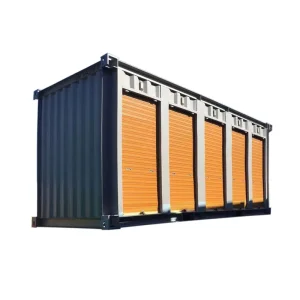
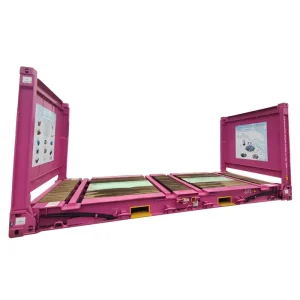
Full product line of roll-up storage units, side-access dangerous cargo enclosures, solar cold units, and modular containers available for direct factory shipment.