Global Maritime Logistics Standard

Famous Steamship Container Manufacturer & Factories

Precision Engineering, ISO/CSC-Certified Maritime Containers, Specialized Refrigerated Units, and Global Supply Chain Intermodal Solutions.

Featured Fleet Deployment

High-Performance Intermodal Shipping Containers

Engineered for structural resilience across intercontinental ocean lines, railway links, and localized static storage networks.
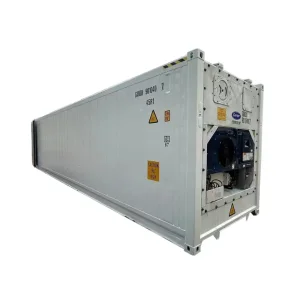
China Ninety Percent New Used 40ft HC Carrier Refrigerated Container Product

China Ninety Percent New Used 40ft HC Carrier Refrigerated Container Product, Exporters

View Specifications
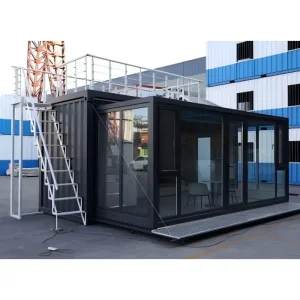
ODM 20ft Foldable Prefab Modular Homes Mobile Expandable Container House

ODM 20ft Foldable Prefab Modular Homes Mobile Expandable Container House Prefabricated House with Bathroom Products, Quotes

View Specifications
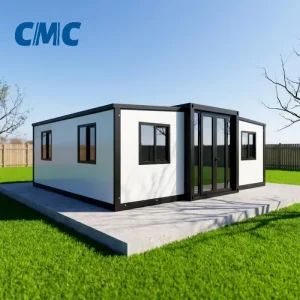
Famous 20ft Modular Container Houses Expandable Steel Container House

Famous 20ft Modular Container Houses Expandable Steel Container House Excellent Thermal Insulation and Sealing Performance Manufacturer, Exporters

View Specifications
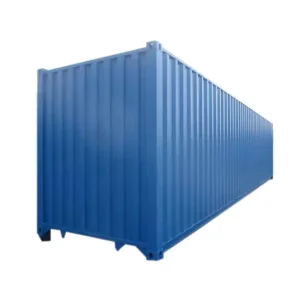
ODM 40ft High Cube Certified Dry Cargo Shipping Container

ODM 40ft High Cube Certified Dry Cargo Shipping Container contaoner Manufacturer, Quotes

View Specifications
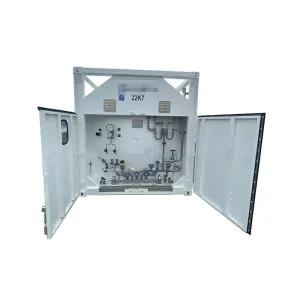
China T75 20ft Cryogenic Liquid Tank Container Product

China T75 20ft Cryogenic Liquid Tank Container Product, Factories

View Specifications

Buy ISO Standard 20ft Versatile Tank Container for Transport Chemicals

Buy ISO Standard 20ft Versatile Tank Container for Transport Chemicals Pricelist, Product

View Specifications
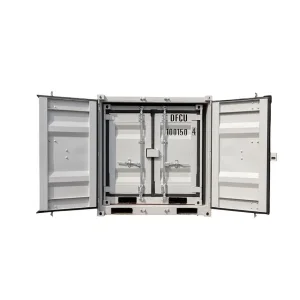
OEM Durable Cargo Shipping Container Nested Shipping Container

OEM Durable Cargo Shipping Container 4Ft/5Ft/6Ft/7Ft/8Ft/9Ft/10Ft/11Ft/12Ft Mini Storage Container Nested Shipping Container Pricelist, Exporter

View Specifications
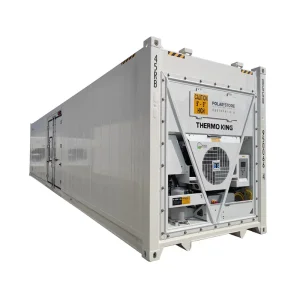
ODM 40ft High-Cube Side Open Door Reefer Container Products

ODM 40ft High-Cube Side Open Door Reefer Container Products, Quotes

View Specifications
1983 EST.

Over 40 Years of Heritage

100M+ USD

Annual Delivery Scale

100% BV/ISO

Certified Maritime Standards

120+ COUNTRIES

Global Shipping Reach

Macro Industry Whitepaper

The Global Intermodal Paradigm & Manufacturing Architecture

Analyzing structural demand, metallurgical advances, and the strategic positioning of global maritime container factories.

1. Global Intermodal Industry Status & Supply Chain Recalibration

The international trade ecosystem relies on the standard intermodal steamship container as the single most critical building block of modern commerce. Handling more than 90% of global non-bulk cargo, maritime container manufacturing is a cornerstone of industrial productivity. In recent years, fluctuating shipping cycles, geopolitical shifts, and the modernization of global carrier fleets have increased the demand for high-spec Corten steel (SPA-H) dry cargo containers, specialized multi-temperature refrigerated boxes, and ISO chemical tank solutions.

As international liner consortiums (including Ocean Alliance, 2M, and THE Alliance) demand higher container turnaround rates and structural endurance, standard dry containers must withstand relentless stresses: ocean racking, high-humidity sea-spray exposure, and repetitive 9-high fully laden stacking loads exceeding 86,400 kg. High-precision container manufacturing centers—principally along China's industrial coastal belt from Tianjin Port down to Shanghai and Ningbo—leverage vertically integrated steel supply chains, automated submerged-arc robotic welding, and shot-blasting processes to meet this rigorous operational standard.

2. Metallurgical Standards & Factory Production Infrastructure

Renowned steamship container manufacturing requires strict adherence to international maritime treaties and engineering protocols. Corten-A weathering steel forms the core structure. When exposed to maritime salt atmospheres, this atmospheric corrosion-resistant copper-chromium alloy produces a compact, self-healing oxide barrier (patina) that prevents rust from degrading the underlying structural core.

Inside certified container factories, advanced assembly lines follow standardized production sequences:

Precision Cold Roll-Forming

High-tonnage stamping presses and continuous roll formers shape 1.6mm to 2.0mm Corten corrugated panels, side walls, and roof sheets, optimizing rigidity-to-weight ratios to balance tare weight and payload capacity.

  • High-yield SPA-H Corten alloy
  • Trapezoidal corrugation for rigidity
  • Automated hydraulic cut-to-length

Robotic Submerged-Arc Welding

Corner castings made from heat-treated cast steel (SCW480) are fused with 4.5mm-6.0mm corner posts through automated multi-pass welding, eliminating micro-fissures and guaranteeing structural integrity under torsional flex.

  • Ultrasonic weld inspection
  • Class-approved welding wire
  • Uniform penetration profiles

Anti-Corrosive Coating Regimes

Complete shot blasting to SA 2.5 cleanliness removes mill scale and oxides, followed by an automated zinc-rich epoxy primer, an epoxy intermediate coat, and a durable polyurethane finish (120+ microns total DFT).

  • 3-coat marine coating system
  • Low-VOC waterborne paint options
  • Strict salt-spray durability testing
End-to-End Solutions

Macro Industrial Solutions & Application Matrices

Targeted container engineering designed for diverse, extreme operational environments worldwide.

Liner Transoceanic Freight

Standardized 20ft and 40ft High Cube containers built for multi-tier vessel holds, featuring waterproof locking bars, EPDM perimeter gaskets, and CSC plates for deep-sea routes.

  • Full ISO 668/1496 compliance
  • Heavy-duty 28mm marine plywood
  • TIR-approved lock rod security

Active Cold-Chain Logistics

Integrated reefer containers configured with Carrier, Thermo King, or Daikin cooling units. High-density polyurethane foam maintains precise internal temperatures from -35°C to +30°C.

  • Air-flow extruded aluminum T-floors
  • Micro-sensor telematic tracking
  • Stainless steel interior linings

Hazardous & Cryogenic Fluids

T75 cryogenic containers and ISO tank units built from 316L stainless steel, designed for liquefied natural gas, industrial solvents, hazardous chemicals, and food-grade alcohols.

  • ASME & IMDG regulatory compliance
  • High-vacuum multi-layer insulation
  • Pressure-relief burst disk safety

Modular Structural Pre-Fabrication

Expandable and modified ISO containers engineered for modular living, mining basecamps, mobile medical units, and distributed energy storage enclosures.

  • Structural fire safety certifications
  • Integrated thermal insulation layers
  • Plug-and-play field utility fittings
Compliance, Quality & E-E-A-T

Localized Support, Engineering Validation & Regulatory Compliance

Ensuring intermodal safety through strict certification frameworks, international marine covenants, and automated quality control.

CSC & Marine Classification

Every newly manufactured container undergoes structural testing for CSC (International Convention for Safe Containers) safety approval plates, verified by classification societies like Bureau Veritas (BV), ABS, and DNV.

  • Floor strength testing (7,260 kg axle loads)
  • Transverse & longitudinal racking tests
  • 9-high container stacking tests

Port Hub Staging & Logistics

Located near key transport gateways such as Tianjin Port and major eastern hubs, our facilities minimize drayage expenses and ensure fast clearance and vessel loading across major ocean routes.

  • Direct rail-to-port intermodal access
  • Pre-trip inspection (PTI) for reefers
  • Buffer yards for quick fleet release

Bespoke OEM/ODM Engineering

From double-door dry cargo boxes and side-opening roller shutter containers to modular accommodation units, our engineering division delivers custom finite element analysis (FEA) drawings and structural prototypes.

  • 3D CAD/CAM structural modeling
  • Specialized lifting points & slings
  • Customized livery & branding integration
Innovation Horizon

Technical Roadmap & Future Outlook (2025–2035)

Anticipating next-generation intermodal demands through green metallurgy, intelligent telematics, and circular lifecycle design.

IoT Telematics & Autonomous Sensoring

Modern container fleets are evolving into intelligent assets. Integrated micro-sensors directly track internal atmosphere, cargo displacement, door seal status, and chassis vibration, transmitting data to global logistics clouds via satellite and cellular mesh networks.

  • Real-time thermal breach detection
  • Automated geo-fencing & security alarms
  • Zero-power solar-harvesting transceivers

Decarbonized Metallurgy & Green Steel

To support global maritime carbon-reduction goals (IMO 2030/2050), production facilities are shifting to hydrogen-reduced direct reduced iron (DRI) steel and 100% bio-based waterborne coatings, lowering the embodied carbon of each manufactured TEU by over 38%.

  • Hydrogen-fueled smelting verification
  • Recycled composite floorings
  • Low-carbon supply chain traceability

Circular Modular Repurposing

Design-for-Deconstruction (DfD) frameworks ensure standard maritime steamship containers can seamlessly transition into architectural structures, remote substation housings, or grid-scale battery storage units at the end of their ocean service life.

  • Standardized modular connection nodes
  • Non-toxic fire retardant insulation
  • Long-life structural reuse engineering
Factory Inventory & Specialized Units

Direct Sourcing & Industrial Container Inventory

Explore specialized dry boxes, chemical tankers, active reefers, and modular units ready for factory dispatch.
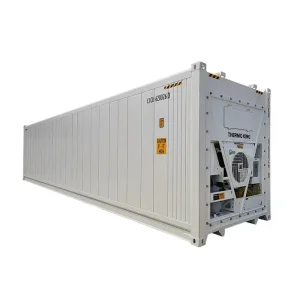
Famous New 40ft High-Cube Certified Reefer Shipping Cargo Container

Famous New 40ft High-Cube Certified Reefer Shipping Cargo Container Factory, Pricelist

View Specifications
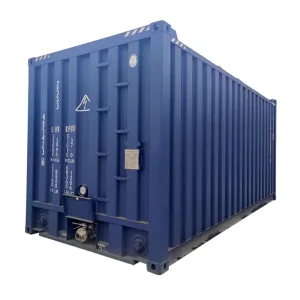
China New 20ft Square Liquid Container Pricelist Products

China New 20ft Square Liquid Container Pricelist, Products

View Specifications
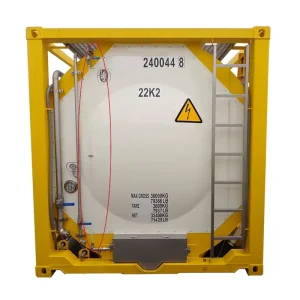
Famous 20ft Tank Container for Alcohol Manufacturer Factories

Famous 20ft Tank Container for Alcohol Manufacturer, Factories

View Specifications
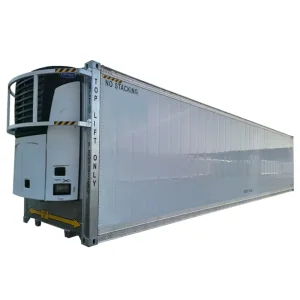
ODM Carrier X4-7300 Refrigeration and Electricity Integrated Container

ODM Carrier X4-7300 Refrigeration and Electricity Integrated Container Exporter, Exporters

View Specifications
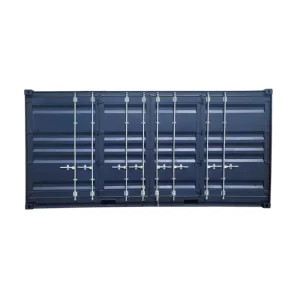
High-Quality New 20ft Customized Side Door Dry Cargo Shipping Container

High-Quality New 20ft Customized Side Door Dry Cargo Shipping Container Manufacturer, Manufacturers

View Specifications
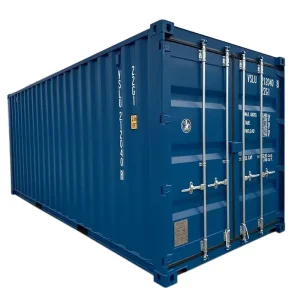
High-Quality New 20ft Double Door Dry Cargo Shipping Container

High-Quality New 20ft Double Door Dry Cargo Shipping Container Pricelist, Exporters

View Specifications
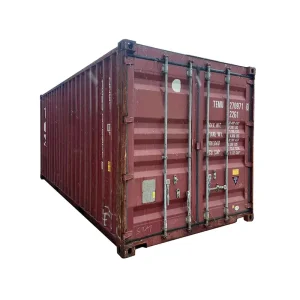
Famous 20ft Used Shipping or Storage Container Factory

Famous 20ft Used Shipping or Storage Container Factory, Manufacturers

View Specifications
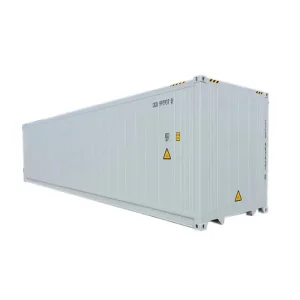
High-Quality New 40ft High Cube Thickened Foam Insulation Container

High-Quality New 40ft High Cube Thickened Foam Insulation Container Manufacturer, Factories

View Specifications
Procurement & Engineering FAQ

Frequently Asked Questions for Engineering Buyers

Detailed technical, compliance, and procurement clarifications directly from certified container specialists.

What steel grades are used in maritime container manufacturing?
High-tier maritime containers are manufactured using SPA-H Corten steel (under JIS G3125 standards) or equivalent weathering alloy steels. This metallurgy incorporates copper, nickel, and chromium alloy elements to produce self-passivating oxide layers under harsh ocean conditions. Structural elements such as corner posts and bottom rails use thicker gauges (4.5mm to 6.0mm), while corrugated side walls and roof panels use 1.6mm to 2.0mm sheets, ensuring structural endurance without unnecessary deadweight.
How are CSC plates issued, and how are containers inspected for international transport?
Every container deployed in international shipping must carry a valid CSC (International Convention for Safe Containers) safety approval plate. Classification bodies such as Bureau Veritas (BV), ABS, or DNV test prototype units for transverse/longitudinal racking, floor deflection (handling loads up to 7,260 kg per axle), and 9-high stacking loads (up to 86,400 kg). When certified, stainless-steel CSC plates are permanently riveted to the left door, detailing maximum gross weight, allowable stacking weight, and racking test values.
What is the difference between active refrigerated and passive insulated containers?
Active refrigerated (reefer) containers integrate an electro-mechanical cooling compressor (Carrier Transicold, Thermo King, or Daikin) that actively maintains temperatures between -35°C and +30°C. They require external power (380V/440V 3-phase) from vessels, yard plugs, or diesel generator sets. Passive insulated containers lack mechanical chillers; they use vacuum-insulated panels (VIP) or high-density polyurethane walls (50mm to 100mm) to slow thermal exchange, making them ideal for short-haul food logistics, chemical protection, or localized temperature-sensitive storage.
Can containers be manufactured with non-standard dimensions and side-opening doors?
Yes. Our factory provides full OEM/ODM engineering customization. Beyond standard 20ft GP and 40ft High Cube specifications, we manufacture full-side opening containers (featuring bi-folding multi-door profiles), roll-up shutter access, mini nested systems (from 4ft to 10ft), double-ended doors, and open-top structures with heavy-duty tarpaulins. Every custom design undergoes finite element analysis (FEA) to confirm ISO corner casting alignment and lifting safety requirements.
What anti-corrosive coating systems are applied for ocean durability?
The coating protocol begins with automated centrifugal wheel shot-blasting to achieve ISO SA 2.5 cleanliness, creating a 25–40 micron surface anchor profile. A zinc-rich epoxy primer (30 microns) is applied immediately, followed by an epoxy intermediate build coat (40 microns), and a weather-resistant polyurethane topcoat (40-50 microns). The total dry film thickness (DFT) reaches 110–130 microns, delivering more than 1,000 hours of continuous salt-fog corrosion resistance.
What are the design requirements for T75 cryogenic and liquid tank containers?
T75 cryogenic tank containers are engineered under the ASME Boiler and Pressure Vessel Code and UN Portable Tank instructions (T75/IMDG). They feature a dual-vessel design: an inner vessel of 304/316 austenitic stainless steel and an outer carbon steel jacket, separated by a high-vacuum annular space filled with multi-layer reflective insulation (MLI). These systems transport refrigerated liquid gases (LNG, liquid nitrogen, argon, and ethylene) across intermodal rail and sea routes, equipped with multi-stage dual safety relief valves.
How are used and refurbished shipping containers rated for structural reliability?
Used containers are graded using Institute of International Container Lessors (IICL-5/6) or Cargo Worthy (CW) standards. Inspections check for corner post alignment, crossmember straightness, floor delamination, wall dent depths, and door gasket water-tightness (verified by internal chalk and light-penetration tests). Containers meeting Cargo Worthy standards can have their CSC certifications updated for continued international sea voyages.
What are typical production lead times, and how does port proximity affect delivery?
Standard dry containers (20ft and 40ft HC) are usually available from standing stock or can be produced on automated lines within 15 to 25 days, depending on batch volume. Specialized units—such as T75 tanks, custom side-open containers, and customized reefer builds—typically require 30 to 45 days. Located approximately 100 km from major container terminals like Tianjin Port, our facilities eliminate long domestic transport legs, enabling efficient vessel booking, container tracking, and fast export dispatch.